• Skip to primary navigation
  • Skip to main content
  • Skip to primary sidebar
  • Skip to footer
Cardamom and Tea
  • Blog
  • Recipes
  • About
  • Cookbooks
    • Piecemeal
    • A Dish for All Seasons (my first cookbook)

Easy Spanakopita Spiral

June 16, 2021 by Kathryn Pauline 4 Comments

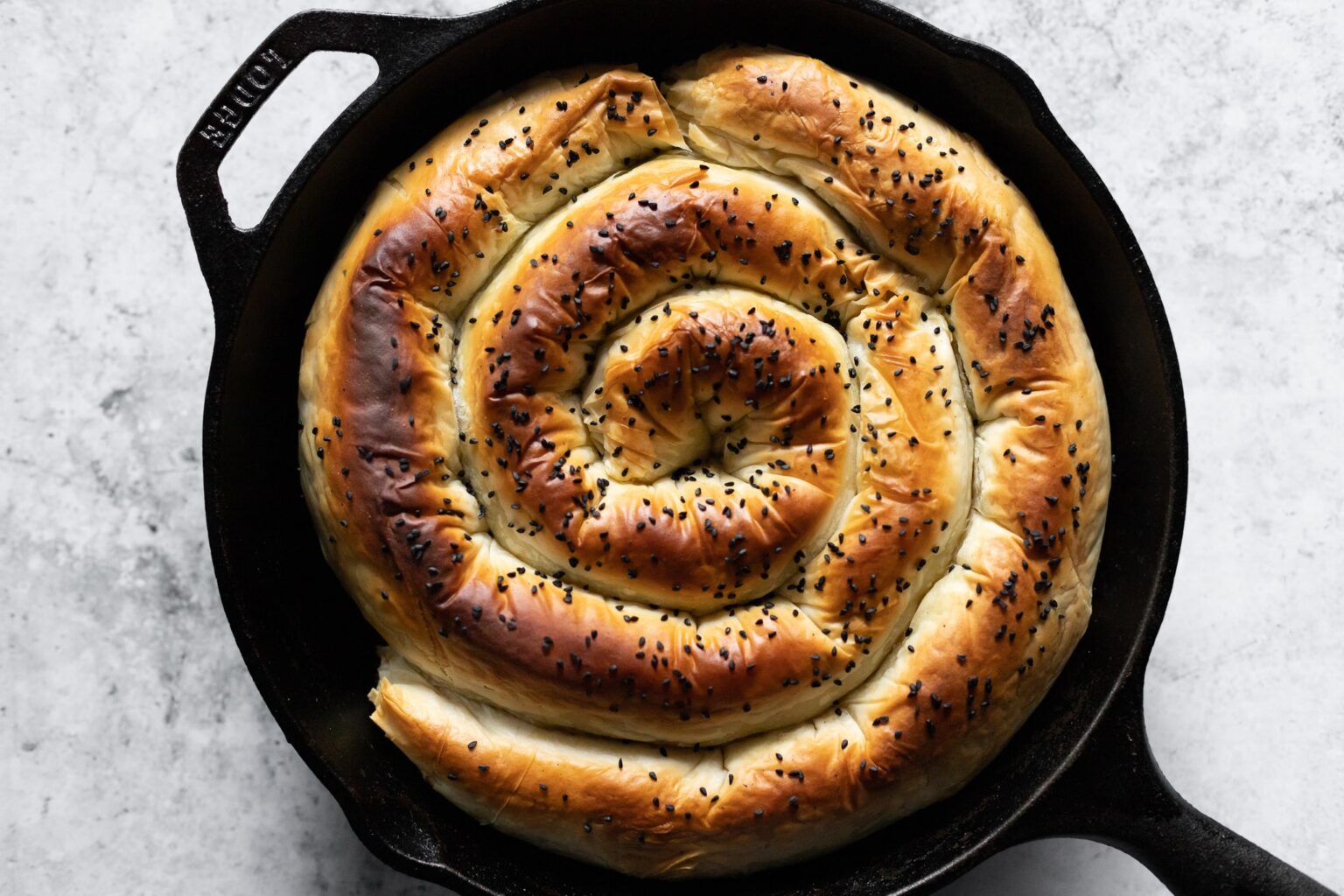
Spanakopita in a spiral, photographed from above

There are a few dishes I come back to again and again because they’re simple to pull off but feel just a tad more thoughtful, and spanakopita is one of them. And while the traditional tray-baked version has its charm, a spanakopita spiral is what I reach for most. It’s easy to make, easier to share, and (not to be shallow, but…) it’s also easier on the eyes, if I do say so myself.

This post has everything you need: the recipe + video, tips for success, a guide to working with filo dough, and all the small details that make a big difference. It’s easy to mess up, but also very easy to get right!
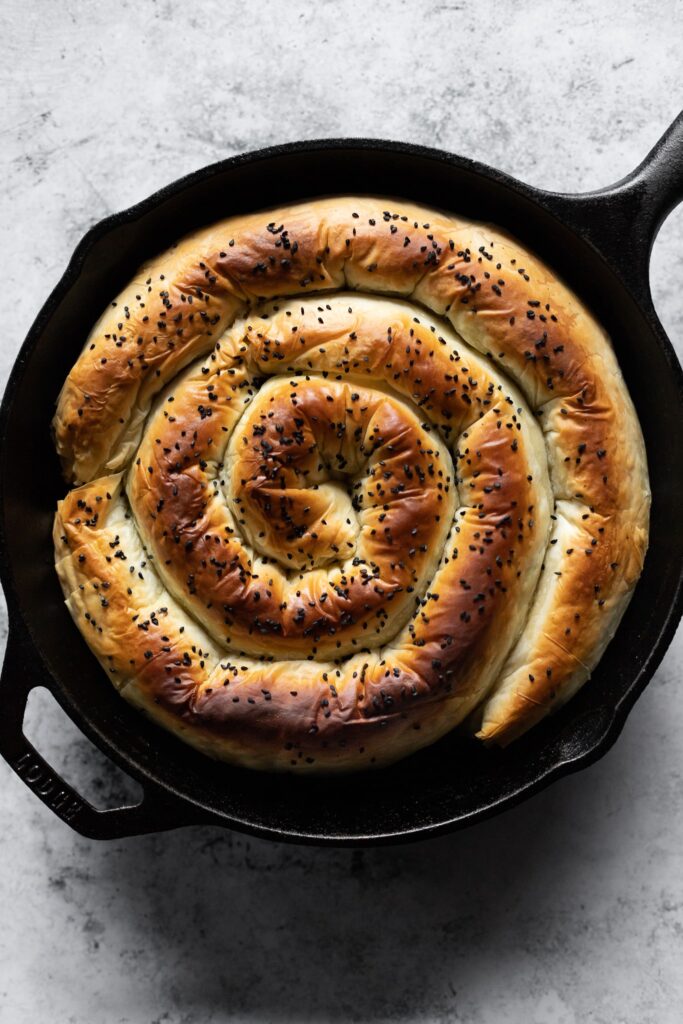
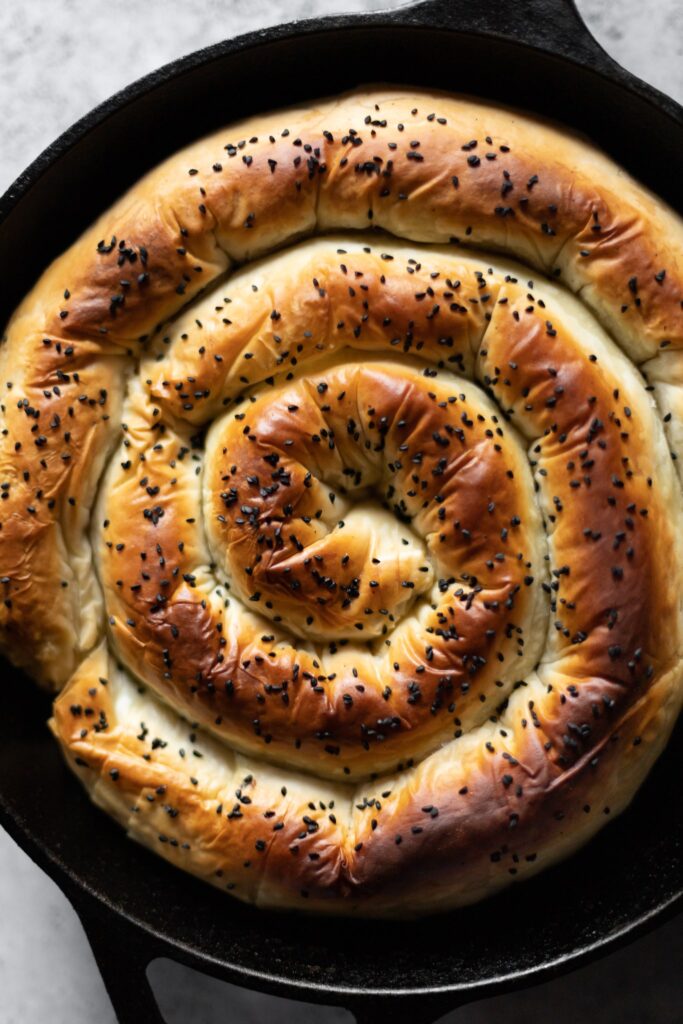
Spanakopita, photographed from above

tips for spanakopita spiral success

1) Decide whether to swirl it or stack it

Deciding what shape to make your spanakopita all depends on your preferences. If you’re looking to maximize crispiness, a rectangular tray-bake version is for you. But if you’re looking for more of a mix of crisp and tender textures, go with a spanakopita spiral. Other advantages of the spiral:

  • It’s great for entertaining. Guests can tear off a piece, or you can slice it into rustic wedges.
  • It will turn out gorgeous with very little effort. Unlike with a tray bake, you don’t have to fuss with scoring the top. You just fill, roll, and spiral.
  • It’s very forgiving of tearing. If your sheets tear in the process of layering, it’ll still turn out gorgeous because everything gets beautifully crinkled anyway.
  • I find it easier to keep the filo from drying out when making a spiral. That’s because you only have to work with 1/3 of the dough at a time, so you can keep most of it covered while you layer those sheets.

This recipe will work for either a spiral or a tray bake. If you want to turn it into a rectangle, simply layer half of your filo sheets with butter in a snugly-fitting casserole dish, fill it, and layer with the rest of the sheets and butter. If you want to be able to slice through without shattering the top of your tray bake, score the top with a knife before baking.

2) make sure the filling is not soggy

Soggy filo is your greatest enemy here. Squeeze your spinach dry (very dry) and sauté the onions until they’ve shrunk down and let off some steam, then drain any briny feta before mixing in.

3) make sure the filling is flavorful

Spanakopita should taste like herbs, not just spinach. I use parsley, dill, and a touch of dried mint, but you could also use a little fresh mint. If it’s not flavorful before baking, it won’t magically get better in the oven, so make sure you use enough herbs, green onions, and garlic.

4) use clarified butter or olive oil, and save those butter solids!

Clarified butter gives you crisp, golden layers with less risk of burning. Bonus: those leftover butter solids you get after clarifying your butter? Stir them into the filling for a little extra depth of flavor! If you’ve never clarified butter, check out my clarified butter post, which includes a video. Or follow the instructions in the notes at the end of my recipe, and you’ll be just fine.

No time to clarify your own butter? Store-bought clarified butter (ghee) or olive oil works great as a substitute. Just start with 1/2 cup (105g) of your fat of choice.
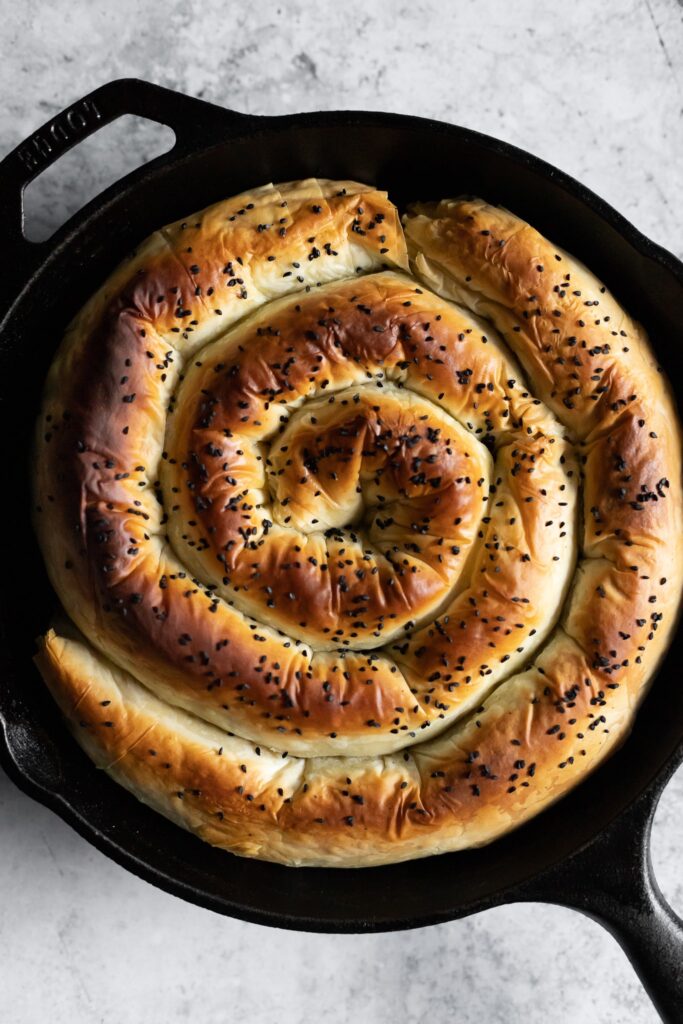
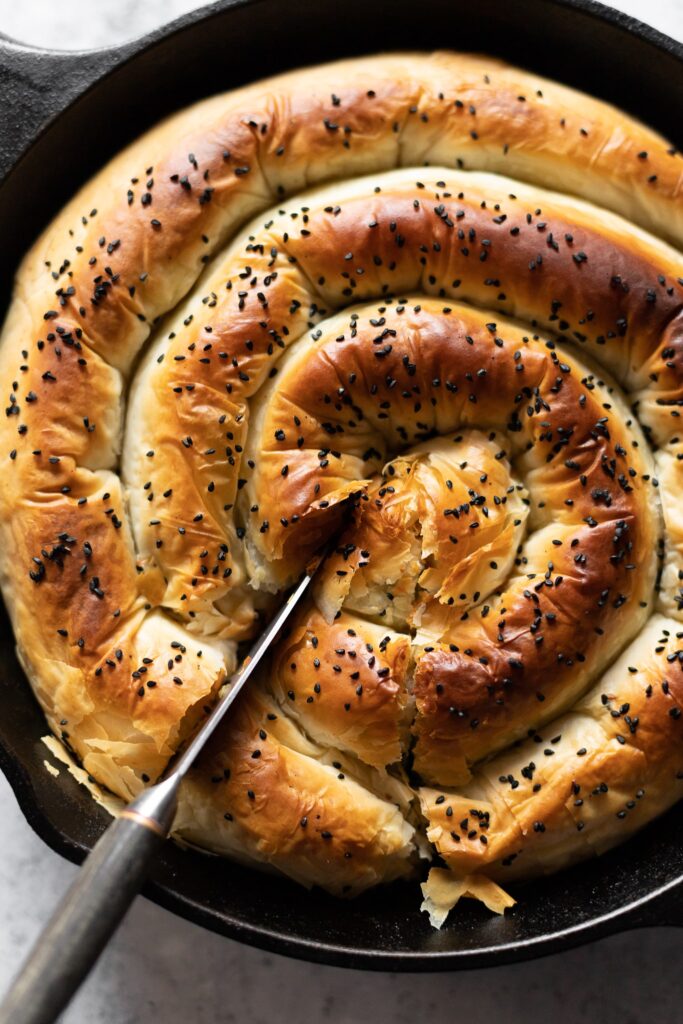
Spanakopita in a spiral, photographed from above
Spanakopita in a spiral with one slice about to be served, photographed from above

how to work with filo dough

Filo has a reputation for being finicky, and to be fair, it can be. But with a few smart habits, it’s actually very manageable. Here are some tips to make the experience less stressful:

1) a lesser-known fact: let it come to room temperature before opening

You absolutely have to let your filo come to room temperature before opening the package. If you let it thaw in the fridge overnight, and then open the package and start to try to work with it cold, it will dry out almost immediately. It will ruin your day. It will haunt your dreams for the rest of your life. Just don’t do it. Leave it on the kitchen counter for at least a couple hours (after thawing).

2) a better-known fact: don’t open it until you’re ready to use it

Don’t open the filo until you have all your components in place. While filo doesn’t dry out quite as quickly as most guides claim, it does indeed dry out after a few minutes. So don’t stress, but do have everything ready to go, and be ready to work efficiently.

3) a hot take: don’t use a damp cloth, and don’t worry about covering the whole stack

While you should keep your filo covered while you work with it, don’t use a damp cloth, and don’t stress about keeping the whole stack covered. Instead of a damp cloth, I like to use the plastic sheet it (usually) comes wrapped in. I find that using a damp cloth sometimes results in the filo sticking to itself—it can be hard to have just the right amount of dampness to prevent over-hydrating those delicate layers.

I just divide the dough in thirds, fold up the two-thirds I’m not immediately using, wrap it with the plastic sheet it came in, and set it aside while I work on the first third. You should have plenty of time to work with the first third, and the rest will be fresh as a daisy once you’re ready for it.

Print

Easy Spanakopita Spiral (+ video)

spanakopita spiral
Print Recipe

5 Stars 4 Stars 3 Stars 2 Stars 1 Star

5 from 1 review

  • Prep Time: 40 minutes
  • Total Time: 2 1/2 hours
  • Yield: about 6 to 8 servings

Ingredients

  • 13.2 oz (375g) filo dough, thawed in the fridge
  • 16 oz (455g) frozen chopped spinach, thawed
  • Olive oil for sautéeing
  • 2 cups (120g) chopped green onion
  • 3 medium cloves garlic (10g), crushed through a press
  • 1 cup (40g) chopped parsley
  • ¼ cup (10g) dill
  • 2 large eggs
  • 1¼ cup (175g) crumbled feta
  • 1 tsp (1g) dried mint (optional)
  • ½ tsp (1.5g) black pepper
  • Salt
  • ½ cup (105 g) melted clarified butter* and/or extra virgin olive oil
  • 1 tsp seeds (e.g., nigella or sesame)** (optional)

Instructions

  1. Move your filo dough from the fridge to the counter for about 2 hours. Do not remove it from the packaging until you’re ready to fill it.
  2. Preheat your oven to 420°F (215°C).
  3. Wring out the spinach: Place about ¼ of the spinach in a clean tea towel***, twist it shut, and keep twisting and squeezing to wring it out. You should end up with about 190g. Once it’s completely dry, add to the mixing bowl. Repeat with the remaining batches.
  4. Make the filling: Move the small saucepan back over medium heat, let it heat for a minute or two, and add 1 teaspoon olive oil and the green onions. Stir for about 4 minutes, just until they soften and cook down a bit. Remove to the mixing bowl.
  5. Add the garlic, parsley, dill, eggs, feta, mint, and pepper to the mixing bowl. Season with about ¾ tsp (4g) salt. Mix together very well.
  6. Fill and shape the spanakopita: Open the filo and prepare to work quickly. Separate out ⅓ of the sheets and keep the rest covered under the plastic sheet they came in. Place one filo sheet on a clean surface and brush with butter. Top with another sheet, brush with more butter, and repeat until you have a stack with the top brushed in butter. Place ⅓ of the filling in a line down one side of the filo’s long side. Roll it up (not tightly), starting with the filled side, ending with the unfilled side. Twist into a spiral (seam-side-down), and move to a greased sheet pan or large ovenproof skillet.
  7. Repeat twice more with the remaining filo and filling. Tuck the second link into the end of the first one, and coil it around the outside, then repeat with the third and final one. If you run out of butter at any point, just use more olive oil.
  8. Brush the top with any remaining butter or olive oil. Sprinkle with nigella seeds, if using.
  9. Bake for about 20 to 25 minutes, until golden brown, crispy, and completely heated through.

Notes

* Use any combination of clarified butter and extra virgin olive oil, to reach ½ cup (105 g) oil/butter combined. To clarify butter, start with 1 stick (115g) butter. Melt the butter in a small saucepan over medium heat. Once the butter has melted, reduce the heat to medium-low and continue to simmer. Keep an eye on the temperature and adjust it as necessary, so that the butter solids don’t brown. Remove the pan from heat as soon as the simmering has quieted down a bit, but before it goes silent—this should take about 4 minutes from the time the butter melts. Use a spoon to skim off any floating solids, and place them in a medium mixing bowl. Slowly pour the melted butter into a measuring cup, leaving behind any of the solids left at the bottom of the pot. If you’d like to, you can add the solids into the mixing bowl with the filling. You should have between ⅓ and ½ cup (85g) of butter after clarifying, which you will add olive oil to to reach 1/2 cup (105 g) oil/butter combined.

** Nigella seeds look a lot like black sesame seeds, but the two could not taste more different. Use whichever you love.

*** If you don’t want to risk staining your towel, you can just do this in more like 8 batches with your bare hands. Afterwards, dab with a paper towel to make sure your spinach is totally dry.

Video note: If you don’t see the video for this post after scrolling up, please disable ad block and try reloading the page.

find us on instagram and let us know what you made!

2025 update: The measurements and method in this recipe are essentially the same as it always has been, but I edited it to streamline it. Notably, the clarified butter steps are now in the note at the bottom instead of embedded within the recipe. This is because many people choose to make this recipe with store-bought clarified butter and/or olive oil, so I thought this made for an easier-to-read process. If you’ve been making this recipe for years, it’s still exactly the same, but hopefully a bit easier to follow now.
Filed Under: appetizers, dinner, every recipe, lunch, main courses, meze, side dishes, vegetarian, weeknight Tagged With: clarified butter, dill, dried mint, fall, feta, greens, herbs, middle eastern, parsley, spring, summer, winter

Persian Love Cake

June 1, 2021 by Kathryn Pauline 101 Comments

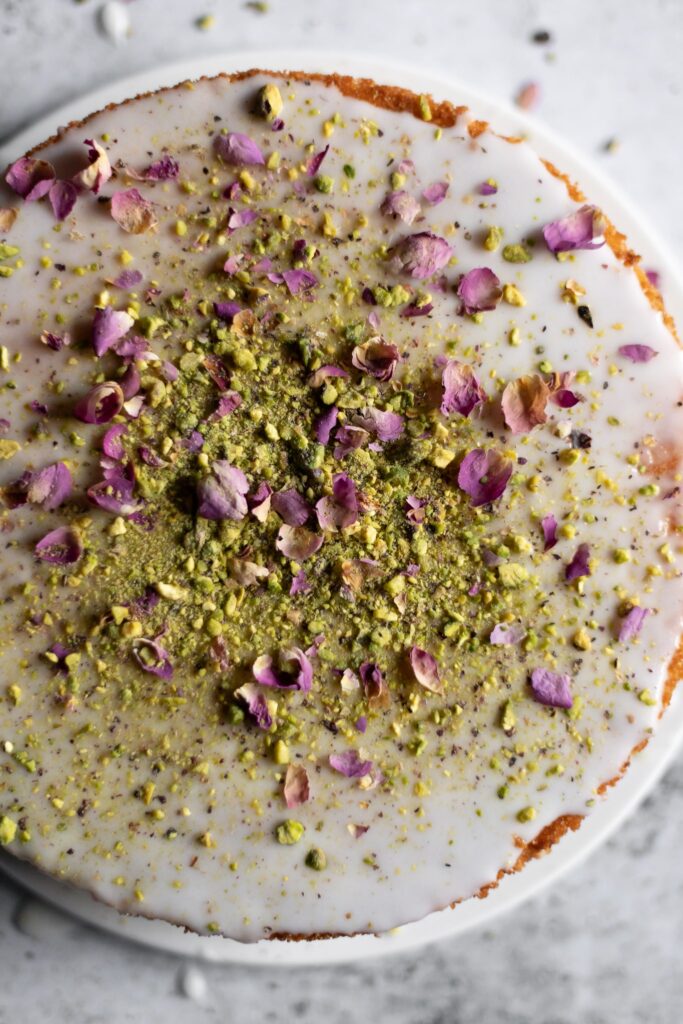
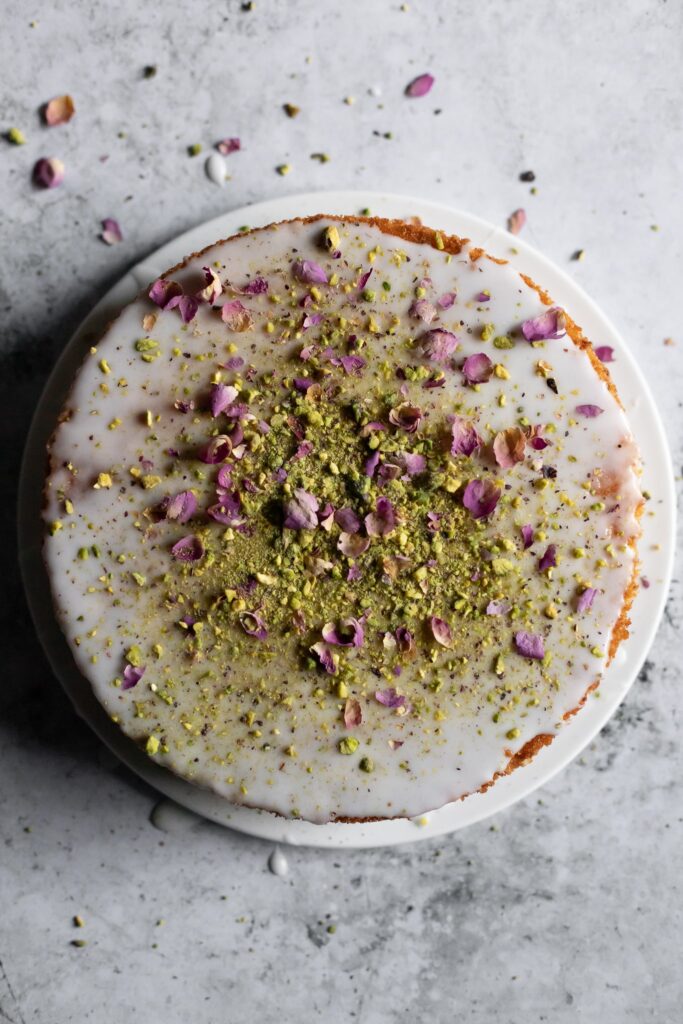
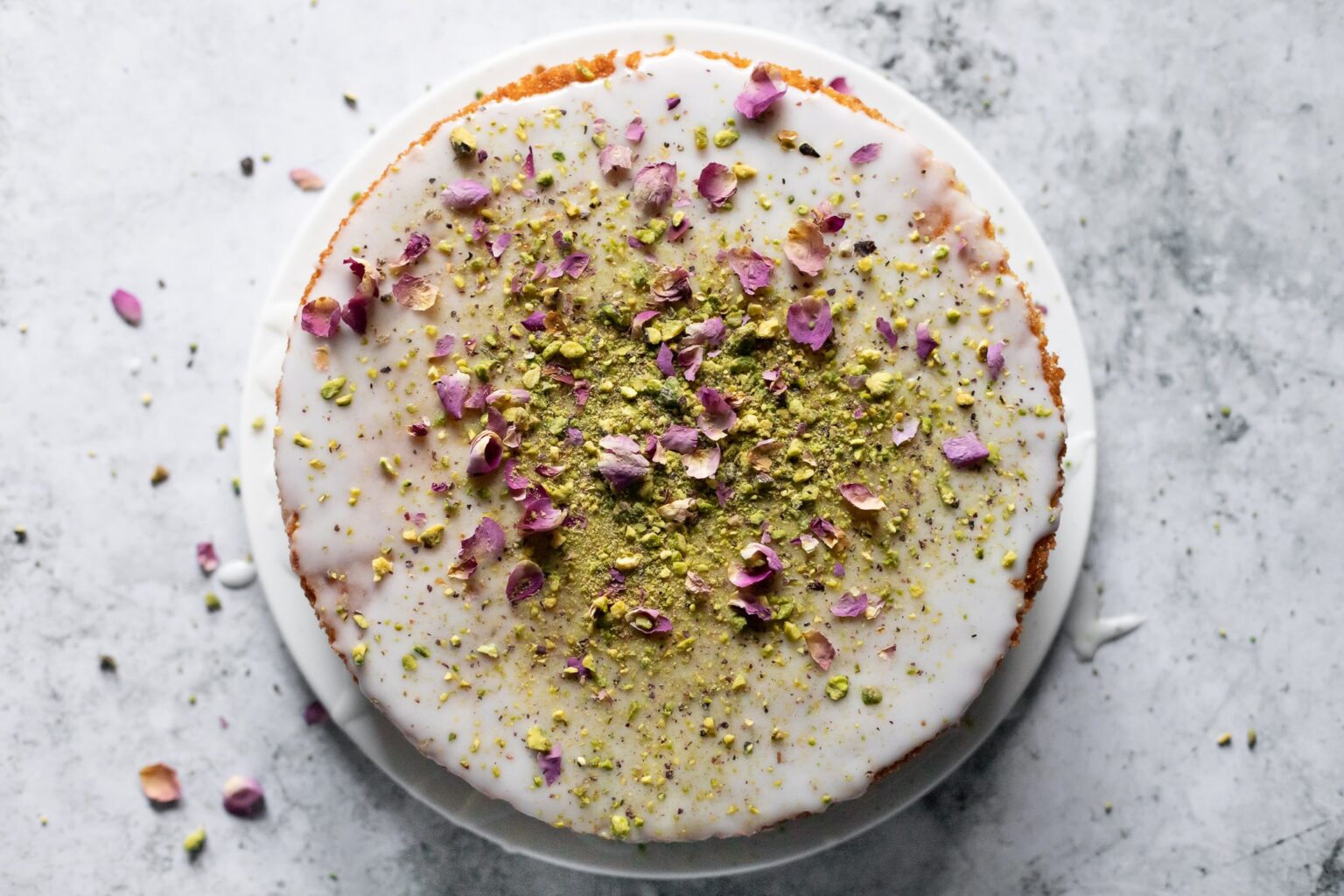
overhead photo of a cake decorated with white icing, green pistachios, and pink dried rose petals

This Persian love cake has a wonderfully moist and buttery texture, as well as a subtly fragrant flavor. Use lemon or lime zest, just enough cardamom and rosewater, and drizzle it with a rosewater citrus icing for a nice and tangy-floral sweetness. It’s everyone’s favorite citrus cardamom cake.

The recipe in this post has you covered! But I’ve also put together a few tips and tricks to ✨style✨ your Persian love cake just so. But it’s hard to go wrong—drizzle it with icing and sprinkle on some rose petals, and it’s bound to be a beauty.

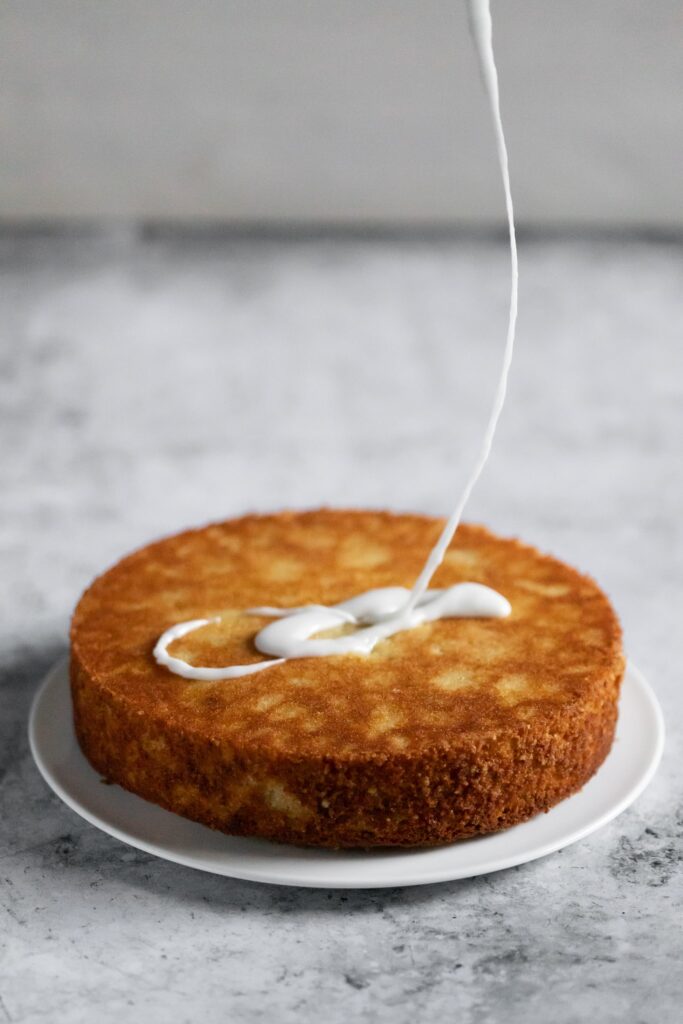
icing being drizzled on a cake
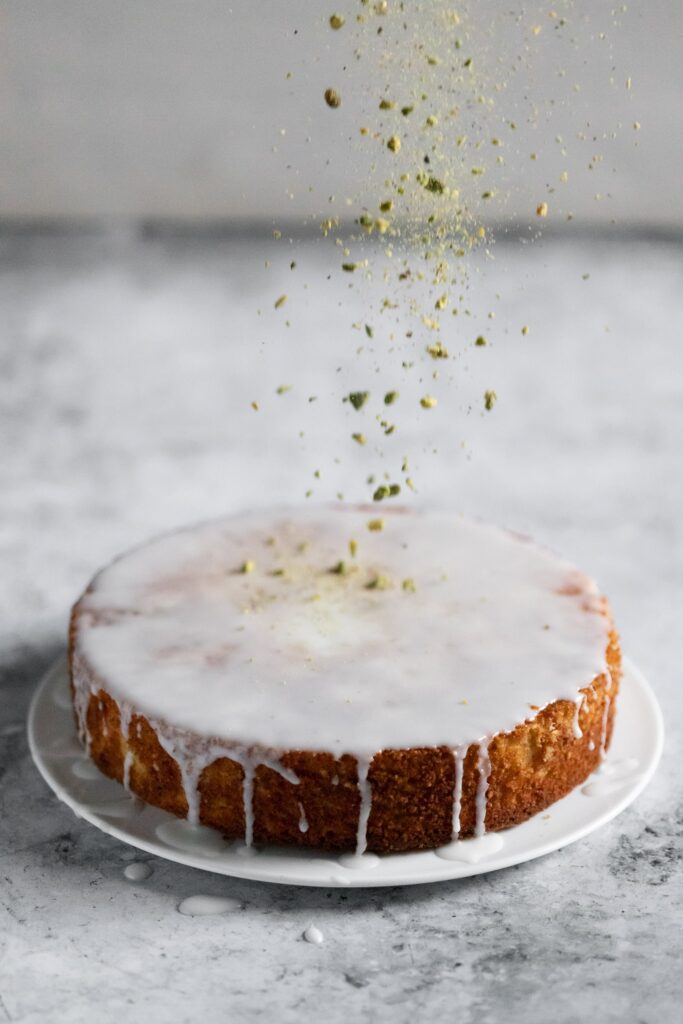
pistachios being sprinkled on an iced cake

More Inspiration

I’ve been in love with Persian love cake ever since trying Yasmin Khan’s recipe. Having grown up with my grandmother’s rich cardamom baklawa (AKA baklava), its particular flavor combination speaks my language. Over the years, I’ve written several recipes inspired by this pastry (e.g. Persian love madeleines and Persian love pop tarts). And now I’m finally sharing the citrus-infused, floral cardamom cake itself!

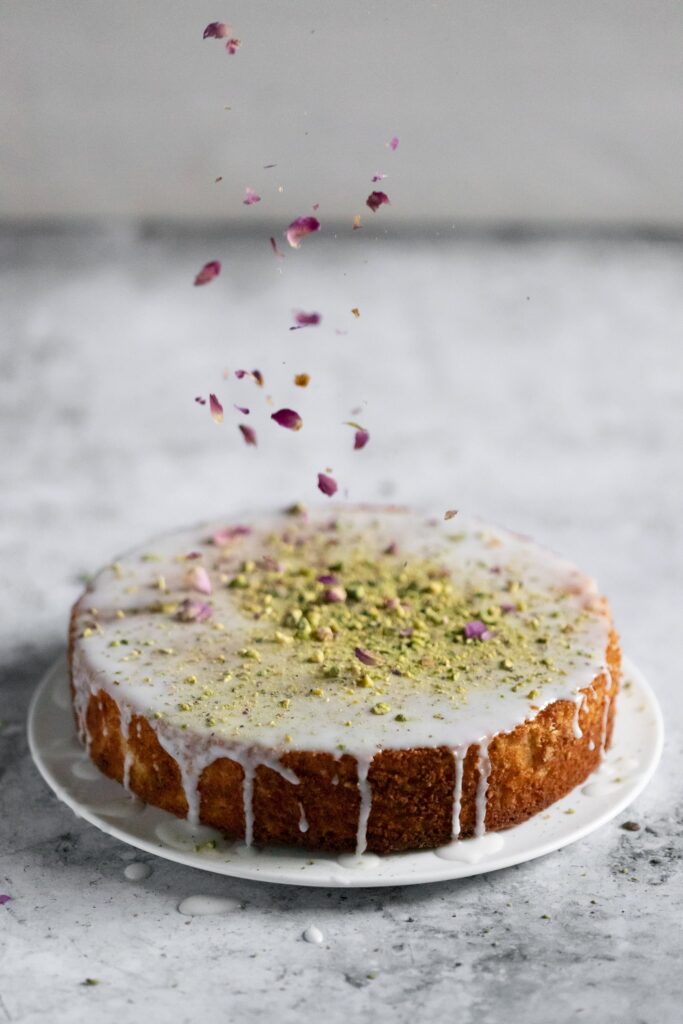
dried rose petals being sprinkled on a cake
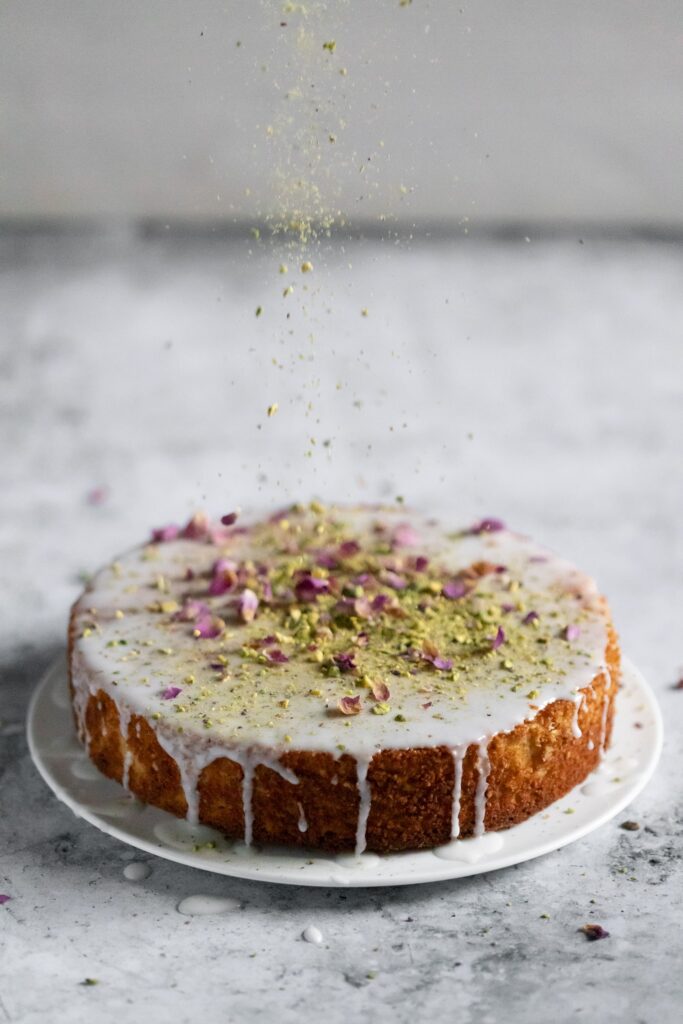
pistachios being sprinkled on an iced cake

cake decorating tips

To get a similar look to the cake in these photos, all you’ve got to do is prep your ingredients carefully, and then assemble them whimsically. Here are 5 tips:

1) buy bright green raw pistachios

Roasted pistachios are the easiest to find, but they’re not so great for decorating things like this Persian love cake. When you want something bright green and stunning, go the extra mile to track down some raw green pistachios. You can find them in all Persian and South Asian markets, most bulk food shops, and online if all else fails.

These pistachios are a little on the pricey side, so you might want to also buy a more reasonable bag of Kirkland salted roasted ones for snacking. Hide your stash of raw green ones in the baking drawer, and don’t forget to add a passive aggressive note to deter roommates/partners/children. These are strictly 100% *for guests*.

2) finely grind your pistachios

Pistachios decorate many Middle Eastern sweets, but they are usually found in a few specific forms. While coarsely chopped pistachios are sometimes used to stuff things like baklawa, those big pistachio chunks are not usually found sprinkled on top. Slivered or ground are more traditional for sprinkling, and for good reason: they’re pretty dang striking!

To finely grind your pistachios, simply place them in a food processor fitted with the blade attachment, and run it until they break down into a coarse meal. Stop way short of turning them into pistachio butter (but if you accidentally do… well, enjoy the pistachio butter!).

There will still be a few larger pieces, which is totally fine. I sometimes give them a shake so that the larger pieces rise to the top of the jar, and then skim those off for salads. Using a hand-held nut mill will get you a more consistent grind, but I’m going to assume you don’t have room in your life for another gadget (yeah, me neither!).

3) buy quality edible dried roses

There are basically two kinds of edible dried rose products you can buy: buds or petals. While whole buds look super pretty, they are only technically edible in whole form, so I separate the petals before decorating with them (as I’ve done in these photos).

Or if you prefer, you can totally buy dried petals instead of dried buds. But bear in mind they’ve got a very different aesthetic. This strawberry rose cake is a great example of one decorated with already-separate petals. As you can see, they’re a bit crinklier and look more like crepe paper. The Persian love cake in this post is an example of one that I decorated after separating a rose bud’s petals.

But whether you buy petals or whole buds, ensure that you find quality brightly-colored ones. They’re purely decorative, so there’s no point in wasting money on drab beige petals. Buy from a reliable source (my favorite is Rose Dose, though others seem to agree because they’re often sold out).

You should expect that already-separate petals will have a tiny bit of yellow/beige, but they should be primarily pink. Whole buds should be completely pink on the outside, with at least 2 layers of pink petals underneath. It’s pretty typical, though, for whole buds to have a dark brown center.

4) separate rose bud leaves carefully

If you’ve got already-separated petals, you’re good to go. But if you’re working with whole buds, make sure you prep them carefully (lest you wind up with rose petal dust instead of whole petals):

Gently squeeze one rosebud from its base, pop off the stem, and discard any green bits. Continue gently squeezing it from the base to loosen the petals and release the black seeds. Let the seeds fall out of the base of the bud, and gently encourage the outer petals to fall away, stopping once you reach the beige/brown core. Feel free to save the brown cores to make tea, or discard them. I love leaving the black seeds in with the petals for some contrast, but you can filter them out if you want a more monochromatic pink look.

5) make sure your icing is the right consistency

Make sure your icing is thick enough to set opaquely, but not so thick that it’s hard to pour. Follow the weight measurements in the recipe below, and you’ll be just fine, or feel free to eyeball it. Add liquid 1/2 teaspoon at a time to thin it out, or add powdered sugar a tablespoon at a time to thicken it.

overhead photo of a cake decorated with white icing, green pistachios, and pink dried rose petals

how to get sharp cake edges:

1) bake your cake in a well-buttered parchment-lined pan for easy removal

This cake is pretty eggy and moist, and it’s semi-naked after decorating, so don’t skip the parchment liner step. This will ensure easy removal and sharp edges. Here’s a tutorial (it’s super easy). When you butter the pan, be sure to really get in the corners.

2) flip your cake upside-down before decorating if you want sharp edges

This recipe bakes up relatively flat, but sometimes it domes very slightly. If your cake domes significantly (more likely if you’re not using grams and accidentally use too much flour), feel free to shave off the top so it lies flat. Either way, you’ll want to flip it over before icing if you’re looking for a sharp and even top. I love the way a messy, drizzly icing looks on top of a cake with super crisp edges.

But it also looks cute with a domed top too, and it’s really a personal preference. If you’re decorating the top of a domed cake, you’ll want to make your icing a bit thicker. Otherwise, it’ll run down the sides too readily before it has a chance to set.

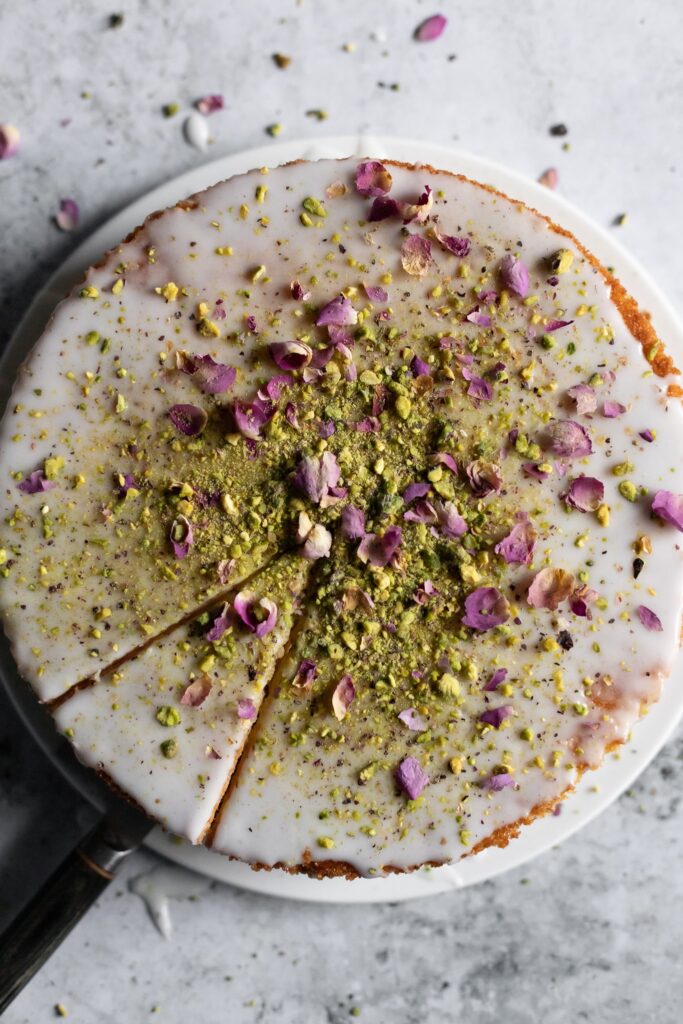
overhead photo of a cake decorated with white icing, green pistachios, and pink dried rose petals (with one slice about to be served)
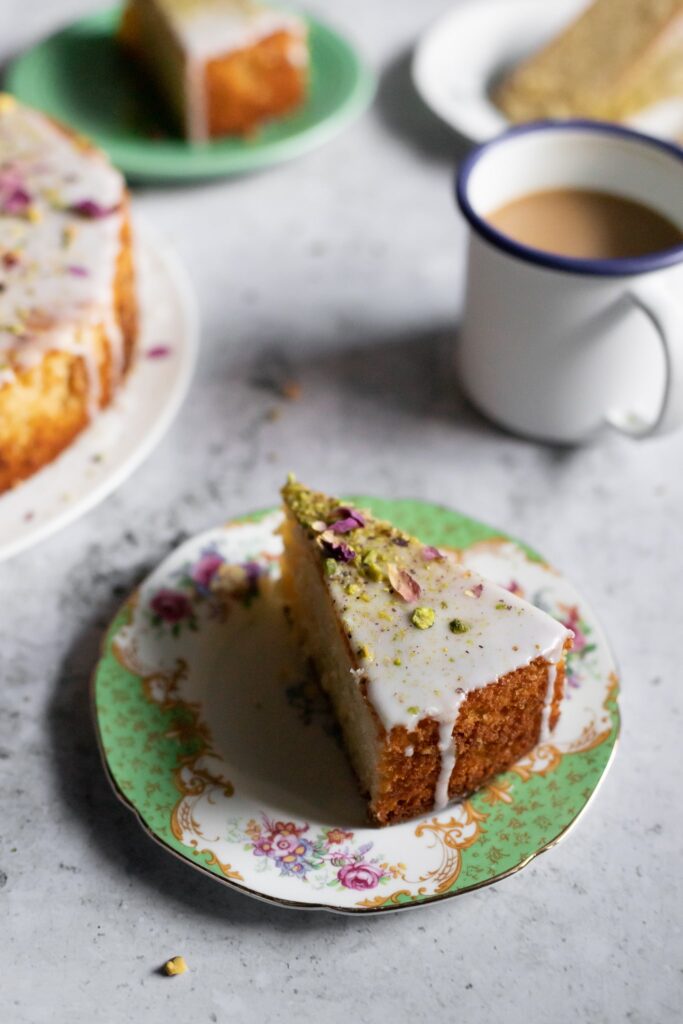
a slice of Persian love cake with coffee and more slices in the background
Print

Persian Love Cake

overhead photo of a cake decorated with white icing, green pistachios, and pink dried rose petals
Print Recipe

5 Stars 4 Stars 3 Stars 2 Stars 1 Star

5 from 11 reviews

  • Prep Time: 15 minutes
  • Total Time: 2 hours 15 minutes
  • Yield: 8 to 12 servings

Ingredients

for the cake:

  • Butter, for greasing the pan
  • 195g (1½ cup) all purpose flour
  • 265g (2⅔ cups) almond flour
  • 9g (2 tsp) baking powder
  • 2.5g (¾ tsp) baking soda
  • 5.5g (1 tsp) salt
  • 115g (1 stick) unsalted butter, softened at room temperature
  • 300g (1½ cups) sugar
  • 2g (1 tsp) lemon or lime zest
  • 1g (½ tsp) cardamom (powder)
  • 200g eggs (4 large), room temperature
  • 240g (1 cup) buttermilk
  • 10 g (2 tsp) rosewater

for the icing and decorations:

  • 110g (1 cup) powdered sugar
  • 7.5g (1½ tsp) rosewater
  • 15g (1 Tbsp) lemon or lime juice
  • Edible dried rose petals (optional)
  • Ground raw pistachios (optional)

Instructions

  1. Preheat your oven to 350°F (180°C).
  2. Butter and line a deep 9 inch (23 cm) cake pan with a parchment round (ideally a springform pan or another pan with very steep sides*).
  3. In a medium mixing bowl, whisk together the flour, almond flour, baking powder, baking soda, and salt. Break up any clumps with your whisk, or sift it if you’re having trouble working out all the lumps. Set aside.
  4. Place the butter, sugar, citrus zest, and cardamom in the bowl of a stand mixer fitted with the paddle attachment (or use a large mixing bowl with hand-beaters). Beat at medium-high speed for about 2 minutes, until fluffier and completely homogenous.
  5. Crack the eggs into a container that has a pour spout. Run the mixer at medium-high speed and add the eggs 1 at a time with the mixer running. Wait for each egg to completely incorporate before adding the next one. Scrape down the bottom and sides of the mixing bowl and beat again to make sure it’s fully incorporated.
  6. Add the buttermilk and rosewater and mix together just to incorporate. Scrape the bottom and sides of the bowl again to make sure it’s mixed evenly.
  7. Add the dry ingredients to the wet ingredients, turn the mixer to low, and let it mix just until smoothly incorporated. Do not overmix. Scrape the bottom of the bowl and give it just one or two folds by hand to make sure it’s evenly incorporated.
  8. Pour into the parchment-lined pan and smooth out the top.
  9. Bake for about 50 minutes, until a toothpick inserted in the center comes out cleanly.
  10. Carefully trace around the edges of the pan with a thin knife. Flip it onto a cooling rack. Let it cool for at least 1 hour before decorating.
  11. While your cake cools, make the icing by whisking together the powdered sugar, rosewater, and citrus juice until completely smooth.
  12. Place your cooled cake bottom-side-up on a plate or cake stand. If your cake domed (usually from not measuring with weight and using too much flour), first shave off the top so it sits levelly, then place it bottom-side-up.
  13. Pour the icing on the top, then smooth it out to the edges using a knife or offset spatula. Sprinkle with pistachios and rose petals before it sets.
  14. Serve immediately, store leftovers at room temperature for a day or two, and store anything you won’t eat in the near future in the freezer ASAP (do not refrigerate or it will stale).

Notes

* Warning! I have used this recipe in both a 9 inch cake pan and steep-sided 8 inch cake pan, and both have worked for me, but I’ve received enough messages and comments from people for whom that did *not* work that I’ve amended the recipe to just say 9 inch pan, and to insist on using a steep-sided 9 inch one. Do not use a shallow 9 inch cake pan for this, but one with steep sides. Again, it has not overflowed on me in the test kitchen, but I just want to be extra cautious. Many commenters recommended using a spring-form pan, which tend to have steeper sides. I also recommend placing a sheet pan underneath the baking cake tin just in case. I’m not sure why overflowing happens to some readers, while not happening to others (such as myself). All to say: please make sure you use a big- and deep-enough pan!

find us on instagram and let us know what you made!

Filed Under: every recipe, sweets Tagged With: almonds, buttermilk, cakes, cardamom, citrus, icing, lemon, middle eastern, persian love cake, pistachio, rosewater

  • « Go to Previous Page
  • Page 1
  • Interim pages omitted …
  • Page 60
  • Page 61
  • Page 62
  • Page 63
  • Page 64
  • Interim pages omitted …
  • Page 183
  • Go to Next Page »

Primary Sidebar

Kathryn Pauline smiling

Welcome! I’m Kathryn Pauline, cookbook author, recipe developer, and photographer.

Footer

read our privacy policy

© 2017 - 2026 Kathryn Pauline