• Skip to primary navigation
  • Skip to main content
  • Skip to primary sidebar
  • Skip to footer
Cardamom and Tea
  • Blog
  • Recipes
  • About
  • Cookbooks
    • Piecemeal
    • A Dish for All Seasons (my first cookbook)

snickerdoodle blondies + how to create a dessert mashup

April 14, 2021 by Kathryn Pauline 2 Comments

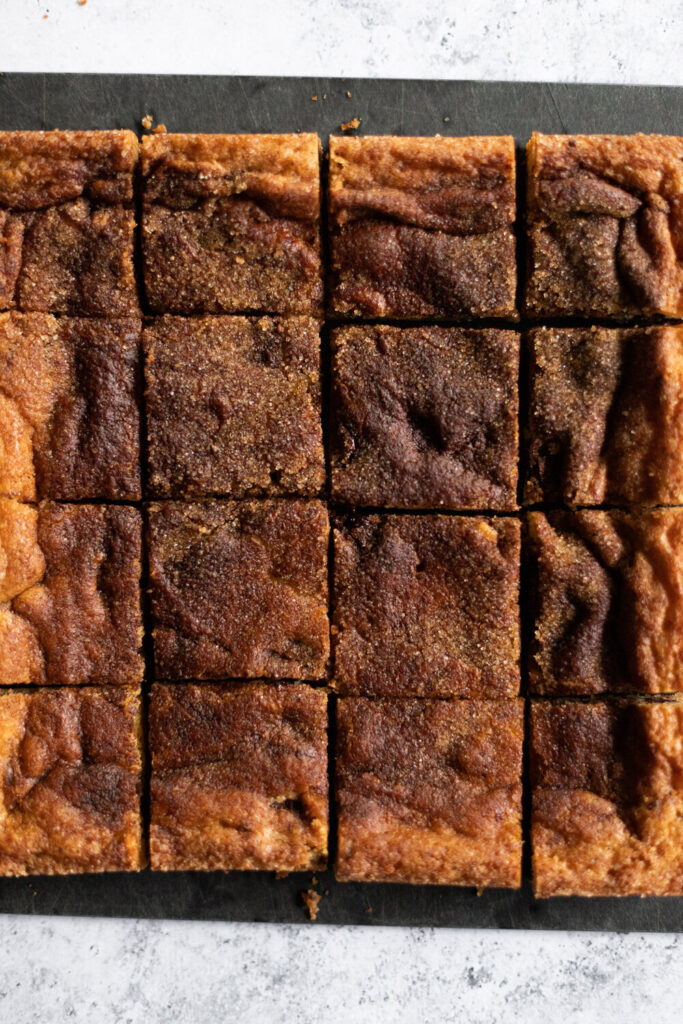
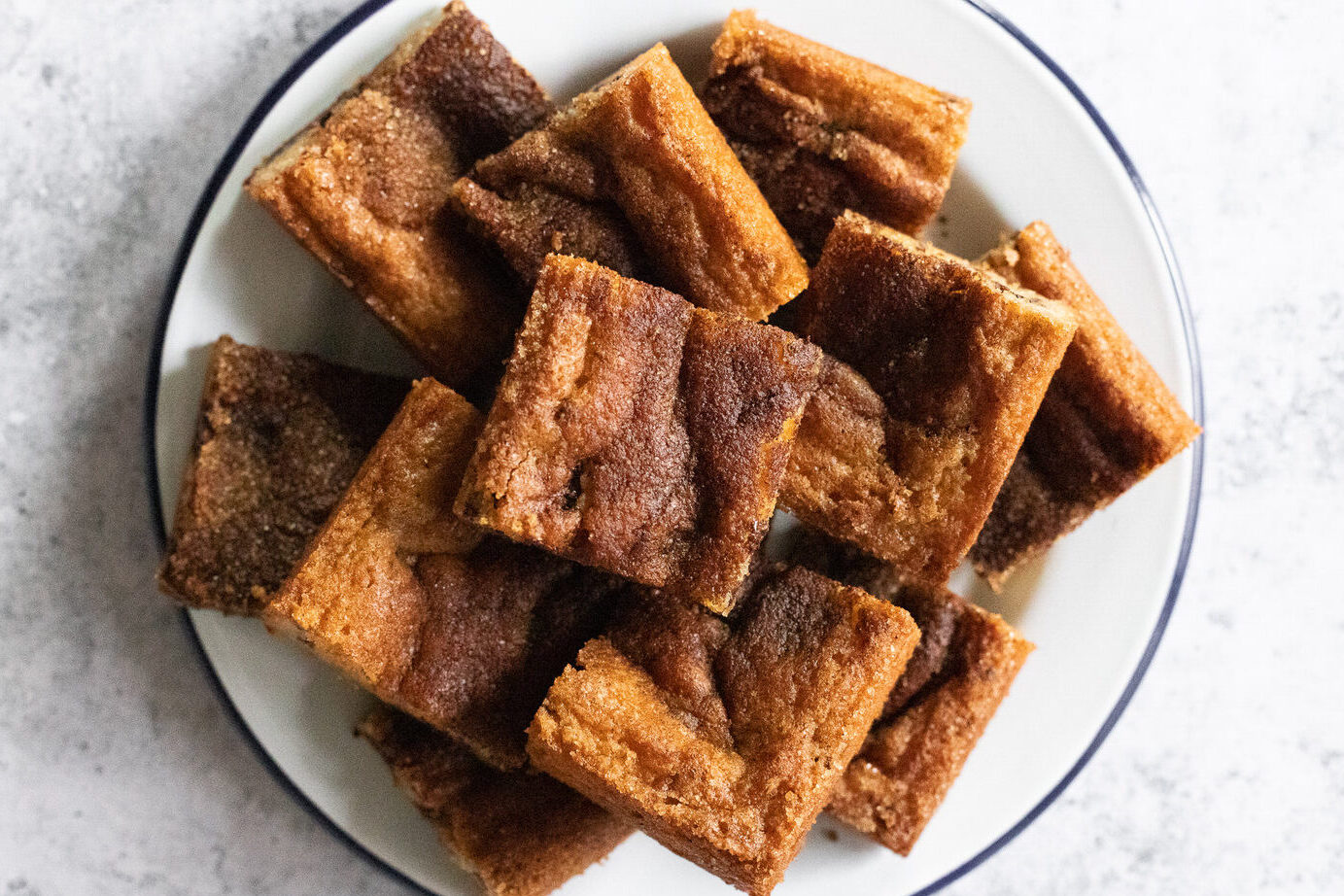
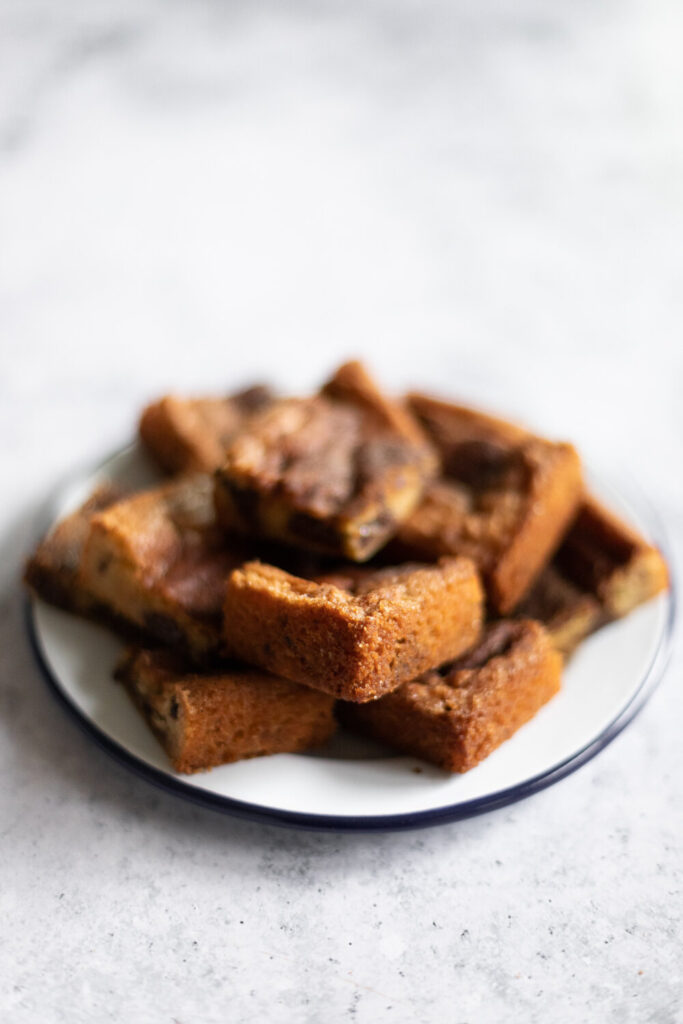
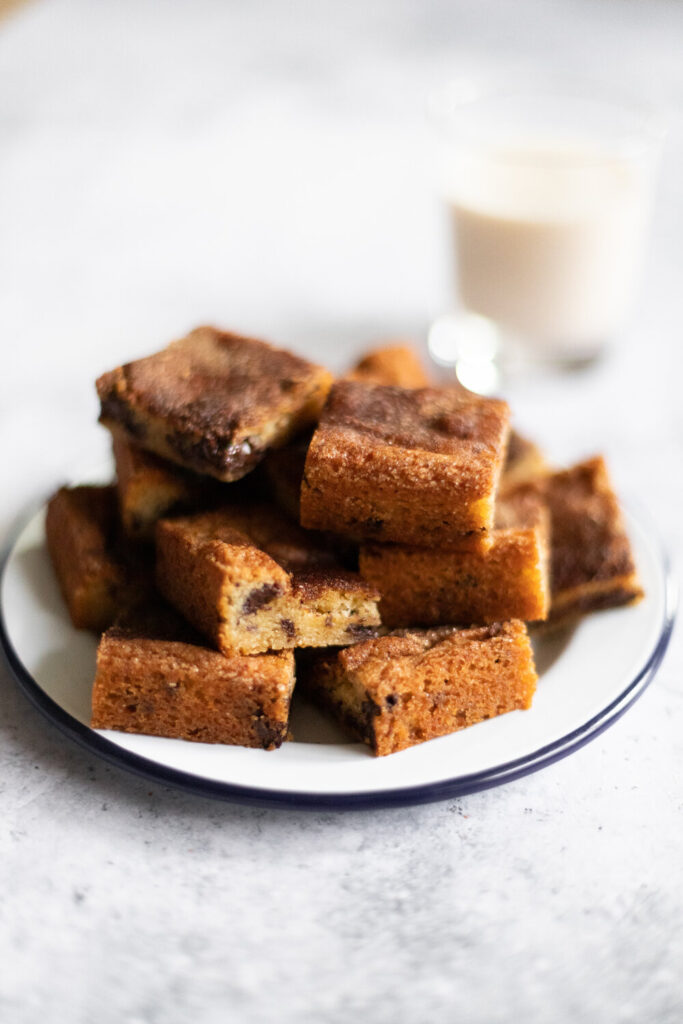
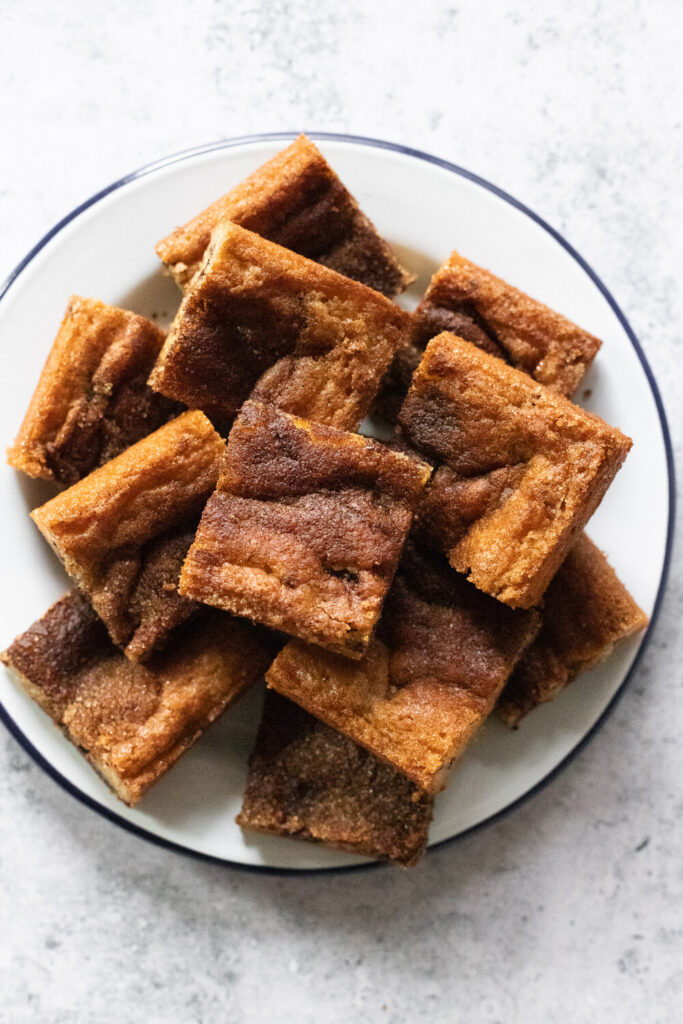
blondies topped with cinnamon sugar and placed on a plate

For my husband Simon’s birthday (this week! 🥳), he requested that we come up with a recipe idea together, and that I develop it and test it to make his vision a reality. Since Simon’s been enjoying all the snickerdoodles I’ve been making, he went with snickerdoodle/blondies hybrid. And after discussing how to make these snickerdoodle blondies work, I decided to write up a few thoughts on baking mashups in general.
So if you’re interested in making your own mashup, feel free to read through. You might even want to read on to decide whether to spend three hours waiting in line to try the latest craze. Really good mashups take two beloved desserts to create something new and exciting. Not-so-good mashups risk losing the two things we loved in the first place.

Or if you’re just here for the snickerdoodle blondies, feel free to jump to the end of this post for the recipe. Either way, you don’t want to miss this one.
how to create a dessert mashup

The kind of dessert mashup I’m talking about is not the kind where you layer two desserts together. (E.g., brookies, donut ice cream sandwiches, etc.—delicious, but not the subject here). I’m talking about the kind of mashup where you take features of one thing and combine it with features of another. This kind of dessert mashup creates a whole new thing.

The cronut, for instance, takes some of the best features of both croissants and donuts, and marries them together. Certain other hybrids are more like Frankenstein’s monsters, losing what we loved about each dessert in the first place, and replacing each one with new slightly worse qualities, just for the sake of merging the two.

For instance, I don’t love big loaves of pretzel bread. More than anything, I love pretzel rolls’ vast surface area of dark brown crust. You lose out on so much of that when you boil and bake the dough into a giant loaf. We’re all going to disagree a bit about our favorite features of various baked goods. Perhaps you always wished that pretzels had just a little less brown crust, because you don’t like bitter flavors.

But when coming up with your own dessert mashup, it’s important to spend a few minutes coming up with something that keeps all your favorite features of your favorite things. This post shows you how to come up with an idea, but I won’t get into recipe developing here. Check out this post if you want a little primer.

Ok, let’s go!
The first step: choose two desserts that you think might merge well, and draw a venn diagram.

Choose two desserts that are not too similar but also not too different. Make sure you choose two things that you completely understand (both culturally and technically. If you don’t fully understand one of the things, research it until you do, or try another dessert that you’ve got a better handle on.

List out features like important ingredients, ingredient ratios, qualities, and/or techniques. Draw a venn diagram to help you think through whether these two desserts actually go well together, or if they’re incompatible and best left on their own.

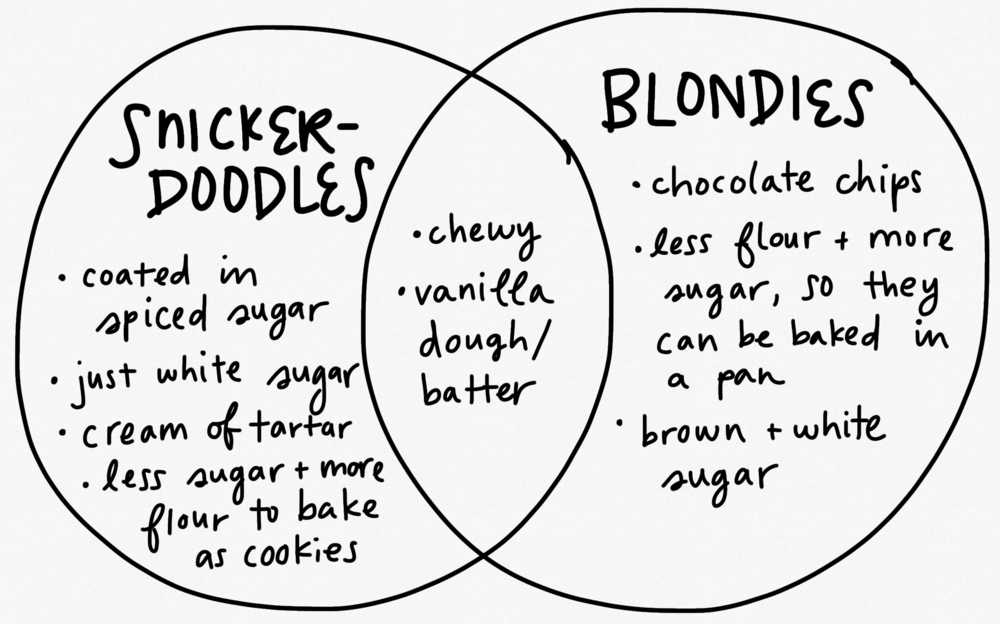
Here’s my venn diagram of snickerdoodles and blondies:
Once you’ve got your venn diagram, ask yourself some questions about it. These questions will help make sure you don’t lose the thread, to keep the best of both worlds:

1) Which of the features of each dessert are essential, and which features are you willing to let go of?

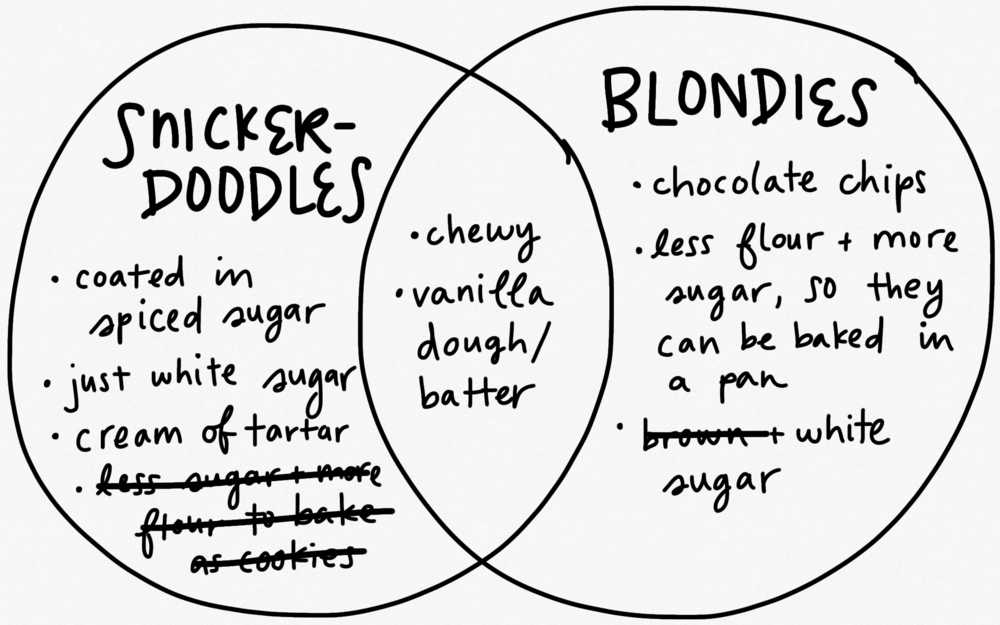
In this case, snickerdoodles absolutely must be made with white sugar and cream of tartar, and they need to be coated in some sort of spiced sugar. But I’m open to the idea of changing the least important of the 4 features of snickerdoodles: their shape. E.g., a snickerdoodle without its spiced sugar coating is just a sugar cookie. A snickerdoodle with cinnamon sugar mixed into the batter is just a cinnamon sugar cookie. But a snickerdoodle that’s been baked into one giant cookie and coated in cinnamon sugar is still a snickerdoodle, even though it happens to be a giant one.

The essential features of blondies: They must be baked in a pan, and they must have some chocolate chips or chunks mixed in. Unlike snickerdoodles, their shape makes them what they are. E.g., if you add a little extra flour and roll them into balls, they become plain old chocolate chip cookies. The brown sugar, on the other hand, is a much less important component. Blondies are still blondies if they’re missing the brown sugar.

So let’s go ahead and cross off the less essential features:
2) Are any of the remaining essential features incompatible?

To decide if this plan will work, we need to decide if any of the remaining things are incompatible.

For instance, if we had instead decided that blondies must be made from brown sugar, and that snickerdoodles can only be made with white sugar, then these two desserts would not be good candidates for a mashup. But luckily, we’ve decided that we don’t absolutely need brown sugar to make blondies, so it’s looking good. Likewise, we’ve decided that the shape of snickerdoodles isn’t super important, but if we had instead decided that the shape of snickerdoodles and the shape of blondies were both equally important, then (again), this wouldn’t be a good candidate for a mashup.

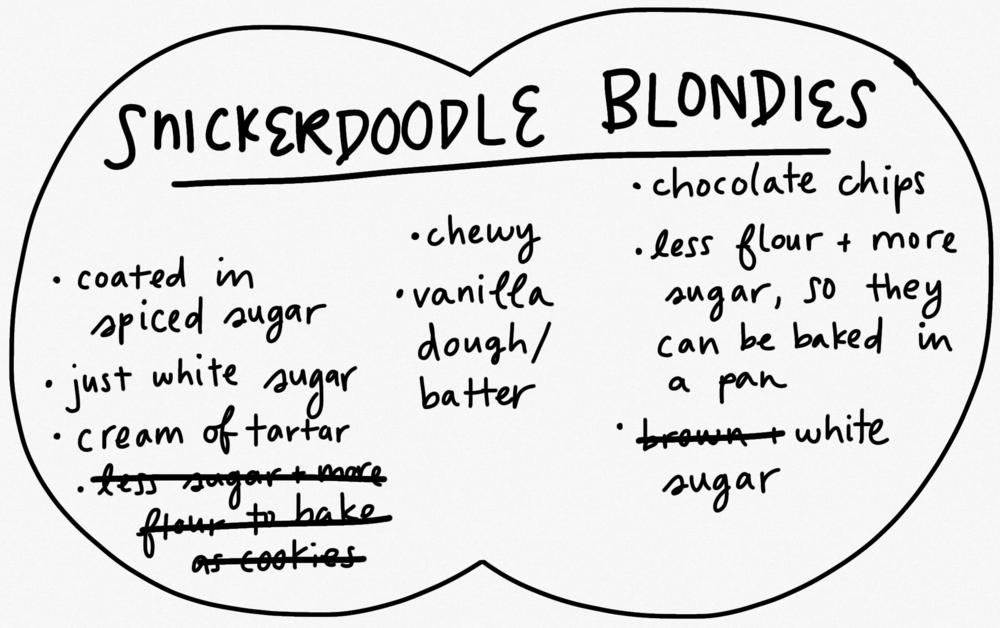
Luckily we’re in the clear. We have full compatibility between left and right. Everything on the left is totally compatible with everything on the right. We’re keeping the snickerdoodle cinnamon sugar coating, getting rid of the brown sugar, keeping the white sugar, keeping the cream of tartar, adding some chocolate chips, and going with a chewy vanilla batter that can be poured into a pan and sliced into bars.

But doable plans aren’t always good plans:

3) Did we create any new problems? How can we solve them?

For instance, one of the best things about snickerdoodles is their crackly cinnamon sugar crust. If we instead sprinkle a pan of blondies with cinnamon sugar, we risk losing all that surface area and might not get a satisfying amount of coverage.

And what about the brown sugar that we’re leaving out of the blondies? While not 100% essential, will we miss it? Or are we adding another similar flavor or texture to compensate?

Finally, we’ve got the problem of a moderately sweet cookie that’s also going to be stuffed with chocolate chips, which might just push them over the edge to cloying territory.

To solve the surface area problem, I developed a recipe for relatively thin blondies, rather than super deep-dish ones. That way, we’ll get a ton of crackly cinnamon crust with each slice.

After thinking a bit more about the issue of the brown sugar missing, I decided that we’ve compensated with the addition of cinnamon sugar. Brown sugar and cinnamon both add a nice warm note. But to make sure we don’t lose any of the chewy/gooey texture that brown sugar would’ve provided, I made sure the recipe didn’t have too much flour.

And to solve the too-sweet problem, I went with dark chocolate instead of milk/semisweet chocolate. While milk or semisweet goes great in a blondie, dark chocolate goes much better with a sweeter snickerdoodle batter.

4) Finally, is this new dessert mashup still recognizable as both things?

Sometimes when we create a mashup, we lose sight of one of the two base desserts by the end of the process. Are both still identifiable? Can you see the snickerdoodle and the blondie? Or just one or the other? Can we really still call these “snickerdoodle blondies”?

If you’re trying to combine two things that are just way too similar, like trying to combine a brownie with devil’s food cake, you’re going to have trouble finding enough friction and difference to have both things represented meaningfully in the final product.

On the other hand, if you’re trying to combine two things that are way too different, you might have trouble finding enough common ground to bring them together, and one of them might get a bit lost. Like, if you took baklava and tried to cross it with rice pudding, you’re probably just going to end up with a spiced rice pudding or a really mushy baklava (or you’re going to go the “brookie” route, sprinkling some baklava on your rice pudding, which is delicious, but isn’t really the kind of mashup we’re talking about here). It’s going to be hard to see both desserts represented in a mashup of such disparate things.

But in this case, we’ve still got iconic features of both, and neither takes anything away from the other, so we are all good to go. At last, snickerdoodle blondies!
A few last thoughts: Do you really need to go through this whole process? I mean, we’re talking about fun dessert mashups here. This is obviously not an emergency. But going through this process will go a long way in making a mashup that feels like it’s truly both things at once. Instead of just dusting your classic blondies with a cinnamon sugar topping, or baking snickerdoodle batter in a pan and slicing into bars, you’ll make something that’s greater (or at least fun and different from) the sum of its parts. Merging two desserts while keeping recognizable features of both is a challenge. But it’s also fun and worth trying out!
Print

snickerdoodle blondies

blondies topped with cinnamon sugar and placed on a plate
Print Recipe

5 Stars 4 Stars 3 Stars 2 Stars 1 Star

No reviews

  • Prep Time: 15 minutes
  • Total Time: 2 hours

Ingredients

For the batter:

  • Butter, for greasing the pan
  • 1 cup all purpose flour (130g)
  • 1 teaspoon cream of tartar (5g)
  • ¼ teaspoon baking soda (1g)
  • 1 stick butter (115g), melted and cooled*
  • 1 cup granulated sugar (200g)
  • 1 large egg (50g), straight from the refrigerator
  • 1 teaspoon vanilla extract (5g)
  • ½ teaspoon salt (3g)
  • ⅔ cup dark chocolate chunks (100)

For the topping:

  • 1 tablespoons sugar (12g)
  • 1½ teaspoons cinnamon (3g)

Instructions

  1. Preheat the oven to 350°F (180°C). Cut a parchment square the size of the bottom of a 8 inch (20 cm) square baking pan. Grease the pan with butter on the bottom and sides. Press the parchment onto the bottom of the pan, flip the parchment over so it’s greased on both sides, and again press onto the bottom of the pan so it makes very good contact with it.
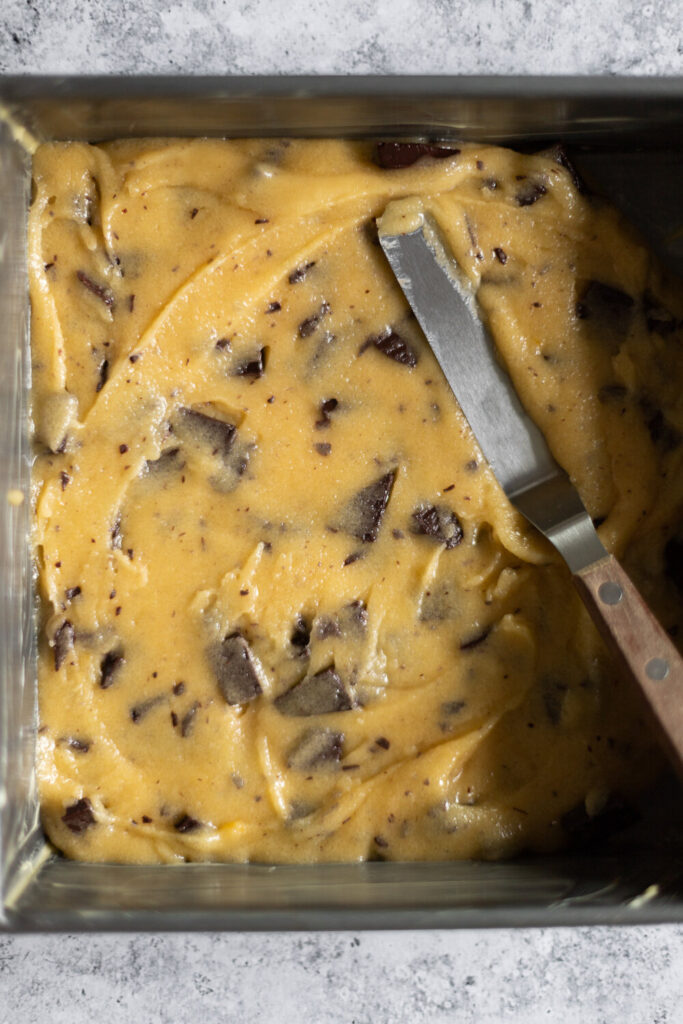
  2. In a large mixing bowl, whisk together the flour, cream of tartar, and baking soda. In a separate medium mixing bowl, whisk together the butter, sugar, egg, vanilla, and salt until completely incorporated. Add the wet ingredients to the dry ingredients and stir together just until there are a few visibly dry pockets remaining. Add the chocolate chips and stir together until they’re evenly distributed and there are no streaks of flour (but do not overmix).
  3. Pour the batter into the parchment-lined greased pan. Smooth out the top.
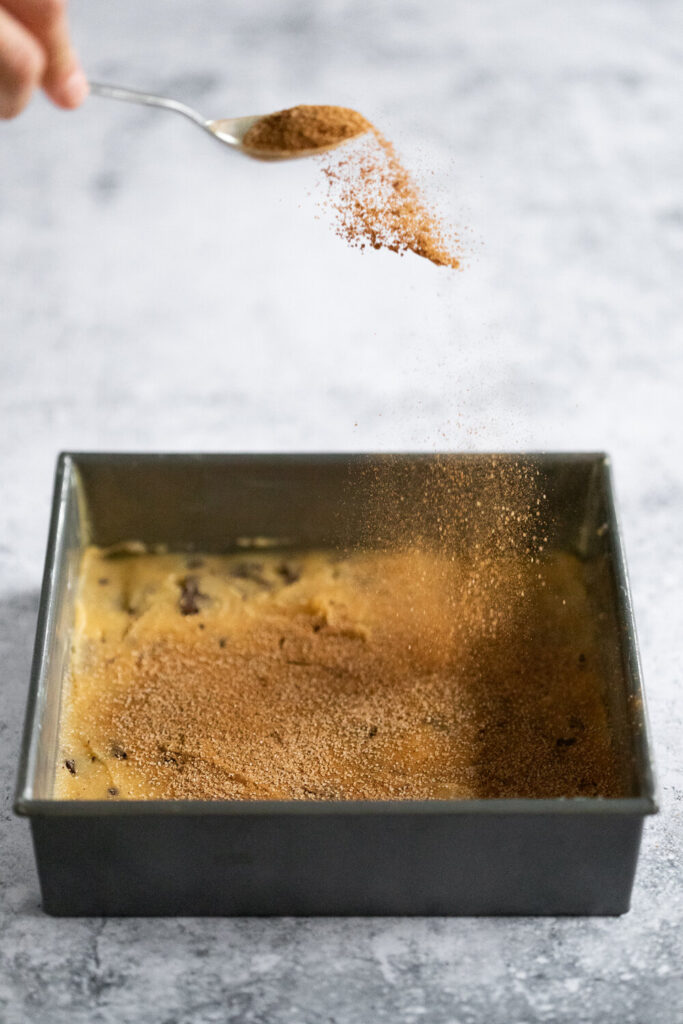
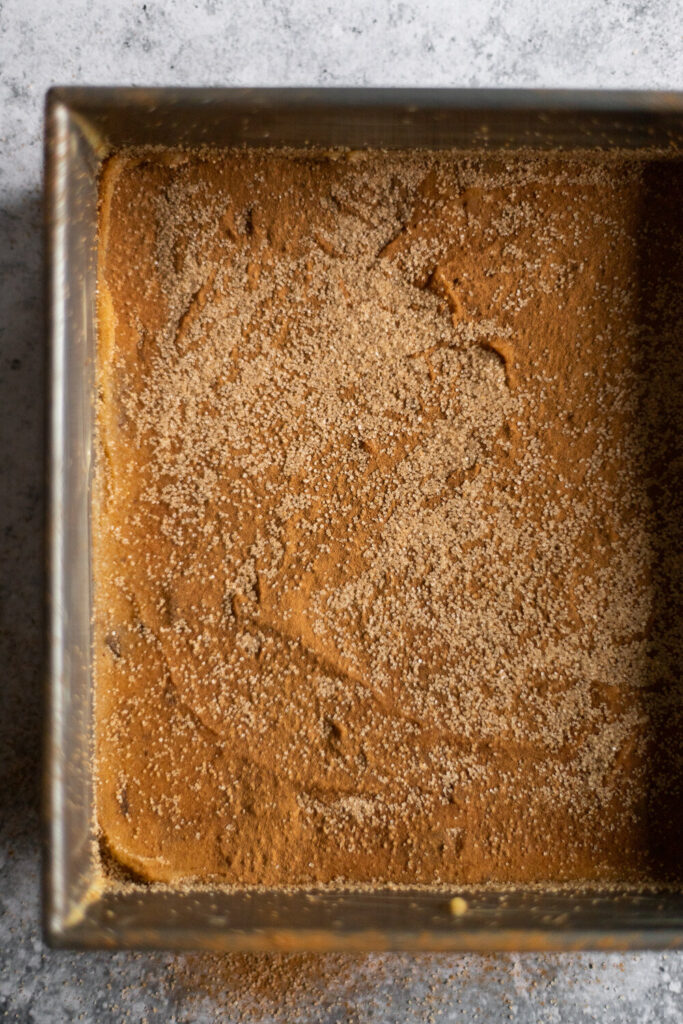
  4. Mix together the sugar and cinnamon, and sprinkle it very evenly over the top of the batter. Gently tip and tap the pan to shake it around if it’s too clumpy in spots.
  5. Bake for about 25 minutes, until a toothpick inserted in the center comes out clean and meets with some slight resistance. Cool in the pan for 15 minutes, then trace around the edge with a knife, and remove by carefully inverting and then inverting again. Let cool at least 15 more minutes before slicing (let it cool completely, at least 1 hour, for cleanly sliced pieces).

Notes

* Make absolutely sure your melted butter is no longer warm, otherwise your chocolate chips will melt. Using an egg straight from the refrigerator (rather than at room temperature) helps make sure the wet ingredients aren’t too warm.
find us on instagram and let us know what you made!

Filed Under: every recipe, recipe writing, sweets Tagged With: bars, chocolate, cinnamon, cookies and bars, snickerdoodles, vanilla

chai snickerdoodles + spice variations

March 15, 2021 by Kathryn Pauline 4 Comments

Even if you’re here visiting my blog for the very first time (hi!), even if you know nothing else about me, you’ve at the very least probably inferred that I seem to like the combination of cardamom and tea. And you’d be right! (You can read more about why here). Indeed, these spiced chai snickerdoodles get their flavor from cardamom and black tea powder.

A little cardamom goes a very long way, so be careful not to overdo it, lest your cookies go from fragrant to perfumey. I’ve included a lot less cardamom here than the amount of cinnamon you’d use in a classic snickerdoodle. But the black tea powder swoops in to give them that classic snickerdoodle patina. It also lends a nice bitter note—a welcome addition to a typically *sweet sweet sweet!* cookie.

The base snickerdoodle recipe here yields a chewy-crisp cookie. If you’ve always wanted to customize a baking recipe, but find the idea intimidating, snickerdoodles are a great starting point. You can add pretty much whatever spices you’d like to the sugar coating, and you can taste it as you go. Spices and powdered tea won’t affect the chemistry of the recipe, and it’s really all about flavor customization.

So feel free to experiment! This recipe’s dough includes some ground-up black tea, which you can leave in or omit. It won’t affect the texture of the dough one bit.

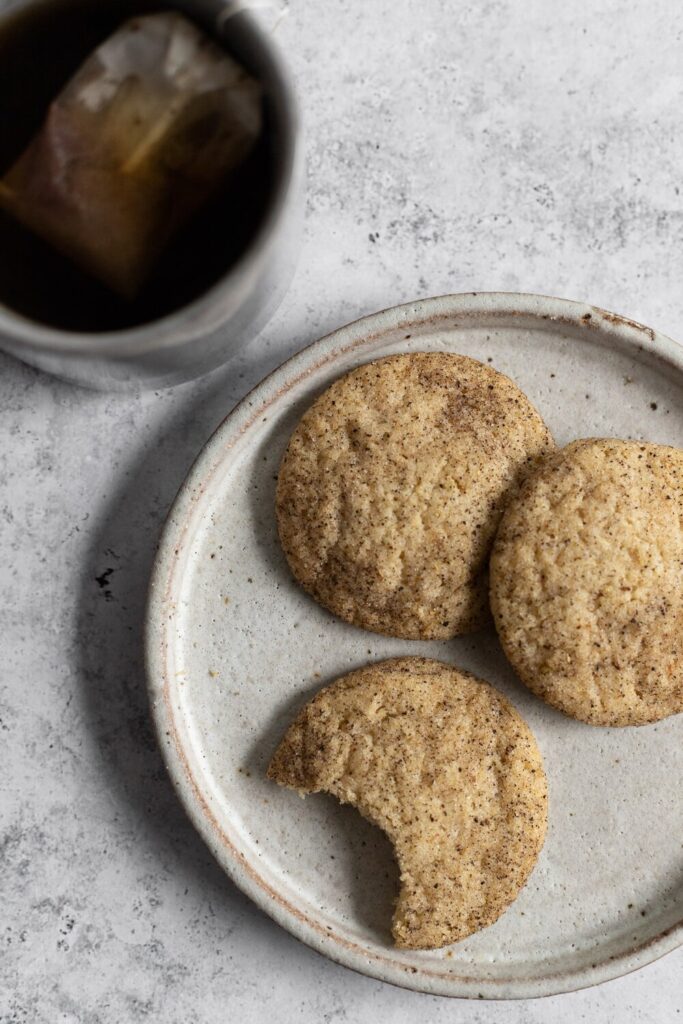
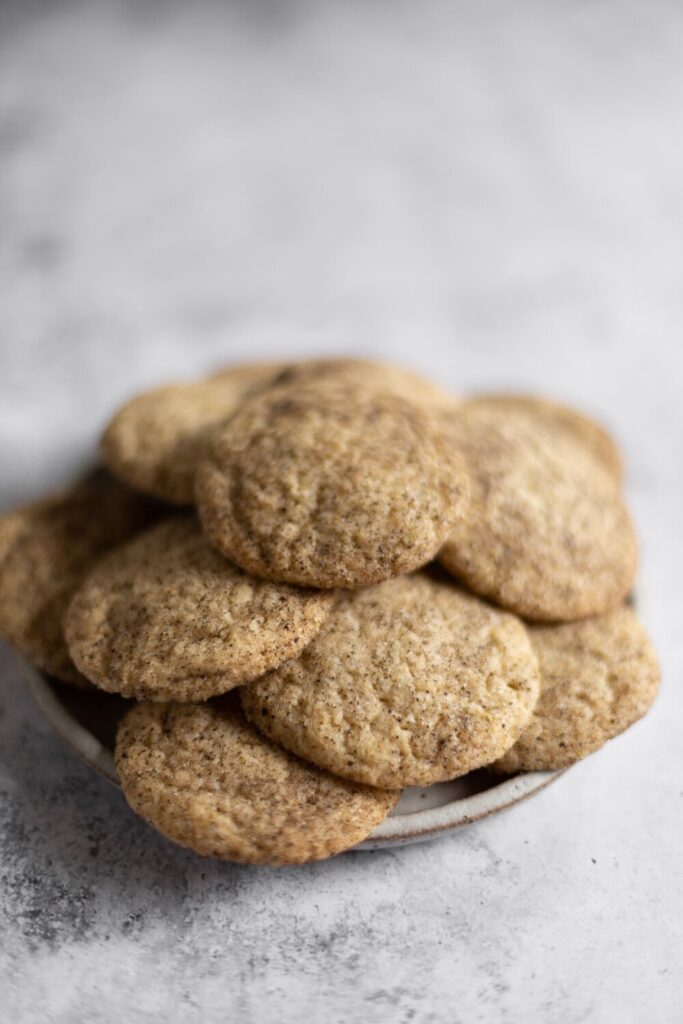
chai snickerdoodles with a cup of chai

snickerdoodle variations

  • anise cinnamon: Omit the black tea in the cookies and sugar coating. Replace the cardamom with 2 tablespoons of cinnamon and a small amount of ground anise seed. Add the anise seed about 1/4 teaspoon at a time, and taste the sugar mixture as you go. My preference for anise is never to add so much that it makes something taste like licorice. Instead, it should add an element that feels like an emotionally moving single note held on the violin. Or if you’re not a metaphor person, just taste as you go, and stop once you’re happy with it.
  • masala chai: Leave the black tea in both the dough and sugar coating. Replace the cardamom with your favorite warming spices. Spice blends that work well with tea are perfect. Try this recipe from the chai box, featuring cardamom, cloves, cinnamon, and fennel. Add about 1 to 2 teaspoons of ground spices at a time, and taste as you go. Use more sparingly than cinnamon, but more generously than straight-up cardamom—you’ll want to use different blends in different amounts.
  • coriander cinnamon: Omit the black tea in the cookies and sugar coating. Replace the cardamom with 2 tablespoons of cinnamon and 2 teaspoons of ground coriander. My friend Rebecca says that coriander smells to her like Cap’n Crunch, which might be why I love using it in small amounts in sweets. If you add too much, it’ll taste perfumey. But if you add just a little, people will just be that little “ooh, these are so good! but what is that background note that reminds me of Saturday mornings??”
  • plain old cinnamon: Omit the black tea in the cookies and sugar coating. Replace the cardamom with 2 tablespoons of cinnamon. It’s a classic for a reason!
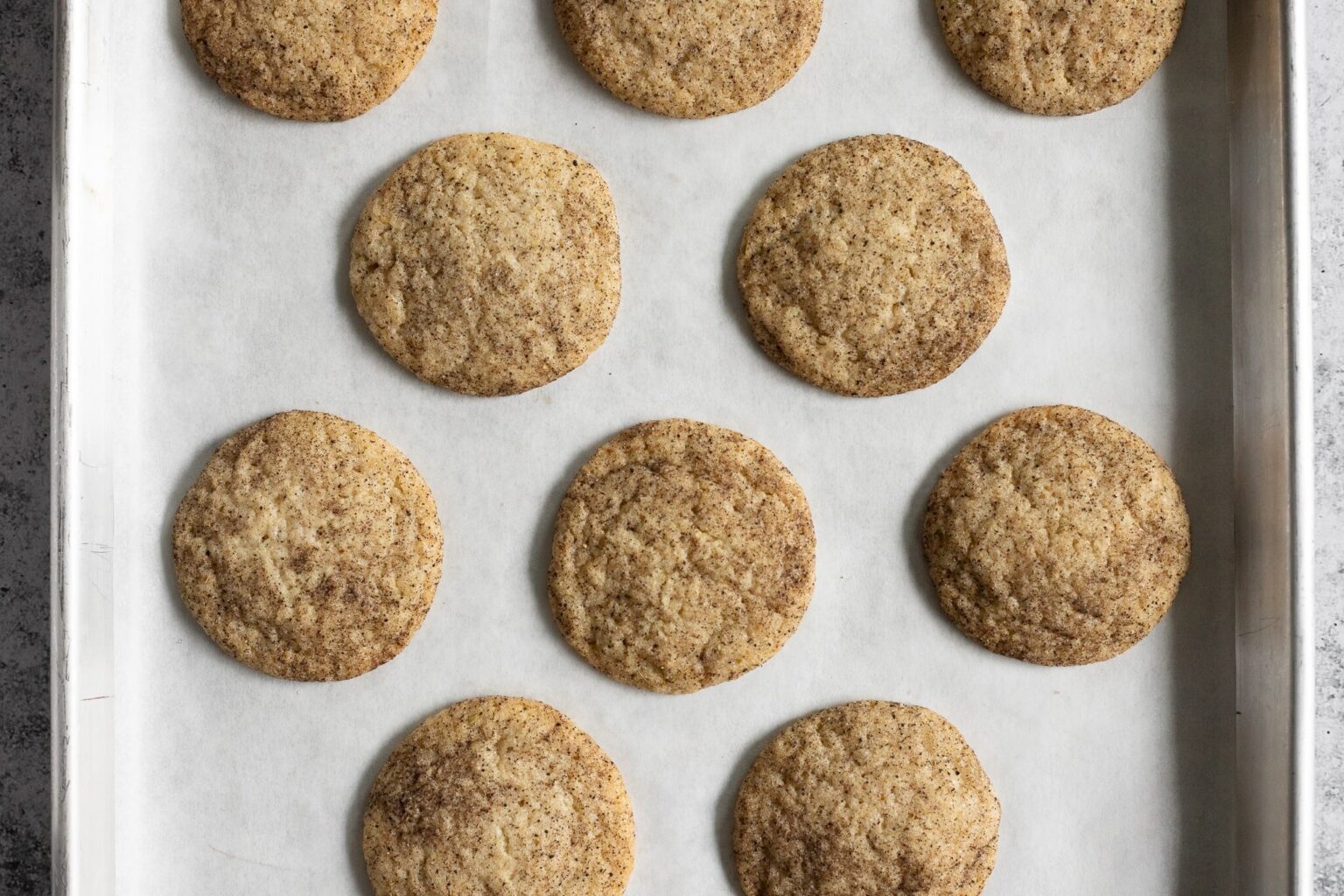
chai snickerdoodles on a sheet pan

a quick PSA about the phrase “chai spiced” and “chai tea”

Whenever someone says “chai spiced” or “chai tea,” I always think of Inigo Montoya:
“You keep using that word. I do not think it means what you think it means.”

1) Chai simply means “tea,” and tea cannot be used to “spice” something (especially itself 🥴):

In Assyrian, Arabic, Hindi, and many other languages, “chai” just means tea, with or without spices. Calling something “chai” does not necessarily mean it will have spices in it, since it’s just the word for tea. And since you can’t really “spice” something with tea, “chai spiced” just doesn’t make sense when you know what the words actually mean. It’s like calling rice pilaf “chicken-spiced rice.” Or calling French onion soup “onion-spiced soup.” These things are not spices. They can be spiced, but they can’t do the spicing.

And it probably also goes without saying that “chai tea” makes even less sense, and literally just means “tea tea.” It’s like saying “When I was in Italy, I had so much caffè coffee” or “I love Spanish pan bread.” On the other hand, you could of course say “When I was in Italy, I had so much caffè latte” or “I love Spanish pan de barra,” just like you could say “I love masala chai” or “I love spiced chai,” because those additional words are actually specifying the kind of coffee/bread/tea you like. “I like coffee with milk,” “I like Spanish baguettes,” and “I like spiced tea.”

2) Furthermore, chai doesn’t necessarily include spices:

While chai literally means tea, it doesn’t necessarily mean “spiced tea.” Some folks add spices to it and some folks do not. For example, if you ask my grandmother for a cup of chai, she will most likely bring you a cup of plain black tea, maybe with some cardamom if she is using her favorite Persian blend. On the other hand, South Asian masala chai is tea (“chai”) with spices (“masala”), and can include a variety of different flavors (see my friend Izzah’s recipe for kashmiri chai and this super aromatic chai with lemongrass and ginger from Goya Journal).

Whether there are spices (and which spices are used, and even which kind of tea is used) entirely depends on who is making it, but one thing holds constant: “chai” simply means “tea,” and does not mean “spices.” Chai is black tea, it’s green tea, it’s spiced tea, it’s plain tea. It’s literally just a generic term for tea. So if you’re going to call something “chai” flavored, it should really have some actual tea in it.

How to coherently name things inspired by all things related to chai:

  • If you flavor snickerdoodles with the kinds of spices you might find alongside tea, but with no actual tea, you do not end up with “chai spiced snickerdoodles”… you’ve just got “spiced snickerdoodles,” which happen to contain 0 chai.
  • If you flavor your snickerdoodles with tea and spices, you’ve got something like “spiced chai snickerdoodles” or maybe “masala chai snickerdoodles” if they were inspired by a South Asian blend. Or simply “chai snickerdoodles” works great, as with this recipe (since chai may or may not contain spices).
  • And if you flavor them with just tea and no spices, you could totally call them “chai snickerdoodles” or “tea snickerdoodles,” since the word “chai” does not mean spices, and is simply synonymous with “tea.” Will most people be like “where are all the spices?” after you call them “chai snickerdoodles” without including any spices? 100%! If you’re an insufferable know-it-all like me, just correct them. I’m told most people love being corrected, right?
  • “Chai spiced snickerdoodles” doesn’t work for any of these, since you can’t spice something with tea. But having it in the title sure does help with SEO if you’re a food blogger, and leads to fewer conversations about language and culture. So I get it.

So to recap: chai = tea, chai ≠ spices, and “chai-spiced” and “chai tea” are both really awkward phrases when you know what the words mean. No shade if you’ve used these phrases without really thinking about it, but I think it’s always nice to know what the words we use mean.

The more you know! ✨🌈

Print

chai snickerdoodles

chai snickerdoodles with a cup of chai
Print Recipe

5 Stars 4 Stars 3 Stars 2 Stars 1 Star

5 from 1 review

  • Prep Time: 20 minutes
  • Cook Time: 12 minutes
  • Total Time: 60 minutes
  • Yield: 4 dozen cookies

Ingredients

for the cookie dough:

  • 345g flour (2⅔ cups)
  • 7g cream of tartar (1½ teaspoons)
  • 3g baking soda (½ teaspoon)
  • 227g unsalted butter (2 sticks), at room temperature
  • 300g granulated sugar (1½ cups)
  • 4g finely ground* black tea (from 2 bags)
  • 6g salt (1 teaspoon)
  • 100g eggs (2 large), at room temperature
  • 10g vanilla extract (2 teaspoons)

for rolling:

  • 60g granulated sugar (¼ cup)
  • 5g ground cardamom (2 teaspoons)
  • 8g finely ground black tea (from 4 bags)

Instructions

  1. Sift together the flour, cream of tartar, and baking soda in a mixing bowl. Set aside.
  2. Place the butter, sugar, black tea, and salt in the bowl of a stand mixer fitted with the paddle attachment (or a large mixing bowl to use with hand-held beaters). Mix on medium-high speed for about 2 minutes, until it becomes noticeably lighter and fluffier.
  3. Add the eggs one at a time with the mixer running on medium, pausing to scrape down the sides between each one. Add the vanilla. Once it smooths out, stop the mixer.
  4. Scrape down the sides again, add the flour mixture, and mix on low speed, stopping once it comes together and there are no dry patches. Scrape the sides and bottom of the bowl and give it a couple folds to make sure it’s homogenous. Let it rest** in the fridge for 30 minutes, up to 48 hours.
  5. Preheat the oven to 350°F [180°C] while your dough chills, and line a few sheet pans with parchment.
  6. Mix together the sugar, cardamom, and black tea in a small mixing bowl.
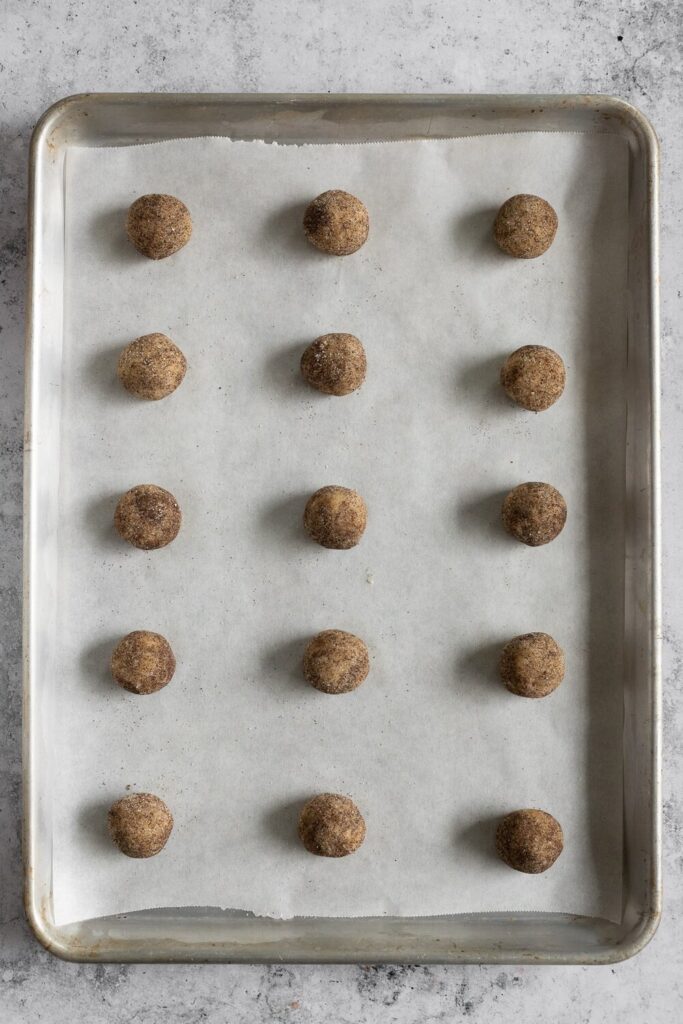
  7. Scoop a 20g blob of cookie dough (1 heaping tablespoon), roll it around generously in the spiced sugar, roll it between your hands to make sure it adheres, roll it around in the sugar again, and roll it between your hands again.*** Move to the parchment-lined pan, and repeat with the remaining cookie dough. Leave 3 inches [7.5cm] gaps between them.
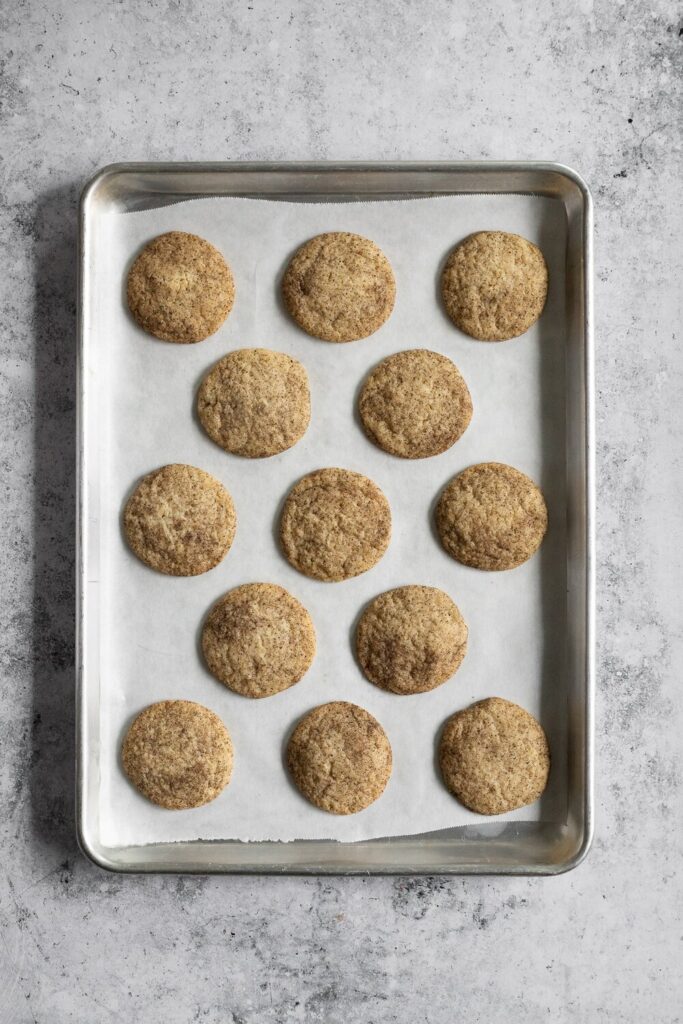
  8. Bake for about 12 minutes****, and slide the parchment out of the pans so they can cool on the parchment right on the counter.

Notes

* Use a coffee grinder or mortar and pestle to grind the tea. Feel free to use decaffeinated tea.

** If you’re in a rush, you can get away with skipping the rest, since chilling is not the primary goal of resting the dough here (they will still bake perfectly well without chilling). That being said, pretty much all cookie doughs benefit from resting. A refrigerated siesta allows the sugar and flour to hydrate, and results in very lovely (i.e., less grainy) texture. Thirty minutes is kind of a bare minimum, but if you’ve got time, feel free to let them rest even longer. Or if you absolutely must have at least a few snickerdoodles right away, try chilling at least half the dough to bake the next day, and see if you notice a difference.

*** At this point, you can place them on a parchment lined sheet pan (with just a tiny bit of room between each one), freeze the sheet pan, and then throw the frozen dough balls into a plastic bag in the freezer for longer term storage (if you’d like). You can bake right from frozen—just give them an extra minute or two.

**** Keep an eye on them. Twelve minutes in my calibrated oven works perfectly for cookies that are chewy in the center and crisp around the edges, but yours might differ. If you like crunchier cookies, go for another minute or two.

find us on instagram and let us know what you made!

Filed Under: every recipe, sweets Tagged With: cardamom, chai, cinnamon, cookies and bars, snickerdoodles, tea

  • « Go to Previous Page
  • Page 1
  • Interim pages omitted …
  • Page 62
  • Page 63
  • Page 64
  • Page 65
  • Page 66
  • Interim pages omitted …
  • Page 183
  • Go to Next Page »

Primary Sidebar

Kathryn Pauline smiling

Welcome! I’m Kathryn Pauline, cookbook author, recipe developer, and photographer.

Footer

read our privacy policy

© 2017 - 2026 Kathryn Pauline