• Skip to primary navigation
  • Skip to main content
  • Skip to primary sidebar
  • Skip to footer
Cardamom and Tea
  • Blog
  • Recipes
  • About
  • Cookbooks
    • Piecemeal
    • A Dish for All Seasons (my first cookbook)

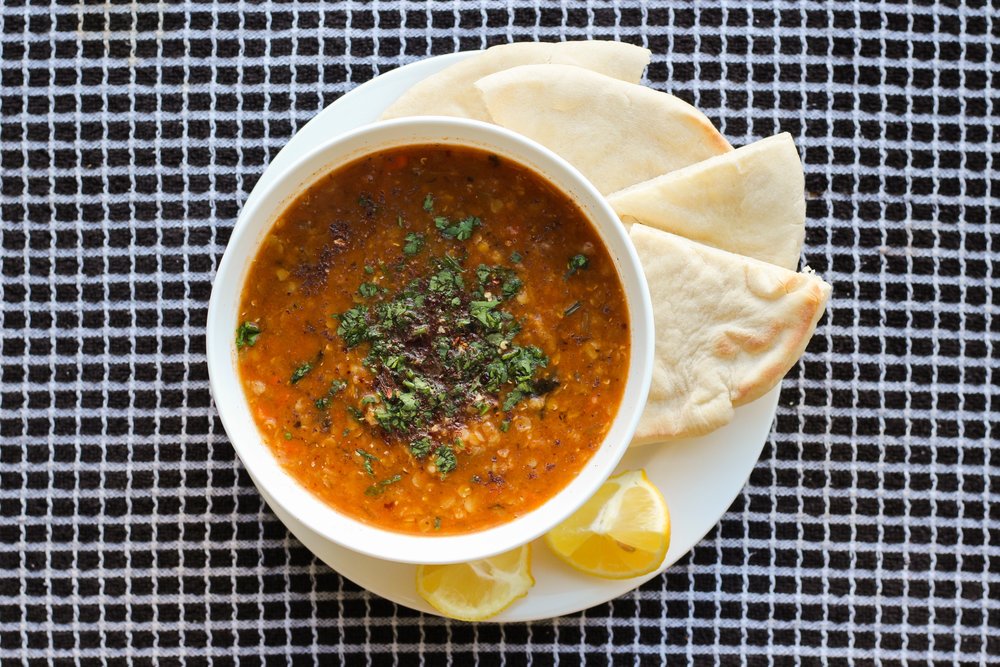
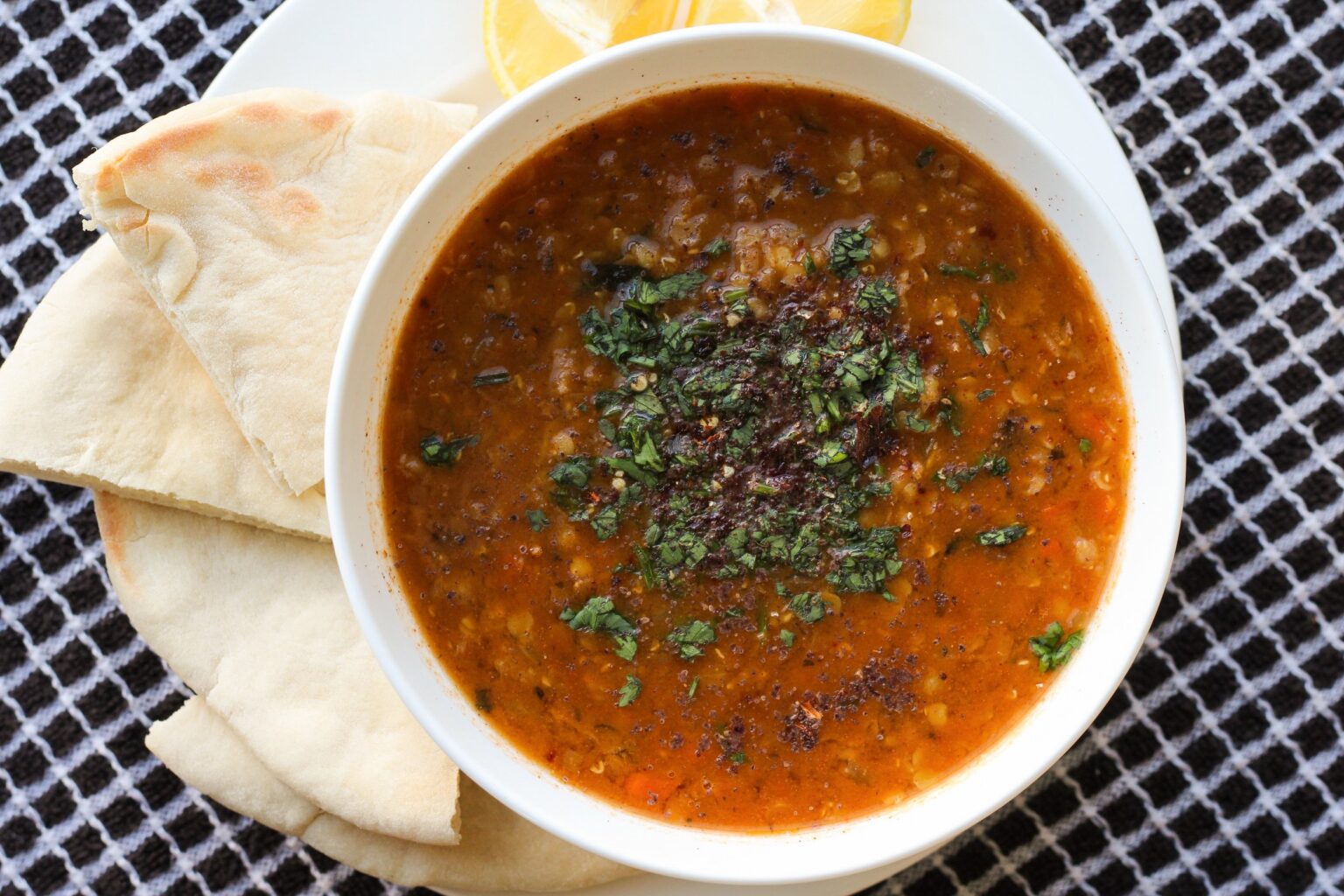
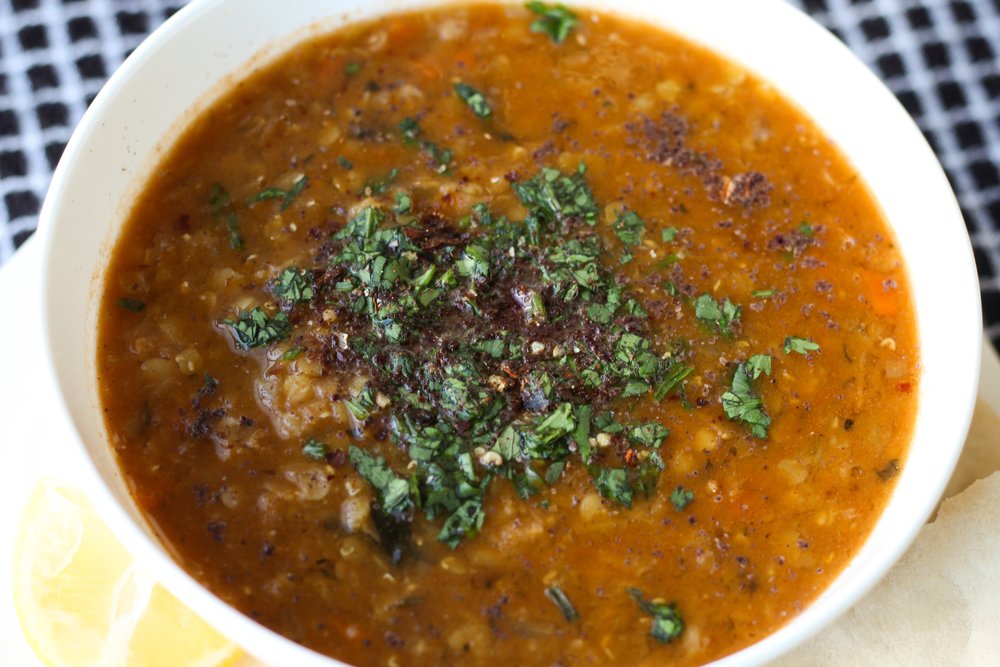
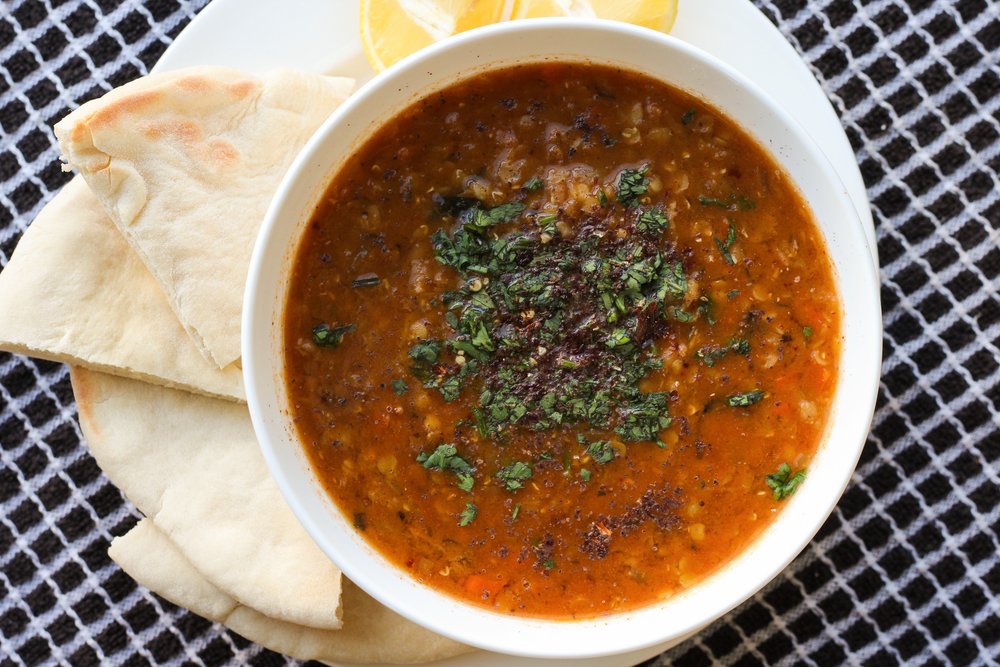
zesty lentil soup

June 18, 2017 by Kathryn Pauline 17 Comments

For the last few weeks, I’ve been putting the finishing touches on some fresh takes on classic Middle Eastern salads, and I’m very excited to start sharing all the recipes and photos. A couple weeks ago, I raved about beet salad with fresh chive blossoms. I recently posted this recipe for ruby fennel tabbouleh, and I’ve got two others in the works, so be sure to keep an eye out later in the summer for more tabbouleh variations. And on Wednesday, I’m posting a take on classic fattoush.

So, yes: everyone loves a crisp, refreshing seasonal salad with a bright, sunny dressing, and lots of fresh summer produce. But after about a month of nothing but salads with every meal, all those cool cucumbers and juicy tomatoes start to become a little monotonous. And that’s when you remember that the right kind of soup can make a wonderful summer meal too.
That’s all just to say that this red lentil soup is not one of those hearty, stick-to-your-bones, warm your heart and soul, flannel-blanket-in-a-bowl kinds of soups with russet potatoes, roasted beef bones, cheddar cheese, roux, barley, mushroom, and gobs of roasted garlic. Instead of warming it, this soup will lift your soul, clear your head, and bring your senses back to life after an early summer salad burnout.

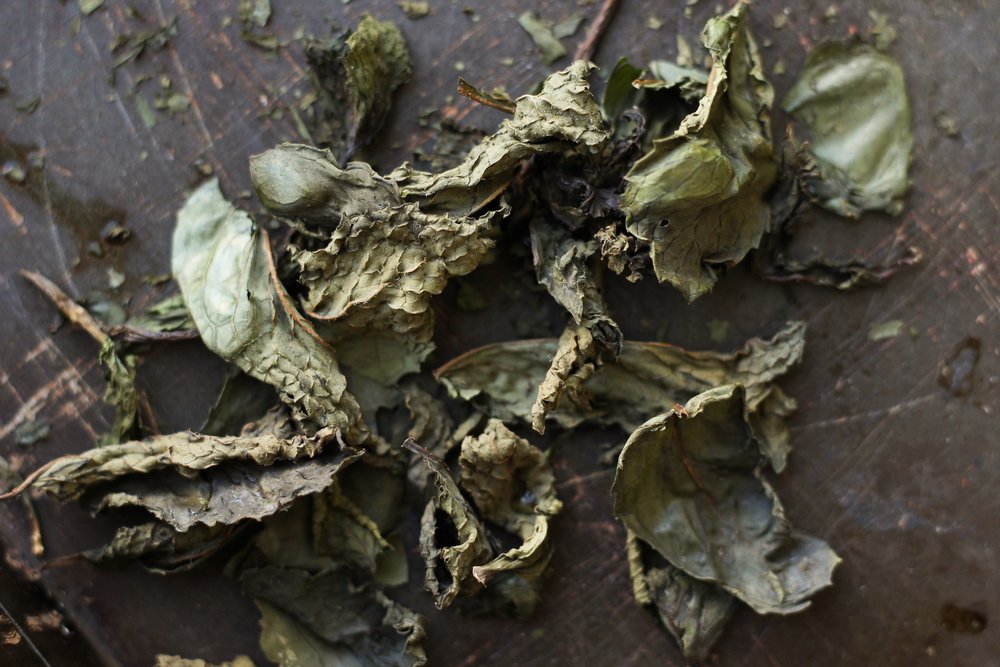
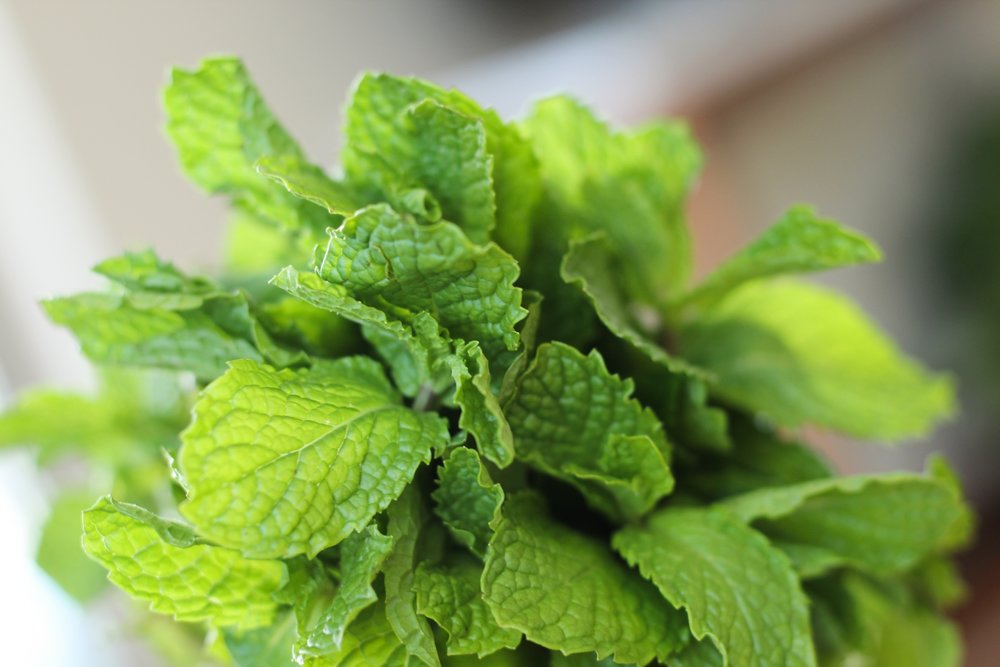
How does this soup do it? Lots and lots of cilantro, sumac, lemon, and—most importantly—mint. But you know how sometimes you accidentally add way too much mint to something and it ends up tasting like toothpaste? Dried mint is the key to this soup’s subtlety. You can buy dried mint in some specialty stores, but if you can’t find it, you can easily dry fresh mint at home, which is absolutely in season right now. If you have a friend who grows it, they’re probably already trying to find people to take all the extra mint off their hands. And while it might sound strange to dry out an ingredient before adding it to something wet, it actually makes all the difference.
But I totally understand if you’re skeptical—whenever a recipe tells me to add water and then boil to reduce, I roll my eyes and totally ignore both instructions altogether (because who wants to simultaneously waste time and make their house more humid?), but this is different, and absolutely not an oversight.

Just think about how different dried basil and fresh basil taste. Close your eyes and imagine a caprese salad with dried basil; then imagine a sandwich with fresh basil meatballs. I mean, both sound totally delicious, but completely different than what you’re probably used to. No matter the herb, drying changes everything! The dried mint makes this soup herby without being too minty, and the red lentils make it filling without feeling heavy. And best of all, this soup is delicious at room temperature or chilled.

But if you’re not totally on board with chilled soups, you can absolutely enjoy this one hot on a summer day. My great grandfather Paulos would always drink chai in sweltering weather, because he claimed that drinking a hot liquid actually cools you down. While I’ve never been quite sure if this is true, he was a wise man, and so on hot days when I’m craving a bowl of hot soup, I just go with it. Or you can just revel in the chill of your air conditioned kitchen while you eat hot soup under a blanket (no judgement!).
Print

zesty lentil soup

Print Recipe

5 Stars 4 Stars 3 Stars 2 Stars 1 Star

5 from 1 review

  • Prep Time: 20 minutes
  • Total Time: 30 minutes
  • Yield: 6 servings

Ingredients

  • 3 tablespoons olive oil
  • 1 small or 1/2 of a large onion, minced (about 1 1/2 cups)
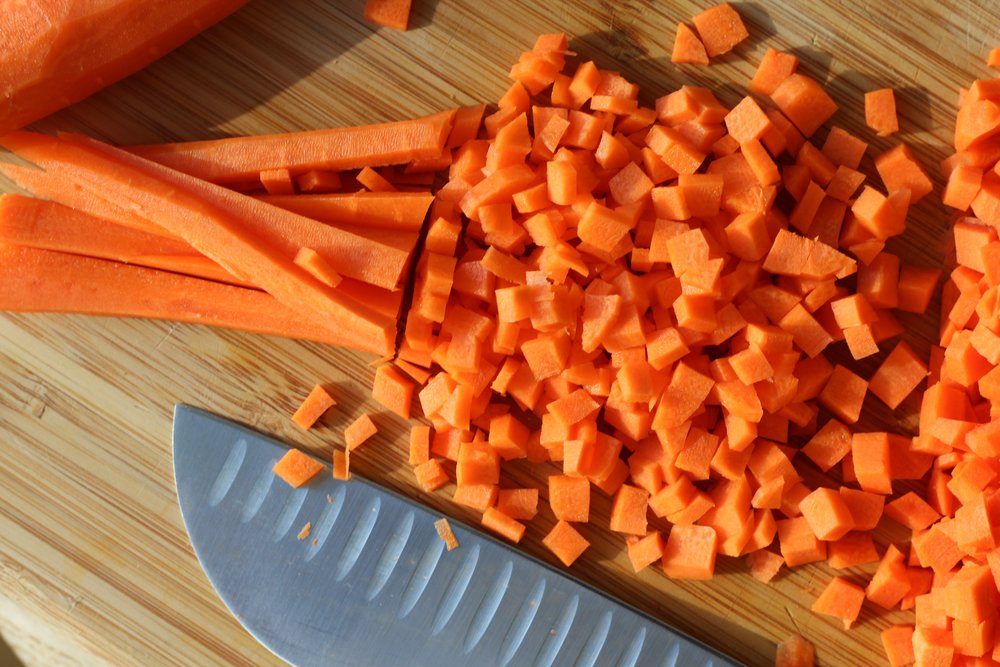
  • 3 carrots, diced small (about 1 1/2 cups)
  • 2 cloves garlic, minced
  • 1 teaspoon ground cumin
  • 1/2 teaspoon ground coriander seeds
  • 2 1/2 tablespoons tomato paste
  • 2 quarts (8 cups) vegetable broth or stock
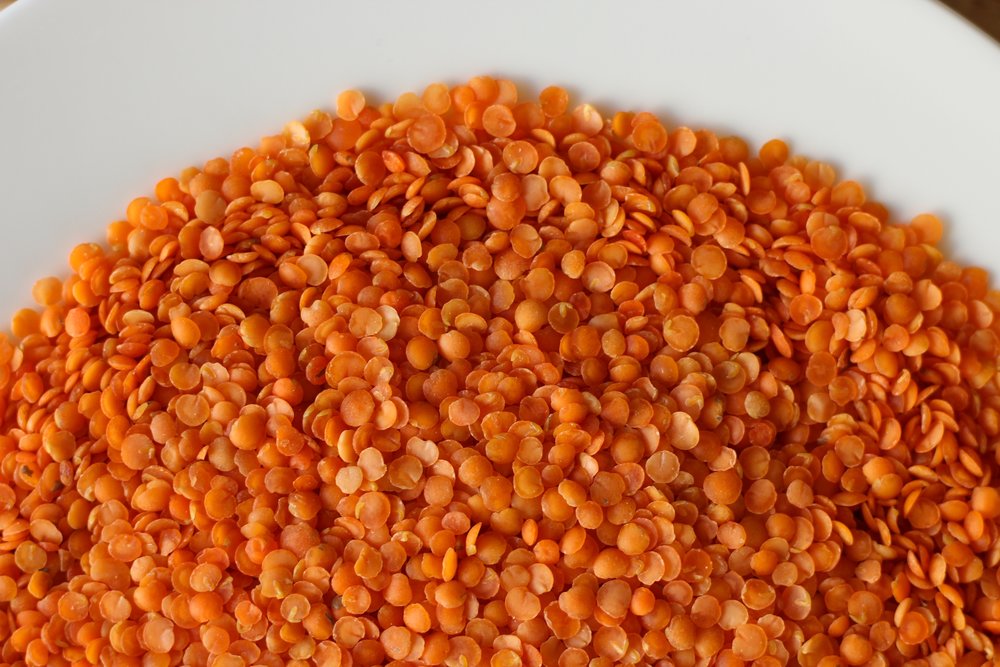
  • 1 pound (16 ounce) bag red lentils (slightly over 2 cups), sorted and rinsed
  • 1 1/2 tablespoons crumbled dried mint
  • 2 teaspoons paprika
  • 2 teaspoons sumac
  • 1/4 teaspoon cayenne pepper (or to taste)
  • Salt to taste
  • 1/4 cup lemon juice (about 1 to 1 1/2 lemons)
  • For serving: chopped cilantro, sumac, crushed red pepper, lemon wedges, pita bread or rice

Instructions

  1. Place a stockpot over medium heat and add the olive oil. Stir in the onion, carrots, and garlic, and cook for about 10 minutes, stirring every minute or two, until they soften.
  2. Once the veggies soften, stir in the cumin and coriander seeds, and cook, stirring constantly, for another 2 minutes.
  3. Stir in the tomato paste and continue to cook, stirring constantly, for another minute.
  4. Add the vegetable broth, lentils, dried mint, paprika, sumac, and cayenne pepper. Stir together, cover, and increase heat to high. Once it comes to a boil, reduce the heat to low and continue to cook, covered, for about 10 minutes, until the lentils are starting to fall apart. *
  5. Taste the soup and add more salt if necessary. If the soup looks a little dry add 1/2 cup of water at a time. Partially purée the soup, if desired. Once you’re happy with the seasoning and amount of liquid, stir in the lemon juice.
  6. Serve either hot, chilled, or at room temperature. Garnish with cilantro, sumac, and crushed red pepper. Serve alongside lemon wedges and bread or rice.

Notes

* Most red lentils sold in US grocery stores are split red lentils. The lentils should be falling apart and past al dente.
find us on instagram and let us know what you made!

Filed Under: dairy free, dinner, every recipe, gluten free, lunch, main courses, soups and stews, vegan, vegetarian Tagged With: beans, carrots, dried mint, lemon, lentils, middle eastern, sumac

vegetarian stuffed grape leaves | prakhe’t soma

June 14, 2017 by Kathryn Pauline 26 Comments

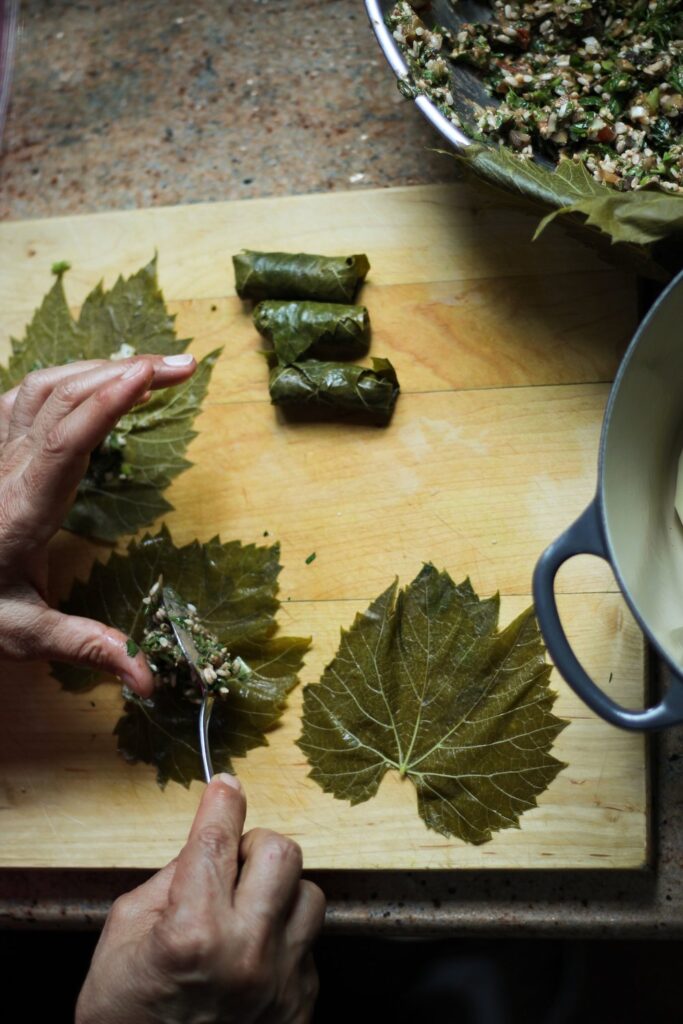
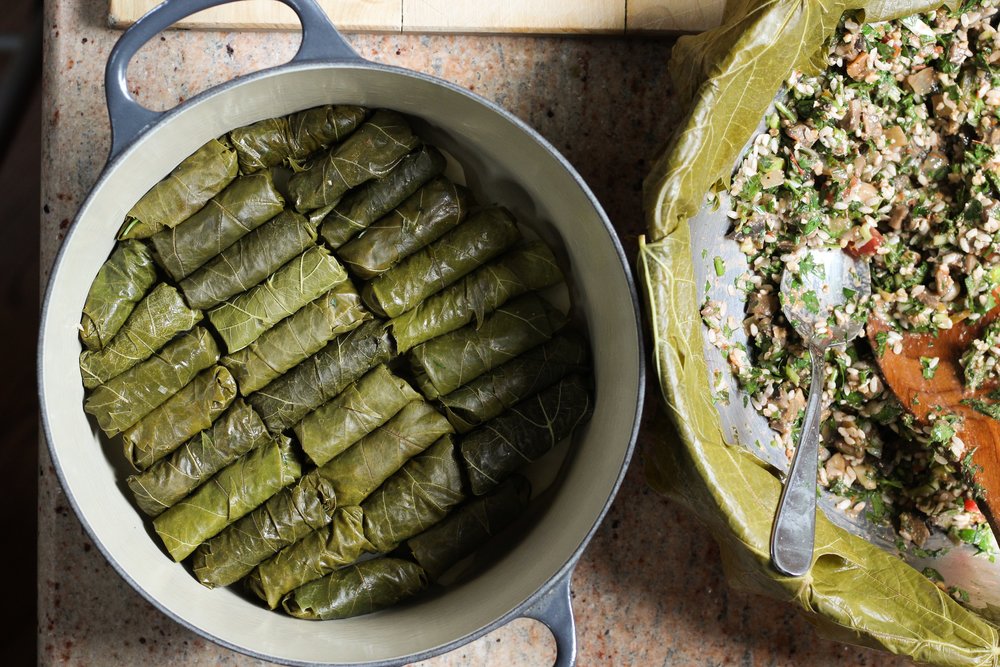
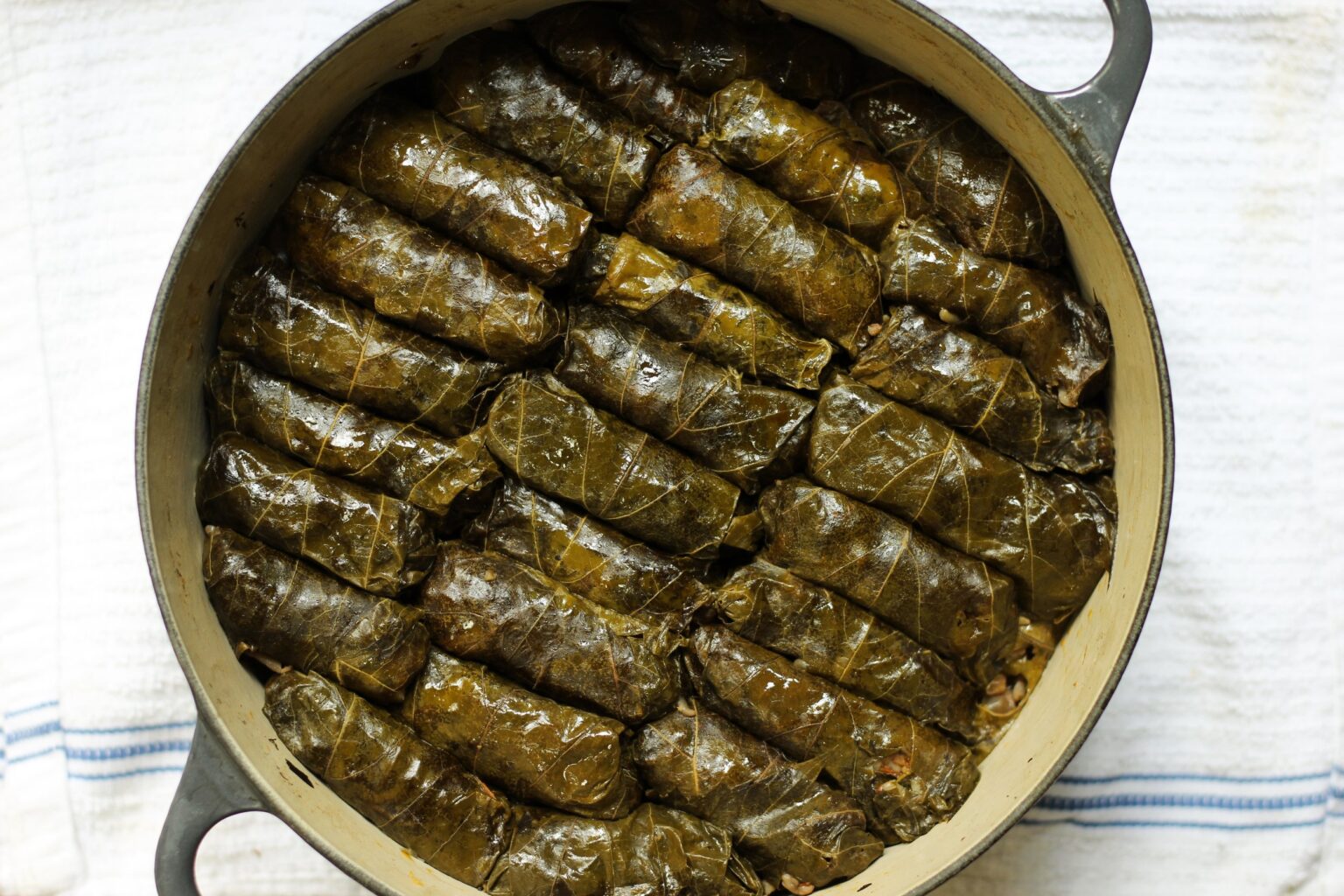
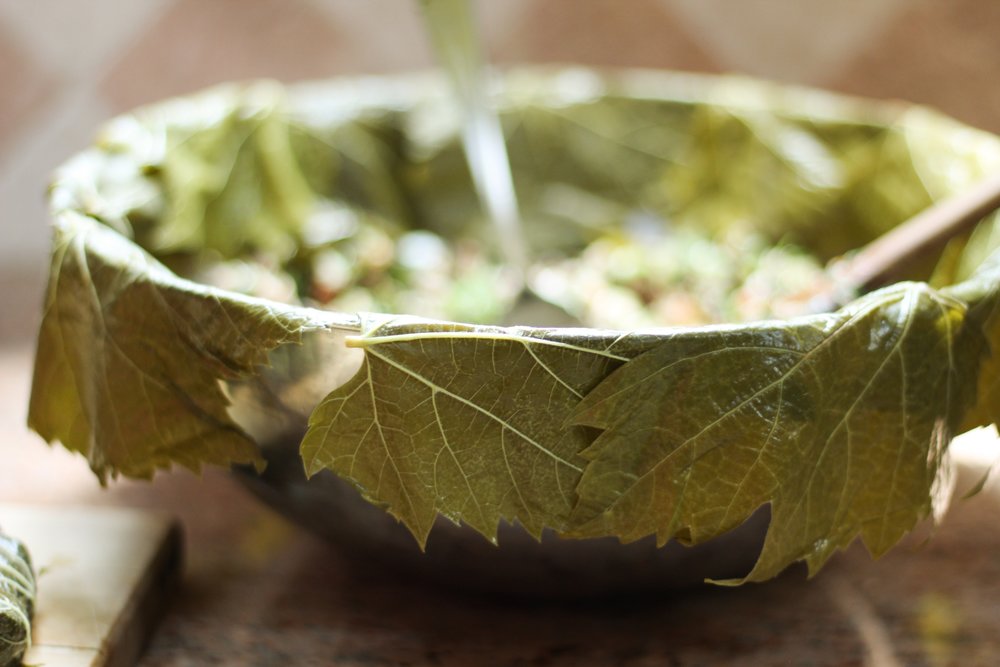
Last weekend, I made a small pot of prakhe (stuffed grape leaves) with my mom. Growing up, she would help her mother and grandmother make prakhe almost every weekend, and she’s helped them make it many times since then. They started her with the easiest job, separating the grape leaves and draping them over the side of the bowl while they worked. And once she was allowed to stuff and roll the grape leaves, she was only allowed to put her amateur rolls in the big family pot, instead of the special pots for her uncles (although she would sneak her rolls into the special pots when her grandmother wasn’t looking). She’s certainly paid her dues, and so last weekend was her first time being the head cook.

While my family calls this dish prakhe, it’s also known as yaprukh, warak dawali, warak enab, and many other names in other languages. And in most languages, including our own, “dolma” is a general category of stuffed leaves or stuffed vegetables, and not a particular dish. In Assyrian, we call the grape leaf versions of dolma “dolma’t prakhe” or “prakhe” for short, and when the dolma is vegetarian, we call it “soma,” because it’s suitable for fasting.

So saying you like “dolma” is a little like saying you like dumplings—what kind of dumplings? In this case, what kind of dolma? Vegetarian or beef? Stuffed mixed vegetables, grape leaves, cabbage leaves, or cored apples? Spicy? Plain? Lemony? Herby? With raisins? Furthermore, from what region? Greek? Palestinian? Iraqi? Syrian? Lebanese? Serbian? Within these regions (and many more), the dish can vary from family to family, so even coming up with regional categories doesn’t narrow it down enough. There’s a whole world of dolma out there, and my family’s prakhe’t soma is my favorite.

This recipe for prakhe is in some ways very traditional and in some ways a little untraditional. To develop the recipe, I’ve used fresh grape leaves, which my mom and I foraged. If you have a reliably safe source of grape leaves, you can use them here, but otherwise, the kind that come from a jar will work too. If you’re using the kind from a jar, you just need to make sure you rinse them first and use a little less salt, lemon juice, and oil in the recipe (taste a grape leaf to determine how you want to adjust the seasoning).

The filling is made with very traditional ingredients, although the addition of salsa might seem surprising. The thing is, all of the ingredients in salsa would otherwise go into the filling separately; but when you use prepared salsa, the garlic, spicy peppers, and tomato are already together in one delicious, convenient package, and it’s nice to save a step in a recipe that is already very time-consuming, without sacrificing any quality. But if the idea of using something that isn’t a “from scratch” ingredient irks you, feel free to make your own salsa out of stewed tomatoes, hot peppers, cilantro, citrus, garlic, and onion.

The most time consuming thing about this recipe is the rolling, but like many traditional dishes that involve a lot of rolling and stuffing (e.g., tamales, pasteles, joong/zongzi, etc.), it’s best to get your whole family involved. If you’re working with more than two people, you can circle a round table with the pot in the center and grape leaves and bowls of stuffing divided. Or you can start an assembly line, where the least experienced cooks separate the grape leaves and dole out the stuffing, and the more experienced cooks roll them and put them in the pot. Many hands make light work and you can quickly accomplish a double or triple batch if you pool your efforts. Put your phone away and just spend some time together cooking and talking.

Print

vegetarian stuffed grape leaves | prakhe’t soma

Print Recipe

5 Stars 4 Stars 3 Stars 2 Stars 1 Star

No reviews

  • Prep Time: 1 1/2 hours
  • Total Time: 3 hours
  • Yield: about 75 small rolls

Ingredients

For the filling:

  • 3 tablespoons olive oil
  • 1 pound mushrooms, diced
  • 3/4 cup diced onion (1 small onion)
  • 1/2 teaspoon kosher salt *
  • 1 cup minced parsley
  • 3/4 cup minced cilantro
  • 1/2 cup minced dill
  • 1/2 cup minced green onions
  • 1 cup uncooked medium grain rice, rinsed (for example, Calrose rice)
  • 1 1/4 cups spicy salsa **
  • 1/2 cup very finely chopped walnuts
  • 2 tablespoons cooled, melted unsalted butter or extra virgin olive oil
  • 1/2 teaspoon kosher salt, or to taste

To wrap and cook:

  • 1 tablespoon olive oil
  • 1 peeled russet potato, in 1/4 inch slices
  • About 100 medium grape leaves ***
  • 1 1/4 cups boiling water
  • 3/4 teaspoon kosher salt
  • 1 tablespoon unsalted butter or extra virgin olive oil
  • 1/2 cup lemon juice

Instructions

  1. To make the filling: Heat a skillet over medium-high heat for about 2 minutes. Add the olive oil, mushrooms, onion, and 1/2 teaspoon kosher salt and stir. Cook for about 10 minutes, stirring frequently, until the liquid has run from the mushrooms and evaporated, the onions have softened, and the mushrooms have shrunk significantly. Remove from heat.
  2. Combine the parsley, cilantro, dill, green onions, medium grain rice, salsa, walnuts, melted butter/oil, and the other 1/2 teaspoon salt. Once it’s slightly cooled, add the mushroom/onion mixture and stir to combine.
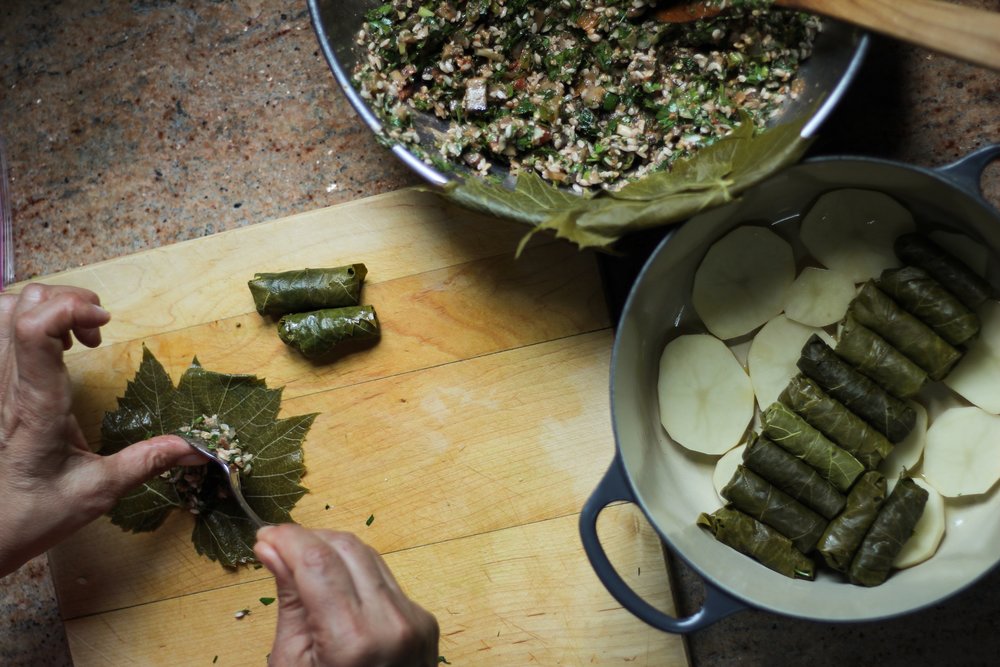
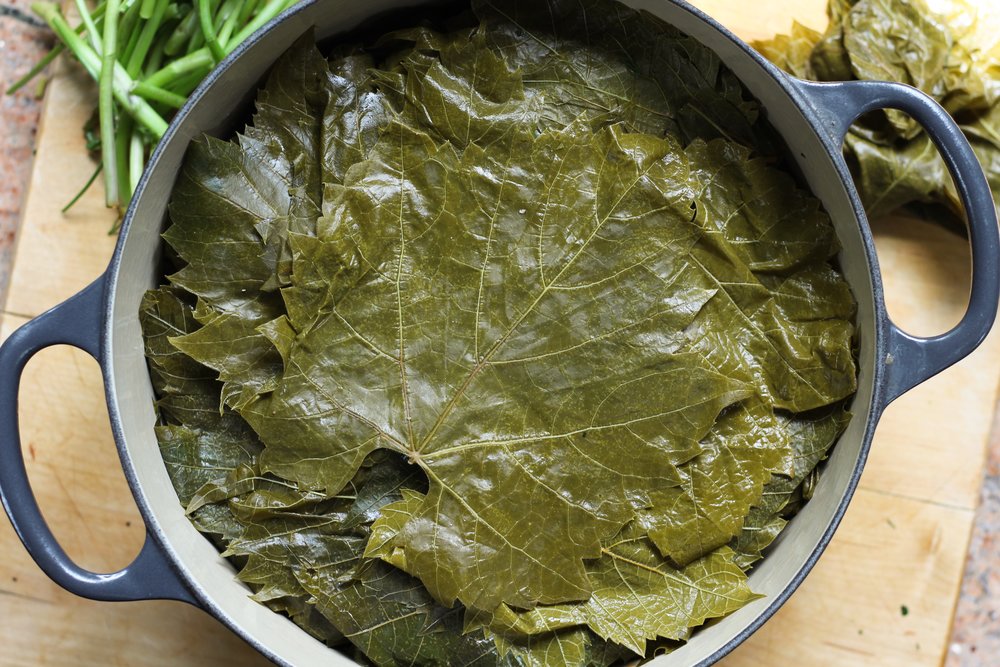
  3. To wrap and cook: Coat the bottom of a 4-quart enameled dutch oven or stockpot with the olive oil, and then line it with the potatoes. (You may have a couple slices left over, depending on the width of your pot and size of your potato. Only make 1 layer).
  4. Drape some of the grape leaves on the edge of the stuffing bowl, to get them ready to wrap.
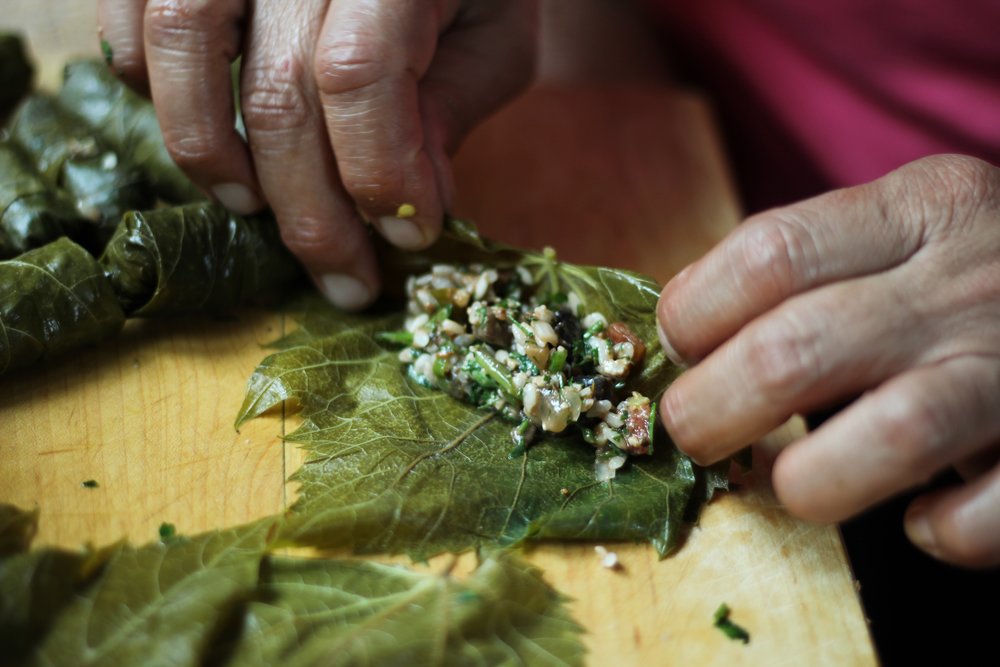
  5. Place a grape leaf flat on a cutting board, with the stem end pointing toward you, and the veiny side of the leaf facing up.
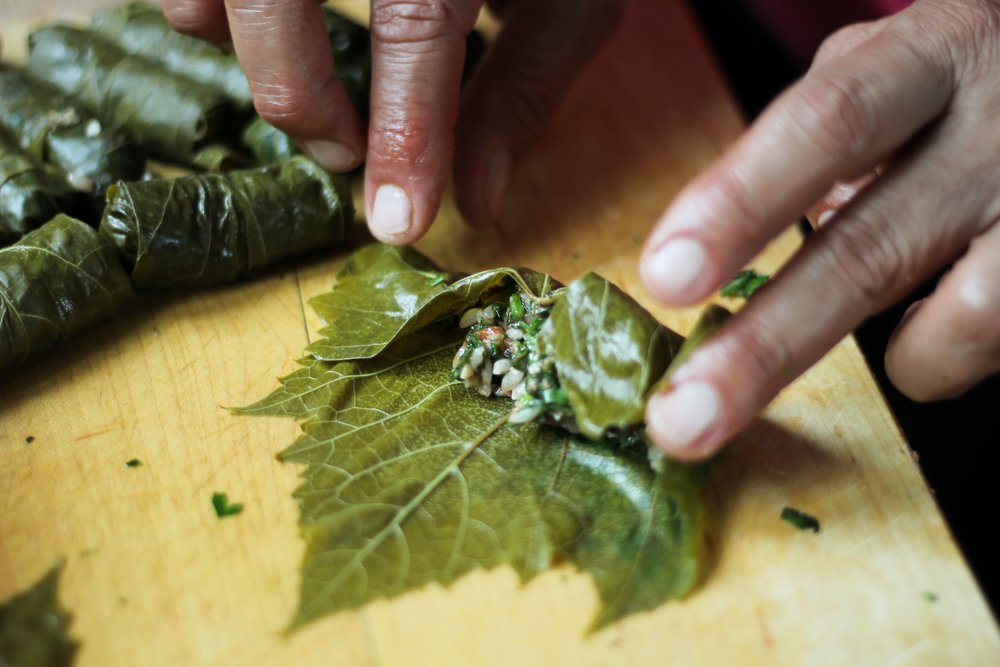
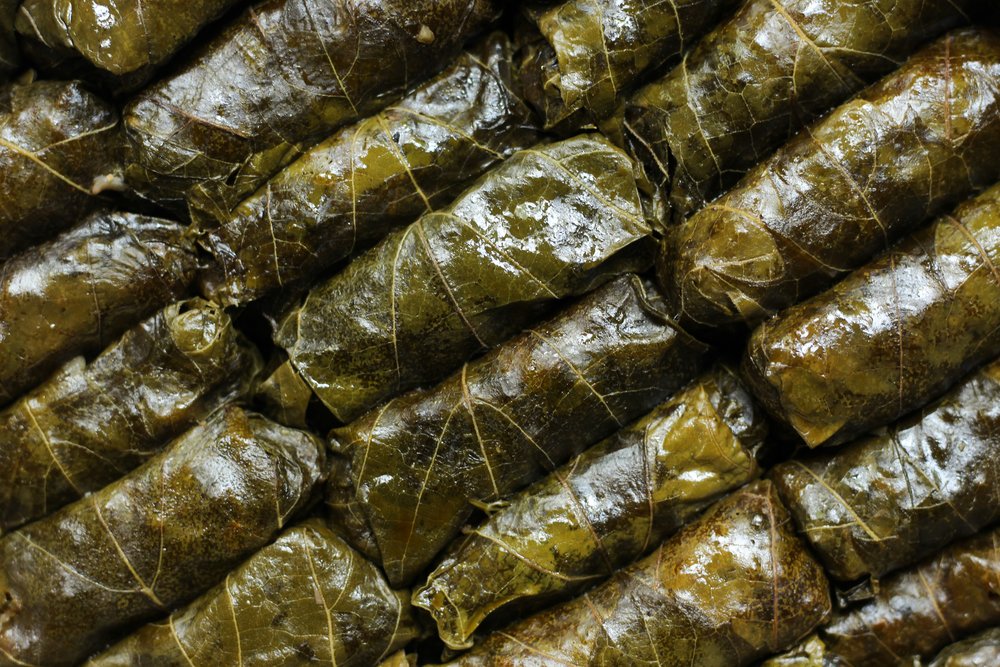
  6. Roll the dolma like very small burritos (see the video above). Spoon about 1 tablespoon of filling near the stem of the grape leaf and roughly shape it into a sideways log, leaving a border around the sides. Wrap the stem-side up to cover about half of the filling, then fold the sides of the leaf in toward the center. Keeping the sides tucked in, roll the grape leaf away from you, putting a little pressure on it so that you end up with a snugly packed roll. The roll should be somewhat soft, but a little firm. It shouldn’t feel like it’s about to burst, but it should be fairly tightly packed.
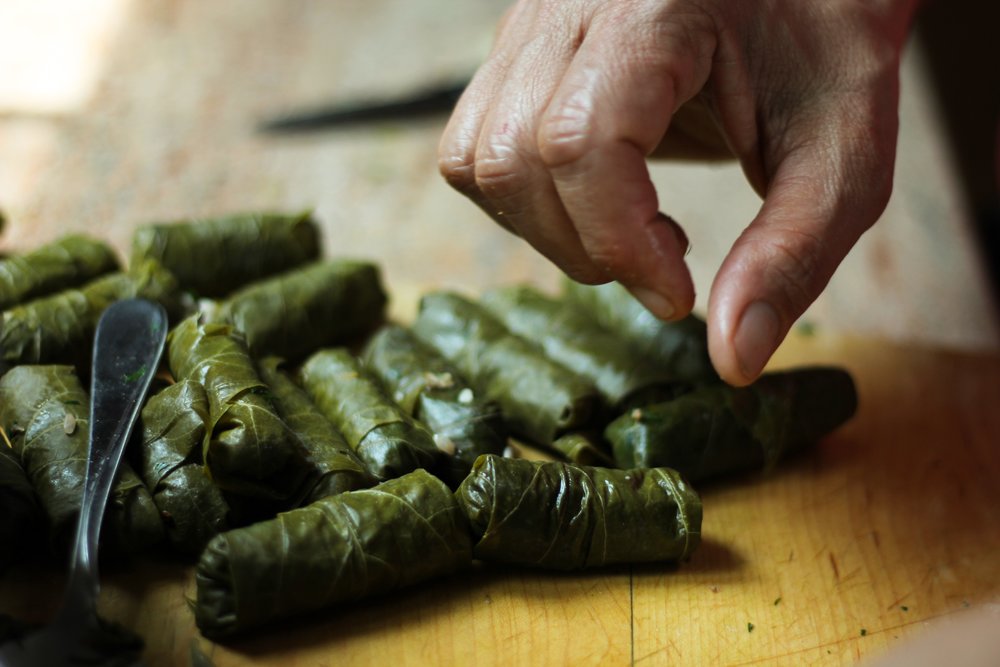
  7. Repeat with the remaining grape leaves and stuffing.
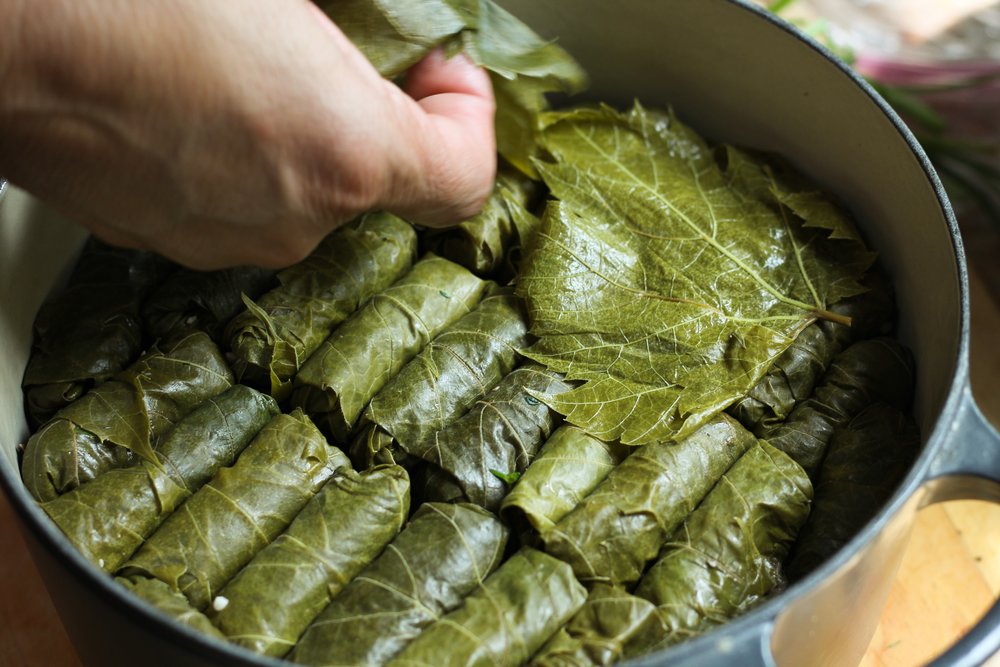
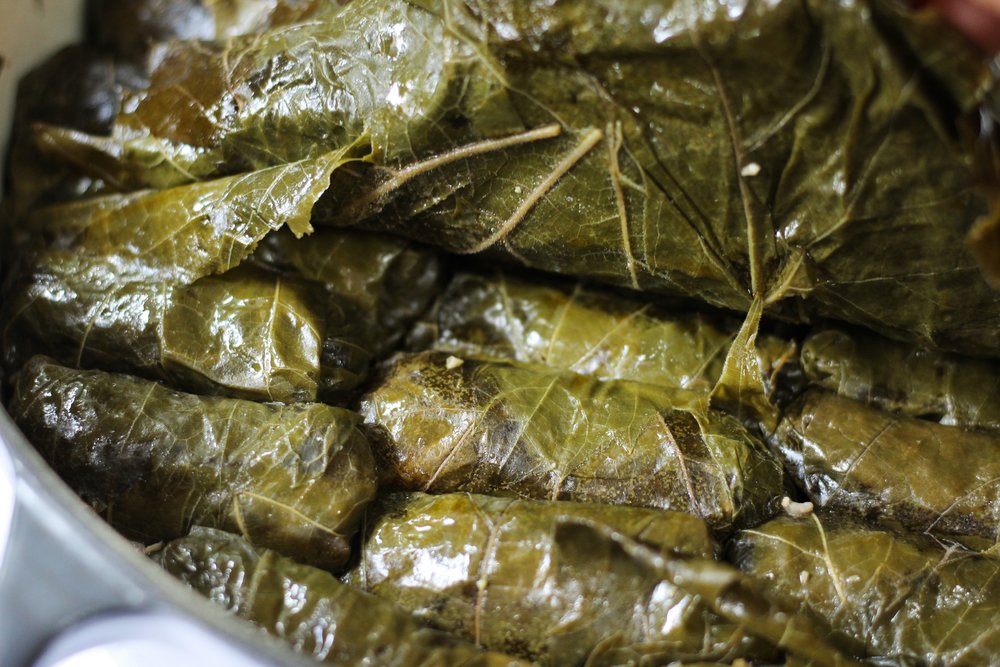
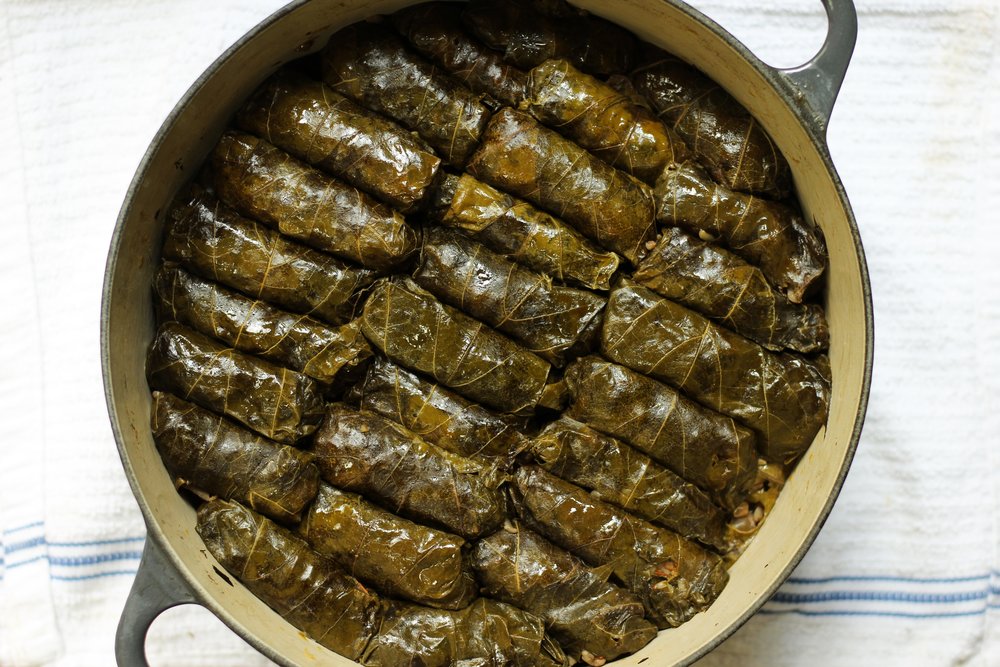
  8. While you work, layer them over the potato slices, alternating the direction of the rolls whenever you start a new level.
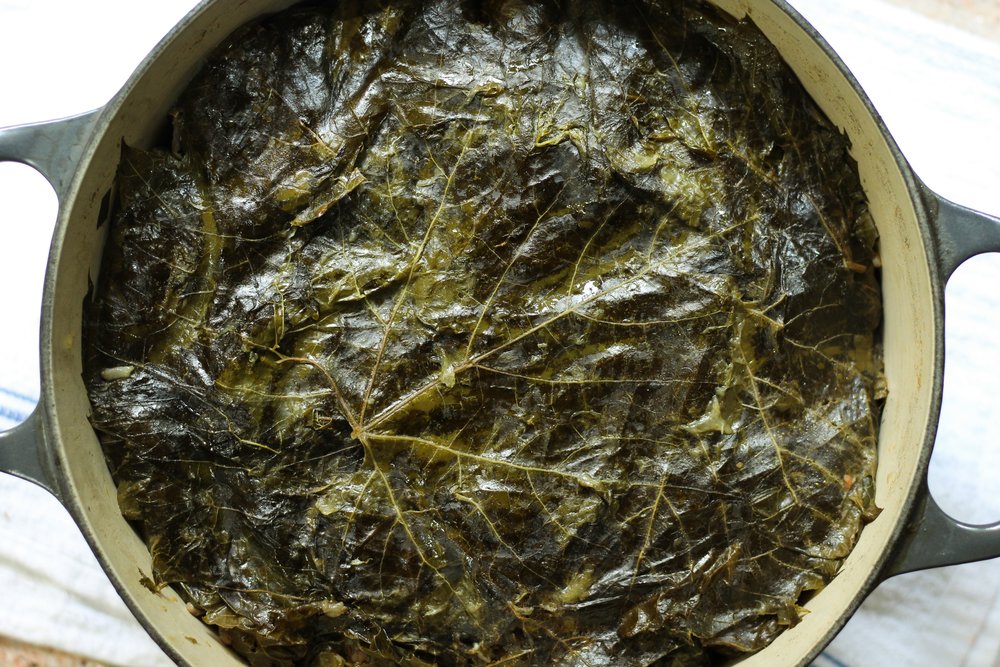
  9. Layer any remaining grape leaves over the top of the dolma (you should have about 25 left over, if you started with 100). Also feel free to add any clean leftover herb stems to the top of the grape leaves.
  10. Add the 3/4 teaspoon of kosher salt and butter/oil to the boiling water and slowly pour over the grape leaves.
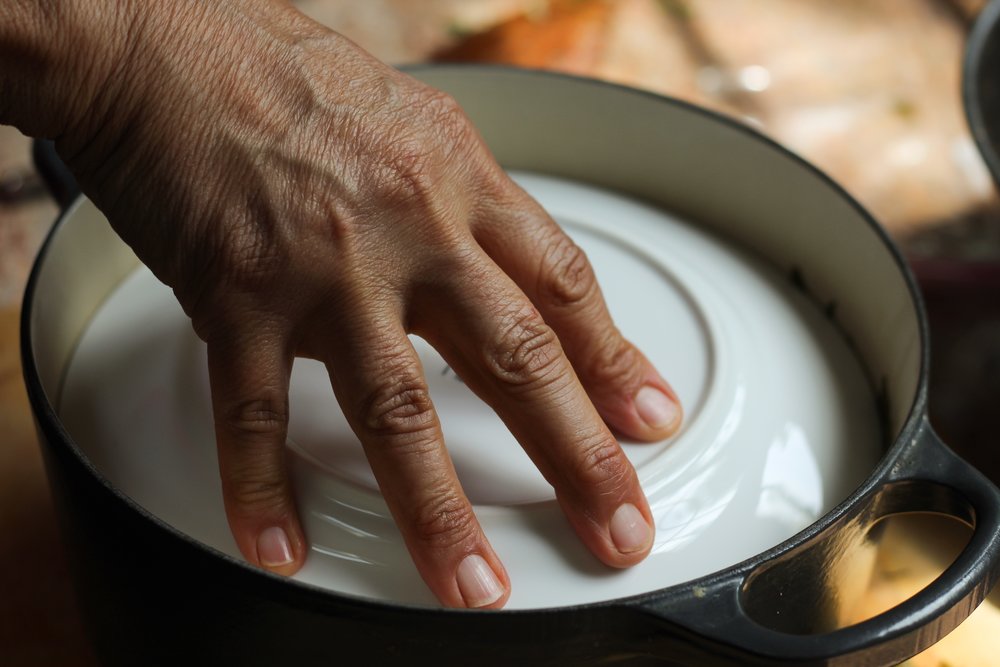
  11. Take a ceramic heat-resistant plate and invert it over the dolma, gently pressing down to work out big air bubbles. It’s ok if there is a gap between the plate and the sides of the pot.
  12. Turn the heat to medium-high and bring the pot to a simmer. Once it is simmering, immediately reduce the heat to medium-low, cover, and continue to simmer for 20 minutes. Keep an ear out to make sure the prakhe isn’t too dry. You should always hear water bubbling. If the bubbling suddenly stops, add 1/4 cup more water.
  13. At the end of 20 minutes, add the lemon juice, cover, and continue to simmer for 25 minutes.
  14. Once the 25 minutes have passed, keep the pot covered, remove from heat, and let it rest for at least 15 minutes.
  15. Once you’re ready to serve, either carefully invert the pot onto a plate (if you dare! For this, it’s best to wait another 15 minutes) or serve it straight from the pot. If you’re serving the prakhe to guests, remove the potatoes after inverting and save them for yourself for later. ****

Notes

* If you’re using table salt or fine sea salt, use less than the recipe calls for. Kosher salt is coarser and less compact.

** Any tomato-based spicy salsa will do, except for fresh salsas like pico de gallo.

*** If you’re using fresh grape leaves, this recipe will work just right. If you’re using store-bought pickled grape leaves from a jar, hold back a little on the lemon and salt and be sure to rinse and dry them. If you’re using frozen, make sure they’re thawed ahead of time. If the grape leaves you’ve picked are on the small side, you’ll need more of them. In this case, layer one more on top of the other, with the stems staggered about an inch apart, to form one long grape leaf. But if they’re all medium, try to use the larger ones for stuffing, and the smaller ones to layer over the top. Make sure you prepare fresh grape leaves ahead of time.

**** The potatoes taste really good, although they look extremely ugly. They’re just there to keep the delicate grape leaves on the bottom from scorching. They’re a treat for the chef, not for the guests.

find us on instagram and let us know what you made!

Filed Under: appetizers, dairy free, dinner, dolma and mahshi, every recipe, family recipes, gluten free, main courses, meze, side dishes, vegan, vegetarian Tagged With: cilantro, dill, grape leaves, herbs, lemon, middle eastern, mushroom, nuts, parsley, potatoes, rice, walnut

  • « Go to Previous Page
  • Page 1
  • Interim pages omitted …
  • Page 166
  • Page 167
  • Page 168
  • Page 169
  • Page 170
  • Interim pages omitted …
  • Page 183
  • Go to Next Page »

Primary Sidebar

Kathryn Pauline smiling

Welcome! I’m Kathryn Pauline, cookbook author, recipe developer, and photographer.

What’s new? 🥕

cauliflower frying

Fried Cauliflower

edible cookie dough

A Better Way to Make Edible Cookie Dough

steamed kale

Steamed Kale (without a steamer)

steamed cauliflower

Steamed Cauliflower

strawberry rhubarb jam in a jar with a spoon photographed from overhead

Strawberry Rhubarb Jam

rhubarb cookies

Rhubarb Cookies

Footer

read our privacy policy

© 2017 - 2026 Kathryn Pauline