• Skip to primary navigation
  • Skip to main content
  • Skip to primary sidebar
  • Skip to footer
Cardamom and Tea
  • Blog
  • Recipes
  • About
  • Cookbooks
    • Piecemeal
    • A Dish for All Seasons (my first cookbook)

Hummus Toppings

July 14, 2025 by Kathryn Pauline Leave a Comment

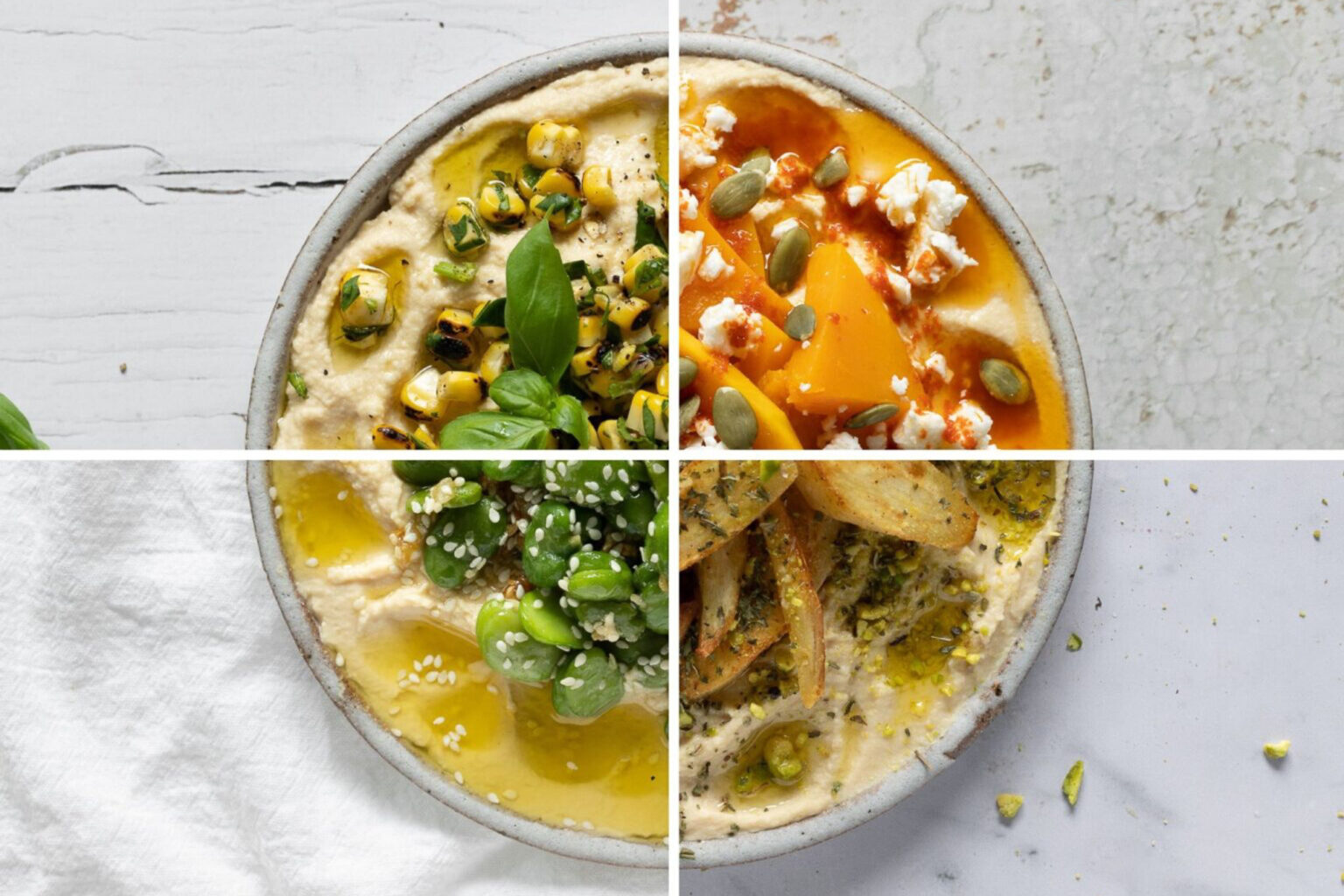
4 different hummus toppings (fava beans, squash, corn, and parsnips)

Sure, you can stick with classic hummus toppings like a drizzle of olive oil and a sprinkle of za’atar and call it a day. And honestly, that’s great. But if you’ve got a few vegetables kicking around, it takes almost no effort to turn hummus into something that feels a little more special.

My go-to move is to treat one or two vegetables like a quick little salad. Toss them with a pinch of salt, a splash of lemon juice or vinegar, and maybe a drizzle of olive oil. That brightness and crunch are the perfect contrast to creamy hummus and it makes things feel a lot more intentional.

I’ve got a recipe at the end of this post for basic hummus, which includes instructions for mixing-and-matching with whatever you’ve got on hand. I’ve also included a list of my favorite toppings for mixing-and-matching, 4 seasonal combinations you can try, and instructions for my favorite way to plate hummus.

Hummus toppings for mixing-and-matching

Produce

roasted tomato sauce

fresh or slow-roasted tomatoes
blanched green beans
grilled zucchini or corn
leafy herbs (parsley, cilantro, mint, dill, chives)
bell pepper chunks
minced hot peppers
grilled eggplant
diced cucumbers
boiled halved new potatoes
pickled or roasted okra
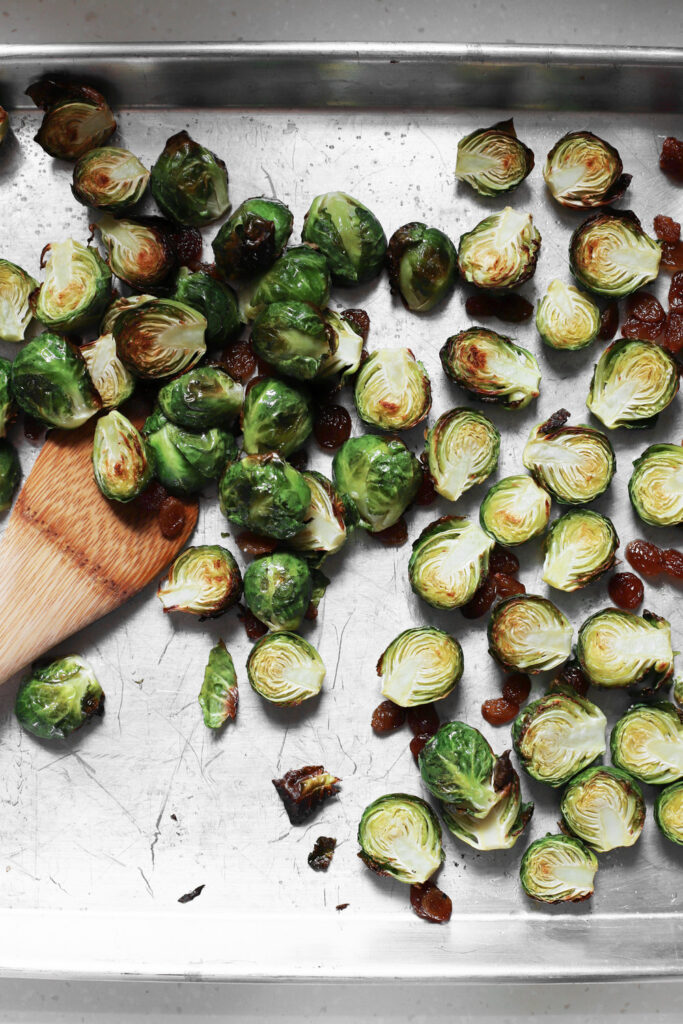
sautéed or roasted brussels sprouts
thinly sliced raw or sautéed fennel or leeks
roasted or steamed squash/pumpkin
sautéed mushrooms or sweet potatoes
raw/shredded or sautéed carrots or parsnips
roasted cauliflower or broccoli
fava beans
sliced radishes
blanched peas/snap peas/snow peas
sautéed asparagus

Other fun toppings
Sesame seeds
Pistachios
Toasted slivered almonds
Raisins sautéed in butter for 1 to 2 minutes
Pepitas
Walnuts
Hazelnuts
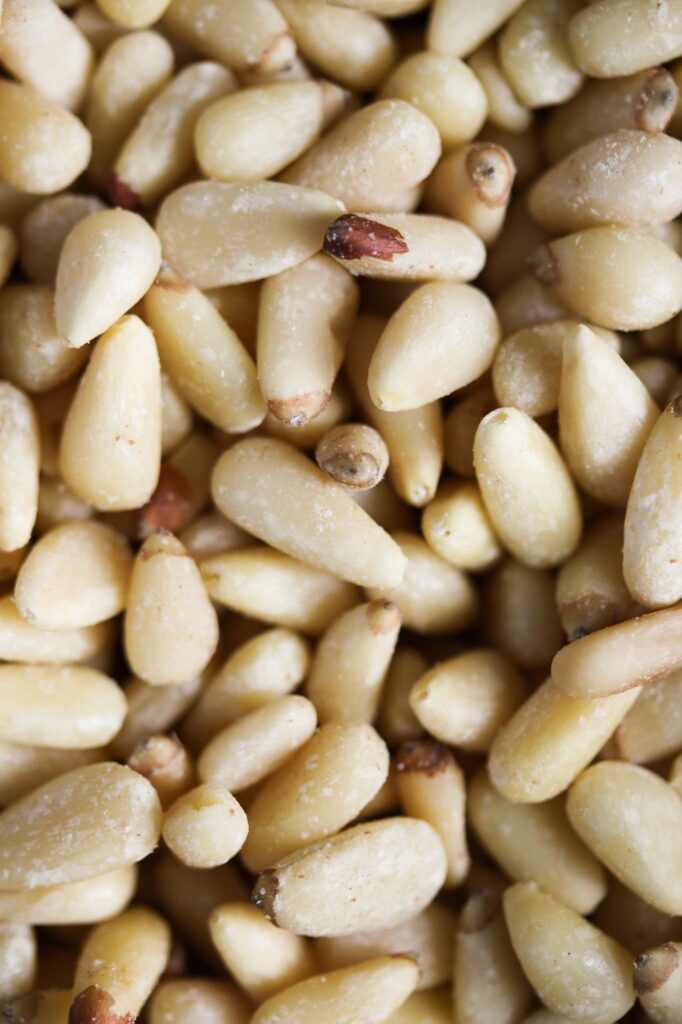
Toasted pine nuts
Fresh and dried herbs
Any of your favorite spices, like za’atar, baharat, paprika, black pepper, or sumac

4 seasonal combinations

Each of these is served over hummus topped with olive oil and sea salt.

hummus with basil, cilantro, and corn

Summer hummus:

grilled corn
basil
cilantro
a tiny bit of red wine vinegar
black pepper

hummus with squash

Fall hummus:

Steamed kabocha squash
a tiny bit of red wine vinegar
harissa
pepitas
feta

hummus with parsnips and dried mint

Winter hummus:

butter-sautéed parsnips
pistachios
dried mint
lemon juice

hummus with sesame fava beans

Spring hummus:

fava beans
garlic
sesame seeds
olive oil or butter
(prepared like this)

Tips for plating hummus with ✨style✨

hummus with olive oil and za'atar
hummus with olive oil and a bowl of Jerusalem salad next to it

I’m Assyrian, so I grew up eating hummus before it became standard fare in all 50 states. And my family has a very unique way of plating it with lots of little indentations across the surface. Those indentations are perfect pockets for olive oil and other toppings, and they’re super easy to make.

How to get that signature look: Start out with a plate or very shallow bowl (definitely not a deep bowl, or you won’t get enough surface area). Once you’ve smoothed it out into one even layer, use the back of your spoon to create little dips across the surface, rotating the plate as you go.

At this point, you could simply drizzle with olive oil, za’atar or paprika, and a little sea salt and call it a day. Or you could add a few classic (or not so classic) hummus toppings. See the video in the recipe below, and enjoy!

Print

Hummus Toppings (4 ways + build-your-own)

4 kinds of hummus toppings
Print Recipe

5 Stars 4 Stars 3 Stars 2 Stars 1 Star

No reviews

For my 4 seasonal suggestions and all topping ideas, see the notes above this recipe.

  • Yield: 2 small or 1 large plate

Ingredients

For the hummus:

  • 1 garlic clove, or 1½ tsp garlic powder
  • 3 or 4 ice cubes * [80 g]
  • Two 15 oz [425 g] cans chickpeas, rinsed and drained
  • ⅓ cup [80 g] fresh lemon juice
  • ⅓ cup [85 g] tahini
  • Salt

For the toppings/for serving:

  • 1½ cups seasonal produce
  • ½ to 1 tsp red wine vinegar or fresh lemon juice
  • Extra-virgin olive oil, for drizzling
  • Extra toppings
  • Pita and/or crudités, for serving

Instructions

  1. Put the garlic in the bowl of a food processor fitted with the blade attachment. Pulse until it’s finely chopped.
  2. Add the ice cubes to the food processor, followed by the chickpeas and lemon juice. Blend until the ice cubes break into small pieces and melt completely and the chickpeas smooth out.
  3. Add the tahini, season with salt, and continue blending until completely combined.
  4. Prep your vegetables, season with salt, and toss in a little vinegar or lemon juice.
  5. Spread the hummus evenly on one large or two small plates, dip the back of a spoon across the surface to create little dimples, top with oil, the prepped produce, and extra toppings, and serve with pita and/or crudités.

(If video does not appear below, please disable ad block)

Notes

* If you don’t have any ice cubes on hand, you can use 1/3 cup [80 g] of water instead.
find us on instagram and let us know what you made!

Psst… by the way, I wrote a whole cookbook of adaptable recipes like this one. It’s called A Dish for All Seasons!

Check it out for adaptable base recipes + ideas for seasonal (and evergreen!) variations
Filed Under: appetizers, dairy free, dinner, every recipe, gluten free, meze, salads, vegan, vegetarian, weeknight Tagged With: chickpeas, fall, garlic, herbs, hummus, lemon, middle eastern, spring, summer, tahini, winter

Caramel Chocolate Baklava

July 13, 2025 by Kathryn Pauline 2 Comments

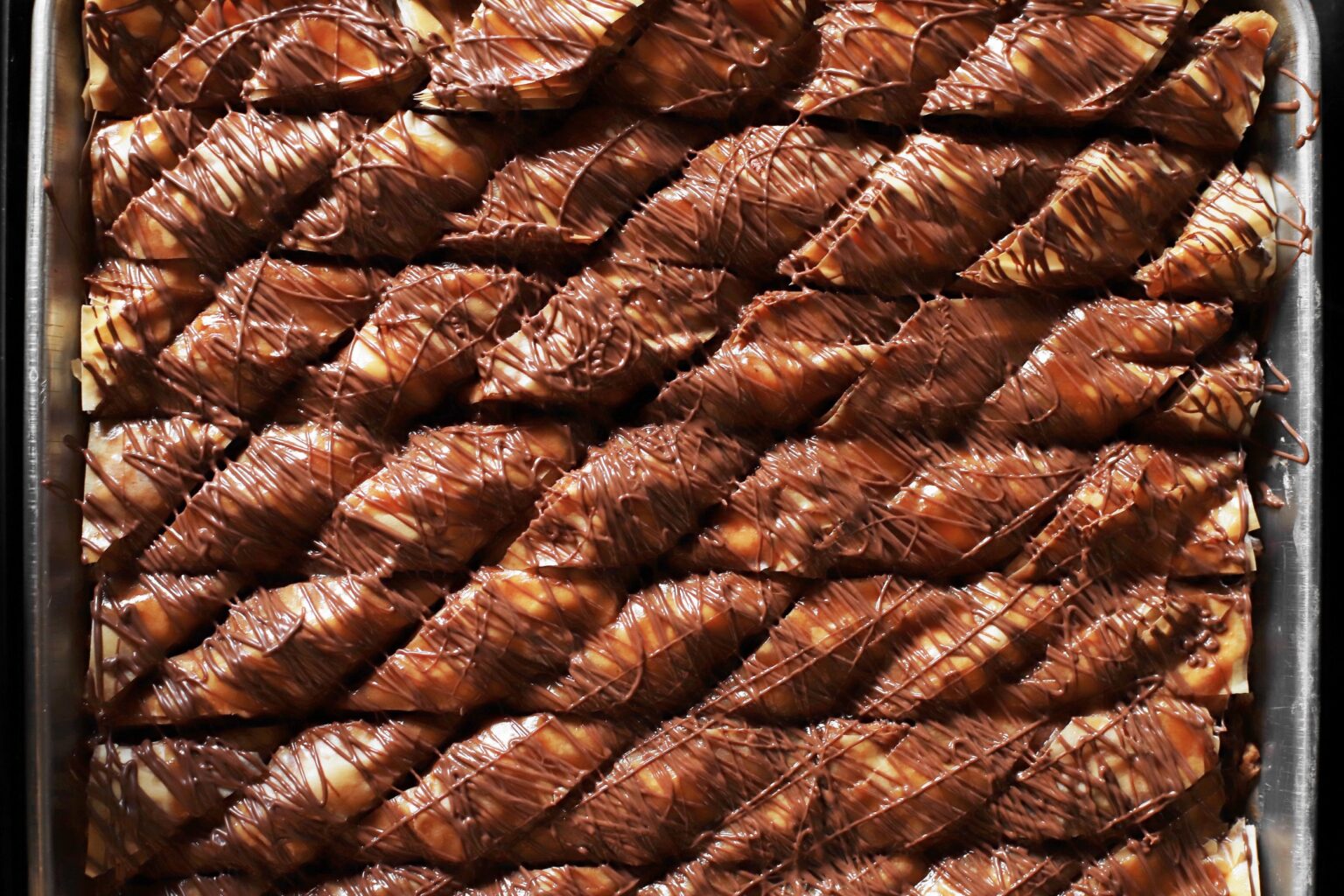
Caramel chocolate baklava is what happens when old-world tradition takes a detour through a box of chocolate turtles. Crisp, buttery laters of phyllo are stacked with toasted pecans and dark chocolate, drenched in homemade caramel, and finished with a drizzle of chocolate. The result is gooey, nutty, and very chocolatey.

making caramel
making caramel
making caramel
caramel chocolate baklava before drizzling

Tips for caramel chocolate baklava success

1. Pour the caramel while it’s still hot.

Unlike simple syrup, caramel thickens quickly as it cools. If you pour it over your chocolate baklava once it’s cooled down too much, it’ll just sit on top instead of soaking in. Hot caramel is key, so make sure you get the timing right.

caramel chocolate baklava

2. Don’t stress about perfect phyllo.

Phyllo can be finicky—sometimes it dries out, tears, and refuses to behave. But with this recipe, the top layer is going to be drizzled with chocolate. So even if it gets a little patchy, it’ll still look and taste great at the end of the process.

But do use proper phyllo handling to make sure it’s easy to work with. Thaw it completely and let it come to room temperature before opening the package, and once it’s open work somewhat quickly. It’s as simple as that!

caramel chocolate baklava

3. Use my grandmother’s super easy baklava-slicing technique.

It’s detailed in the recipe below, but you essentially slice the pecan/chocolate baklava while it’s totally dry (no butter-brushing necessary!), and then pour melted clarified butter over the top. It seeps between each layer and turns out beautifully. Here’s a video! (It’s from my vegan baklava post, which is why it looks totally different than this one. But the technique is the same!)

Print

Caramel Chocolate Baklava

Print Recipe

5 Stars 4 Stars 3 Stars 2 Stars 1 Star

No reviews

  • Prep Time: about 40 minutes
  • Total Time: about 3 1/2 hours
  • Yield: about 6 dozen pieces

Ingredients

for the baklava:

  • Butter for greasing the pan
  • 1 heaping cup milk chocolate chips for the filling (170g)
  • 16 ounces pecans (454g)
  • 1/2 teaspoon cinnamon (1g)
  • 1/2 teaspoon salt (2.5g)
  • 16 oz filo dough sheets (454g), thawed at room temperature for 4 hours
  • 6.25 ounces hot melted clarified butter (177 grams, or 3/4 cup + 2 tablespoons by volume)*

for the caramel syrup:

  • 2 1/2 cups sugar (500g)
  • 3/4 teaspoon salt
  • 3/4 cup water (170g)
  • 1 1/2 cups whipping cream (350g)

for the topping:

  • 2/3 cup milk chocolate chips for the topping (100g)

Instructions

  1. Bake the baklava: Preheat the oven to 350°F/180°C convection**, and grease a rimmed sheet pan.
  2. Place the chocolate chips in a food processor and blend until they’re very finely chopped (or chop by hand). Add the pecans, cinnamon, and salt, and pulse a few times, until they’re very finely chopped/coarsely ground (but careful not to over-process them into pecan butter!)
  3. Make sure you have all your ingredients (including the clarified butter) ready before you open the filo dough. Place half of the filo dough on the sheet pan, spread the pecan mixture evenly over it, and place the rest of the filo dough on top of the pecan mixture.
  4. Cut the baklava into diamonds by slicing straight across in the short direction, then diagonally (see photos in my original baklava post). It’s best to work with a very sharp knife so that you don’t tear, stretch, or dishevel the filo. It’s alright if a few of the pieces go a little awry, but you want everything to stay pretty lined up.
  5. Slowly and evenly drizzle the hot clarified butter over the sliced baklava.
  6. Bake for about 25 minutes, until it has lightly browned. Make the caramel (below) while you wait. Make sure the caramel is hot right as the baklava comes out of the oven, and rewarm if necessary.***
  7. Make the caramel syrup: First, get all your ingredients ready, because things will move very quickly.
  8. Place the sugar and salt in a large saucepan with lots of room to prevent bubbling over. Pour the water down the sides of the saucepan, to make sure that none of the sugar is stuck to the sides (this will prevent crystallization****). Turn the heat to high, and bring to a boil without stirring.
  9. Once it comes to a boil, give it a gentle stir with a wooden spoon to help it circulate (but do not let it slosh around, or your caramel might crystalize), and then do not stir it again. The sugar will dissolve after a couple minutes. Once the bubbles become tighter and smaller (after about 5 to 10 minutes), keep a close eye on it—it will start to turn amber, and will quickly progress to clear brown. You can decide how dark you’d like it to be—I like to wait for it to get a tiny bit smokey.
  10. As soon as the syrup caramelizes to your liking, remove from heat and slowly pour in the heavy cream while stirring. Watch out, because it will bubble violently, and make sure your pot has plenty of room so it doesn’t bubble over. Once all the cream is added, keep carefully stirring the mixture, which will continue boiling dramatically. After a minute or so of stirring, everything will come together a little, and it will calm down.
  11. Set it back over medium heat, and cook stirring constantly for about 2 minutes, just until the caramel comes together and then thickens very slightly (adjust the heat to prevent boiling over). Do not let it continuously boil or it will become too thick.
  12. As soon as the baklava comes out of the oven, slowly pour the hot caramel sauce over the surface. If the pan is wider than the filo, some of the caramel will pool at the sides. Simply scoop it up with a small spoon and drizzle back over the top.
  13. Let it sit until it comes to room temperature, at least 2 hours, and then temper the 2/3 cup (100g) chocolate. Drizzle the chocolate over the room temperature baklava. Wait until the chocolate hardens. Cut through the lines you made before baking, and then serve. Store in the refrigerator for up to 6 days, or in the freezer for months. It’s even better the next day.

Notes

* Clarified butter is really easy to make, and I’ve got a video and recipe here. You can also watch the video above.

** If you don’t have convection, no worries—you might need to slightly increase the temperature and/or bake it for slightly longer. If your convection fan is particularly strong, you might want to bake without convection, otherwise the pieces of filo might go flying.

*** The syrup will be much more pourable when hot, and it will more easily soak through the layers of filo. Usually, chilled or room temperature syrup is poured over baklava, but this caramel works better when warm.

**** Crystallization happens when grains of sugar fall into a concentrated sugar solution. If a grain of sugar sticks to the side of the pan in the beginning, and then finds its way back into the syrup halfway through boiling, it will set off a crazy chain reaction where the whole thing will seize up and get grainy. If you follow these instructions, you should be fine.

Video note: You can find the video in the introduction to this blog post. If you don’t see it after scrolling up, please disable ad block and reload the page.

find us on instagram and let us know what you made!

This recipe was previously posted as “turtle baklava” on 24 January 2019, but I reposted it in 2025 after adding some additional videos and added extra info to the intro. But the recipe itself is the same (except for a few superfluous details I removed from the notes).

Filed Under: every recipe, sweets Tagged With: baklawa, caramel, chocolate, cinnamon, clarified butter, middle eastern, nuts

  • « Go to Previous Page
  • Page 1
  • Interim pages omitted …
  • Page 35
  • Page 36
  • Page 37
  • Page 38
  • Page 39
  • Interim pages omitted …
  • Page 183
  • Go to Next Page »

Primary Sidebar

Kathryn Pauline smiling

Welcome! I’m Kathryn Pauline, cookbook author, recipe developer, and photographer.

Footer

read our privacy policy

© 2017 - 2026 Kathryn Pauline