• Skip to primary navigation
  • Skip to main content
  • Skip to primary sidebar
  • Skip to footer
Cardamom and Tea
  • Blog
  • Recipes
  • About
  • Cookbooks
    • Piecemeal
    • A Dish for All Seasons (my first cookbook)

assyrian egg rolls | burek

March 1, 2017 by Kathryn Pauline 4 Comments

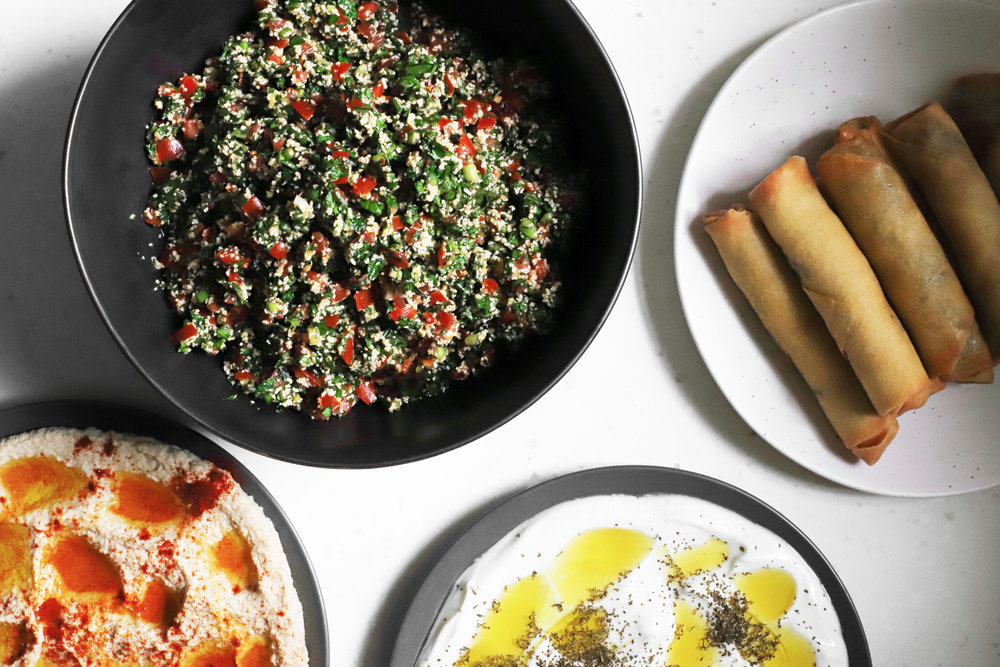
Whenever someone immigrates, gets engaged or married, or visits from out of town, my grandmother celebrates the occasion by frying up a big plate of burek, which she usually serves unceremoniously on a plate lined with paper towels, since everyone is always lurking around the stove waiting for her to lift them out of the deep fryer. Burek doesn’t need to be served on fine china, dressed up with a fancy presentation, or served with a clever assortment of dipping sauces in order to be celebratory. It’s just inherently so! And if you make these for your next party, they will be the first thing to go (seriously, even if you triple the recipe), so make sure you save yourself a few in the back of the refrigerator, because they’re also fabulous left over (it’s a very cold-leftover-pizza experience).

This recipe is totally flexible—you can add more cheese, parsley, a clove or two of garlic, or a few pinches of allspice. My family loves to eat burek with salsa or Sriracha, but it’s also delicious just on its own. You can even make a special vegetarian version, with mushrooms instead of beef; I’ve included a note with the recipe about how to make this substitution. There are other vegetarian versions made with mostly cheese. Assyrian chef Lana Shlimon, who cooks Lebanese and Iraqi Assyrian food, recommends mixing a combination of mild and briny cheeses, for instance feta and mozzarella.

If you’d like to make your burek ahead of time, you can either roll them up the night before and then fry them at the last minute, or fry them earlier in the day and then later crisp them up in the oven before serving.

If you’re new to deep frying, don’t be intimidated! The thing is, it’s very easy if you know a few tricks. Just make sure to set up a safe deep fry station and to keep the heat at a constant temperature. If you do both, deep frying is a piece of cake. The easiest way to keep a constant temperature is to buy an inexpensive deep fry thermometer so that you can easily monitor and adjust the heat. As long as you keep it around 350°, the oil shouldn’t sputter or smoke. But if you don’t have a thermometer and need burek now, there are a few low tech workarounds. To keep your fry station safe, find a heavy pot, make sure you have several inches of space above the oil line so that it doesn’t bubble over, and keep the pot toward the back of the stove.

Print

assyrian egg rolls | burek

Print Recipe

5 Stars 4 Stars 3 Stars 2 Stars 1 Star

No reviews

  • Total Time: 1 hour
  • Yield: approximately 20 rolls

Ingredients

  • 2 tablespoons neutral-flavored oil
  • 1 small onion (or half of a large onion), minced
  • 1 pound sirloin, minced finely into very small pieces (or ground) *
  • 1 cup loosely packed shredded mozzarella (not fresh mozzarella) *
  • 1/2 cup loosely packed chopped parsley
  • Salt and pepper to taste
  • 1 package large wonton wrappers (1 pound / 20 to 21 wontons)
  • 2 or 3 tablespoons water in a small bowl
  • 1 to 2 quarts oil for deep frying (e.g., peanut, canola, olive oil, but not extra virgin)

Instructions

  1. Make the filling: Heat 1 tablespoon of neutral oil in a medium frying pan over medium heat. Once the oil has heated for a minute or two, add the minced onion and cook until it softens and becomes translucent, about 5 to 10 minutes.
  2. Once the minced onion has softened, turn the heat to medium-high and push the onion to the sides of the pan.
  3. Add the other tablespoon of neutral oil to the center of the pan and add the minced beef * to the center of the pan. Spread it out evenly and then let it sit there for about a minute while you season it with salt and pepper.
  4. After the beef has sat in the center for a minute, mix up the beef, trying not to disturb the onions, scraping any bits off the bottom of the pan, and let it sit for another minute or two. Continue this pattern until it has browned nicely and any pooling liquid has been cooked off, about 6-7 minutes.
  5. Mix together the onions and the beef if they haven’t already mixed together.
  6. Take the beef and onions off the heat and let them cool (about 10 minutes).
  7. Stir in the mozzarella, parsley, and any additional salt and pepper.
  8. Set up a safe fry station on the stove or in a dedicated deep fryer. Turn the heat to medium so that the oil slowly rises to 350° F and keep an eye on it while you work.
  9. Wrap the burek: Place one wrapper on a cutting board.
  10. Put a couple spoon-fulls of the filling (approximately 2 tablespoons—pace yourself for 20 rolls) in the center of the wrapper in a diagonal line, from corner to corner, rather than side to side. Leave a large border all the way around the filling so that you can wrap it up.
  11. Place the wrapper so that the filling looks horizontal from your perspective and fold over the two side corners so that they meet in the middle. Then fold the triangle facing you over the top, and then roll everything tightly into a cylinder away from yourself. Make sure you roll them snugly, so that they don’t hold in big pockets of air.
  12. To seal the roll: raise the loose wonton flap, wet your fingers liberally, brush water all over the triangular wonton flap, and roll it back over until it sticks.
  13. Repeat with the remaining 19 or 20 rolls.
  14. Fry the burek: Once the oil has reached 350° F, add a few rolls at a time and fry for about 5 minutes, until golden-brown. Flip the burek over if they aren’t tumbling around on their own. Work in batches, don’t crowd the oil, and adjust the heat as necessary to maintain a temperature of 350° F.
  15. Once golden brown, remove the burek with a slotted spoon or spider and cool on a couple layers of paper towels.

Notes

* To make the vegetarian version, use 1 pound finely chopped mushrooms instead of minced beef and add an extra 1/2 cup of cheese. You’ll need to cook the mushrooms until they’ve given up their liquid and have begun to brown.

find us on instagram and let us know what you made!

Filed Under: appetizers, dinner, every recipe, family recipes, meze, side dishes, vegetarian Tagged With: beef, herbs, middle eastern

homemade yogurt | mesta

February 26, 2017 by Kathryn Pauline 9 Comments

There’s something precious about the way mesta (homemade yogurt) is made. You slowly simmer milk, swaddle it in a blanket right before going to sleep, and then you wake up to the most perfect breakfast. But for all its preciousness, the process is not the least bit fussy. So if you’ve never fermented anything at home, yogurt is a nice first project. It doesn’t take very long, it doesn’t require any special equipment, it’s very hard to mess up, and the results are so much more delicious than anything you can buy in a store. All you need is milk and a little bit of leftover yogurt, which we call the khumsah.

If you have a lot of friends or relatives who make their own yogurt, you should be able to track down some real khumsah, left over from the last batch of homemade yogurt. The khumsah gets passed on from friend to friend and generation to generation, so that it eventually becomes impossible to pinpoint where or when it started. But if you don’t have a homemade yogurt fanatic friend, you can always start your first batch off with a scoop of store-bought yogurt. After you make the first batch, just be sure to set a little bit of yogurt aside to make more—you’ll be on a roll and soon your friends will start showing up at your house, asking you if they can borrow a scoop.

If you’ve never tried plain homemade yogurt, you don’t know what you’ve been missing. But there are also a lot of tasty ways to dress up this humble bowl. Try out some of these serving suggestions (crowd-sourced from my friends and family), whether you’ve got homemade or store-bought:

Sweet:
Rosewater, pistachio, and honey (pictured above)
Figs, dates, honey, and cinnamon
Slivered almonds and a dollop of jam or honey
Apple, pomegranate, and slivered almonds

Savory:
Za’atar and extra virgin olive oil (above left)
Oregano, garlic powder, and extra virgin olive oil (above right, pictured with Cuban oregano)
Mint or dill, cucumber, garlic powder (a variety of jajik)
+ Add some pita chips or prakhe (stuffed grape leaves) to any savory option

Print

homemade yogurt | mesta

Print Recipe

5 Stars 4 Stars 3 Stars 2 Stars 1 Star

No reviews

  • Prep Time: 35 minutes
  • Total Time: 8 1/2 to 24 hours
  • Yield: 4 quarts, unstrained

Ingredients

  • 1 gallon whole milk
  • 1/4 cup yogurt with live active cultures (also known as khumsah) *

Instructions

  1. Heat the milk very carefully over medium-low heat so that it doesn’t scorch or boil over. Stir it every few minutes and keep a very close eye on it.
  2. As soon as it starts to simmer, take it off the heat and pour it into the container you’re going to store it in (either glass or ceramic). Or you can leave it in the same container you heated it in, as long as it’s a non-reactive metal and you have avoided scorching the bottom.
  3. Let it cool down a bit, checking periodically to make sure the milk doesn’t cool down too much. It should still feel warm, but should be cool enough that you can stick your finger in the milk without burning yourself. Once it’s at this point, add the khumsah to a small bowl and combine it with 1/4 c of the warm milk.
  4. Add this mixture back into the container, mix it together, and cover it with a loose-fitting lid or plastic wrap.
  5. Wrap the whole thing in a blanket. This will keep it insulated so that it keeps some of the residual heat from the milk.
  6. Store the blanketed container in the oven and put a note on the control board so no one turns it on while your yogurt is inside.
  7. Let it ferment anywhere between 8 to 24 hours, depending on how sour you want it to be. It will become more sour as it ages. 12 hours is usually perfect.
  8. Once you’re happy with the consistency, put it in the refrigerator to let it chill.
  9. Once it’s chilled, put a couple of layers of undyed paper towels or clean tea towels (washed without dryer sheets, fabric softener, or fragrance) on top to soak up some of the whey. Discard after they absorb as much liquid as they’ll hold.
  10. Enjoy the mesta as is, or hang it with cheesecloth to turn it into Greek yogurt (hung for about 4 hours) or labneh (hung for about 12 hours).

Notes

* The khumsah can be from a homemade batch of yogurt, or a scoop of store-bought yogurt.

find us on instagram and let us know what you made!

Filed Under: breakfast, every recipe, family recipes, gluten free, lunch, vegetarian Tagged With: labneh, middle eastern, rosewater, yogurt, za'atar

  • « Go to Previous Page
  • Page 1
  • Interim pages omitted …
  • Page 165
  • Page 166
  • Page 167
  • Page 168
  • Go to Next Page »

Primary Sidebar

Kathryn Pauline smiling

Welcome! I’m Kathryn Pauline, cookbook author, recipe developer, and photographer.

Footer

read our privacy policy

© 2017 - 2025 Kathryn Pauline