• Skip to primary navigation
  • Skip to main content
  • Skip to primary sidebar
  • Skip to footer
Cardamom and Tea
  • Blog
  • Recipes
  • About
  • Cookbooks
    • Piecemeal
    • A Dish for All Seasons (my first cookbook)

spiced gurdthu with fresh figs

August 17, 2017 by Kathryn Pauline 8 Comments

When writing about Middle Eastern food, it’s often impossible to assign particular dishes to particular cultures. For instance, baklawa, hummus, grape leaves, and labneh, (and many, many more) are central to many different cuisines throughout the region. But while there is a lot of overlap and influence, there are also some important differences and nuances, and each cuisine has its own specialties and unique creations.

That’s all just to say that I often blog about dishes that Assyrian cuisine has in common with many other cultures (some are our own inventions that have become widespread, and some are dishes that we have adopted from the many nations we inhabit), but there are some things that we make that are unique to our culture. As far as I can tell, gurdthu is one of those things.
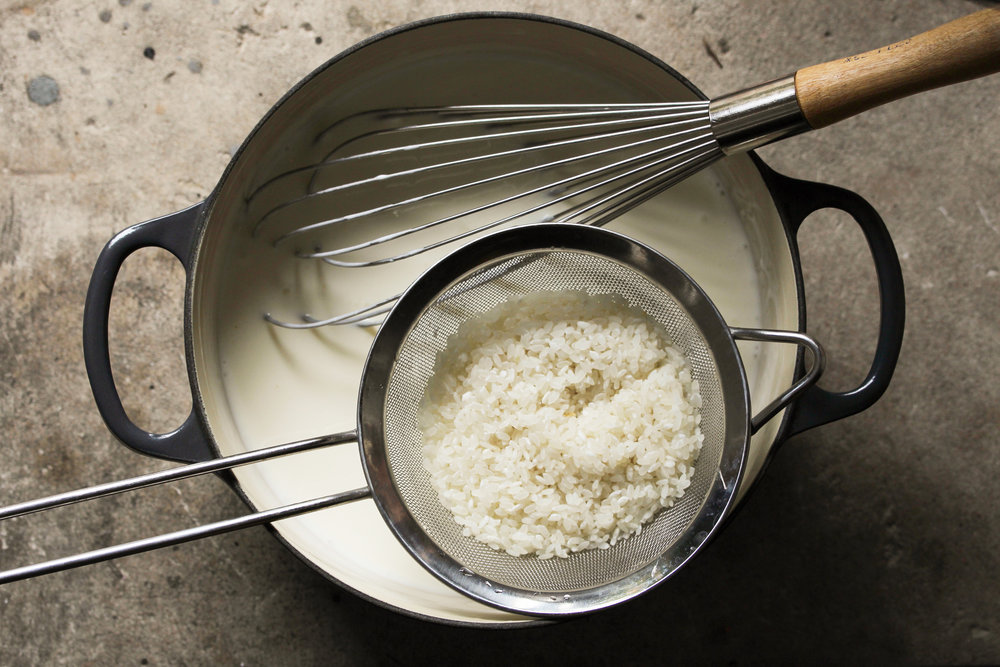
Gurdthu marries two of the most important staples of our cuisine, yogurt and rice, to create the creamiest rice porridge imaginable. To make very traditional gurdthu, we ferment yogurt from scratch, but we let it go extra long until it becomes very sour. Then we mix together the yogurt, rice, egg, and water and stir it constantly while bringing it to a simmer. Once it’s simmering, we reduce the heat to low and let it cook until the rice becomes very soft and the whole thing thickens into a beautiful, rich, velvety custard.
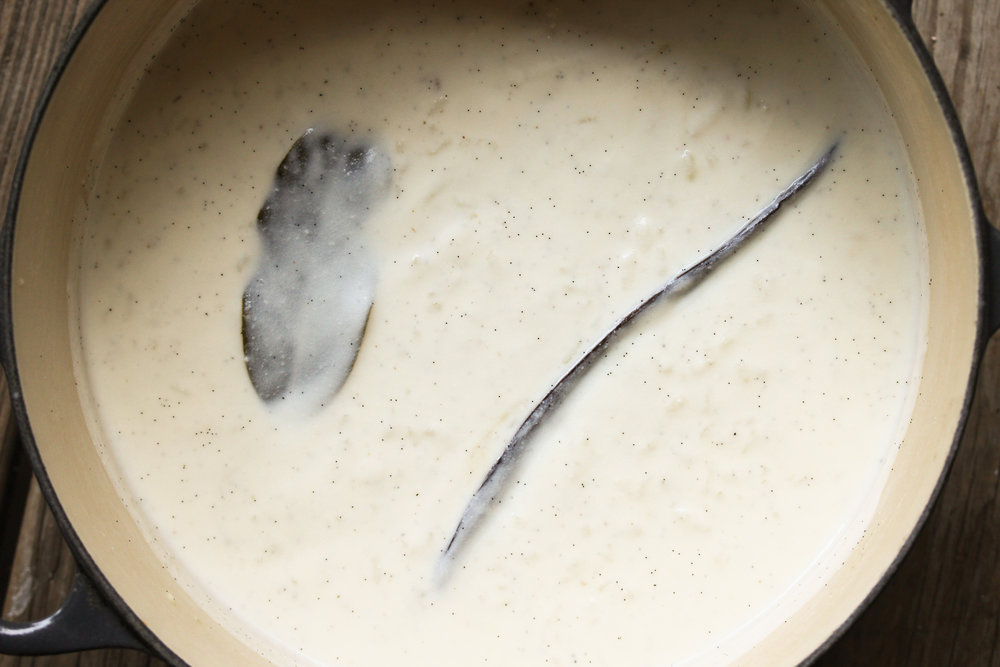
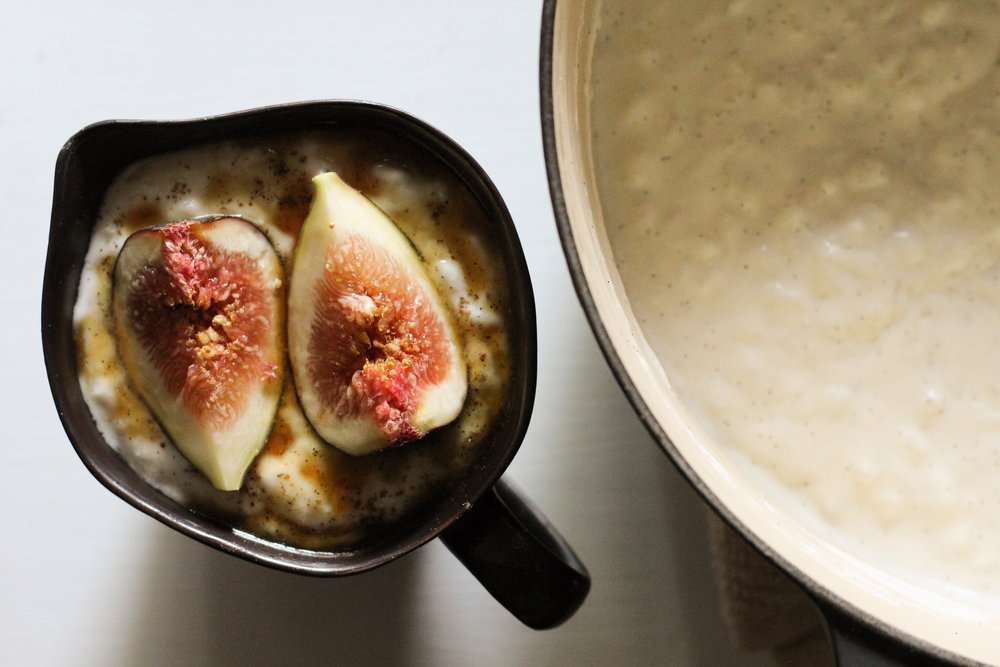
Gurdthu is delicious plain, but it’s also traditionally served with a variety of toppings. If you tend to like sweet rice pudding, it’s lovely with a drizzle of honey or date syrup. My favorite traditional gurdthu topping is melted butter, and swirling in both butter and honey makes this comfort food at its absolute best. Some people even like to eat gurdthu with Turkish coffee dusted on top, but that’s just a little too efficient for my taste.

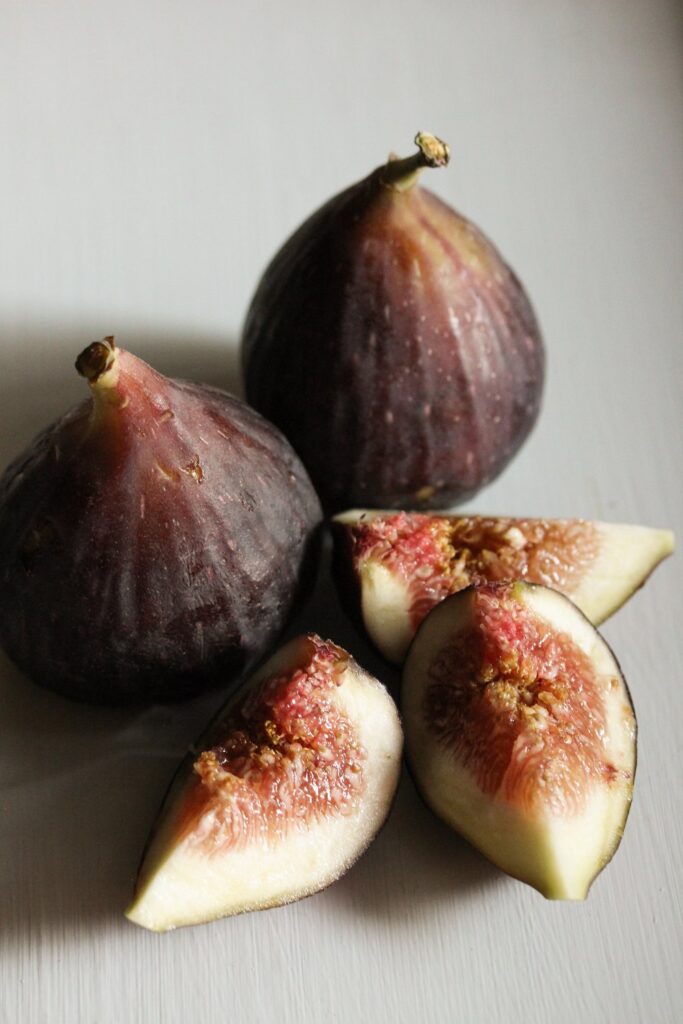
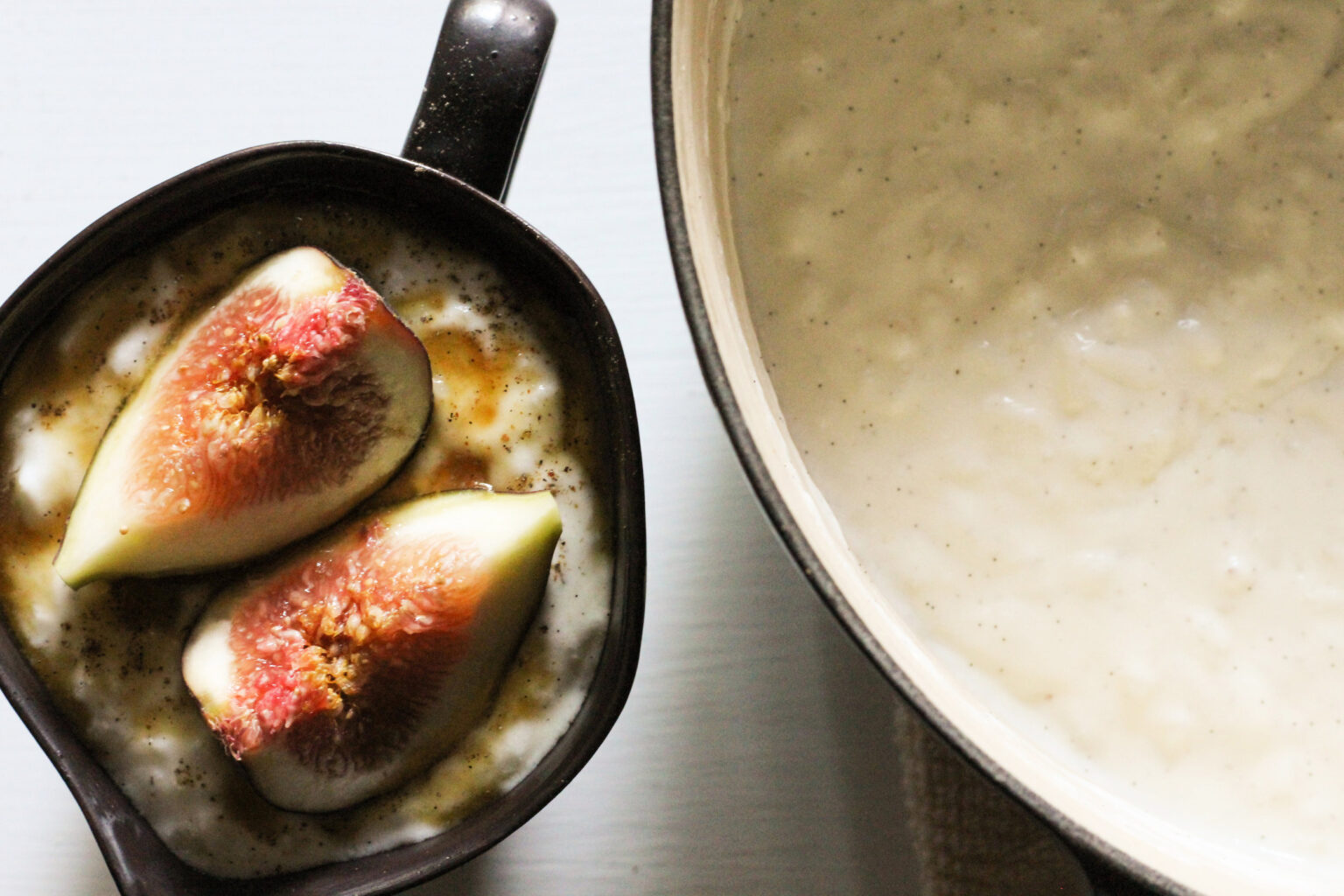
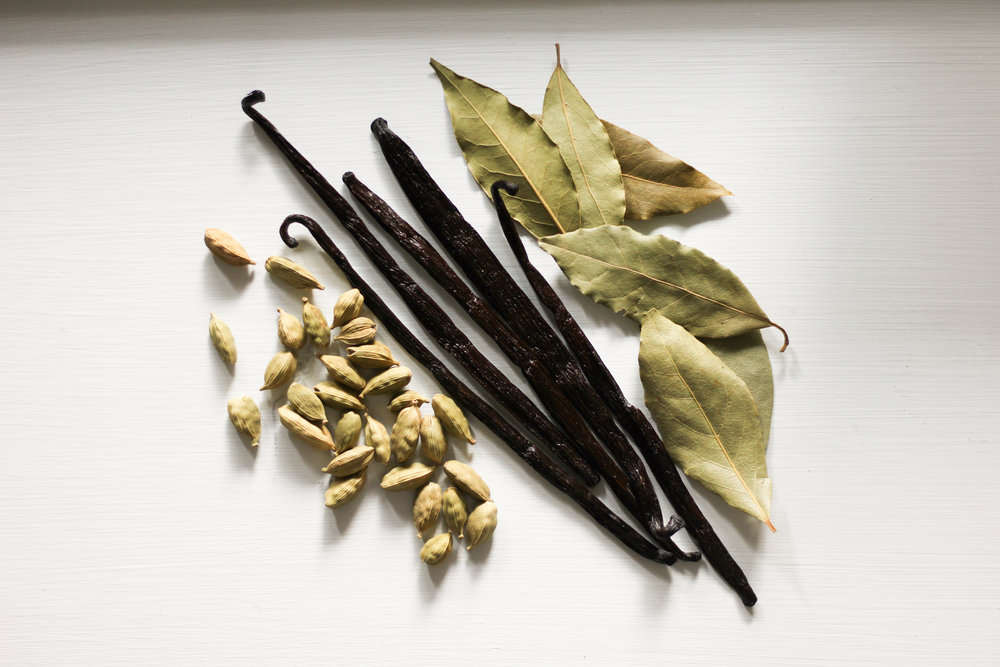
I’m currently working on a traditional gurdthu post, with homemade yogurt and the whole shebang, but for now I’ll leave you with my current favorite, since I love finding new ways to enjoy gurdthu. Lately I’ve been steeping it with bay leaves, cardamom, and vanilla, and then drizzling honey on top and serving it with fresh figs, which are at their sweetest right now. Bay leaves seem to have become pigeon-holed in savory foods, but they can add flavor to a lot more things than a pot roast. They work perfectly with vanilla and cardamom, and give everything a floral flavor that’s not too cloying. But the flavor of bay leaves is subtle, so it’s important to make sure you’re not using expired ones.
Print

spiced gurdthu with fresh figs

Print Recipe

5 Stars 4 Stars 3 Stars 2 Stars 1 Star

No reviews

  • Prep Time: 20 minutes
  • Total Time: 40 minutes
  • Yield: 8 servings

Ingredients

4 cups plain whole milk yogurt (1 quart container of non-Greek yogurt or 1/4 of a homemade batch)
1 1/2 cups water
1/2 teaspoon salt
1 beaten egg
2/3 cup medium grain rice, rinsed (e.g., Calrose)
1 vanilla bean, scraped
1 large or 2 small bay leaves
1/4 teaspoon ground cardamom, plus more for sprinkling
Honey, for serving
6 to 8 figs, cut into pieces (or another fruit if figs are not in season, such as berries or cherries).

Instructions

  1. In a stock pot, whisk together the yogurt, water, and salt.
  2. Beat the egg in a small bowl and then whisk it into the yogurt mixture.
  3. Stir in the rice, vanilla bean pod and scrapings, bay leaves, and cardamom, and place the stockpot over medium heat. Stir constantly while you bring it to a simmer, about 10 to 15 minutes. Once it comes to a simmer, lower the heat until it is maintaining a bare simmer (low or medium-low heat).
  4. Continue to stir occasionally for 20 minutes, until the rice is cooked through and the yogurt has thickened. Remove the bay leaves and vanilla pod once it is done.
  5. Serve it hot or let it cool to room temperature. Serve with a drizzle of honey, a pinch of cardamom, and a few fig pieces.
find us on instagram and let us know what you made!

Filed Under: breakfast, every recipe, gluten free, sweets Tagged With: cardamom, fall, figs, porridge, rice, summer, vanilla, yogurt

piquant lentils and rice

August 13, 2017 by Kathryn Pauline Leave a Comment

We food bloggers are always trying to show you something new. Sometimes we want to tell you all about unfamiliar ingredients or flavor combinations, like the wonders of sumac or the lovely combination of grapefruit, fennel, and pomegranate. But other times we want to share a new technique that will change the way you cook something familiar.

A few months ago, I wrote about the way I learned to make lentils and rice from my mom. The recipe calls for very few ingredients—it’s just lentils, rice, olive oil, onion, and salt. And with such humble beginnings, its deliciousness is one hundred percent a product of the way it’s made, rather than the fanciness of the ingredients used to make it. These are no imported green puy lentils, but just a simple one pound bag from the supermarket, and you don’t need much more to get it just right.

Homemade lentils and rice can sometimes turn into something that resembles the gloopy, scummy afterthought served as the one vegan option in cafeterias. But to cook perfect lentils and rice, you simply need to approach the dish with an obsessive amount of rinsing. You par-cook and then rinse the lentils, then you rinse out the pot that they were cooked in, you rinse the uncooked rice, and then you steam everything together. Everything comes out perfectly fluffy, clean, and flavorful, and when you get the timing and measurements right, absolutely nothing melts together, and you end up with perfectly distinct grains, each cooked to the perfect doneness.

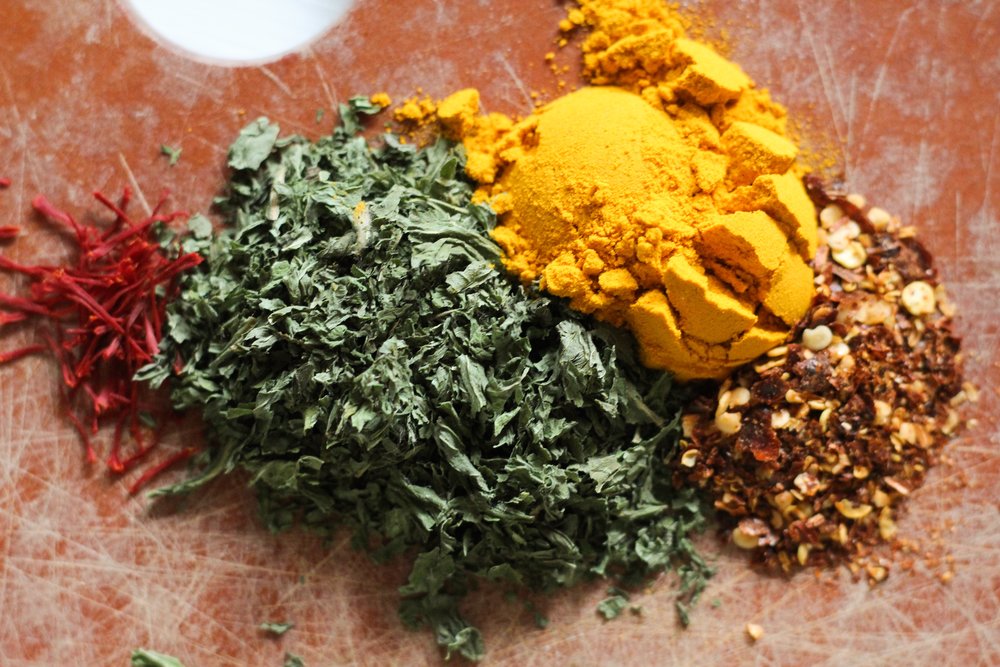
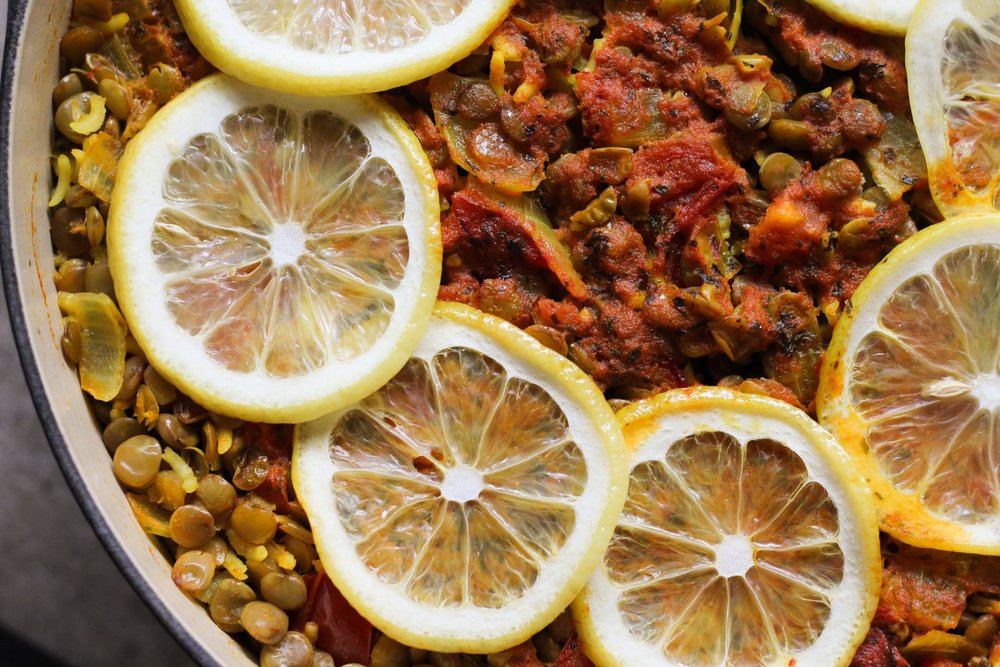
To do anything to the original recipe is to gild the lily, but sometimes it can be fun to use a standard as a template to come up with something new. So this recipe is another take on classic lentils and rice. It involves just as much rinsing as the original, but it also introduces some new flavors and colors. For herbs and spices, we’ve got turmeric, dried mint, crushed red pepper, and saffron. If you’ve never tried dried mint, I highly suggest that you make or find some because it has a flavor completely unlike fresh mint, and it’s an important ingredient in Middle Eastern and Mediterranean food.

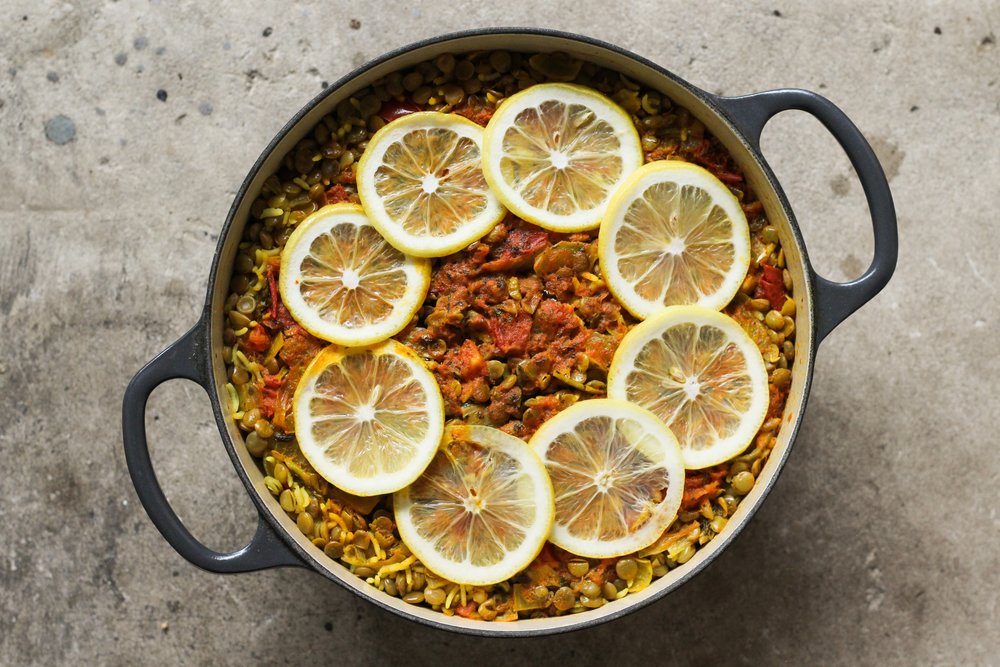
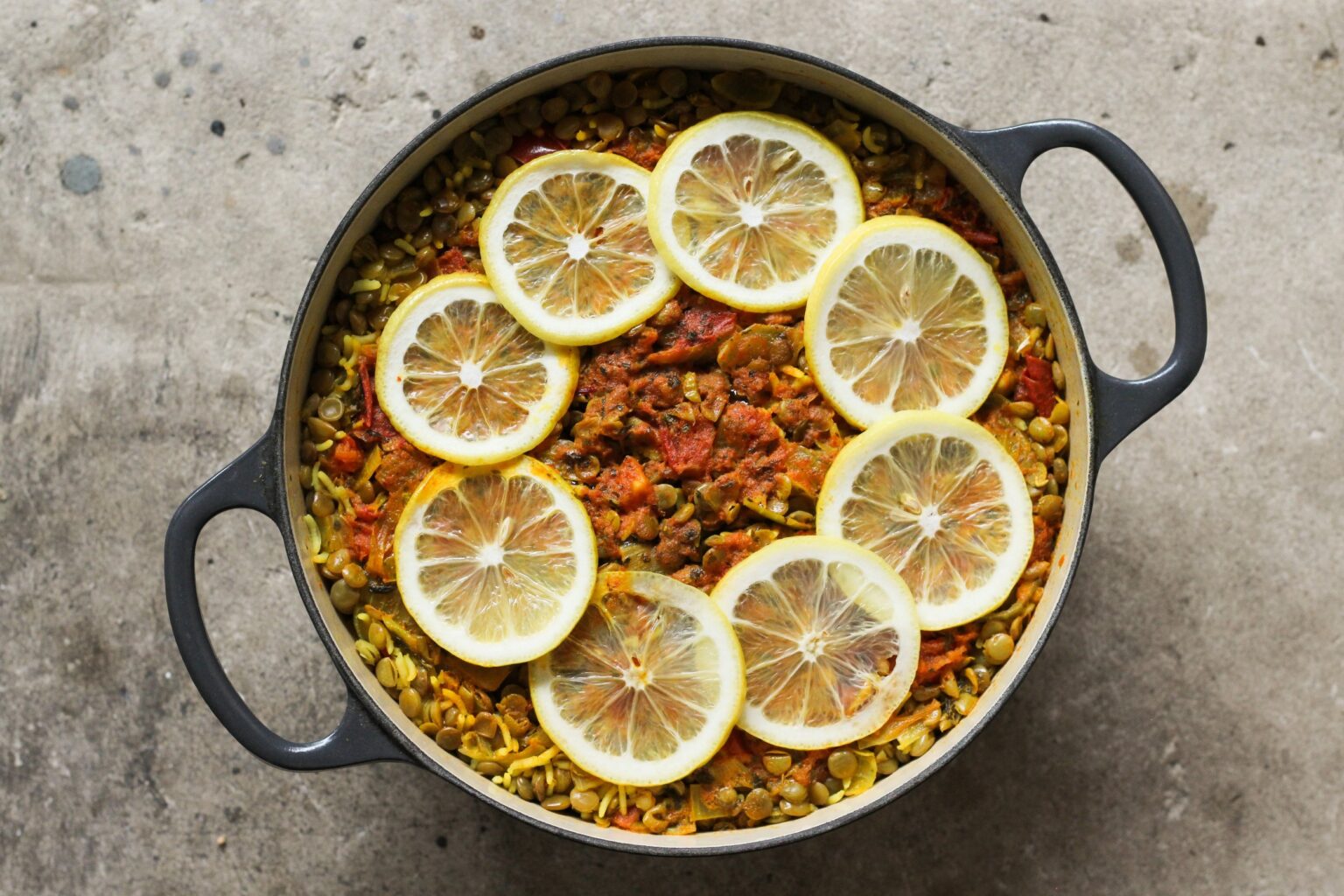
The spices add a wonderful aroma to this dish, but it’s the tomato and lemon that give this version of lentils and rice its piquancy. I’m a big fan of whole lemons, so I like to leave a ring of very thinly sliced lemons on top of the lentils and rice, which get mixed in when you fluff everything right before serving. If you aren’t a fan of the sour-bitter combination of whole lemon slices, you can remove them before fluffing. In either case, they’ll impart a lovely fragrance and tartness while the lentils finish cooking.

Print

piquant lentils and rice

Print Recipe

5 Stars 4 Stars 3 Stars 2 Stars 1 Star

No reviews

  • Prep Time: 15 minutes
  • Total Time: 40 minutes
  • Yield: 6 to 8 servings

Ingredients

1 pound lentils
1 cup basmati rice
1/4 cup extra virgin olive oil
1 1/2 cup onions
1 teaspoon turmeric
1 1/2 teaspoons dried mint
1/4 teaspoon crushed red pepper
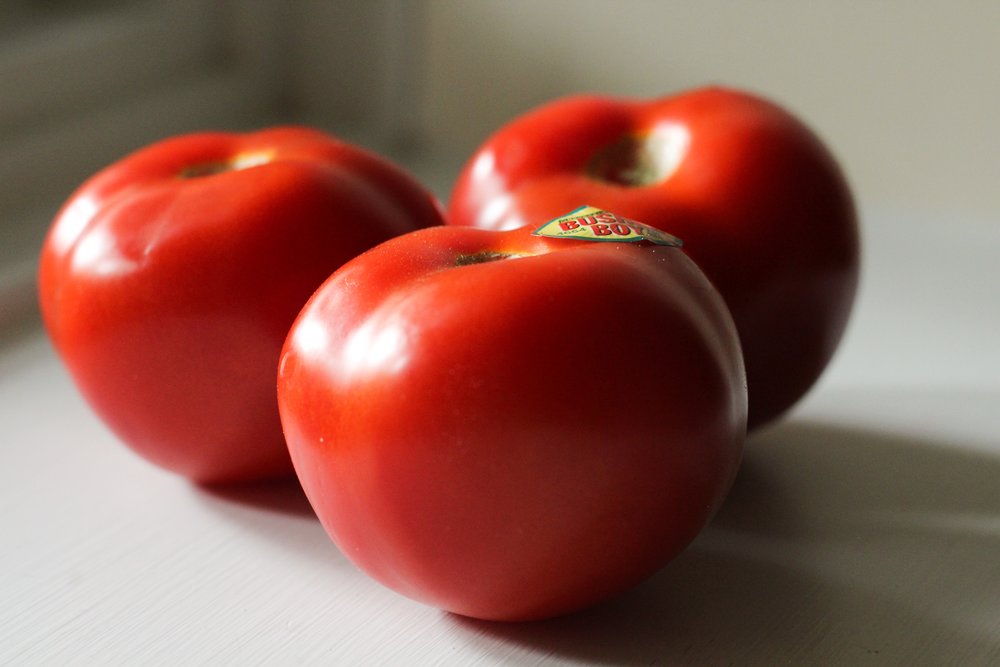
1 1/2 cups diced fresh tomatoes
1 pinch saffron (optional)
2 teaspoons kosher salt, or to taste
2 tablespoons lemon juice
2 1/4 cups boiling water
1 small or 1/2 large lemon, very thinly sliced

Instructions

  1. Rinse the lentils and sort through them for little pebbles. Cover with about 3 inches of water in a medium stock pot.
  2. Turn the heat to high. Once the pot of water and lentils comes to a boil, turn the heat to medium and boil uncovered for about 10 to 15 minutes.
  3. While the lentils are cooking, rinse the rice until the water runs clear and set it aside. *
  4. Start testing the lentils for doneness around the 10 minute mark. The lentils are ready once they are unpleasantly al dente. You should be able to chew one (it should be somewhat soft), but it should still be gritty and mealy.
  5. Once the lentils are ready, strain them and rinse them until the water runs clear. *
  6. Use a damp paper towel to wipe down the sides of the pot that you cooked the lentils in until the scum is completely gone.
  7. Add the olive oil to the pot, turn the heat to medium and add the diced onion. Cook, stirring occasionally, until the onion softens (about 5 minutes).
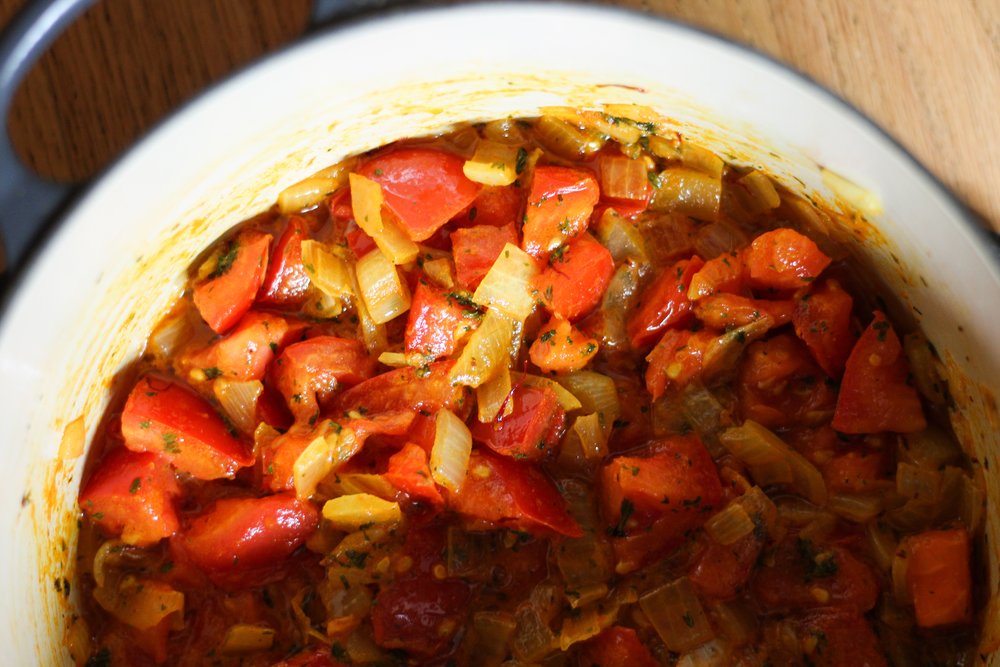
  8. Add the turmeric, dried mint, crushed red pepper, and tomatoes, and cook for 1 minute.
  9. Add the lentils back into the pot, along with the saffron, rinsed rice, kosher salt, lemon juice and 2 1/4 cups boiling water. Stir together and shake everything out into an even layer.
  10. Turn the heat to high. Once the water comes back up to a boil, cover, lower the heat to low, and cook for 6 minutes. Do not open the lid while it’s cooking.
  11. Once 6 minutes have passed, open the lid, do not stir the lentils and rice, and arrange the lemon slices on top.
  12. Cook covered for another 6 minutes. Once 6 minutes have passed, turn off the heat and keep the pot covered for another 10 minutes.
  13. After 10 minutes of resting, fluff the lentils and rice with a fork and serve.

Notes

* To do a more environmentally friendly version of the rinsing steps, you can rinse by adding water to the pot, swishing things around, straining, and repeating a few times. This uses less water than just rinsing in a colander over the sink.

find us on instagram and let us know what you made!

Filed Under: dairy free, dinner, every recipe, gluten free, lunch, main courses, side dishes, vegan, vegetarian Tagged With: beans, dried mint, lemon, lentils, rice, saffron, tomato

  • « Go to Previous Page
  • Page 1
  • Interim pages omitted …
  • Page 156
  • Page 157
  • Page 158
  • Page 159
  • Page 160
  • Interim pages omitted …
  • Page 183
  • Go to Next Page »

Primary Sidebar

Kathryn Pauline smiling

Welcome! I’m Kathryn Pauline, cookbook author, recipe developer, and photographer.

Footer

read our privacy policy

© 2017 - 2026 Kathryn Pauline