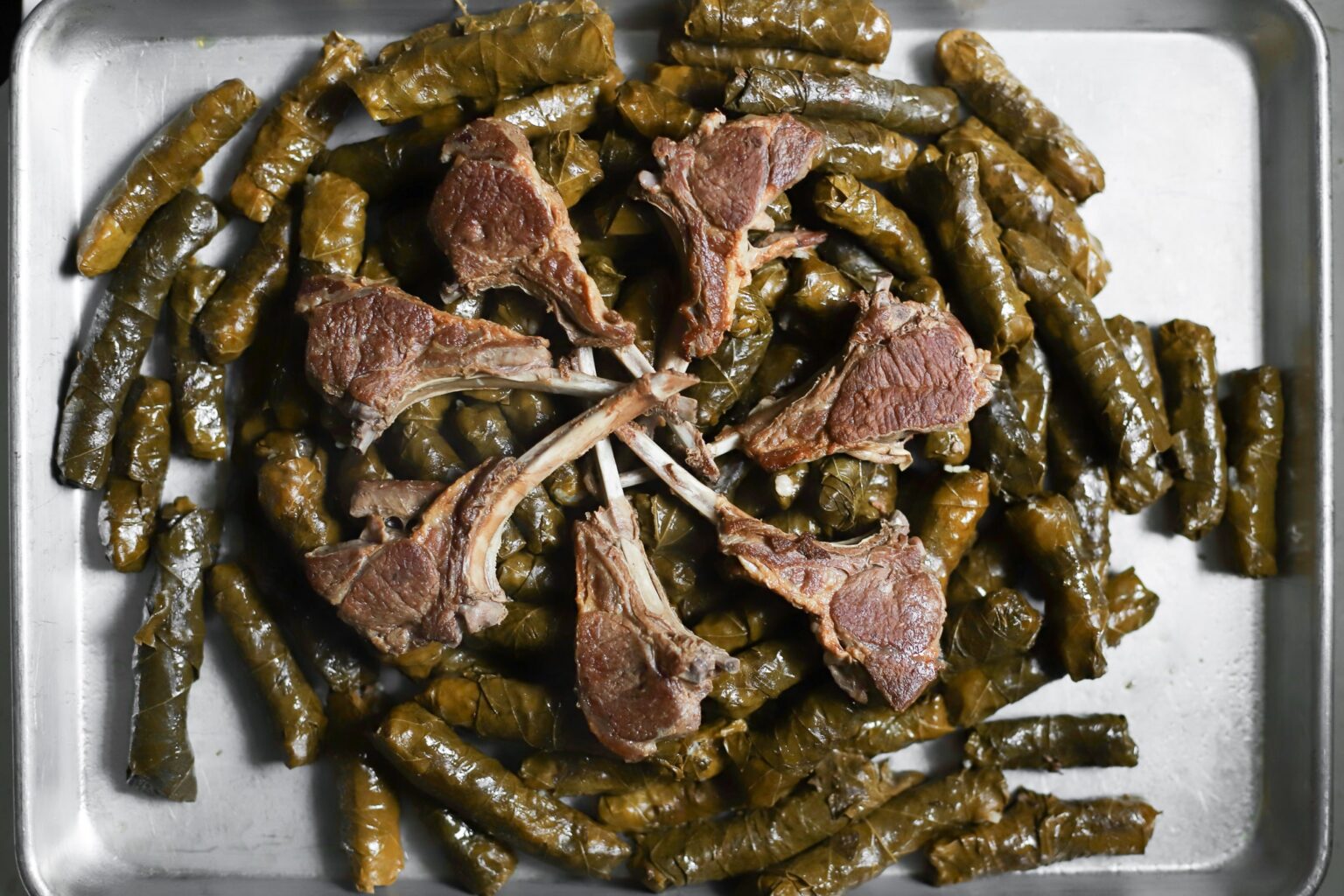
These Lebanese warak enab are pure comfort food for meat lovers. Whether you choose lamb or beef, you’re in for a treat.
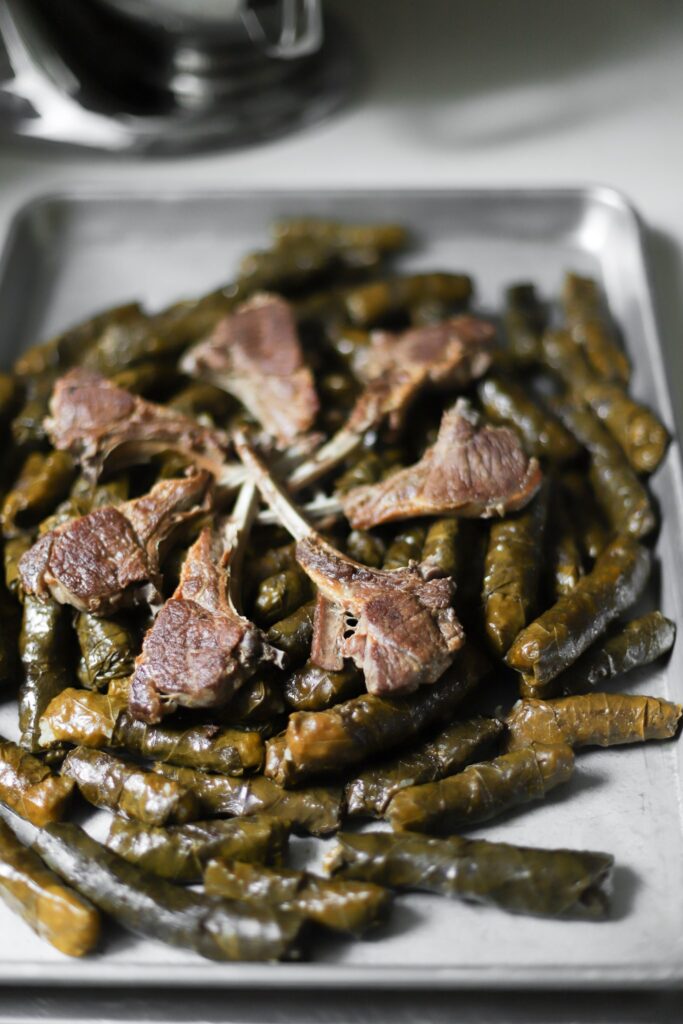
Picture this: tender loin chops nestle at the bottom of the pot, shielding the grape leave from scorching while becoming irresistibly fall-apart tender in the process.
The stuffing keeps it simple with just 7 real ingredients, but there’s no shortage of flavor. This recipe is proof that you don’t need a mile-long ingredients list to make an unforgettable dish.
Jump to the recipe if you’re ready to go, or read through some helpful tips and tricks first. And don’t miss my whole collection of dolma and mahshi for lots of similar recipes (including a few vegan versions).
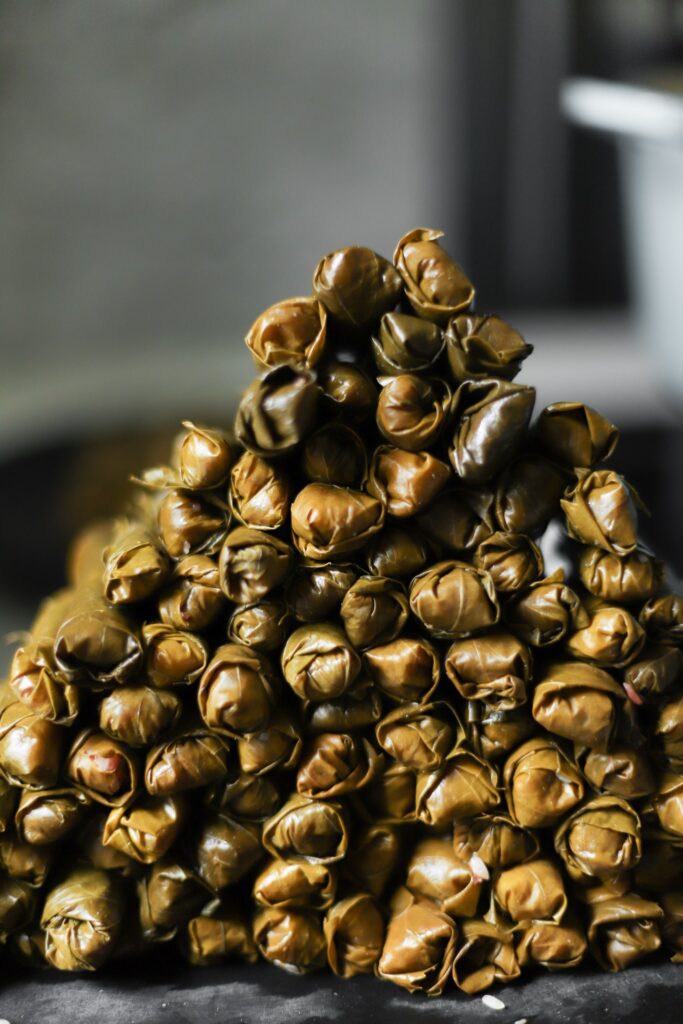
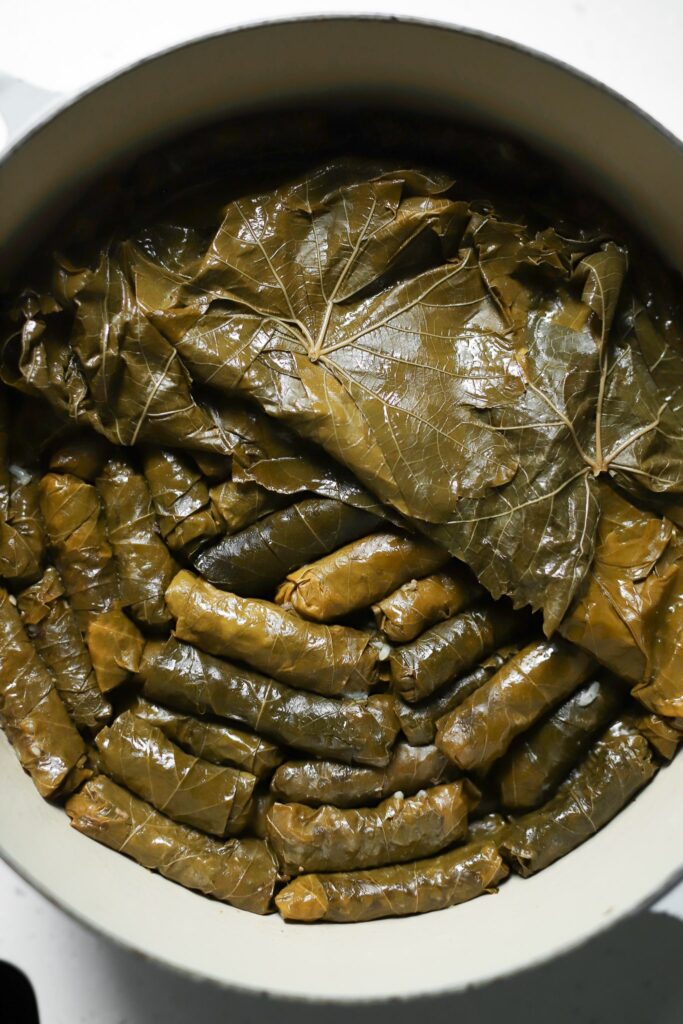
How to stuff and roll the grape leaves
Stuffing and rolling grape leaves takes a little bit of know-how. You’ll get the hang of it in no time. Here are step-by-step instructions, as well as GIFs of my mom rolling up the vegetarian version of this recipe.
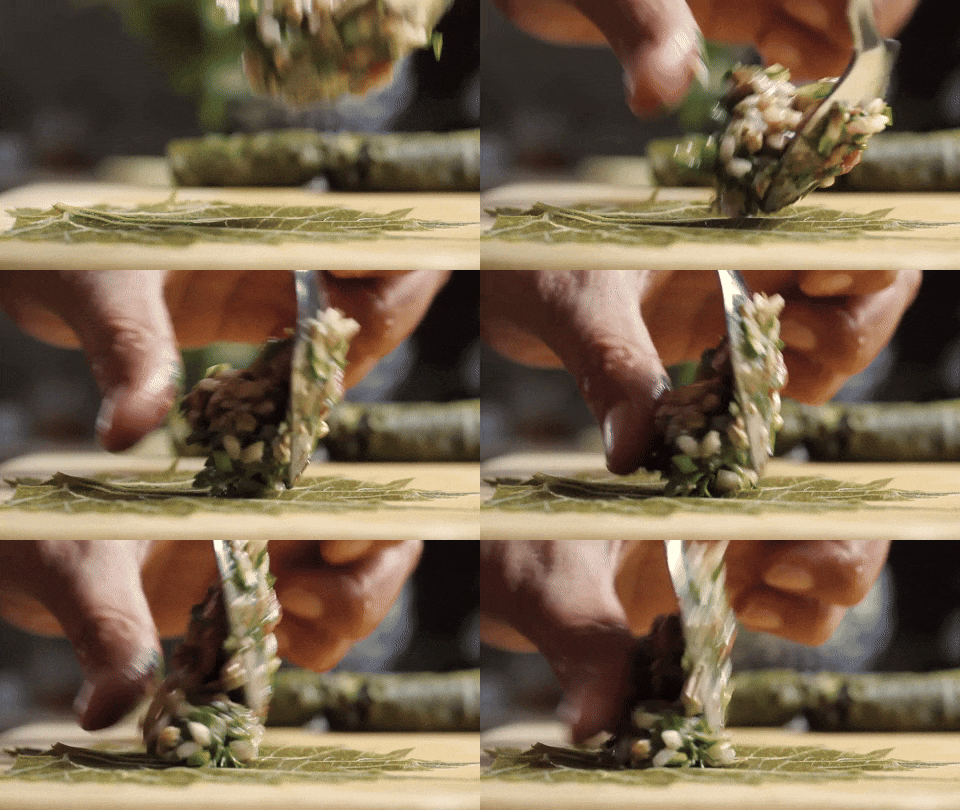
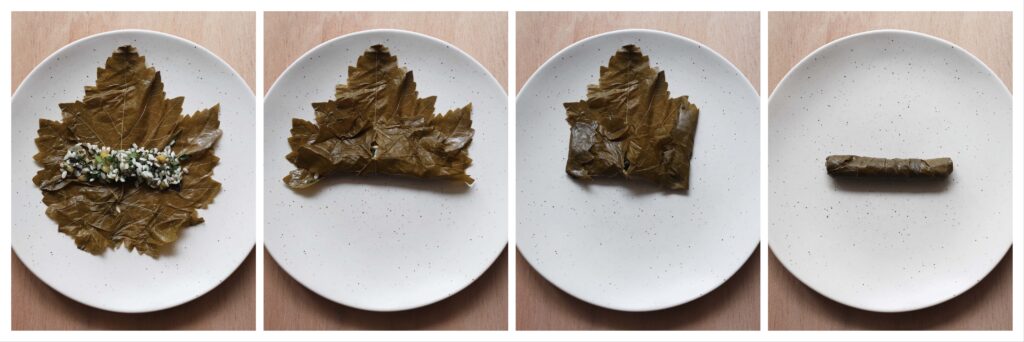
1. Start with the dull veiny side up on a cutting board. Make a log with the filling in the center of the leaf.
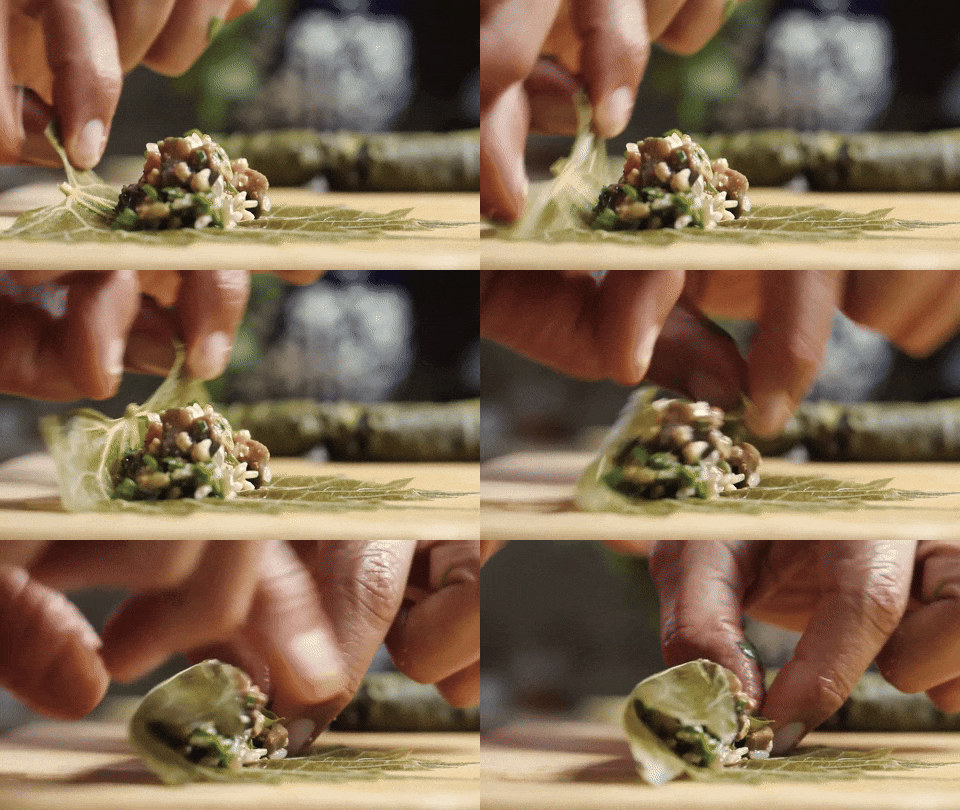
2. Fold up the bottom of the leaf.
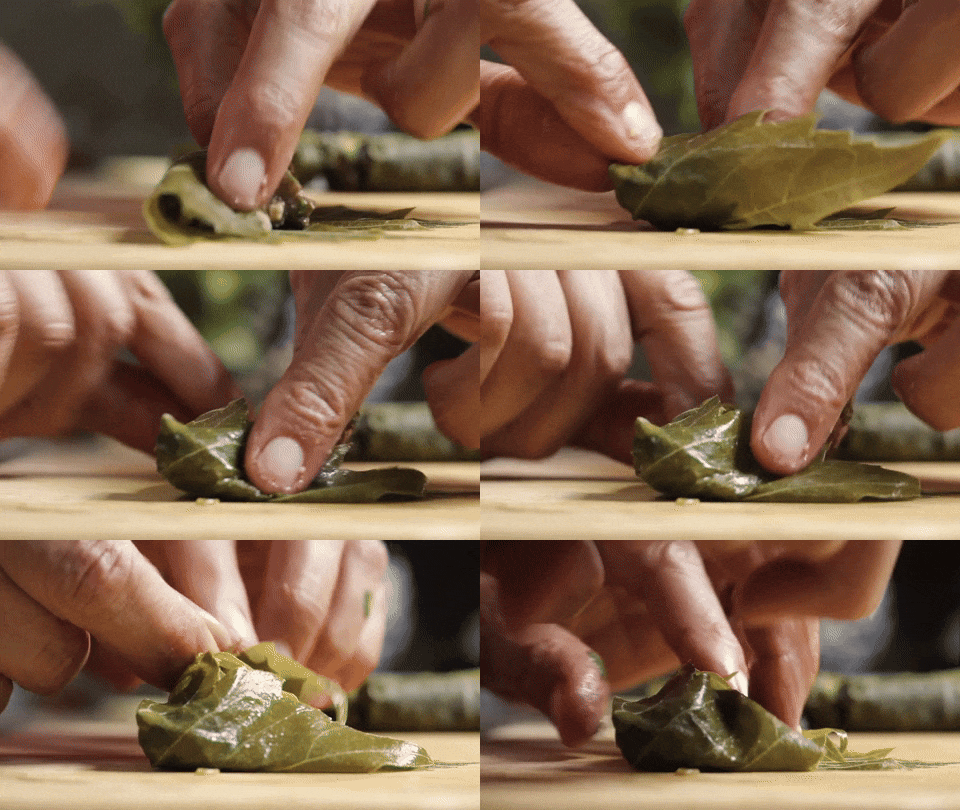
3. Fold the sides of the leaf up.
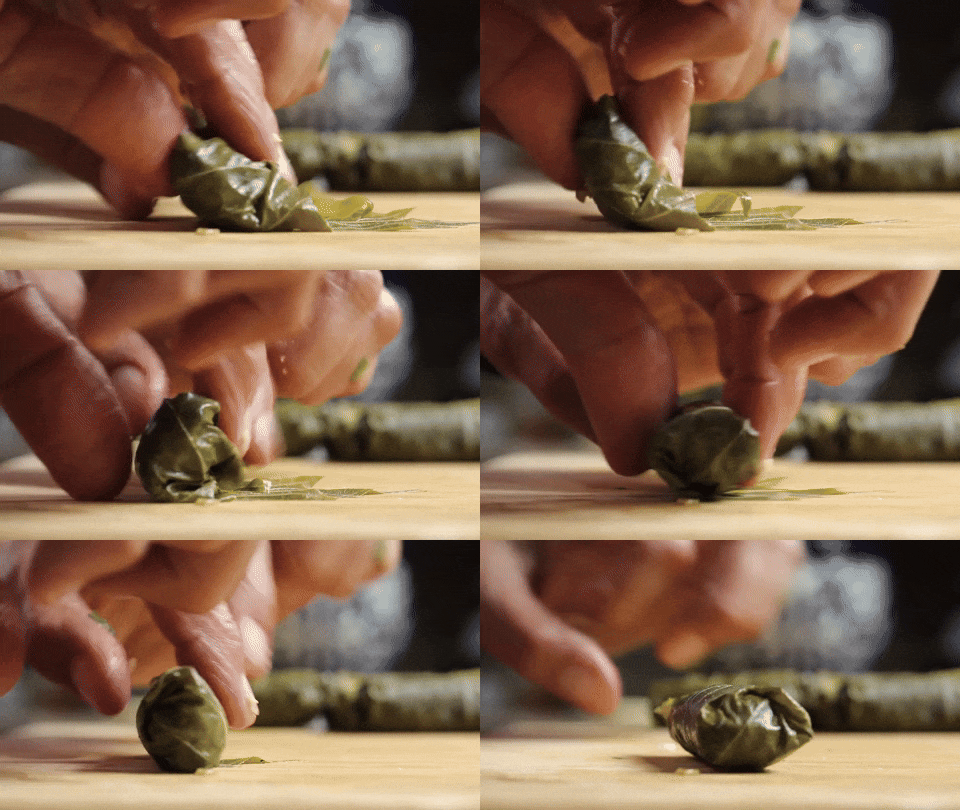
4. Roll up, putting a little pressure on the roll as you go.
Guide for warak enab first-timers:
If you’re making grape leaves for the first time (or if it’s been a while!), I’ve got you covered. All of the following tips are woven into the recipe, but here’s everything you need to know:
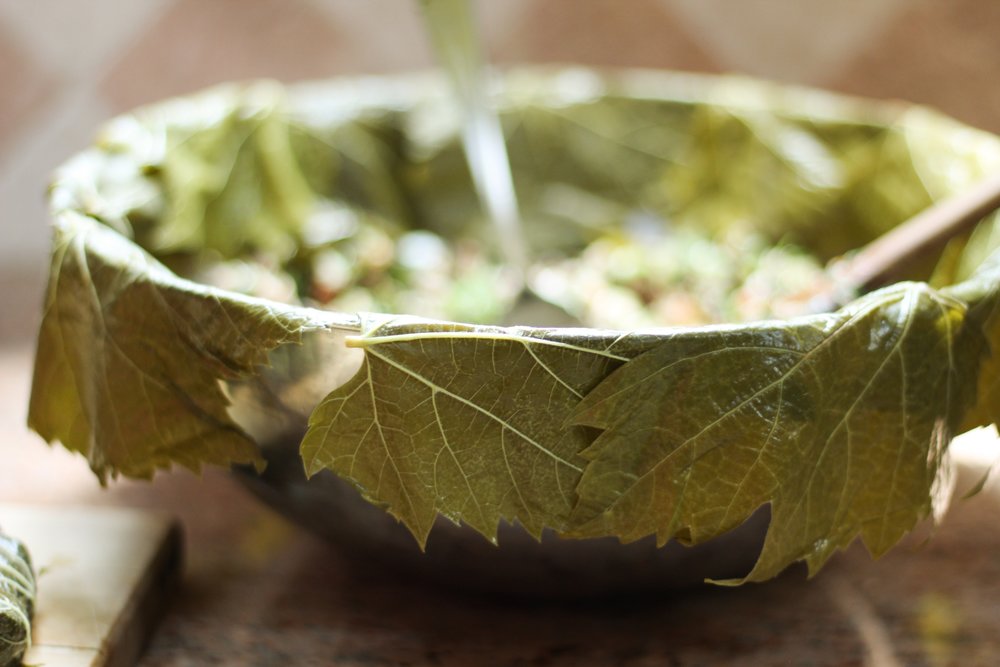
1) Start the day before if you can.
If the process seems a little daunting, you can make the components ahead the day before you plan to serve. Blanch and prep the grape leaves, make the stuffing, and store both separately in the fridge. Then the day you want to serve, stuff the grape leaves, build the pot, and let it simmer away.
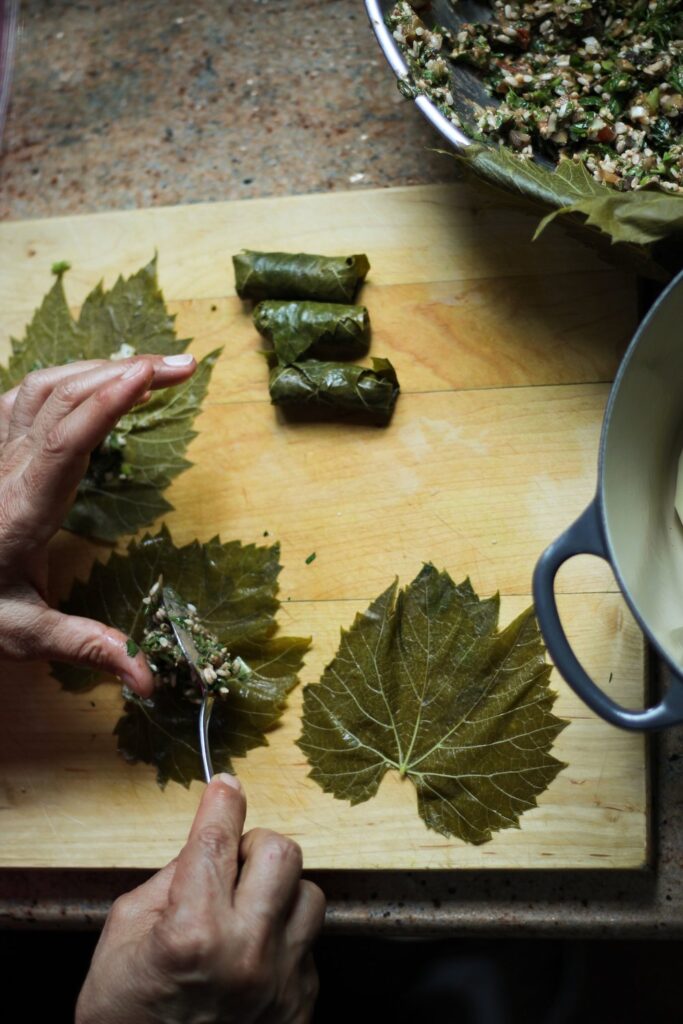
2) Use the right amount of stuffing per leaf.
Many recipes will tell you “don’t over-stuff your leaves,” but I’ve seen some folks make grape leaves who should be told the opposite advice. See the photos in the recipe for a guide, and try to wrap them a little snugly, but not extremely tightly.
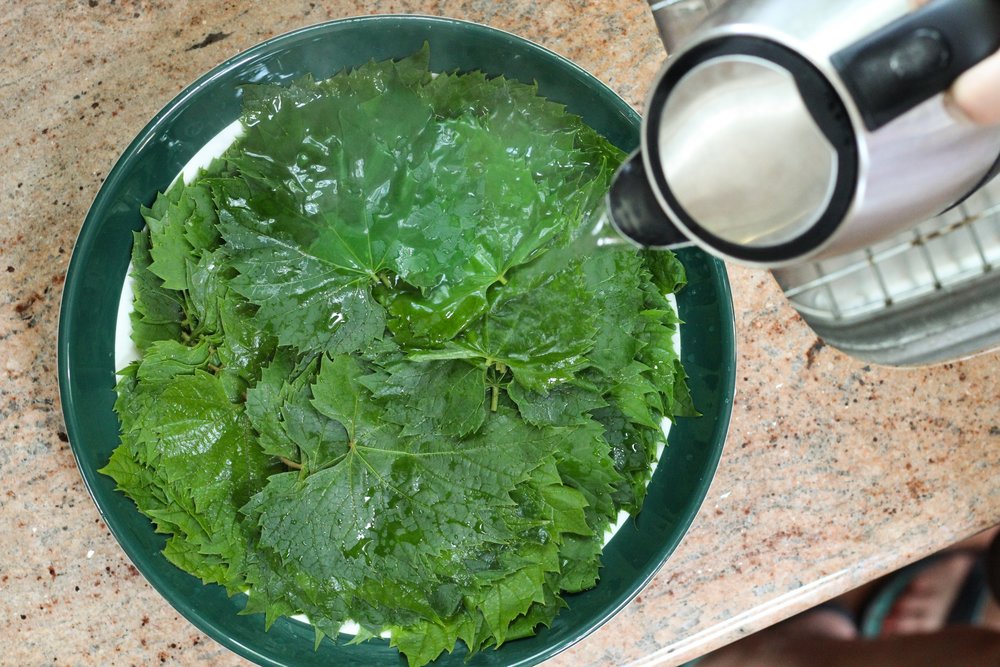
3) Make sure you blanch your grape leaves if they’re from a jar or vacuum-sealed bag.
I’ve included blanching instructions in the recipe below, so just make sure you don’t skip that step. It is 100% mandatory if you want to end up with something edible.
Why not just give them a quick rinse instead of fully submerging them in water? Soaking helps rinse off the extra brine better than running water—it gets between the leaves. Plus, the hot water helps remove any oily residue so the leaves are clean and ready to roll.

4) Use your own judgment about how much salt to add.
Even after rinsing your brined leaves, they’re still going to be quite acidic and salty. Taste them to get a sense of what you’re working with. Then decide how much salt to add to the simmering liquid and meat.
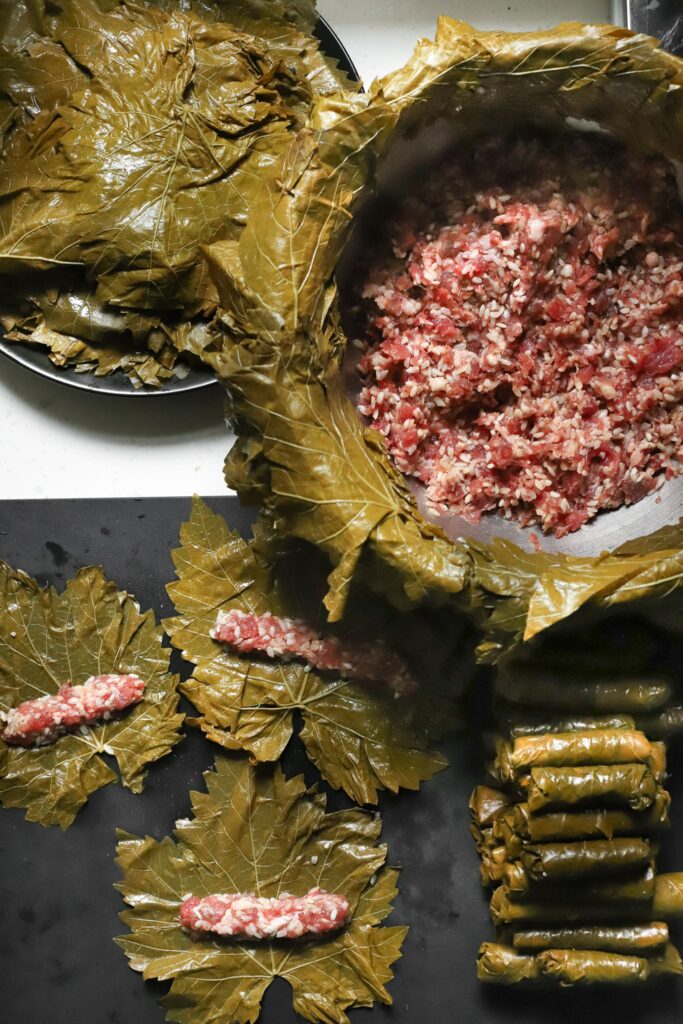
5) The dull, veiny side of the leaf should face the stuffing (the shiny, smooth side should face out).
Place the dull, veiny side of the grape leaf facing up before adding the stuffing. There’s no real rule saying you have to. But for that classic, glossy look, it’s worth it. They just look more appetizing this way, and I have a feeling they hold together a little better too.
One caveat: If you plan to bring a pot over to an auntie’s house, this step becomes 100% mandatory. 😉
What sets Lebanese warak enab apart from other grape leaves:
There is no one right way to make warak enab. Recipes vary a ton from person to person. But here are some things you can probably count on:
1) Delicately thin rolls
In my experience, Lebanese grape leaves are usually rolled into elegantly thin wands. This shape works great with a more meat-heavy filling, since it’s easy to shape the meat into a long line before rolling it up. If you can’t get them quite as thin as you’d like, no worries—they’ll still turn out great. Above all, just make sure you don’t over-stuff them.
2) Simple, hearty flavors
Vegetarian grape leaves are a whole other story. But meaty warak enab are not usually flavored with a ton of spices or herbs. It’s usually more about the flavor of the lamb/beef, lemon, and grape leaves.
3) A nice amount of olive oil
You’ll usually find a decent amount of olive oil in most recipes, both in the filling and in the simmering liquid. It makes them super rich, but not heavy. I learned this particular secret from chef Maria Bizri.
A world of grape leaves
There are lots of different kinds of stuffed grape leaves out there. Even within one country, you’ll find a ton of variation from region to region and family to family. Here are a few others to keep an eye out for:
- I grew up with Assyrian stuffed grape leaves (prakhe), which my family makes with a ton of parsley, dill, and cilantro. We often made ours vegetarian with mushrooms and walnuts.
- Syrian grape leaves (yabraq) are a little sweet and sour, like my friend Tony’s recipe, which has a ton of meltingly-tender whole garlic cloves.
- There’s a lot of regional variation within Palestinian grape leaves (warak dawali), and my friend Abeer’s recipe is flavored with lots of different vegetables on the bottom of the pot. Her recipe’s stuffing is also super flavorful, with seven spice and parsley.
- Persian grape leaves (dolmeh barg) are super fragrantly flavored and often folded into perfect pentagons.
All just to say, there is a ton of variety out there! These were just a few highlights, and there are about two dozen other regional variations I could’ve added to this list.
PrintWarak Enab (Lebanese grape leaves), beef or lamb
- Prep Time: 45 minutes
- Total Time: 2 hours
- Yield: serves 8 to 10
Ingredients
- About 125–150 grape leaves, jarred or vacuum sealed (about 600g after draining)
- ½ tsp neutral oil
- 7 to 10 small lamb* chops (450-650g)
- Salt to taste
- 2 pounds ground lamb * (905g)
- 1 1/2 cups uncooked medium grain rice, rinsed (300g)
- 2 teaspoons Lebanese baharat ** (3g)
- 6 tablespoons extra virgin olive oil (80g), divided in half
- 2 cups stock or water (480g)
- 2/3 cup lemon juice (160g)
Instructions
- Prepare your grape leaves: Strain your jarred grape leaves well, and then blanch them in a large pot of simmering water for about 3 minutes. This washes away some of the brine that’s still clinging to them.
- Preheat a 7 to 8 quart dutch oven over medium-high heat for a few minutes. Season the lamb chops with salt to taste (about 1/2 teaspoon). Swirl 1/2 teaspoon oil over the dutch oven, then add the lamb chops and let them brown for about 8 minutes per side. Once they’re deeply brown, remove the dutch oven from heat and arrange the lamb chops in an even layer on the bottom. Set aside while you work on the grape leaves.
- Combine the ground lamb, rice, baharat, salt to taste (about 1 to 2 teaspoons, depending on how salty your grape leaves are), and half of the olive oil. Mix together until evenly distributed.
- Combine the other half of the olive oil with the stock and lemon juice (If the grape leaves are extremely salty, use water instead of stock and do not season the liquid).
- Wrap the grape leaves into long, thin rolls: place a leaf rough- and veiny-side-up on a cutting board. Place the stuffing in a long and thin line in the center of the leaf. Fold up the bottom. Fold in the sides, but don’t fold in very far. Roll away from yourself, trying to keep the roll somewhat tight. See the video below the recipe, or photos below:
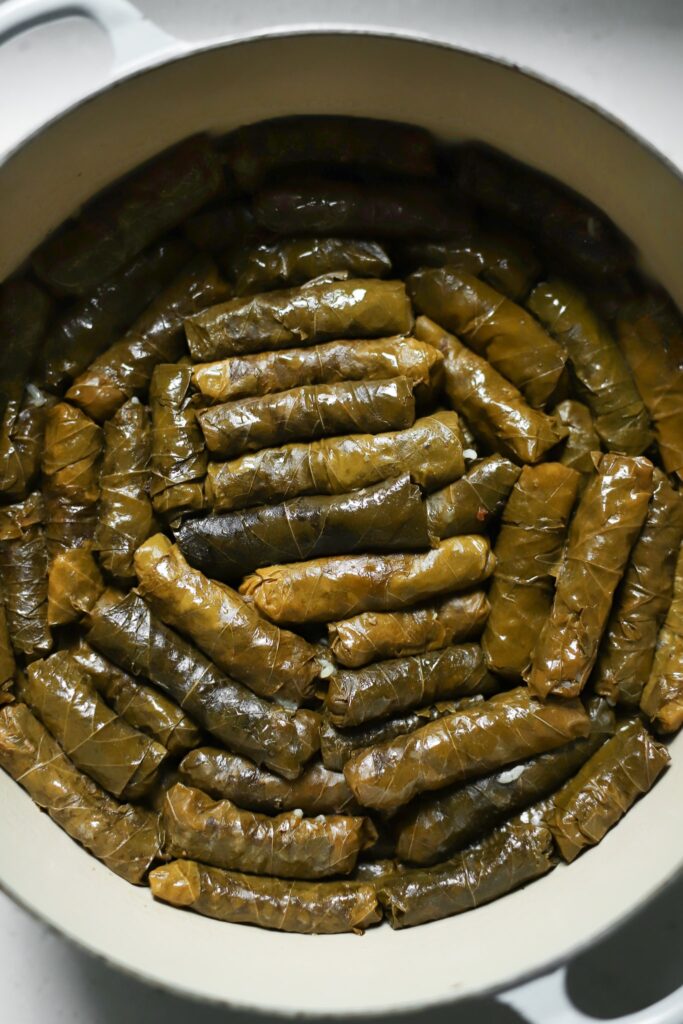
- Use any remaining grape leaves to fill in gaps between lamb chops at the bottom of the pot. Arrange stuffed grape leaves in the pot in about 3 layers, on top of the lamb chops, and top with any more extra grape leaves you might have.
- Microwave the liquid until hot, and then pour over the top of the stuffed grape leaves. Set the pot over medium-high heat, cover with an upside-down heat-proof plate, and allow it about 5 to 10 minutes to come to a full simmer. Once it’s simmering, reduce the heat to medium, and cook for another 5 minutes covered with a lid. By this time, the whole thing will be heated through, and you should gradually reduce heat to low while you cook covered for another 40 minutes. During the 40 minutes, bubbles should break the surface at a simmer.
- Once the grape leaves are done cooking, remove from heat and let it sit covered for 30 minutes to coast and cool slightly. Once it’s rested, remove the lid, remove the plate with tongs, place a tray or large serving plate over the top of the dutch oven, and carefully flip it over.
(If video does not appear below, please disable ad block)
Notes
* To make this recipe with beef instead of lamb, use ground beef for the filling instead of ground lamb, and use potato slices or scraps of beef in place of the lamb chops.
** If you don’t have a baharat blend, you can substitute 1/4 tsp freshly ground black pepper, 1/4 tsp ground cumin, 1/4 tsp sweet paprika, and 1/4 tsp ground coriander seeds. If you don’t have coriander seeds, use a pinch of cinnamon instead.