The moment I discovered that I could use my stainless steel pan to turn out flawless, no-stick scrambled eggs, I sent all my nonstick pans to Goodwill. That day, I learned how to cook with stainless steel properly, and I have never once looked back.
So what makes this the ultimate guide to cooking with stainless steel? Well, most guides say something like: “Just preheat your pan, but not too much, or you’ll burn your oil!” … and okay, that’s not wrong! But what on earth is the average home cook supposed to do with that?
In this post, I’m going to walk you through exactly how to cook with stainless steel. We’ll go step-by-step, we’ll talk best practices, and we’ll even get to a recipe + video for scrambled eggs in stainless steel. You’re going to walk away armed with the understanding you need to fully master this technique.
Let’s learn how to cook with stainless steel!
How to cook with stainless steel, step-by-step
Here’s the gist of my technique. But make sure you read the rest of the post and watch the video—don’t just waltz into the kitchen with this summary. Once you do your homework, this summary will serve as a handy reference:
- Dial your burner to its “sweet spot” (somewhere around medium-low) and place a 9.5 inch [24 cm] stainless steel skillet to preheat. It’s done heating once water drops dance across the surface of the pan. This will take about 7 minutes for gas, 3 minutes for induction, or 10 minutes for electric.
- Add a glug of oil and use tongs to sweep the oil around the pan with a paper towel until it’s very evenly coated in a thin layer.
- Crank the heat to high, add another small, even drizzle of oil (for things like eggs) and immediately add the ingredients (for meatballs, potatoes, burgers, what-have-you, you should instead just start with a more generous pour).
- Let your ingredients sear (or let your eggs start to form curds) before disturbing them. Reduce the heat gradually if you’re working with something that takes longer than a couple minutes to cook.
Best practices for cooking with stainless steel
Here are more details you need to know to make the above technique work. The summary above is like a padlock and this section is the code you need to open it:
Start with a quality pan.
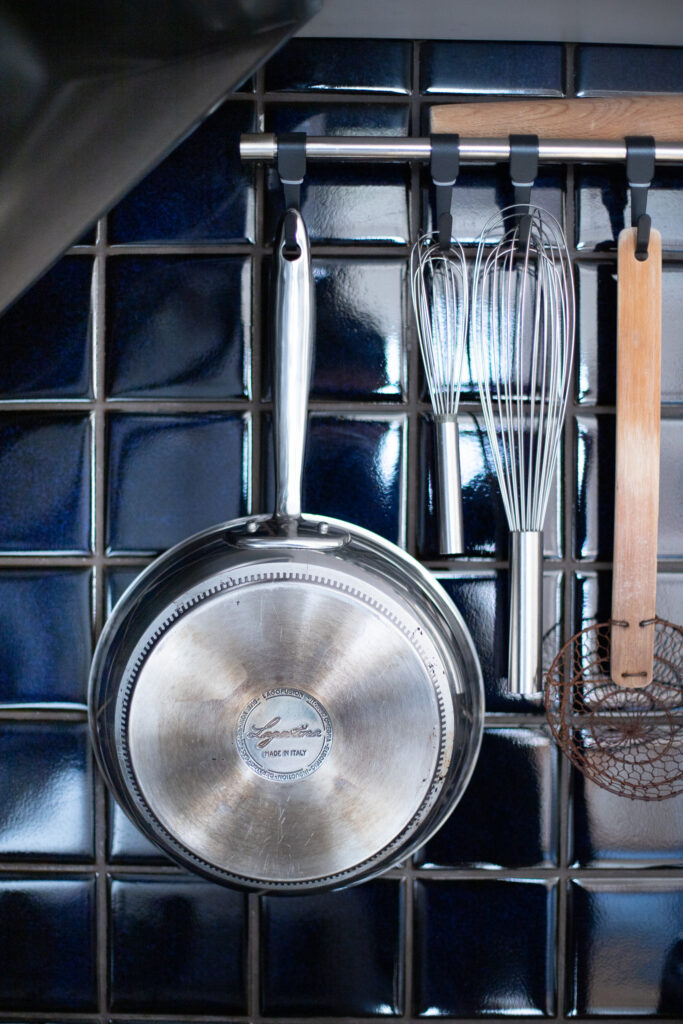
This first tip is kind of annoying, but it’s necessary: This technique will only work in a good stainless steel pan. It doesn’t have to be a splurge. But it has to have 3 to 5 layers of laminated steel and aluminum. Very high quality pans can mimic teflon-levels of nonstick (mine is a 5-ply Lagostina). But even mid-tier pans can achieve a pretty good level of nonstick (I’ve used 3-ply Cuisinarts to pretty good effect, and those run more like $30).

Preheating: Discover your stove’s “sweet spot.”
Hitting the perfect temperature between too-cold and flaming-hot is tricky if you’re just blasting the heat and trying to catch it at the right moment. Instead, figure out your stove’s sweet spot, or its perfect setting where the pan reaches the right temperature and stays there. It’s a one-time investment of 10 to 20 minutes, and once you know it, you’ll never have to figure it out again! Here’s the test:
- Preheat your stainless steel skillet over medium-low heat and set a timer for 7 minutes for gas (3 minutes for induction, 10 minutes for electric).
- Once your timer goes off, check to see if water droplets dance across the surface. If they don’t dance, that means your heat is too low, so you should raise it a tad. If they do dance, lower the heat a tad to test whether it’s too hot. Set a 5 minute timer. Once your timer goes off, test it out again.
- Repeat this process, adjusting up and down, trying to find the lowest possible temperature where water still dances across the surface.
- Once you’ve found it, memorize the sweet spot and use it whenever you want to preheat your pan.

Oil: Use my 2-pour strategy.
There’s nothing wrong with simply swirling to coat, but if you do so, you’ll need to use a lot of oil to get an even coating. If on the other hand, you want to add a more moderate amount of oil for something like eggs, you can do what I do: Add a glug of oil, use tongs to wipe the oil around the inside of the pan with a paper towel, just until it thinly coats the entire surface. Then add a small, even drizzle of oil and proceed with frying.
What kind of oil can you use? If you master the “sweet spot,” you can often get away with using extra virgin olive oil without it smoking. Avocado or canola are safer if you are not yet a pro. Make sure you use enough oil—if you’re making something that’s going to absorb a bit (e.g., potatoes), you’ll want to add a bit more than just a small drizzle.

Adjust the heat and oil.
Crank the heat up right before adding the ingredients. Adding oil and ingredients fights against the stove’s heat source, so it’s good to boost it a bit in the beginning.
For things like eggs, which cook very quickly, don’t bother lowering the heat back down. But for things like potatoes (and so on), gradually lower the heat to keep from burning. You may need to temporarily boost the heat again right before you turn them, and you may need to add more oil then as well.

Adding ingredients: don’t crowd the pan.
When you’re adding ingredients, make sure you don’t add so much that the pan over-crowds. Overcrowding will cool it down and cause ingredients to stick. Work in batches if you need to. For instance, cook 2-3 eggs at a time.

Don’t turn or agitate your ingredients too soon.
Let your ingredients sear before flipping or turning them. Once those ingredients are in the pan, let them sit for at least a couple minutes without messing with them. Or in the case of eggs, let some curds form before agitating them. If you try to agitate or turn your ingredients too soon, they’ll be more likely to stick.

Don’t use a silicone spatula when making scrambled eggs in stainless steel.
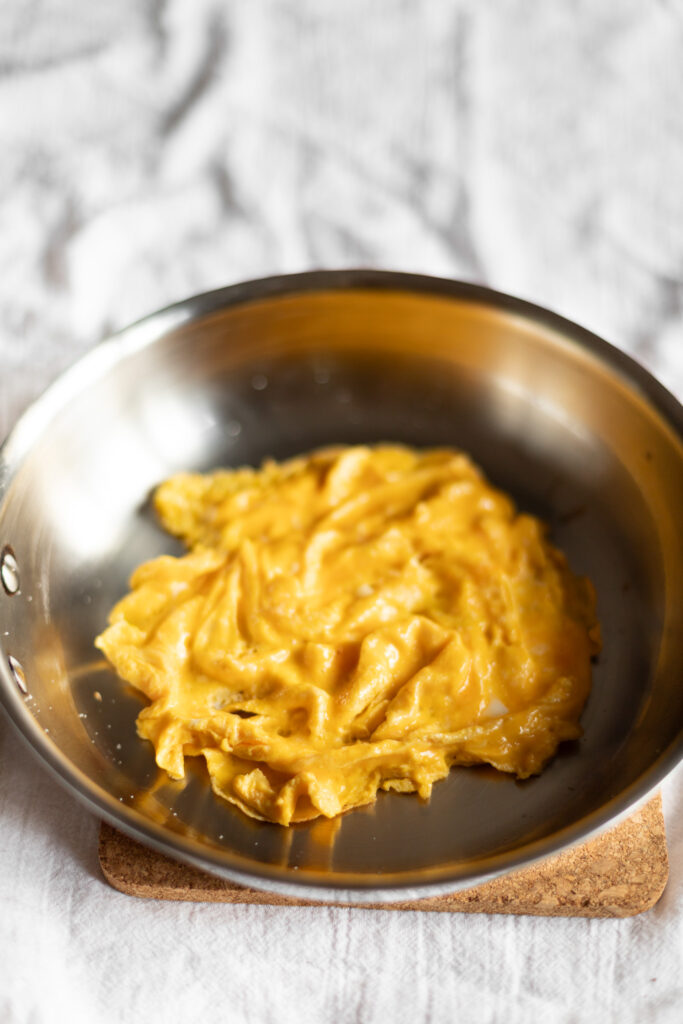
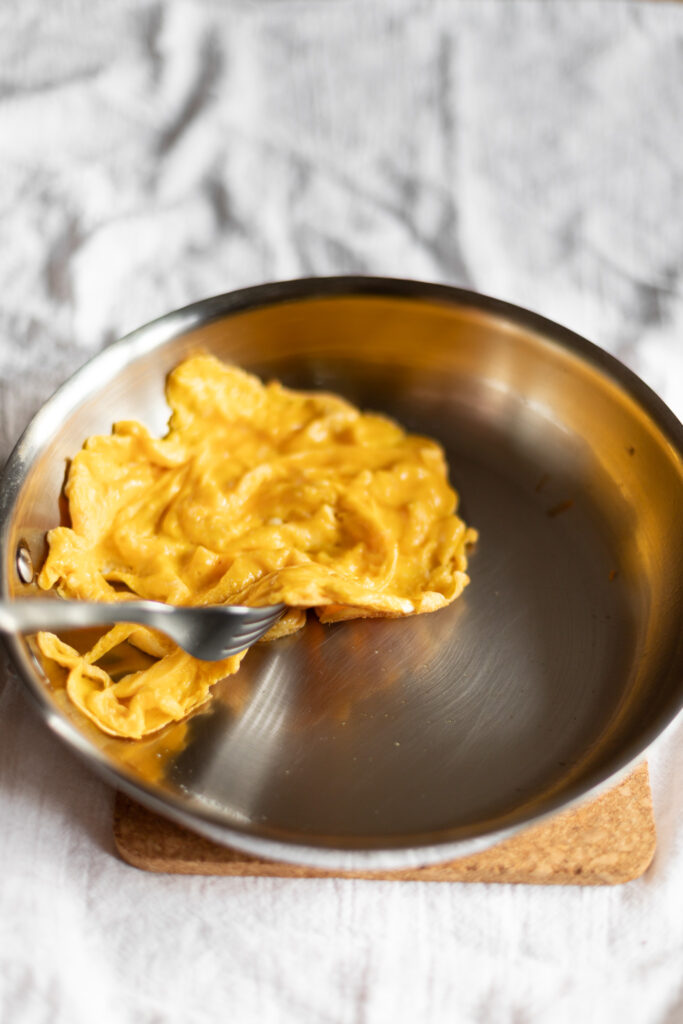
It’s funny—the exact tool that’s perfect for making eggs in a nonstick skillet works horribly with stainless steel. The problem? A silicone spatula squeegees oil off the surface of the pan, leaving unprotected steel in its wake. And when raw egg falls back on that unprotected steel surface, they will stick like crazy. Instead, use a fork or chopsticks to shift the eggs around the pan.

Clean it like you mean it.
Maintenance is pretty simple—clean your pan normally with soap and water, or you could even just throw it in the dishwasher if it is dishwasher safe. But every so often, you might notice some burnt oil buildup on the inner surface, or you might notice it is not as no-stick as it once was. When that happens, use something like Bar Keeper’s Friend or Bon Ami to give it a bit of a scrub. I do this about once every 2 weeks. The shinier, the better!

Add eggs and batters in a swirling pattern.
Pour liquids into the pan in a swirling pattern so that you don’t create a cold spot on the pan and so the oil remains evenly distributed. In other words, don’t just pour the liquid onto one spot on the pan—try to hit every spot of the pan as you pour.
This goes for eggs, crêpe batter, dutch baby batter, and anything else that goes from liquid to solid. But I’m not talking about simmering liquids like oatmeal, which we’re not worried about sticking.
What do you do if all goes wrong? 🫣
It happens! Sometimes I don’t pay attention and only preheat my pan for 2 or 3 minutes, and everything sticks. Sometimes I’m cooking in an airbnb and I overestimate the strength of the stove.
If you under-heated your pan and everything is sticking, a metal spatula is your friend. I’ve saved many an egg-breakfast by cranking up the heat, giving it a good scrape to dislodge, adding a bit more oil to the pan, and flipping it. Not great, but totally edible.
If you’re making something meaty (like meatballs or burgers), add more oil, try your best to hold everything together (as with the eggs, scrape instead of lifting), and deglaze the pan with about 1/4 cup of water at the end. All those stuck-on brown bits (assuming they’re not burned) will make a delicious pan-sauce.
If you over-heat your pan and your oil starts to smoke, be safe! Hot oil can catch fire. Learn how to put out a grease fire in case you overheat your pan. If it’s smoking and not on fire, cover the pan and remove it from heat. Wait for it to cool down enough, wash it with Bar Keeper’s Friend or Bon Ami, and try again. Do not cook in smoking oil.
Now that you know exactly how to cook with stainless steel, let’s get to that recipe for cooking scrambled eggs in stainless steel + another video!
PrintScrambled Eggs in Stainless Steel

Be sure to read the whole post above this recipe card before cooking!
(This is the one and only time I’ve ever started a recipe card with a note like this one, so you know I’m serious 🫡)
Ingredients
- Extra virgin olive oil
- 2 to 3 beaten eggs*
- Salt
Instructions
- Dial your burner to its sweet spot** and place a 9.5 inch [24 cm] stainless steel skillet to preheat. It’s done heating once water drops dance across the surface of the pan (over medium-low heat that will be about 7 minutes for gas, 3 minutes for induction, or 10 for electric).
- Once your pan has preheated, add a glug of oil and use tongs to sweep the oil around the pan with a paper towel until it’s very evenly coated in a thin layer.
- Crank the heat to high, add a small, even drizzle of oil, and immediately add the eggs. Be careful not to pour them in one spot on the pan, but pour in a circular motion to hit the pan evenly.
- Once your eggs have started to form curds (about 10 to 15 seconds), use a fork or chopsticks to scramble them (do not use a silicone spatula). Season to taste.*** Let them sit for another 5 to 10 seconds, agitate them again, and repeat until they are done.
Doneness times:
- Very runny eggs: Total of 30 seconds on just one side (do not flip)
- Set eggs, which are still a bit custardy: 40 seconds on the first side, flip and cook for 5 more seconds on the other side.
- Well-done eggs: 45 seconds on the first side, flip and let cook for another 15 seconds (or longer).
If you leave the eggs in the pan, they will continue cooking, so remove from the pan as soon as they reach your desired doneness.
Notes
* Cooking too much egg at once will cool the pan and everything will stick. If you want to make more than 3 eggs, it’s very easy to work in batches. As long as they don’t stick, you won’t need to wash or re-heat the pan between batches, and it should breeze by very quickly. But do not try to add more than 3 eggs to the pan.
** I describe how to find your burner’s “sweet spot” above the recipe, earlier in this post. It is the medium-low temperature where you can maintain water-drops-dancing without the pan overheating.
*** Scientifically speaking, it doesn’t actually matter when you salt your eggs, but I prefer salting eggs at this point in the process. It’s less about texture and more about taste. But you can salt them whenever you prefer.
And in case you watched the video above with any degree of skepticism, here is a quick video with no cuts, all in one take!