• Skip to primary navigation
  • Skip to main content
  • Skip to primary sidebar
  • Skip to footer
Cardamom and Tea
  • Blog
  • Recipes
  • About
  • Cookbooks
    • Piecemeal
    • A Dish for All Seasons (my first cookbook)

muhammara

July 9, 2017 by Kathryn Pauline 12 Comments

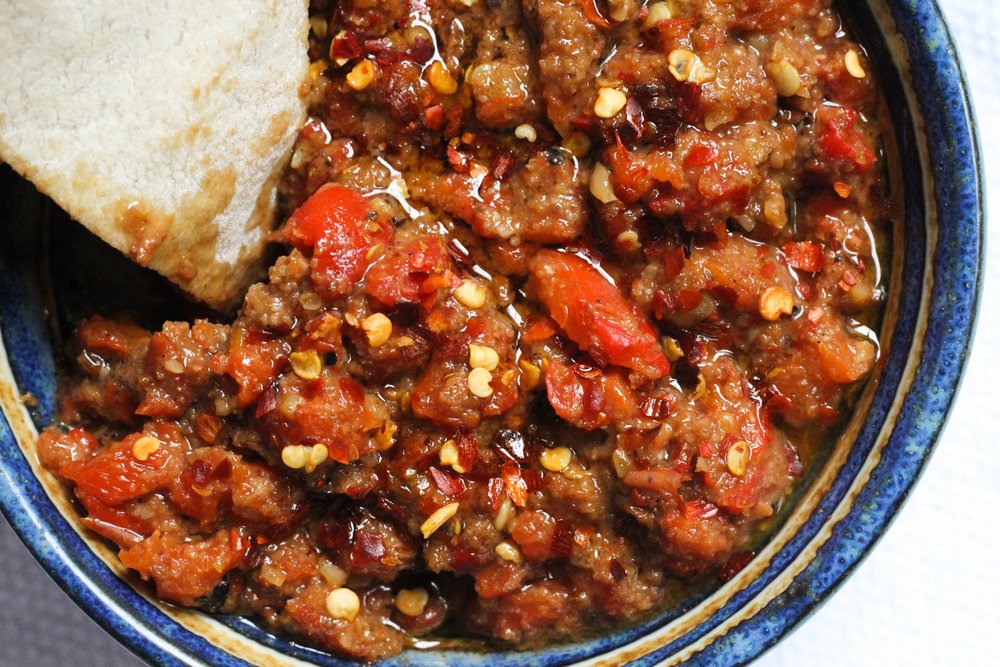
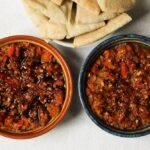
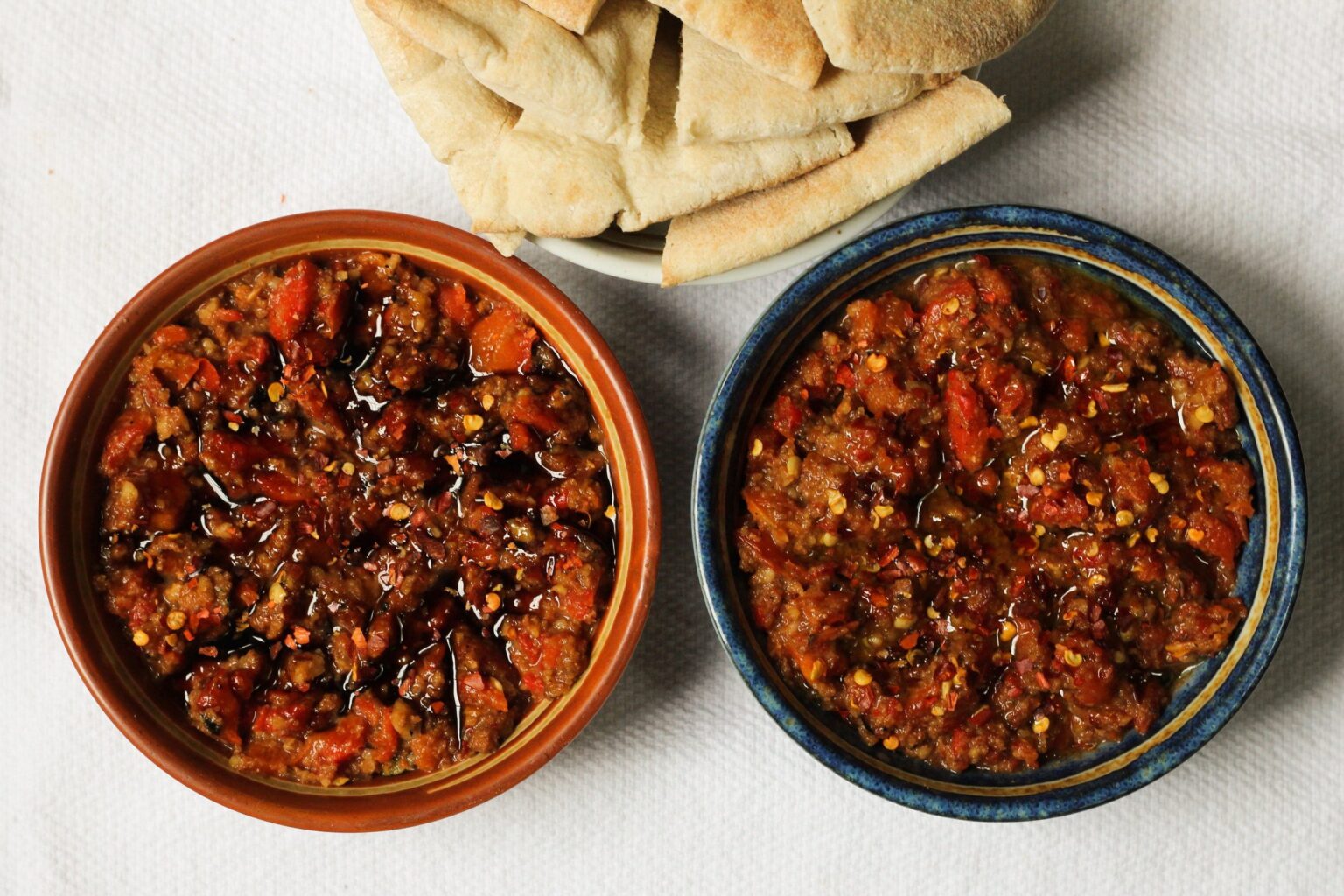
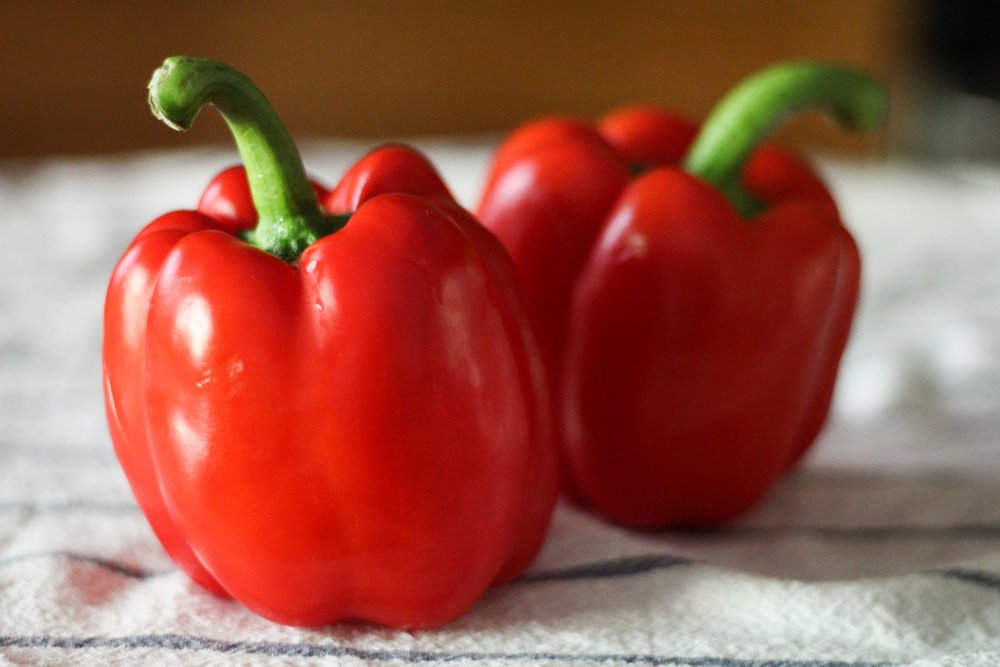
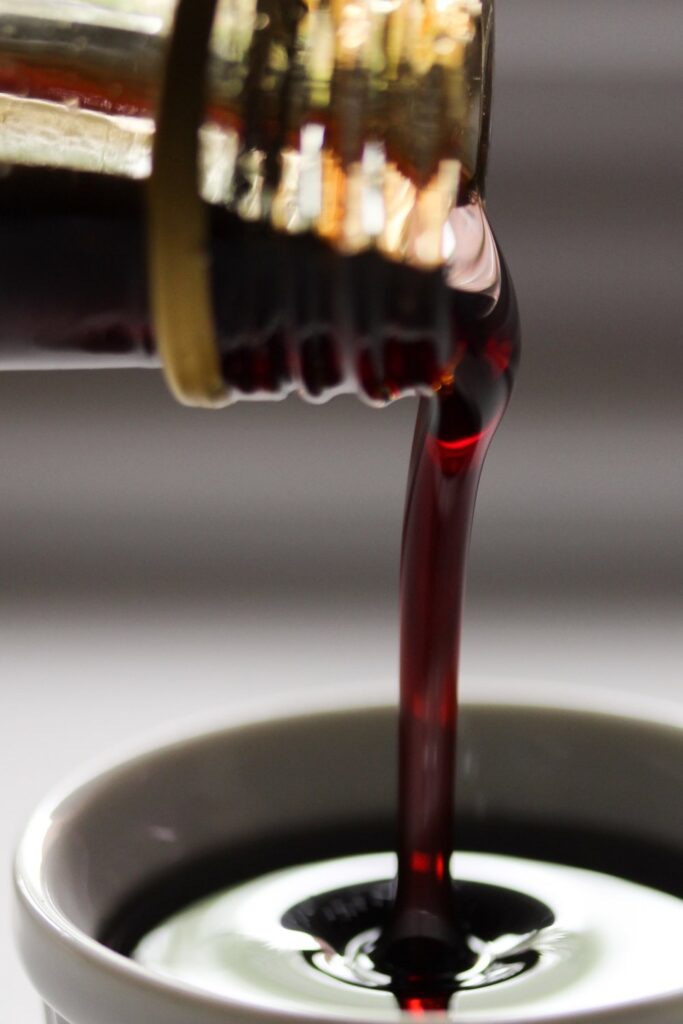
Muhammara is a Syrian spread, which literally means “reddened” in Arabic. And it’s not hard to see how it got its name. In a little while, bell peppers will be in season in temperate climates. And using high quality peppers makes muhammara turn a deep, dark shade of red. While it looks nice and shiny with a drizzle of olive oil, it looks even more dramatic with little puddles of maroon pomegranate molasses.

Before we dig in, there are just a few things to keep in mind to make sure your muhammara turns out super flavorfully. No one wants a bland dip!
How to make super flavorful muhammara

Deeply roasted peppers:

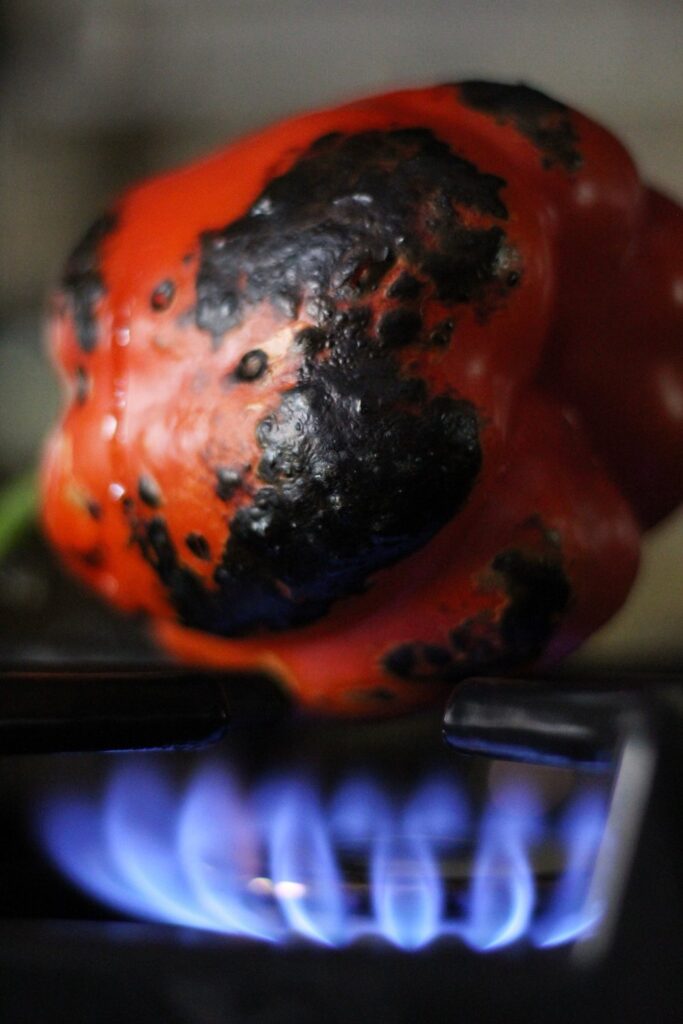
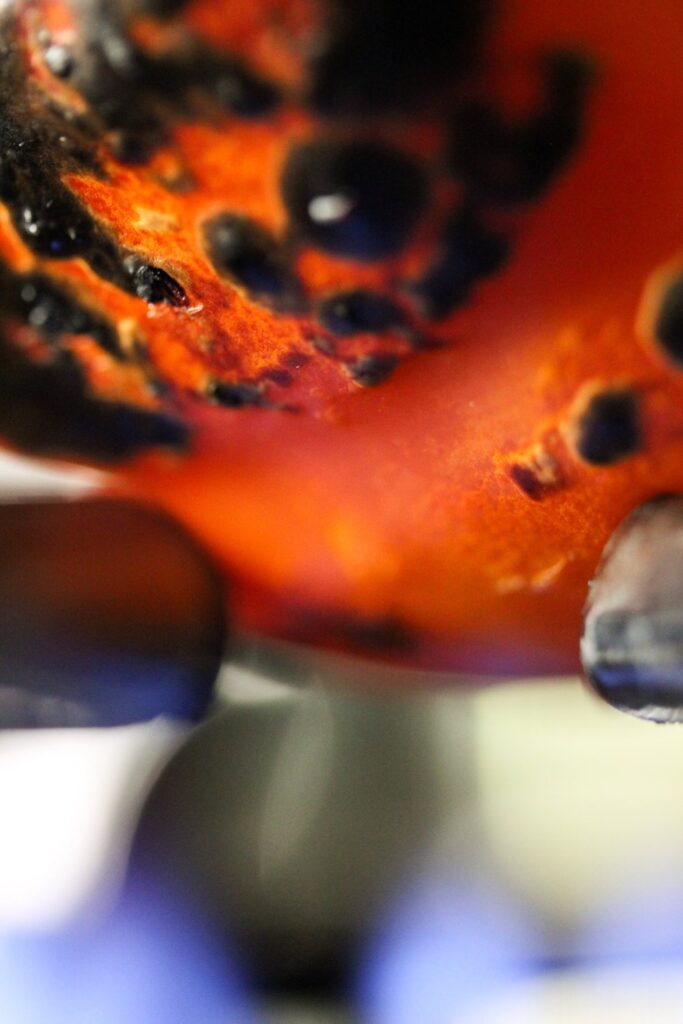
You begin most muhammara recipes (including this one) by roasting red peppers over a flame, which chars the skins and softens the interiors.

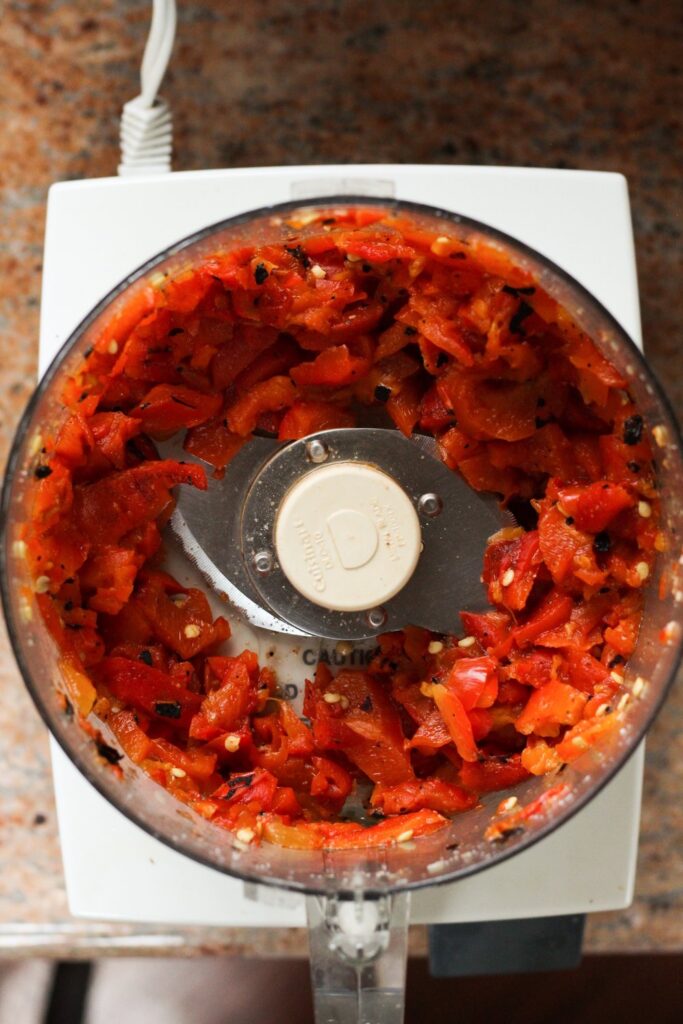
Once the skins have sufficiently charred, and the peppers have spent some time steaming, the burnt skins will easily slough off, and the pepper flesh will maintain the roasted flavor with just the tiniest bit of char clinging to it.

Toasted breadcrumbs and walnuts:

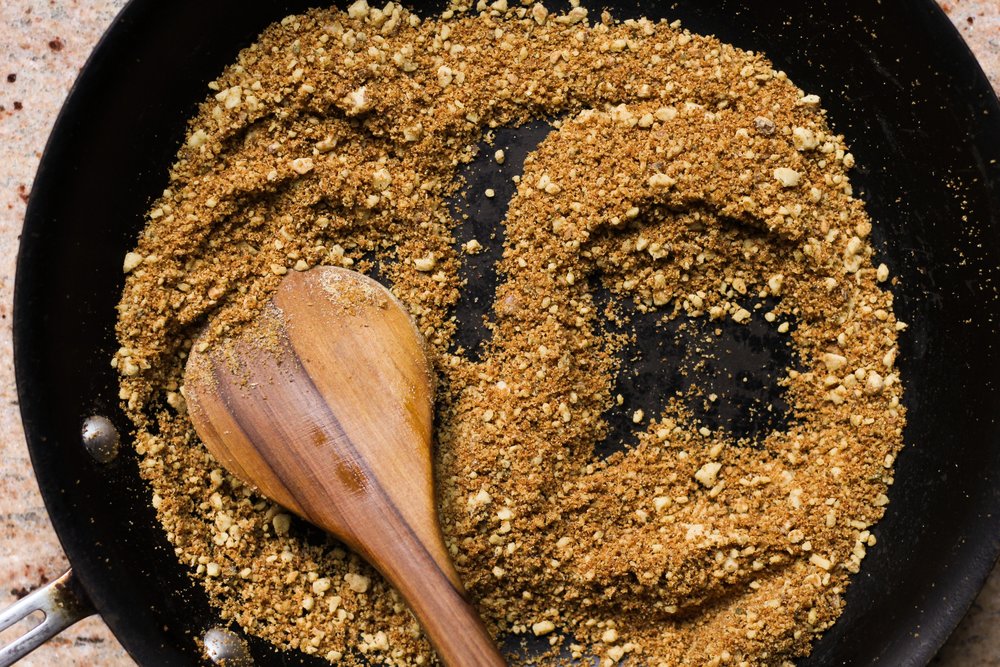
To add even more toasty flavor, my own personal technique is to pan-roast the walnuts and breadcrumbs before adding them to the dip. The cumin, likewise, gets toasted for just a few seconds to tone down its raw flavor and highlight its nuttiness. If you think you don’t like cumin, I encourage you to try toasting it this way before cooking with it. It really makes a difference.

Add lots of pomegranate molasses and crushed red pepper

Pomegranate molasses is usually added to muhammara, because it’s the perfect counterpoint to all that roasted flavor, and it’s especially important in this one, since there’s more roasted flavor than usual. It brings a lot of acidity and brightness, which also highlights the flavor of the peppers.

And the crushed red pepper is just the thing that always sends muhammara over the top.

There’s so much going on with this dip: acid, heat, char, and toast. It’s just right for spreading on pita bread, or serving with a dish that needs an extra something. Try it on some vegan pizza (manakish muhammara) or serve it with flatbread.
Print

muhammara

Print Recipe

5 Stars 4 Stars 3 Stars 2 Stars 1 Star

5 from 1 review

  • Prep Time: 30 minutes
  • Total Time: 1 hour
  • Yield: about 2 cups

Ingredients

  • 2 large or 3 small red bell peppers
  • 1/2 cup whole walnuts
  • 1/4 cup breadcrumbs (either homemade or store-bought)
  • 1/2 teaspoon ground cumin
  • 2 tablespoons pomegranate molasses
  • 1 teaspoon crushed red pepper (or to taste)
  • 1 teaspoon lemon juice
  • 1/2 teaspoon garlic powder (or substitute 1 small clove crushed garlic)
  • 1/4 teaspoon oregano
  • 1/2 teaspoon salt, or to taste
  • For garnish: extra virgin olive oil, pomegranate molasses, 1/2 teaspoon crushed red pepper
  • For serving: pita bread (either homemade or store-bought) or anything savory that needs more flavor

Instructions

  1. Turn one or two gas stove burners to medium heat and place the red peppers directly over the grates. *
  2. Cook the peppers, frequently rotating each as soon as one side becomes very charred. Cook until the peppers are somewhat soft and very charred (about 5 to 10 minutes total).
  3. Immediately place the peppers in a glass container or bowl. Cover with a lid or plastic wrap and microwave for 30 seconds on high heat. Then use the residual heat to let the peppers slowly steam for 30 minutes to an hour.
  4. While the peppers are steaming, pulse the walnuts in a food processor, until they’re very finely chopped (be careful not to over-process).
  5. Toast the walnuts and breadcrumbs together in a skillet over medium heat, stirring constantly, until they turn golden-brown, about 4 to 7 minutes. Stir in the cumin during the last 30 – 60 seconds of cooking. Remove from heat and set aside.
  6. Once the peppers have steamed long enough (they should be soft and cool enough to handle), use a paper towel to rub away most of the charred skins. Tear the peppers open and discard the seeds, pith, stems, and any excess liquid that has collected.
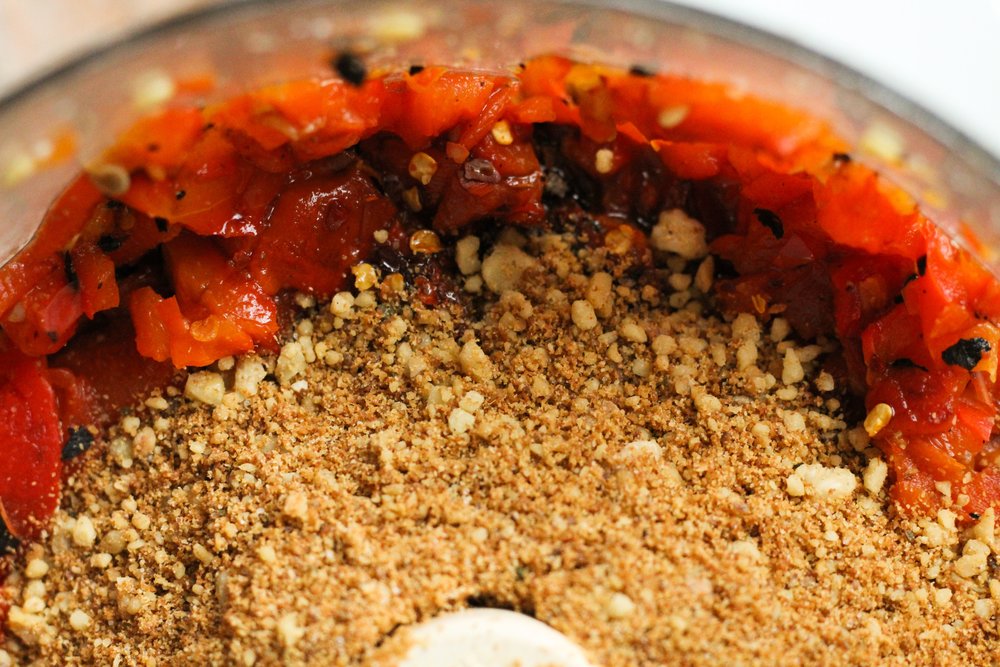
  7. Place the skinless, seeded red peppers in a food processor and only pulse 1 or 2 times to very coarsely chop the peppers. **
  8. Add the walnut-breadcrumb mixture, pomegranate molasses, 1 teaspoon crushed red pepper, lemon juice, garlic powder, oregano, and salt, and pulse 2 to 3 more times just until everything forms a chunky paste. Do not purée.
  9. Place the muhammara in a bowl and drizzle with olive oil or pomegranate molasses and sprinkle with more crushed red pepper.

Notes

* If you don’t have a gas stove, you can use your oven’s broiler or a grill, using the same method and checking frequently.

** If you don’t have a food processor, you can easily do this by hand. Very coarsely chop the red peppers on a cutting board, add them to a bowl, and use a potato masher to combine the peppers with the rest of the ingredients. You could also use a mortar and pestle, as Ottolenghi suggests. It’s harder to over-process by hand, but be careful to stop as soon as it turns into a chunky paste.
find us on instagram and let us know what you made!

Filed Under: appetizers, dairy free, dinner, every recipe, lunch, meze, side dishes, vegan, vegetarian Tagged With: bell pepper, fall, middle eastern, peppers, pomegranate molasses, summer

tomatillo tabbouleh verde

July 5, 2017 by Kathryn Pauline Leave a Comment

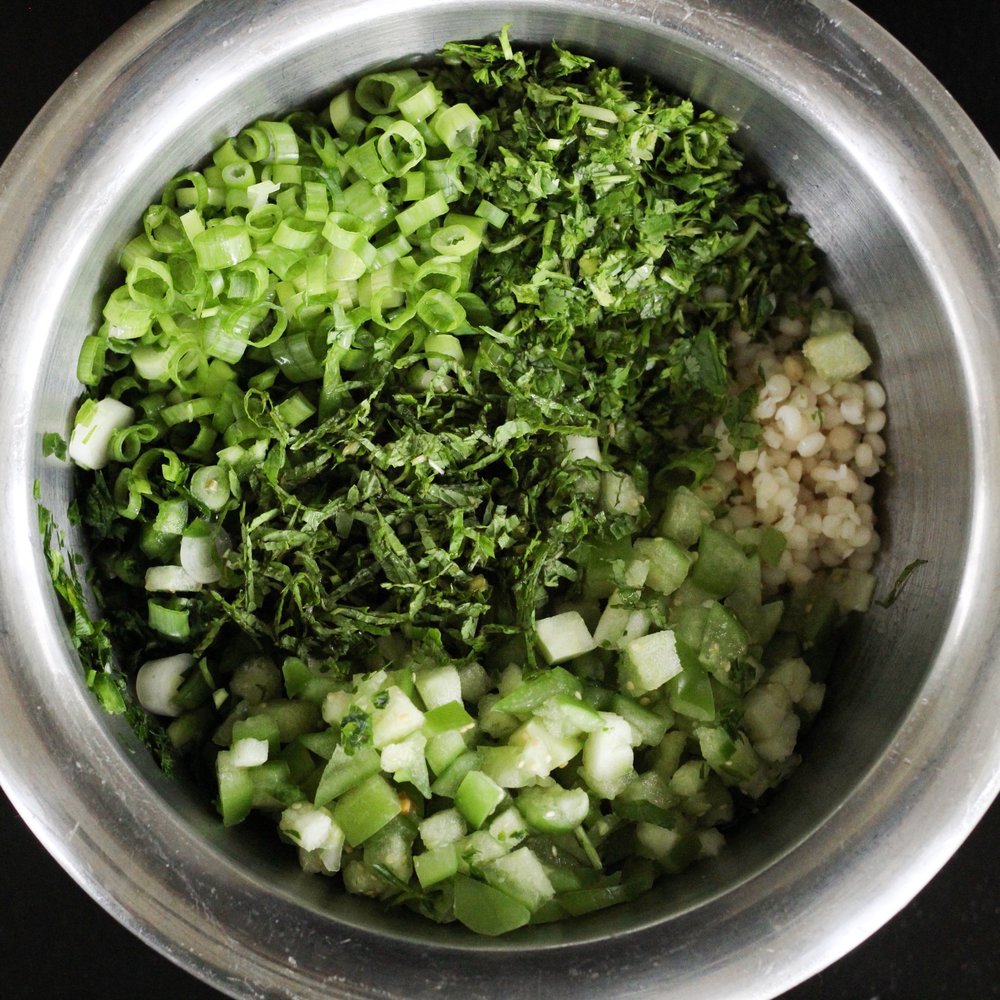
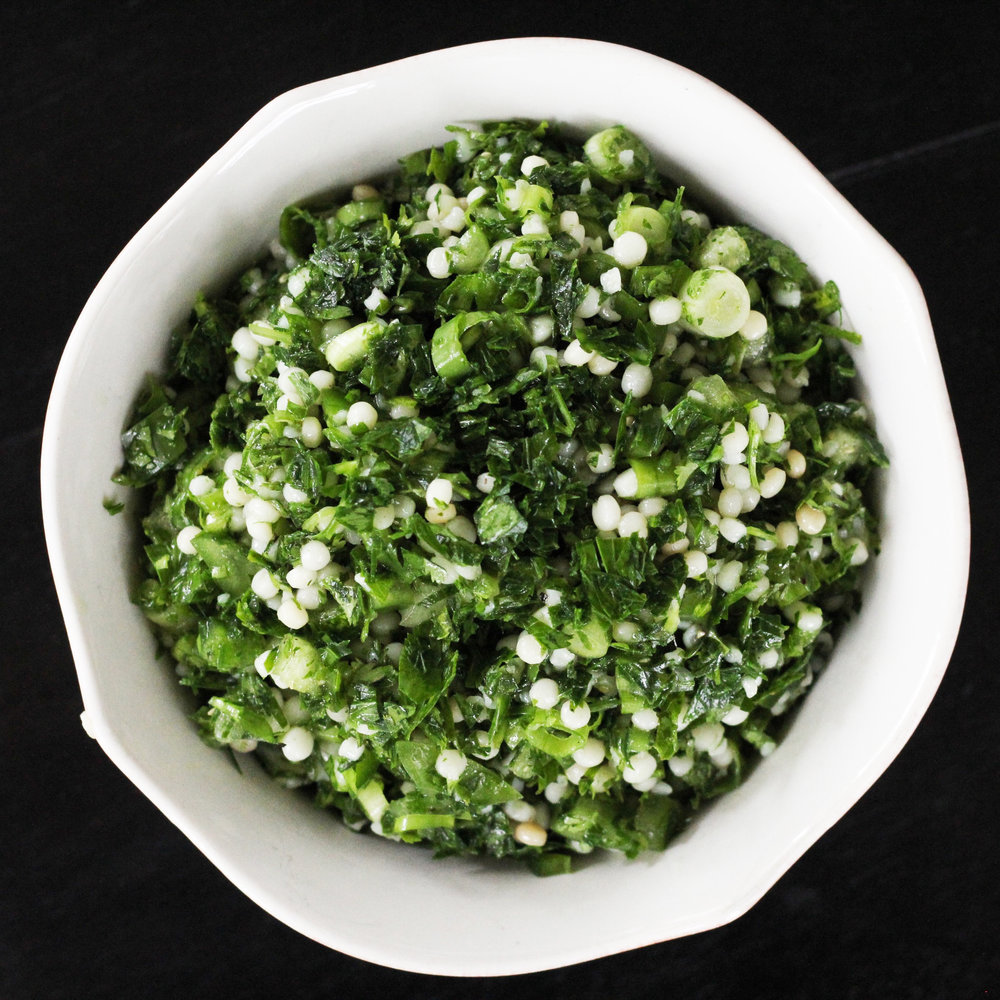
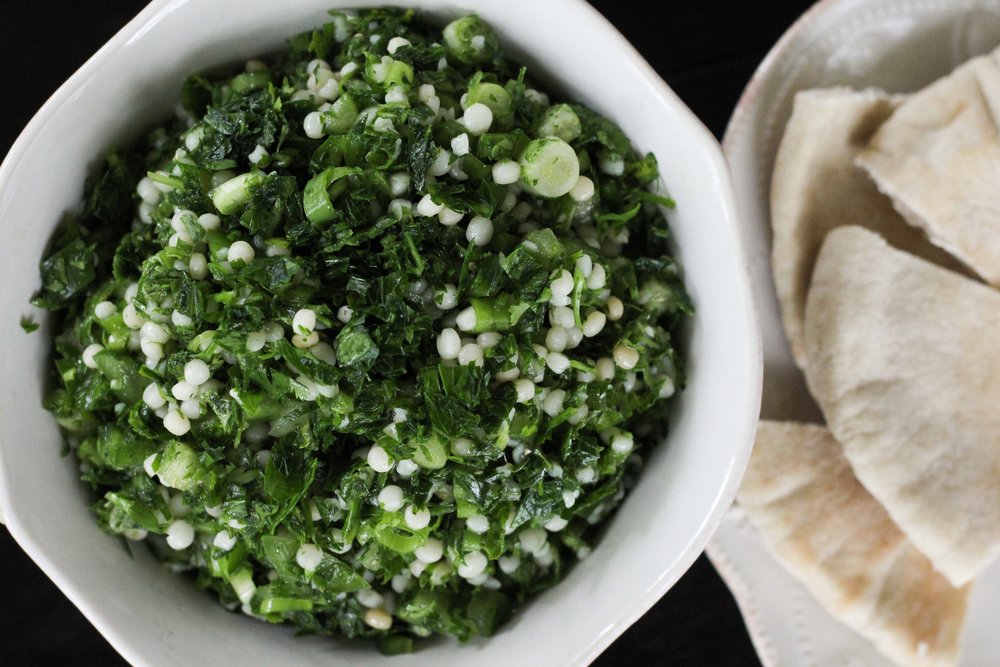
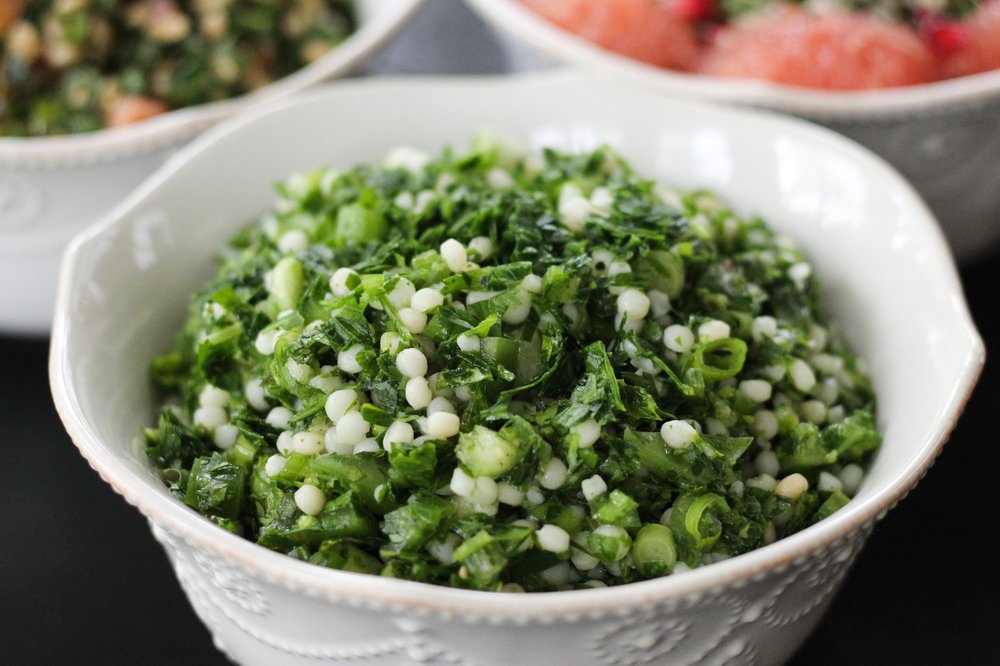
This tabbouleh verde, inspired by classic Mexican salsa verde, is as green as can be. And something that just looks like a plain green salad might not seem like it would taste very exciting. But, as anyone who has ever tasted a banana and a lemon knows, a color isn’t the same thing as a flavor (unless you count “blue” flavored sports drinks). There are so many different green things packed into this tabbouleh, and each ingredient brings its own personality, which will surprise anyone who takes a bite. And there’s something especially fun about a monochromatic dish that doesn’t taste monochromatic. Just as anyone who spends time learning about Mexican or Middle Eastern food will discover, what may seem homogenous to an outsider is actually incredibly diverse and sophisticated.

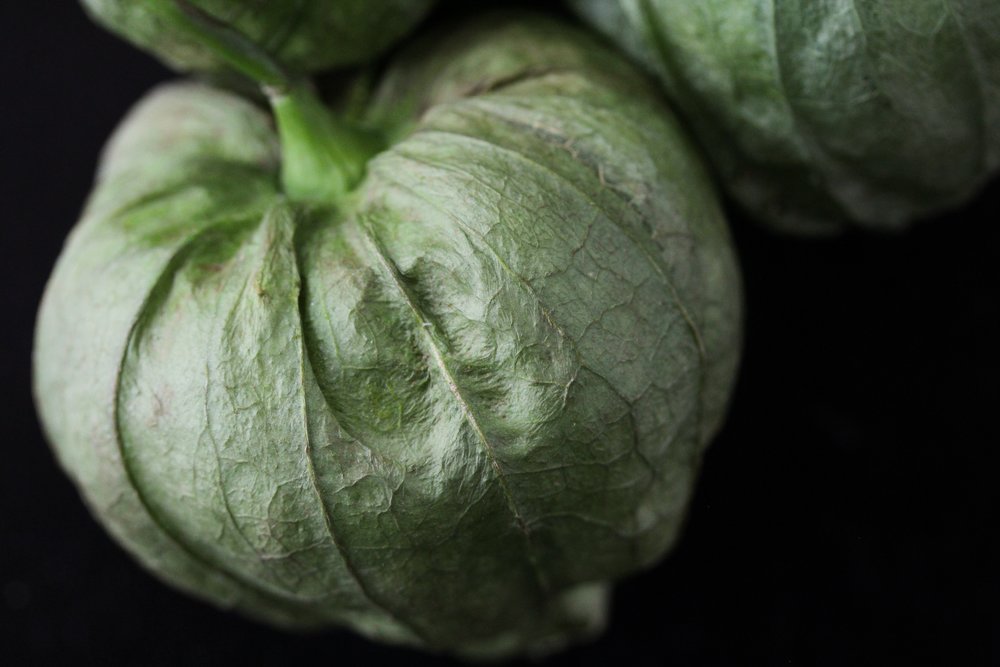
The primary thing that makes salsa verde salsa verde is the massive amount of tomatillos that go into it (well, that and lots of other tasty green produce like cilantro, jalapeños, and lime juice). Most of the salsa verde I’ve had has been the cooked version, but there are also some variations where the tomatillos are left raw. And if you’ve ever tried raw tomatillos, you know how different these two salsa verdes can be. Instead of that almost gelatinous texture, and the deep, tannin cooked tomatillo flavor (which I absolutely adore), raw tomatillos have such a snappy, sweet flavor and texture, almost like a tomato-flavored apple. So, needless to say, this tabbouleh is very different than the classic kind, made with red tomatoes. But it’s a really fun change for times when you’re looking for something a little zippier and more refreshing.

more tabbouleh

Build your own tabbouleh
Ruby fennel tabbouleh
Tabbouleh margherita
Pomegranate Cilantro Tabbouleh

Print

tomatillo tabbouleh verde

Print Recipe

5 Stars 4 Stars 3 Stars 2 Stars 1 Star

No reviews

  • Prep Time: 25 minutes
  • Total Time: 30 minutes
  • Yield: 4 to 6 servings

Ingredients

For the couscous:

  • 2 cups water
  • 1/4 teaspoon kosher salt
  • 1/2 cup pearl couscous *

For the tabbouleh:

  • 3/4 cup minced parsley
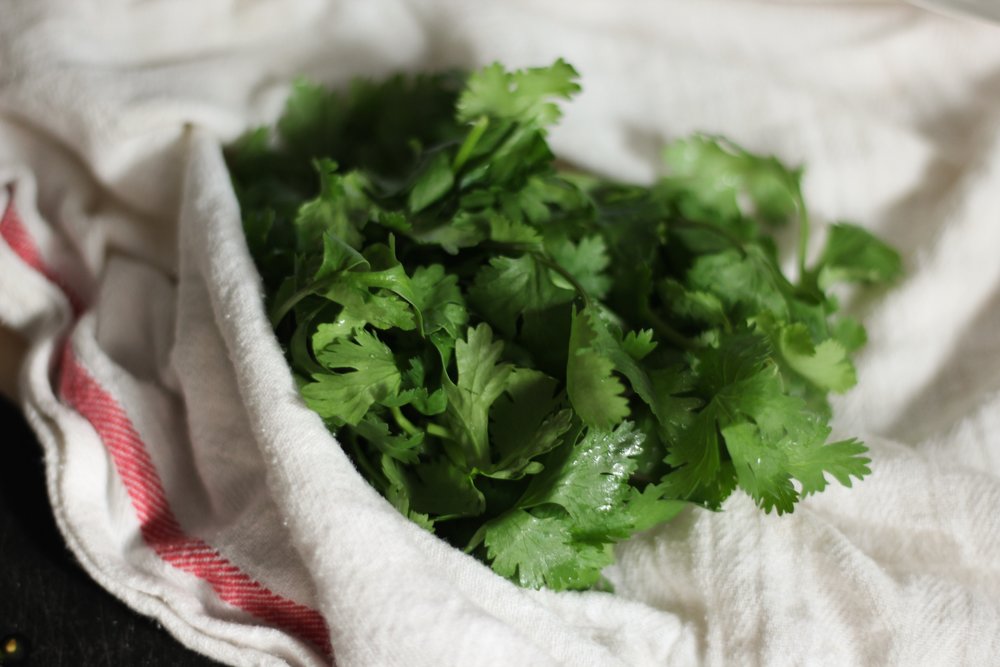
  • 1/2 cup minced cilantro
  • 2 tablespoons chiffonade mint
  • 1/2 cup minced green onions
  • 1 cup minced raw tomatillos (about 4)
  • 1 minced jalapeño (remove the pith and seeds for less spice)
  • 2 tablespoons extra virgin olive oil (plus more to taste)
  • 1/4 cup lime juice (plus more to taste)
  • Salt and pepper to taste

Instructions

  1. Make the couscous: Bring the water and salt to a boil in a small saucepan.
  2. Once the water is boiling, add the couscous and cook, uncovered, stirring occasionally, for about 7 to 8 minutes (check the box for cooking time). The couscous is done when it is al dente (pleasantly chewy).
  3. Strain and then rinse the couscous in lukewarm water for about 30 seconds. Drain well and add to a mixing bowl.
  4. Make the tabbouleh: This tabbouleh is best when served immediately, but is still very good the next day. Use a sharp knife and dry the herbs completely to make sure they don’t turn brown.
  5. Add the parsley, cilantro, mint, green onions, tomatillos, jalapeño, olive oil, lime juice, salt, and pepper to the couscous.
  6. Combine, taste it, and adjust the seasoning to taste (oil, lime, salt, pepper).

Notes

* Pearl couscous is much larger than fine couscous, so if you’re using a finer kind, be sure to reduce the cook time. Cooking times vary from box to box, so be sure to check yours for instructions. This dish can be made a few hours ahead of time; if you plan to let the tabbouleh sit for longer than 30 minutes, undercook the couscous by about 1 minute.

find us on instagram and let us know what you made!

Filed Under: appetizers, dairy free, dinner, every recipe, lunch, meze, salads, vegan, vegetarian Tagged With: cilantro, herbs, lime, mint, parsley, peppers

  • « Go to Previous Page
  • Page 1
  • Interim pages omitted …
  • Page 162
  • Page 163
  • Page 164
  • Page 165
  • Page 166
  • Interim pages omitted …
  • Page 183
  • Go to Next Page »

Primary Sidebar

Kathryn Pauline smiling

Welcome! I’m Kathryn Pauline, cookbook author, recipe developer, and photographer.

Footer

read our privacy policy

© 2017 - 2026 Kathryn Pauline