My favorite bloggers and cookbook authors are constantly, frantically testing solutions to technical cooking problems. And so, when I decided to write up a post about spinach fatayer (Middle Eastern spinach pies), I looked no further than Maureen Abood.
In her blog post about spinach fatayer, she tackles their tendency to pop open in the oven. Her solutions are brilliant:
- First, she suggests making a somewhat wet dough, which led me to start adding a whole lot more liquid to my fatayer dough, and it was magic. The wet dough sticks to itself and doesn’t spring open under the stress of a hot oven.
- Second, she says to make sure that the spinach is very dry, which is something I’ve always done, but perhaps not with as much gusto as I should have. And it’s true, a bone-dry spinach yields a much better pie, especially since you add a little moisture back in with a big squeeze of lemon juice before stuffing. But I’d love to add another problem to the list because I really, really loathe cooking with spinach.
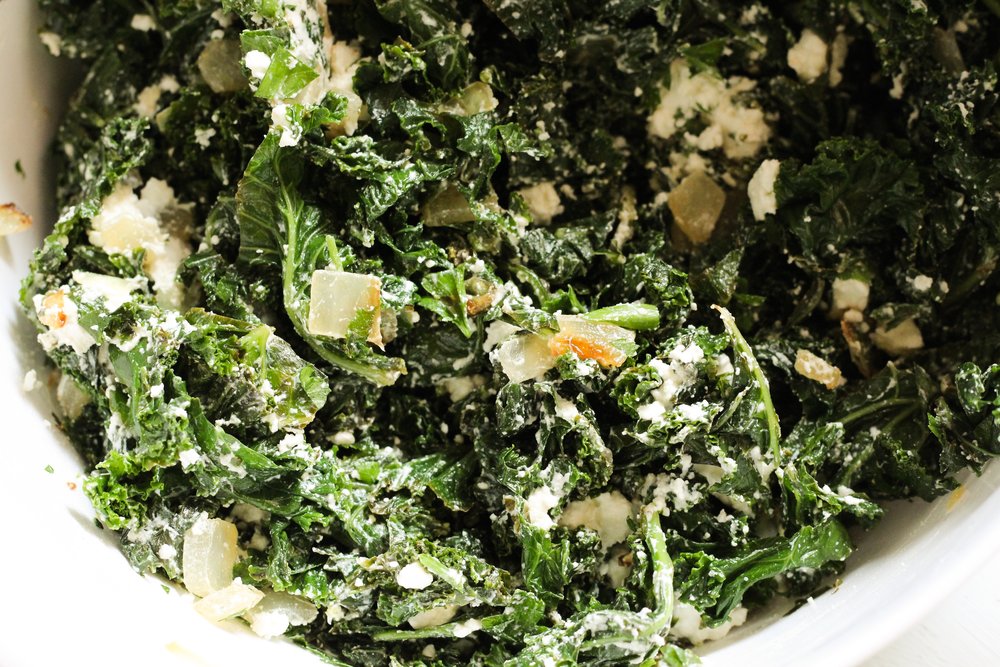
Don’t get me wrong—if you invited me over to your house and served me spinach fatayer, I would be beside myself with joy.
It’s just that making anything with cooked spinach is the biggest pain, which you know all too well if you’ve ever bought fresh spinach to sautée as a side for a fancy dinner party.
What happens? You buy buckets and buckets of spinach, like, way more spinach than anyone should ever buy. The friendly lady scanning your groceries comments, “Wow! Looks like someone really loves spinach!” She exchanges a look with the guy helping you bag that says this is definitely the most outrageous purchase of the day. Then you get home, you heap the bags of spinach onto the counter, and it somehow looks like even more spinach now that it’s in your small kitchen instead of the big, fluorescent supermarket. You wash the leaves in cold water, which takes about 30 minutes because you’ve got to work in batches to let all the sand and dirt settle to the bottom of the sink. Then you heat up your biggest stockpot, and you start sautéeing the spinach, but you have to work in batches again because it won’t all fit at once. Finally, after the last of the spinach has been sautéed, you cock your head as you stare at the soupy, green bowl, wondering how much wilted spinach is really lurking in all that swampy water. You empty the soupy bowl into a colander and press it against the side with a wooden spoon, as you wistfully watch all those vitamins and flavors wash away in the sink, and then finally, you gaze upon your pathetic little treasure trove of wilted spinach. One measly cup!
Because the law of spinach is that it’s always one measly cup, no matter how much you start with.
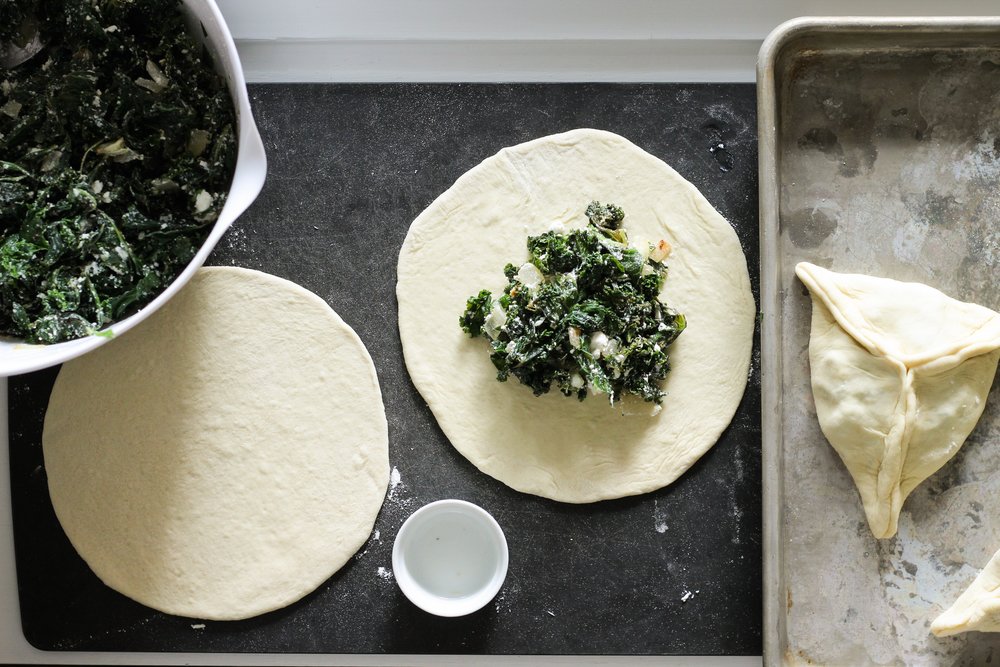
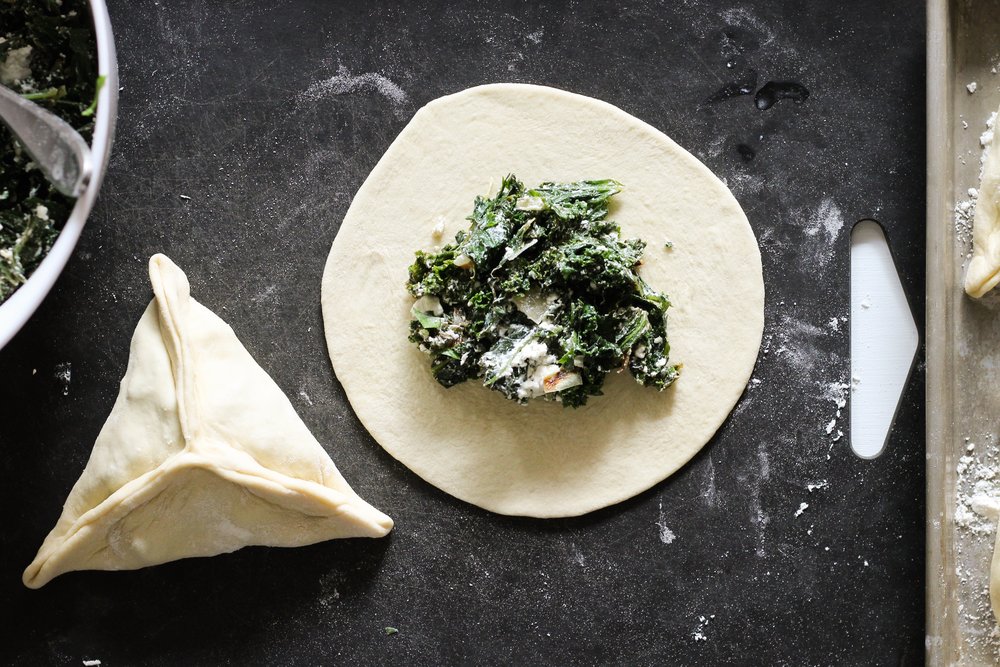
So my idea to substitute kale was not an attempt to improve or “elevate” (ugh, can we all retire that word?) what’s already perfect, but more an attempt to make my life a little easier. Kale doesn’t cook down nearly as much as spinach, so you don’t have to buy as much of it, and so it’s the perfect veggie for anyone trying to avoid that sinking feeling that comes with cooking spinach.
Also, I wanted to leave you with a quick note about this fatayer recipe, and recipes in general. When I first started writing recipes, I learned a lot about the peculiarities of this form of communication, which is written down really differently than the way we usually speak and explain things to people. Recipe writing tends to be a very technical form, and if you understand the rules and clichés of the language, you’ll not only understand exactly what to do, but also what to buy and how to measure.
Something that I learned when I first started writing recipes is that the commas in the ingredients list are actually doing a lot of work. For instance, “1 cup parsley, minced” actually means something completely different than “1 cup minced parsley.” For “1 cup parsley, minced,” you would measure out 1 cup of whole parsley leaves, and then mince them (which would result in a lot less volume). But for “1 cup minced parsley,” you would take a whole lot of parsley, mince it up, and measure it until you’ve got 1 cup of the minced stuff. You can see how confusion about this could really throw things off, and it’s such a subtle difference, so I try to cut out the ambiguity whenever it’s possible to do so. I usually write something like “1 cup minced parsley (from about 1 bunch)” to make it clear that the amount of the ingredient you should buy is different from the amount of prepped ingredient you should measure.
This is just to say that you should weigh out 1 pound of kale leaves after stemming, washing, and drying them. If you weigh out a 1-pound bunch of kale, you will not end up with enough leaves for the recipe. And if this whole thing is news to you, I hope now you feel like recipes make a little more sense and seem less strange and technical (or maybe now they seem even more so).
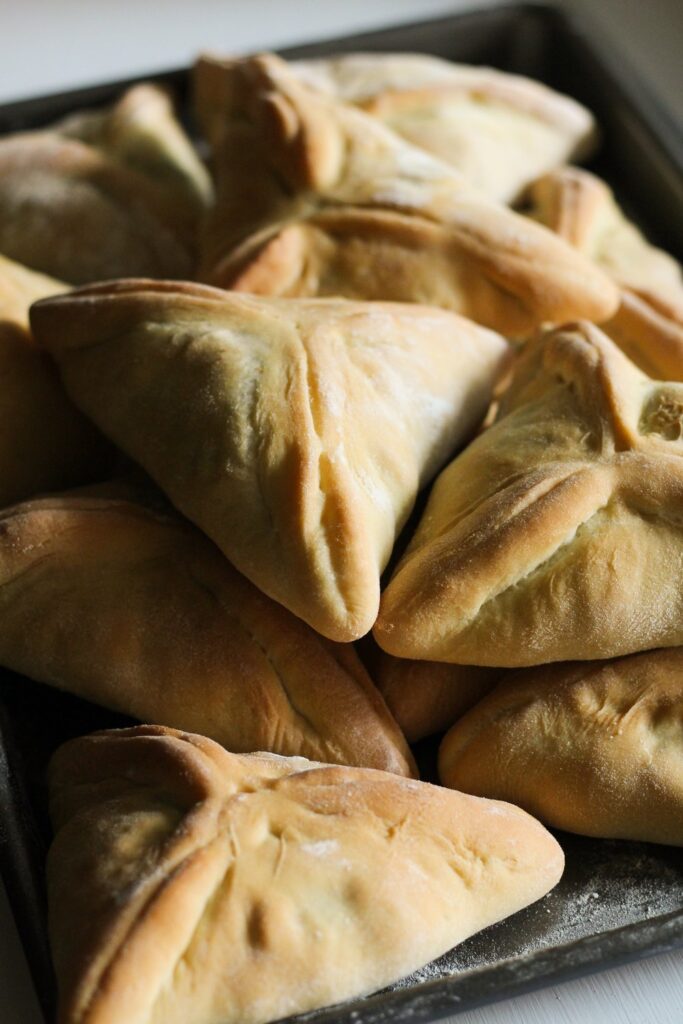
Kale and Feta Fatayer

- Prep Time: 1 hour 15 minutes
- Total Time: 3 hours
- Yield: about 10 to 12 medium individual-serving pies
Ingredients
For the dough:
- 1 cup room temperature water (plus more as necessary)
- 1 1/2 teaspoons yeast
- 1/2 teaspoon sugar
- 1 teaspoon salt
- 1/4 cup extra virgin olive oil
- 15 ounces (about 3 cups) all purpose flour
For the filling:
- 2 tablespoons olive oil
- 16 ounces washed and dried kale leaves (from about 2 big bunches)
- 1 tablespoon olive oil
- 1 medium onion, diced
- 1 tablespoon and 2 teaspoons lemon juice
- 1/2 teaspoon salt (or more to taste)
- 2 tablespoons minced parsley
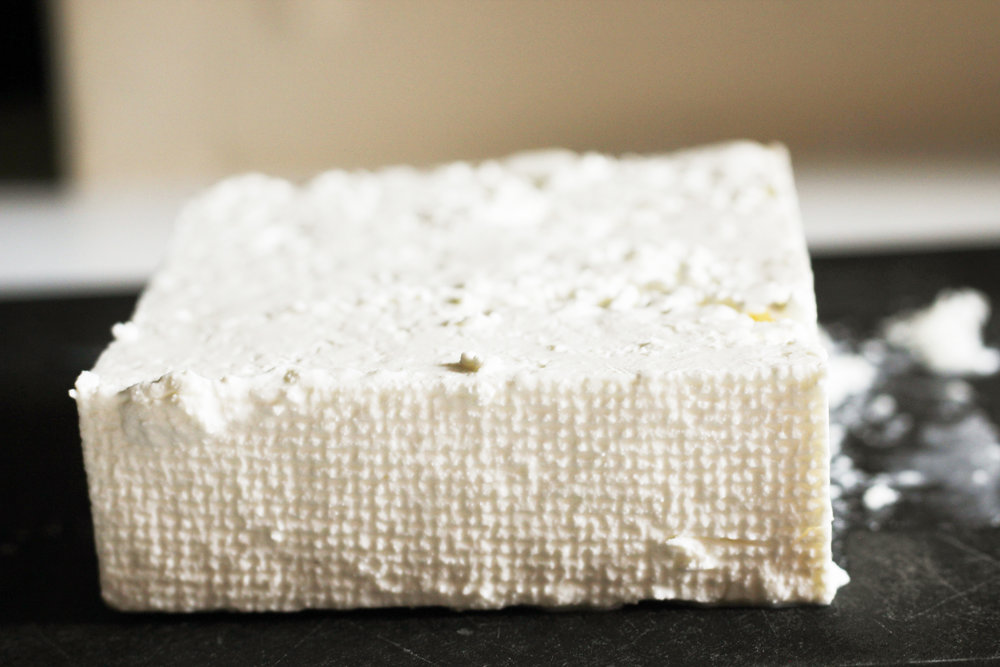
- 8 ounces crumbled feta (Bulgarian feta works particularly well, but you can use any kind)
Instructions
- Make the dough: Combine the 1 cup water, yeast, and sugar in a big mixing bowl, or the bowl of a stand mixer. Let it sit for about 15 minutes.
- Add the salt, olive oil, and flour to the water and stir to start forming it into a dough. If the dough looks a little dry as it comes together, gradually add a little more water, about 1/2 tablespoon at a time. The dough ball should be very soft and sticky, but not soupy. If the dough becomes too wet, add a little more flour to compensate (about 2 tablespoons at a time).
- Knead until the dough ball passes the window pane test. It should come together into an elastic ball that has a smooth surface. Kneading should take about 5-15 minutes by machine with a dough hook, or 10-20 minutes by hand. Pay more attention to the dough’s consistency than the time you’ve spent kneading.
- Place the dough in a bowl, cover it, and let it rise at room temperature for about 1 hour and 15 minutes. It will rise noticeably. While you’re waiting on the dough to rise, prepare the filling.
- Make the filling: Heat a large stockpot over high heat for about 2 minutes. Add the 2 tablespoons olive oil, followed immediately by the kale leaves. Use tongs to keep the leaves moving for about 5 minutes, until they’ve wilted dramatically. Spread out the wilted kale in the bottom of a colander and let it cool down for a few moments while you work on the onions.
- Cook the 1 tablespoon olive oil and the onion in the same stockpot over medium-high heat for about 4-5 minutes, until they soften and slightly brown.
- Once the kale is cool enough to handle, use your hands to wring it out until it is very dry.
- Combine the dry kale, browned onions, lemon juice, salt, parsley, and feta.
- Assemble and bake: Once the dough has finished rising and the filling has been made, preheat the oven to 400° F.
- Divide the dough into 10 to 12 equal pieces.
- Shape each piece into a smooth ball.
- Roll out each ball into a piece that’s 1/8 inch thick. Feel free to lightly flour your work surface, but avoid using too much flour or the fatayer will pop open while they cook.
- Wet the edges of each circle and then place a generous spoonful of the filling in the center of each disc (about 1/4 cup, depending on the size of your circles—pace yourself as you go).
- Fold three “corners” into the center and hold them together with one hand while you use your other hand to pinch the sides shut. If you can manage it, try to press as much air out of the pies as possible before you seal up the last side. Don’t worry if they look a little wrinkly and deflated, because they will puff up a bit in the oven.
- Place the finished pies on a few parchment-lined baking sheets, leaving a couple inches between them.
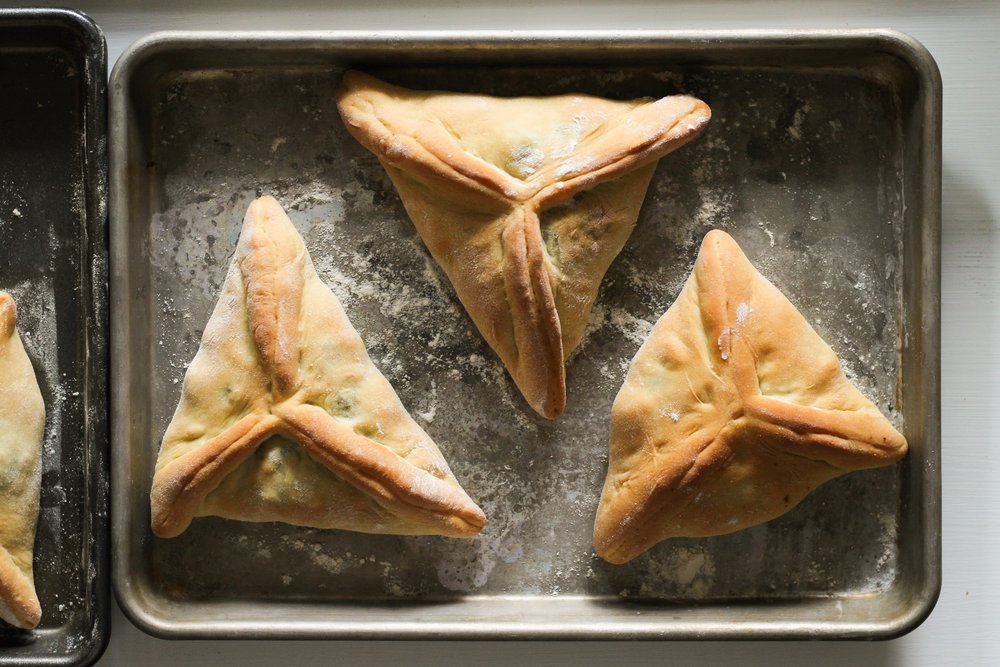
- Bake the pies for about 25 to 30 minutes, until they turn golden-brown and are cooked through. Serve warm or at room temperature.