• Skip to primary navigation
  • Skip to main content
  • Skip to primary sidebar
  • Skip to footer
Cardamom and Tea
  • Blog
  • Recipes
  • About
  • Cookbooks
    • Piecemeal
    • A Dish for All Seasons (my first cookbook)

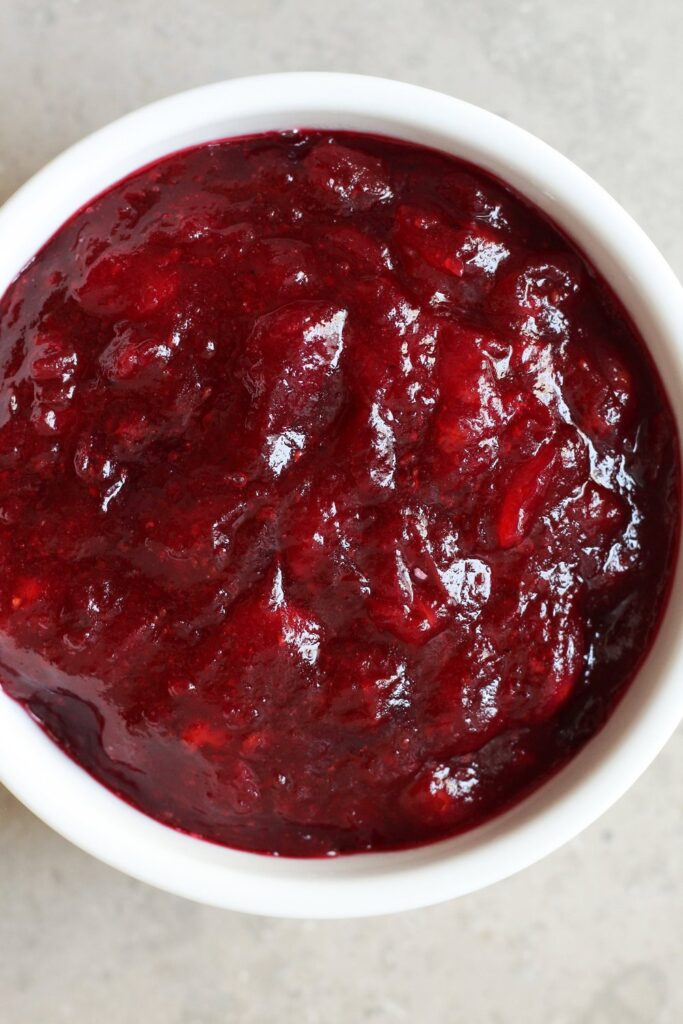
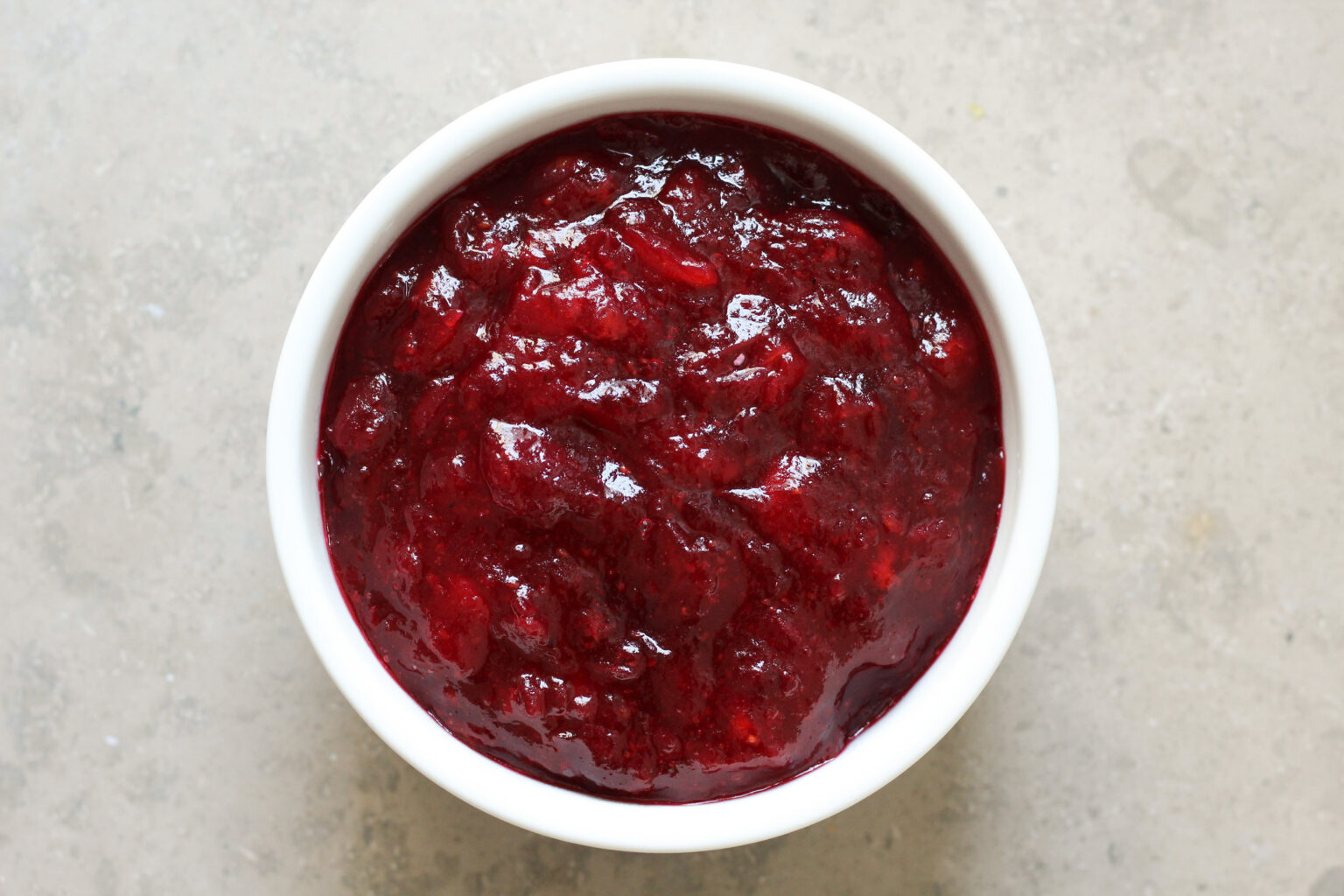
cardamom-spiced cranberry sauce

November 13, 2017 by Kathryn Pauline Leave a Comment

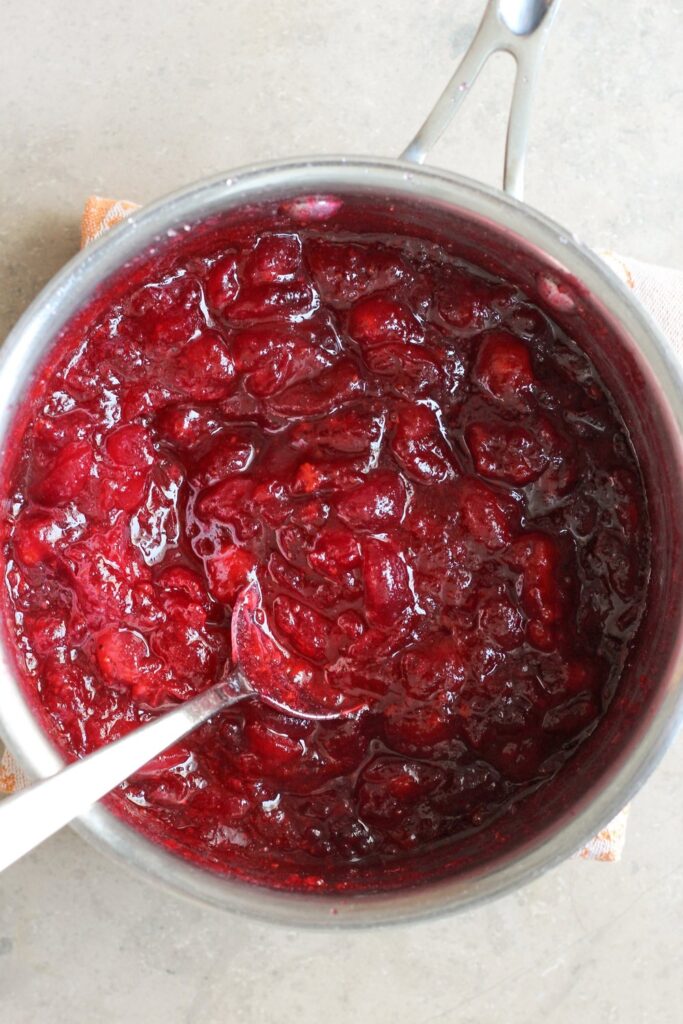
“Sweet and savory” is such an important concept in making really good Middle Eastern food, although I think this dichotomy is generally over-attributed when people see neutral foods in a context that’s simply different than the one they’re used to—but either way, it’s majorly important, and sour almost always finds its way in too. It’s a big deal in everything from riza sh’ariyeh with lots of golden raisins, to muhammara, to falafel with amba. And so, while not necessarily traditional Middle Eastern fare, cranberry sauce is the kind of thing I could totally imagine seeing on a meze tray. And likewise, it brings that little extra mouth-watering sweet and sour something to all those buttery carbs on a Thanksgiving table. In the words of Samin Nosrat, “Often, the only acidic thing on the entire table is cranberry sauce, which is why most people just keep spooning cranberry sauce onto their plates.”
A few recipe notes

Most recipes call for orange juice, apple cider, or another slightly tangy fruit juice, but I’m a big fan of using lemon juice for a little extra acidity. And don’t be fooled by the teeny-tiny pinch of cardamom in this recipe. It’s the kind of thing you want just a hint of—adding any more can end up taking over the flavors of this dish and turning it into a soapy mess. You want cranberry sauce to be the kind of thing you could slather on anything at the table, so it’s important to keep its flavors subtle and dynamic.

more cranberry sauce

Classic spiced cranberry sauce in the Kitchenista’s Thanksgiving Handbook
Maureen Abood’s rosewater pistachio cranberry sauce (more on rosewater)
Print

cardamom-spiced cranberry sauce

Print Recipe

5 Stars 4 Stars 3 Stars 2 Stars 1 Star

No reviews

  • Prep Time: 5 minutes
  • Total Time: about 3 hours

Ingredients

3/4 cup sugar
3 tablespoons lemon juice
1/4 cup water
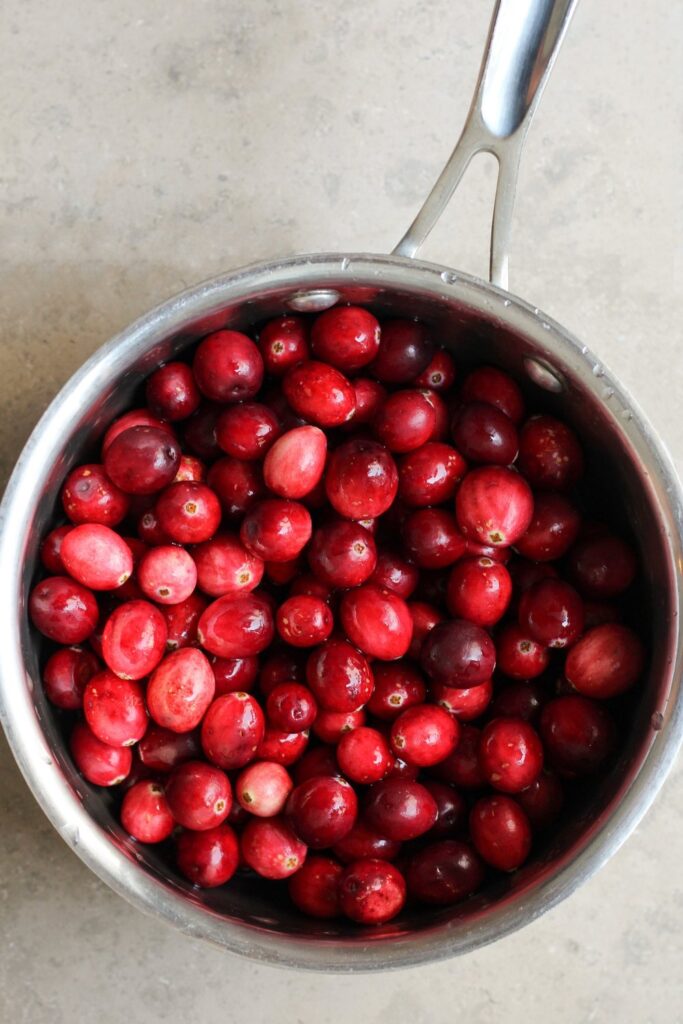
11 ounces cranberries (fresh or frozen, about 3 1/2 cups)
1/8 teaspoon ground cardamom

Instructions

  1. Combine the sugar, lemon juice, water, cranberries, and cardamom. Bring to a boil over medium-high heat. As soon as it starts to boil, reduce to a simmer and cook for about 3 minutes for fresh, 5 minutes for frozen. Stop cooking as soon as the cranberries break down into a bright red sauce, with a few chunks remaining.
  2. Chill for at least 3 hours and serve cold or at room temperature.
find us on instagram and let us know what you made!

Filed Under: dairy free, dinner, every recipe, gluten free, sauces, vegan, vegetarian Tagged With: cardamom, fall, lemon

pomegranate cilantro tabbouleh

November 9, 2017 by Kathryn Pauline 4 Comments

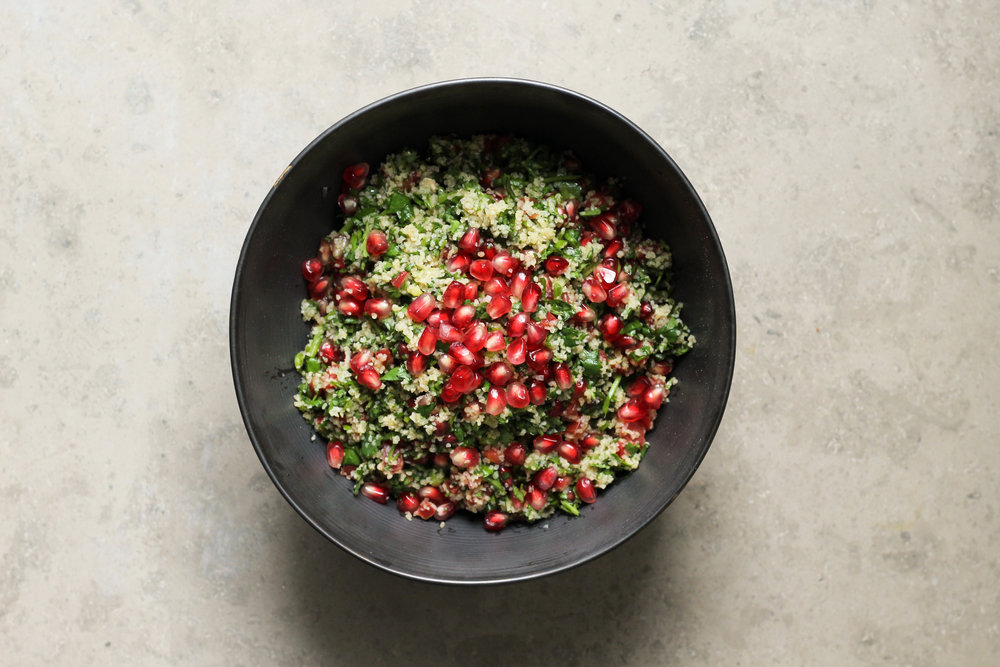
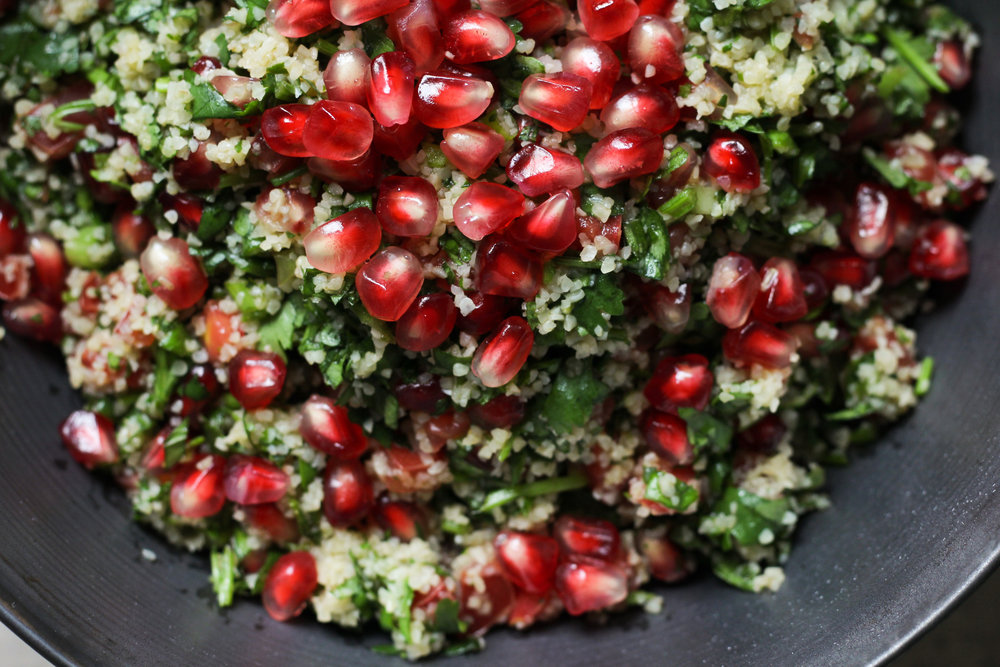
Is there a rule that all cold weather fruit has to start with the letter “p”? Either way, it’s November, and I can’t get enough pomelos, pomegranates, persimmons, and pears, which are crowding out the one free shelf in my kitchen. I’m not a true stickler for seasonal produce, but I do believe in eating as much of it as possible, because it’s both delicious and sensible (an unbeatable combination), and maybe even a little poignant because of its impermanence. So when the farmers market shuts down, and the tomatoes at the supermarket start to look a little mealy, pale, and unpleasantly crunchy, it’s time to change up your tabbouleh routine with some pomegranate seeds.

This recipe for pomegranate cilantro tabbouleh doesn’t leave the tomatoes out altogether, although you absolutely could, and their absence wouldn’t be unprecedented. During winter months when fresh tomatoes aren’t available, tomatoes are traditionally left out of tabbouleh. Plus, I’ve also got a recipe for tomatillo tabbouleh verde, which subs these green, crunchy fall nightshades for the tabbouleh-standard red summer tomatoes.

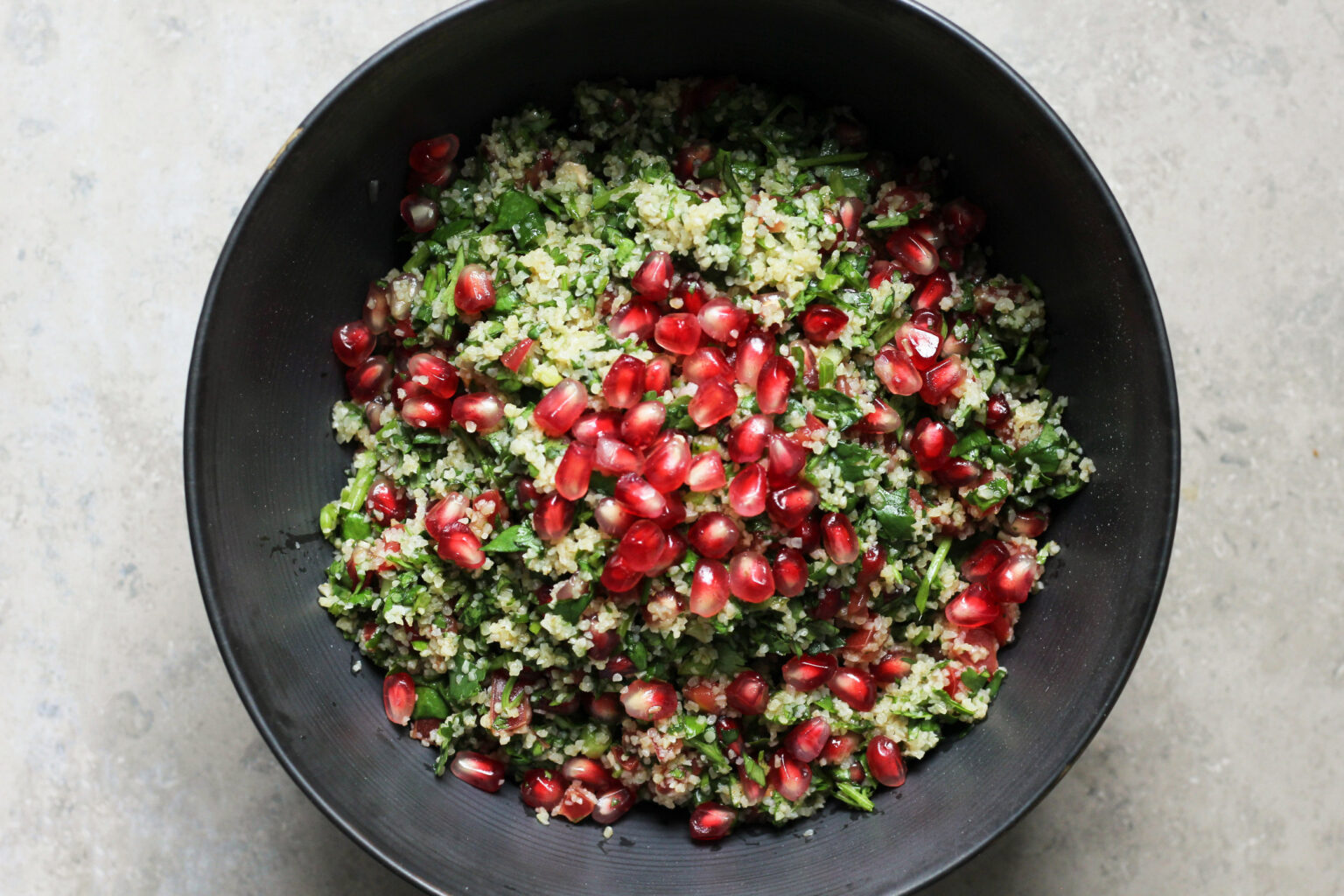
But in this recipe, the post-summer, slightly sad tomatoes are helped out by the added pomegranate seeds. They add the bright red color sorely missing from summer produce in October (go figure!), and they also bring a lot of sweetness and zest, which is missing from pale tomatoes. Pomegranate and cilantro are a perfect match, and so I’ve also replaced the traditional parsley with bunches of cilantro. But if you’re one of 10% of people who taste cilantro as soap, certainly feel free to use parsley instead.

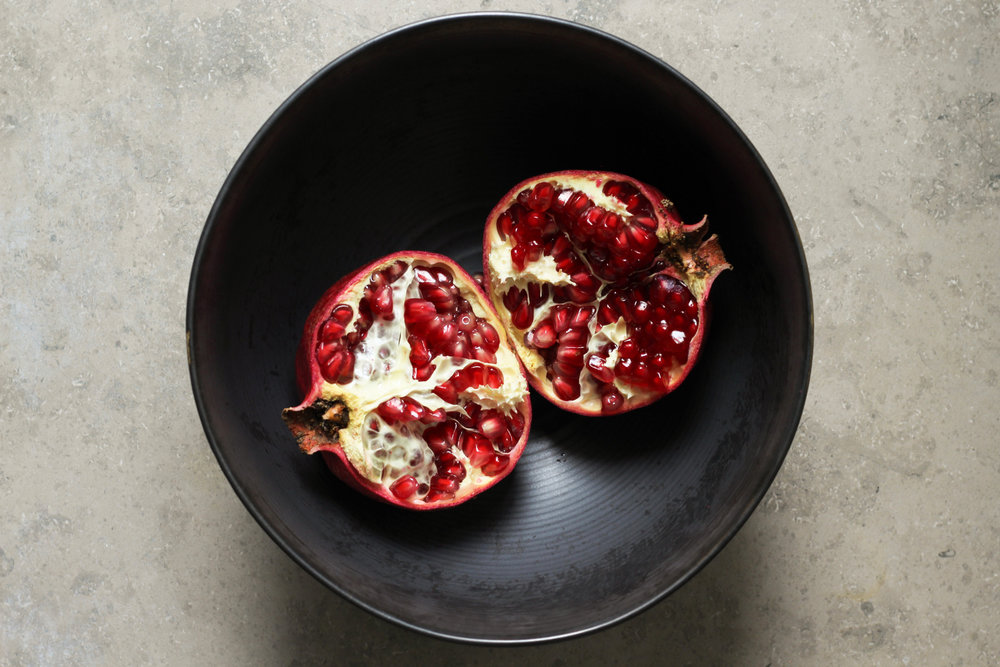
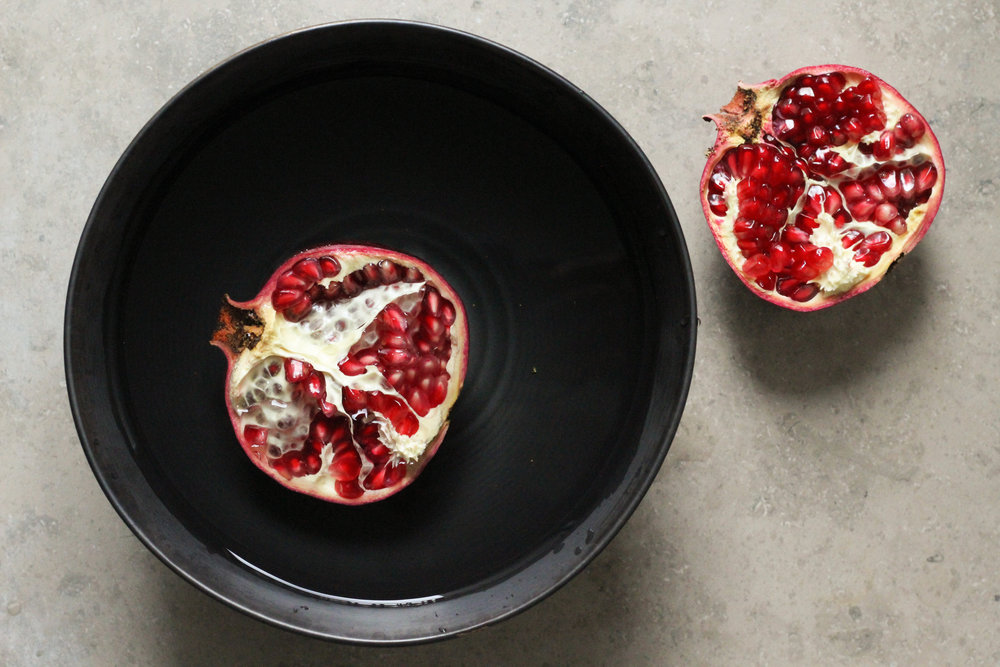
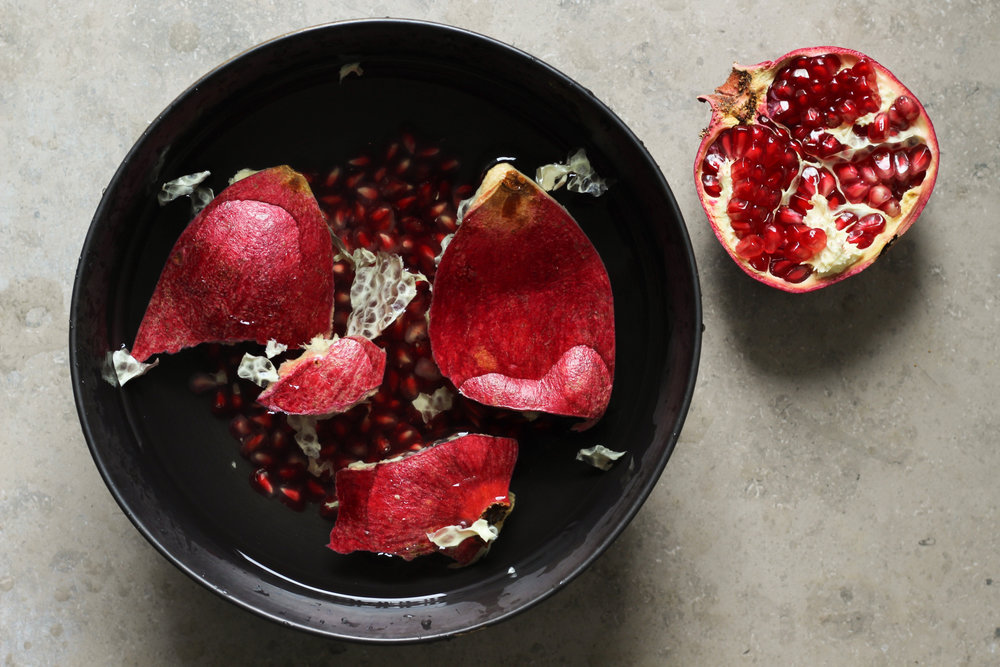
A few recipes notes: I highly recommend removing your pomegranate’s seeds in a bowl underwater, which prevents them from spraying juice all over the place, and also makes it easy to separate the pith from the seeds. Also, since this dish uses cilantro instead of parsley, it won’t hold up as well over time. The leftovers aren’t as good the next day, whereas parsley-based tabouleh tends to last for a few days in the fridge. So this tabouleh is best served right away, or up to an hour after mixing it up (but fortunately, leftovers aren’t usually a problem here).

And just a quick note, in case you were worried: don’t think I’ve forgotten about Thanksgiving. I will post a full menu plan (featuring a different pomegranate tabbouleh) very soon.

Print

pomegranate cilantro tabbouleh

Print Recipe

5 Stars 4 Stars 3 Stars 2 Stars 1 Star

No reviews

  • Prep Time: 20 minutes
  • Total Time: 20 minutes
  • Yield: 4 to 6 servings

Ingredients

  • 1/2 cup fine burghul/bulgur #1 *
  • 3 fresh plum tomatoes, diced small, with their juices (3/4 c diced)
  • The juice of 2 lemons (between 1/3 – 1/2 cup, to taste)
  • 1 big bunch or 2 small bunches cilantro
  • 1 bunch green onions
  • 4 sprigs of mint, stems removed
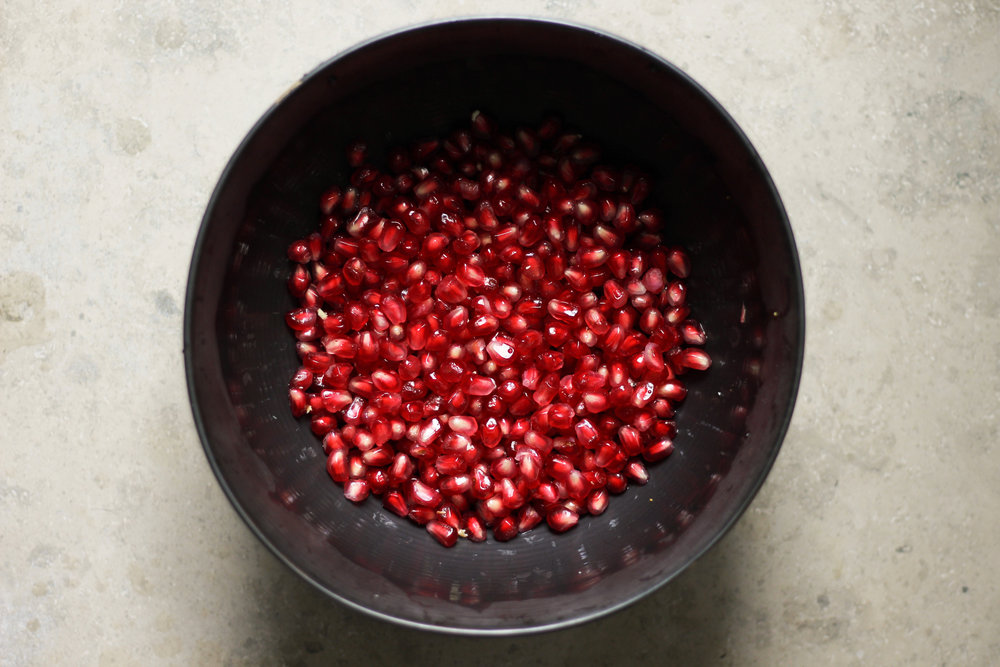
  • 3/4 cup pomegranate seeds + 2 tablespoons for garnish (from about 1 small pomegranate)
  • 2 tablespoons extra virgin olive oil
  • 1 teaspoon pomegranate molasses (optional)
  • Salt and pepper to taste

Instructions

  1. If you’re using fine burghul/bulgur #1, you do not need to cook your burghul in hot water; instead, soak the burghul in a bowl with the diced tomatoes, their juices, and the lemon juice. If the mixture looks a little dry, add 1 to 2 tablespoons of cold water. Let the mixture soak while you prep the rest of the ingredients.
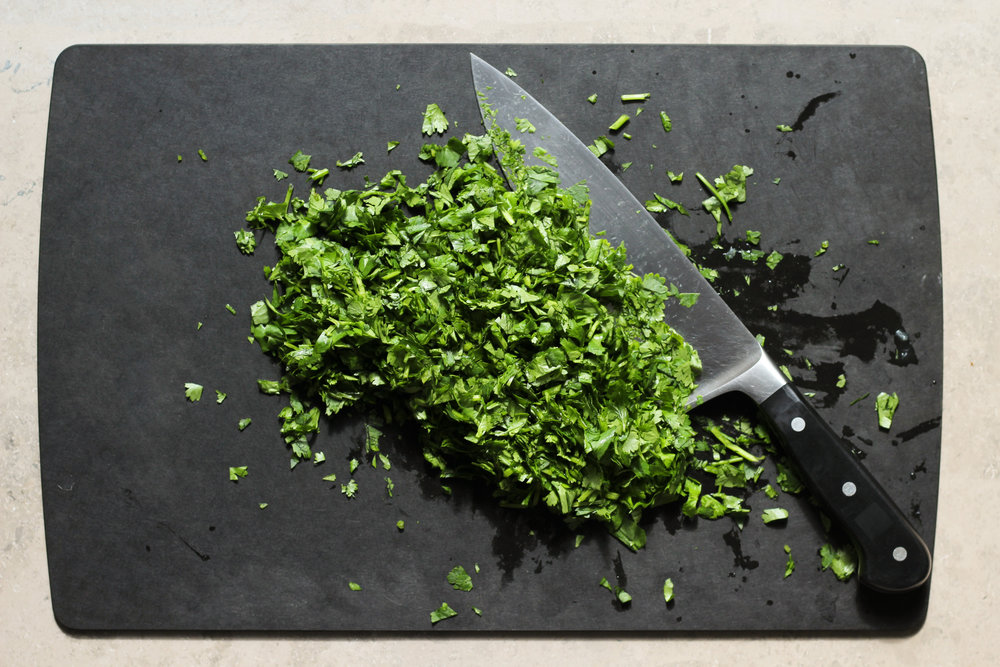
  2. Hold the cilantro together like a bouquet and then rip off the bulky stems in one motion by carefully wringing the whole thing in your hands. Wash the cilantro in cold water, dry it really well, and then mince it.
  3. Wash, dry, and mince the green onions and mint leaves.
  4. Combine the prepped ingredients with the pomegranate seeds, extra virgin olive oil, pomegranate molasses, salt, and pepper. Mix well, garnish with the extra pomegranate seeds, and serve immediately. Cilantro tabbouleh will not keep as long as parsley tabbouleh.

Notes

* You can find burghul #1/fine bulgur at most Middle Eastern grocers. If you can’t find a source near you, you can substitute couscous, cracked wheat, or coarse bulgur. However, these will need to be cooked in boiling water, according to the package instructions (or until al dente), rinsed, and then soaked with the tomatoes and lemon juice for about ten minutes. Burghul #1 is pre-cooked and very fine, so it doesn’t need the extra step of being cooked in boiling water.

find us on instagram and let us know what you made!

Filed Under: appetizers, dairy free, dinner, every recipe, lunch, meze, salads, vegan, vegetarian Tagged With: cilantro, fall, herbs, middle eastern, mint, pomegranate, pomegranate molasses

  • « Go to Previous Page
  • Page 1
  • Interim pages omitted …
  • Page 144
  • Page 145
  • Page 146
  • Page 147
  • Page 148
  • Interim pages omitted …
  • Page 183
  • Go to Next Page »

Primary Sidebar

Kathryn Pauline smiling

Welcome! I’m Kathryn Pauline, cookbook author, recipe developer, and photographer.

Footer

read our privacy policy

© 2017 - 2026 Kathryn Pauline