• Skip to primary navigation
  • Skip to main content
  • Skip to primary sidebar
  • Skip to footer
Cardamom and Tea
  • Blog
  • Recipes
  • About
  • Cookbooks
    • Piecemeal
    • A Dish for All Seasons (my first cookbook)

shakshukotash

January 28, 2018 by Kathryn Pauline 2 Comments

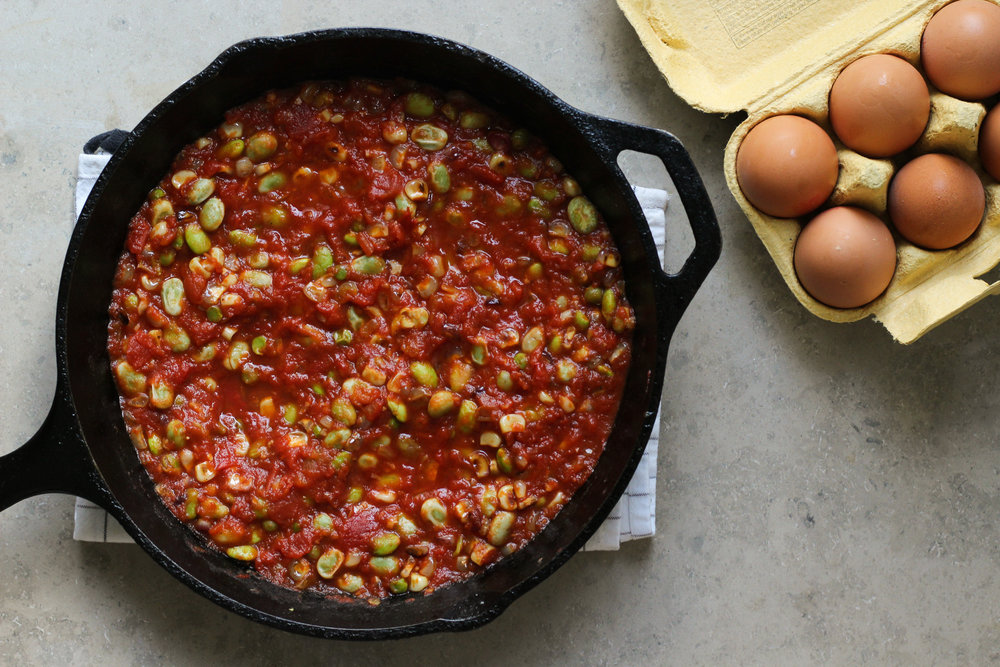
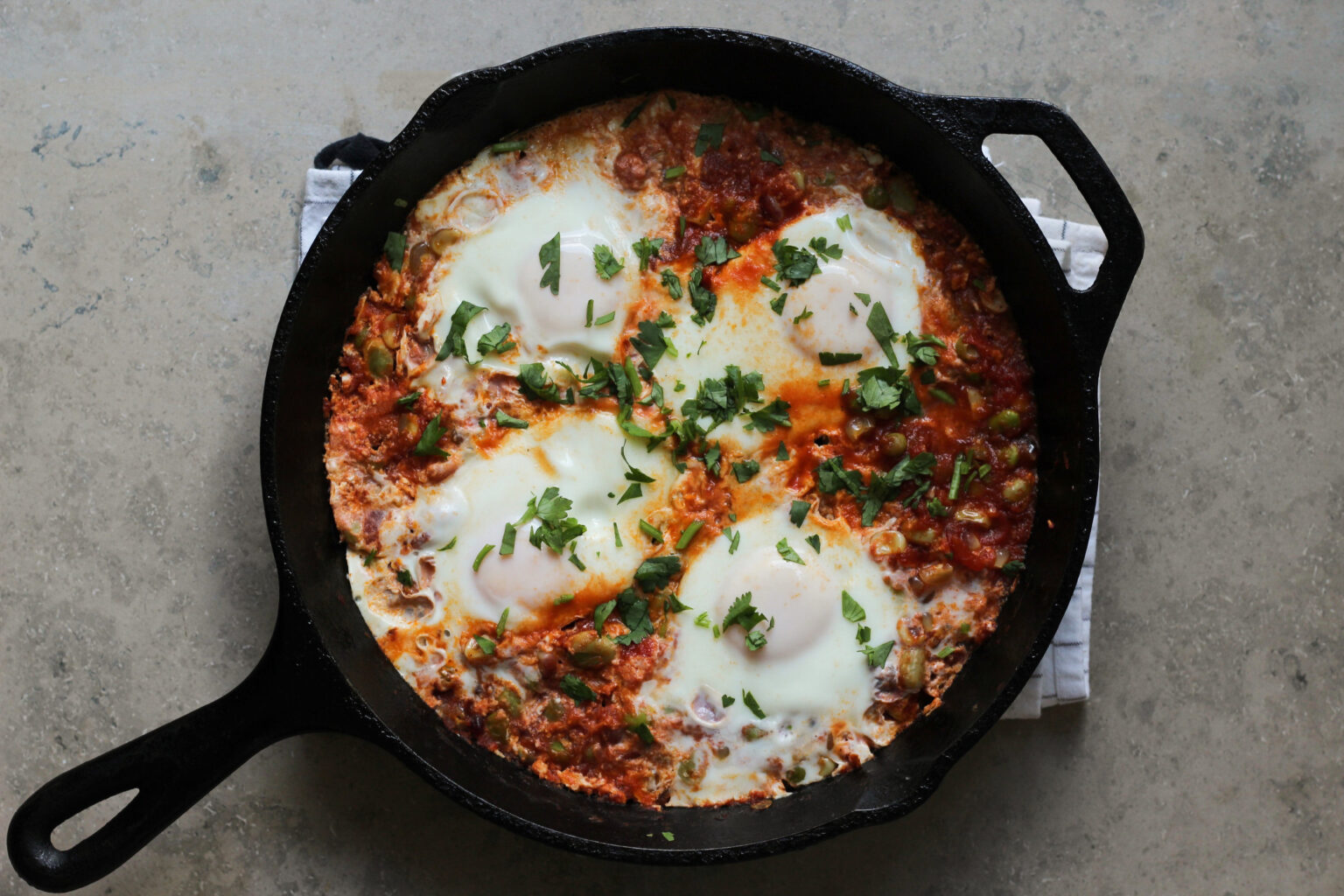
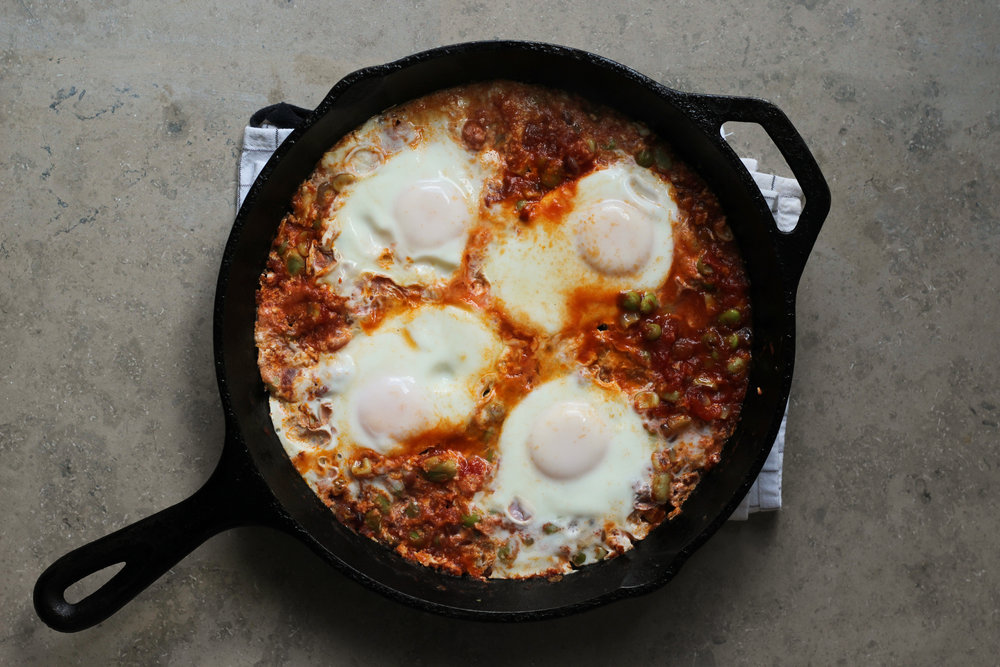
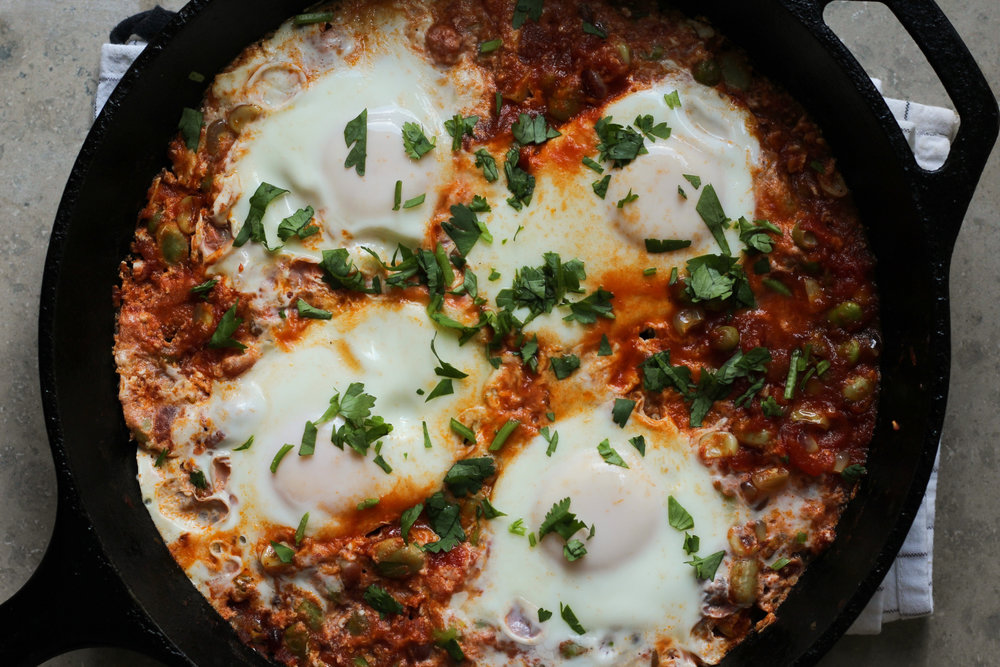
My friend Kate always chooses what to order based on the name. When I first learned this about her, I was skeptical, until I noticed that she always ended up with the most delicious thing on the menu, time and time again. And so I’m not sure whether I decided to cook succotash and shakshuka together because of Kate’s influence (should it be shakshukotash or succoshuka?), or simply because these two traditional dishes are a match made in heaven. But either way, I’m glad I did, because it’s become my new favorite way to cook eggs.
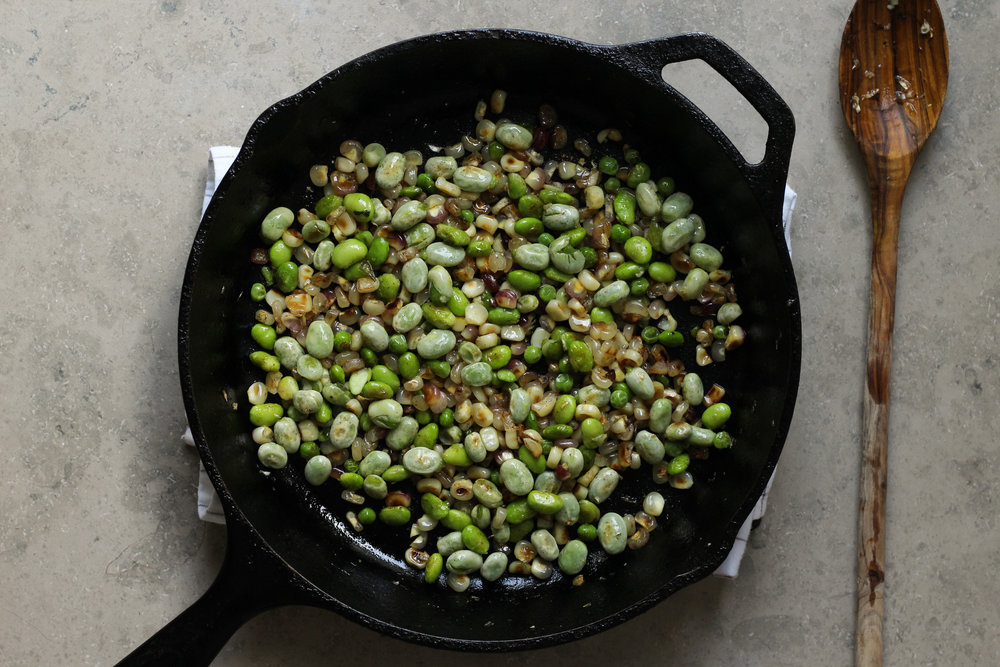
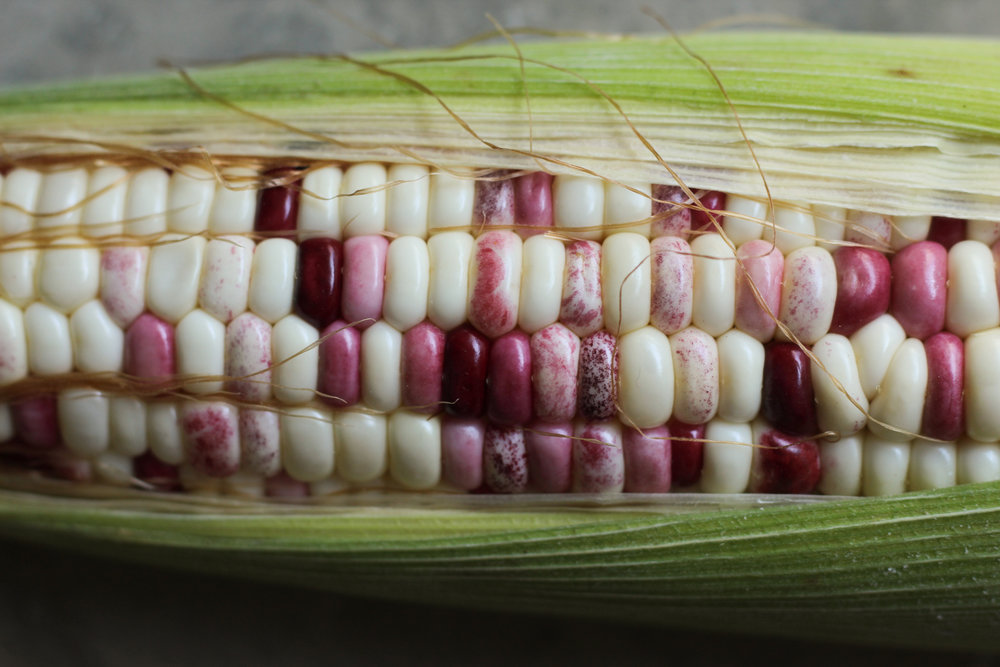
Succotash is a Native American dish, usually made with simmered shelled beans and corn. It’s influenced many American cuisines, especially in the southern and eastern US (check out Jessica B. Harris’ Summer Southern Succotash and Lolis Eric Elie’s Creole Succotash for two fabulous examples). It’s often made with lima beans, but many adaptations rely on a range of different shell beans (and in Harris’ recipe, okra!).

While succotash makes a perfect late summer meal, you can even enjoy it in the middle of winter without sacrificing quality, since all of the key ingredients are delicious frozen or canned. Lima beans are hard to find in my neighborhood, so I used a frozen lima-soy-pea blend to develop this recipe, but any green shelled beans will work beautifully here (fresh fava beans, for instance, go great with tomato and would be wonderful here). For the second part of the succotash equation, you can use always-classic sweet corn, but I also love this starchy Asian variety of purple waxy corn, which gelatinizes into chewy, sticky grains when it’s heated. It’s basically like the corn version of sticky rice.
Print

shakshukotash

Print Recipe

5 Stars 4 Stars 3 Stars 2 Stars 1 Star

No reviews

  • Total Time: 20 minutes
  • Yield: 2 servings

Ingredients

  • 2 tablespoons butter or olive oil
  • 1 cup corn (from about 1 ear)
  • 1 cup shell beans (any combination of frozen lima beans, soy beans, or fava beans)
  • salt, to taste (about 1/4 teaspoon)
  • 2 cloves garlic, crushed through a press or finely minced
  • 14.5 ounce can diced tomatoes
  • 4 eggs
  • optional: chopped cilantro or parsley to garnish
  • for serving: pita bread or toast

Instructions

  1. Place a skillet over medium-high heat and add the butter (or olive oil). Once it melts, add the corn, beans, and salt to taste. Cook, stirring occasionally, for 3 to 5 minutes until everything lightly browns.
  2. Reduce the heat to medium and add the garlic. Stir together for about 30 seconds, and then add the diced tomatoes.
  3. Stir and cook everything for 3 minutes, just until the tomato sauce thickens slightly.
  4. Use the back of your wooden spoon to make four little indentations for the eggs. Crack 1 egg into each indentation. Season with some salt, to taste. Immediately cover, and cook for about 4 minutes for runny egg yolks, or 5 minutes for soft-set, custardy, slightly runny egg yolks.
  5. Check the eggs by poking the white near the yolk with a knife and gently poking the yolk with your finger. If the whites do not ooze and the yolk still feels jiggly, they should be perfect. Once they are done, serve immediately. If the whites are not set, continue cooking them covered, checking every 45 seconds to see if they are done.
  6. Garnish with some chopped cilantro or parsley and serve with bread on the side
find us on instagram and let us know what you made!

Filed Under: breakfast, dairy free, dinner, every recipe, gluten free, lunch, main courses, side dishes, vegetarian, weeknight Tagged With: beans, corn, eggs, middle eastern, summer, tomato

stuffed eggplant | sheikh mahshi

January 24, 2018 by Kathryn Pauline 5 Comments

There’s this great episode of This American Life from a few years ago, where Sarah Koenig interviews her mother about her list of the seven things you’re not supposed to talk about at a dinner party. One or two things on the list are clearly inappropriate for dinner conversation, but most things made her list because they’re just so boring to talk about. So naturally, I thought it would be a great idea to write a blog post that encompasses (not one but) two of the things we’re not supposed to talk about (in this case, diet and health)—and hopefully you’ll find me interesting anyway. So, here it goes—I’m Kathryn, and I’m a Middle Eastern food blogger who can’t eat eggplant. 

When I was a kid, I used to eat eggplant all the time—we would always order baba ganoush with our takeout, and every summer my mom would grill up platters of portobello mushrooms, zucchini, and big thick-cut eggplant slices. When I was a vegetarian in high school, I ate even more eggplant (mostly because I thought it was a good source of vegetarian protein, because I was kind of clueless). And then eventually, it started making me really sick whenever I would eat it. My throat would get itchy, my tongue would swell, and my whole body would rebel. So finally, I had to give it up for good, and I haven’t had any in over a decade.

This means that recipe developing with eggplant is very hit or miss (and not blogging about eggplant is out of the question, because it’s an important part of the cuisine). Sometimes I make something with eggplant, feed it to friends and family, and they love it from the start. In this case, I would make it a couple more times with their minor suggestions, until they let me know it’s perfect, and then the final recipe would make it to my blog. But if an eggplant recipe doesn’t work out the first time, then it is simply dead on arrival, because there’s no way for me to figure out how to fix something I can’t actually taste. One of the best ways to avoid this DOA scenario is to stick to family recipes, which are already vetted by generations. And this, sheikh mahshi, is one of those recipes.

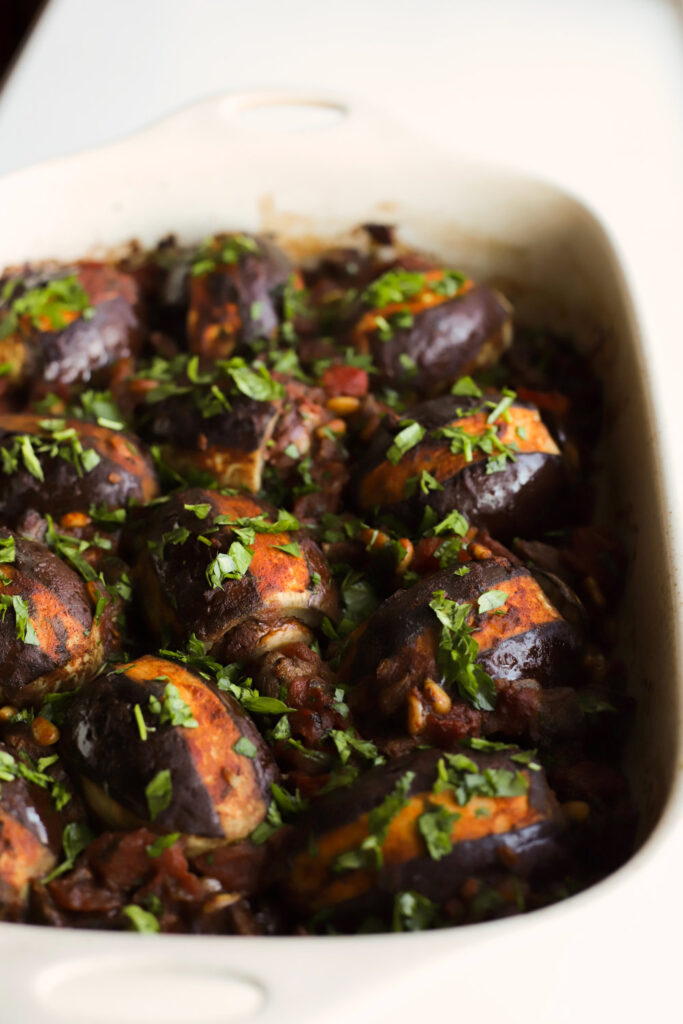
Sheikh mahshi (also know as sheikh el-mahshi) are not only beautiful but they’re also delicious, or so I’ve been told (I did taste the stuffing before it went into the eggplants, and it is absolutely scrumptious). My grandmother taught me how she makes sheikh mahshi, and I barely tinkered with her method to come up with the recipe below. It’s my husband’s favorite thing my grandmother makes, and I hope everyone who can consume eggplant enjoys this dish a little extra for me.

Print

stuffed eggplant | sheikh mahshi

Print Recipe

5 Stars 4 Stars 3 Stars 2 Stars 1 Star

No reviews

  • Prep Time: 1 hour
  • Total Time: 1 hour 40 minutes
  • Yield: 6 main servings, 12 side servings

Ingredients

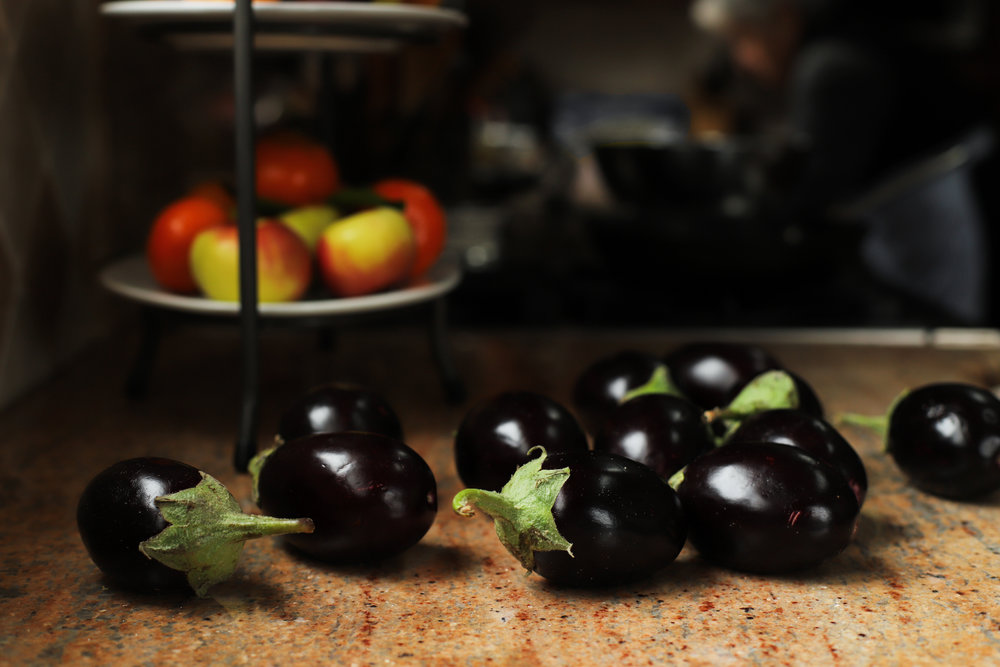
  • 2 pounds 5 ounces of mini eggplants (about 12 of them)
  • special equipment: zucchini corer *
  • Salt
  • 2 tablespoons butter (divided in half)
  • 1/2 cup pine nuts
  • Olive oil
  • 1 medium onion, finely diced
  • 1 1/2 pounds top round or sirloin, small dice into 1/4 inch pieces
  • 1/2 cup chopped parsley, plus more for garnish
  • 1 teaspoon allspice
  • 28 ounce can diced tomatoes
  • (optional) more parsley for garnish

Instructions

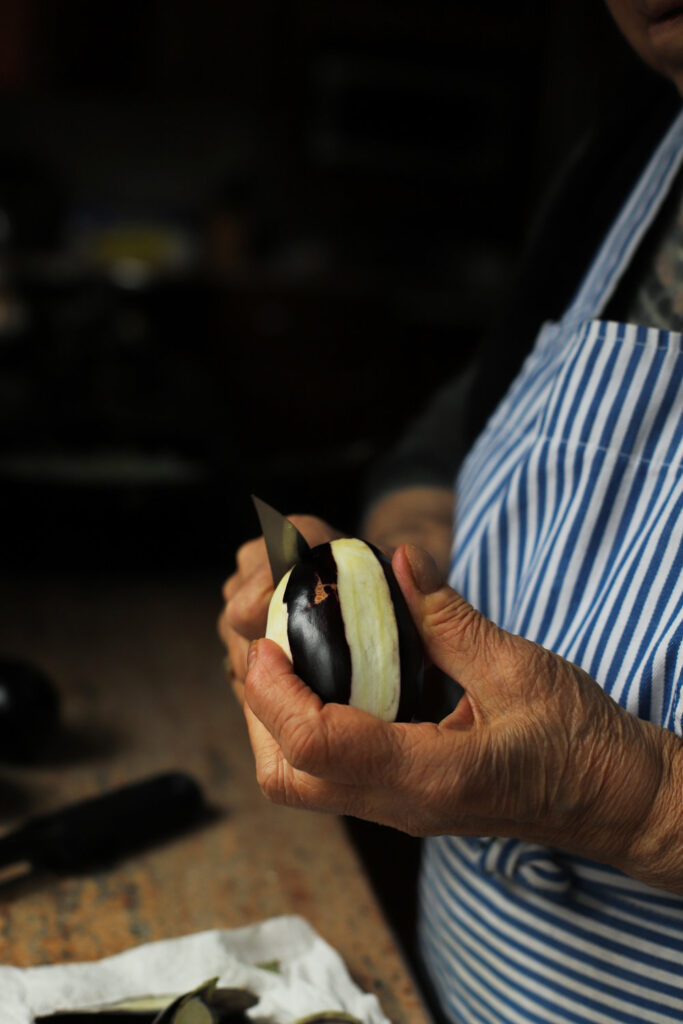
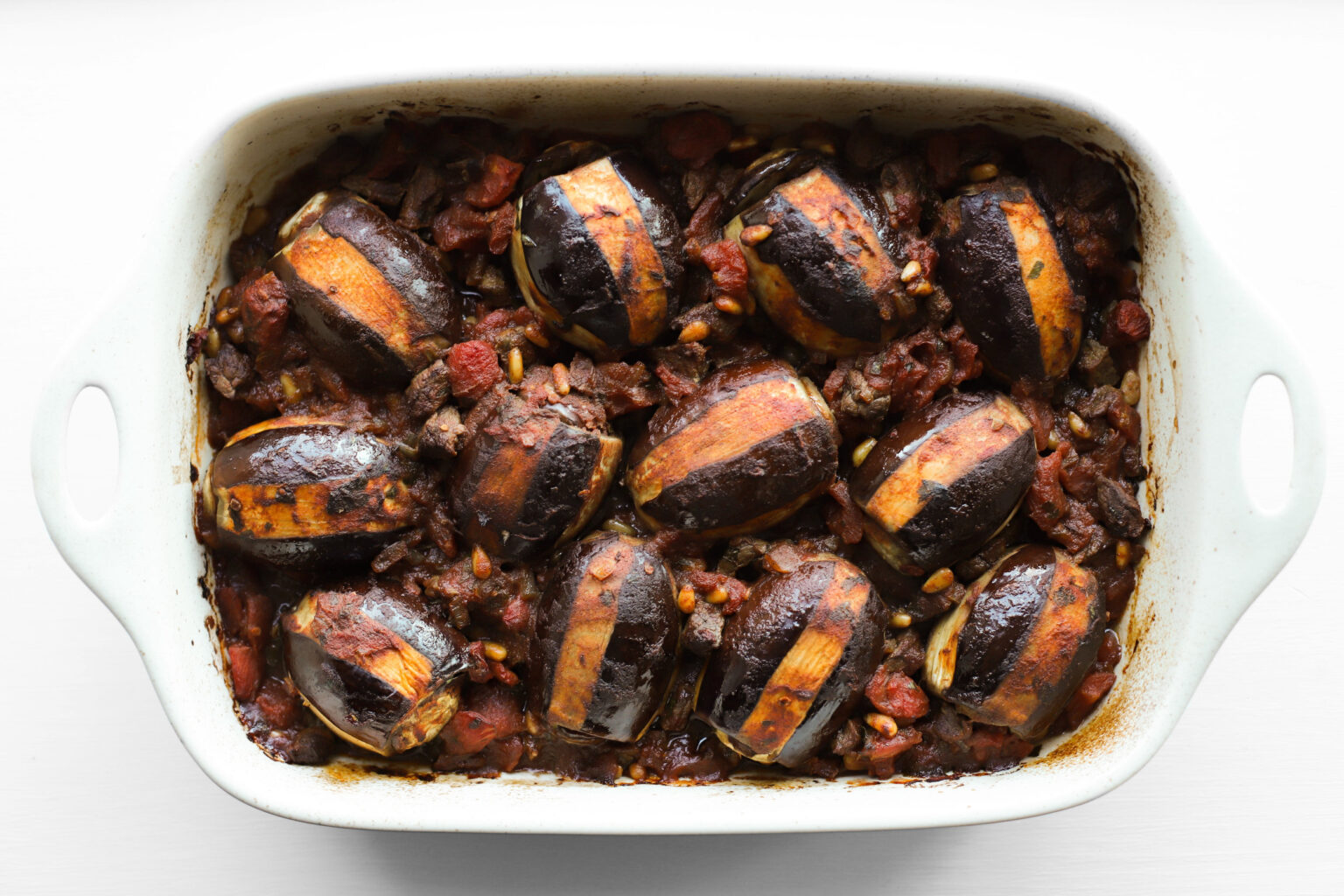
  1. Wash the eggplants, and then peel about 4 or 5 stripes down their sides (as pictured). Cut as close to the stem as possible to remove them (discard the stems), and then slice about 1/4 inch off the top. Save these, so you can use them as caps.
  2. Core the eggplants with a zucchini corer. Sprinkle their insides evenly with the 3/4 teaspoon salt and set them open-side-down to drain. Drain for 30 minutes to an hour.
  3. Preheat the oven to 400° F.
  4. While you’re waiting on the eggplants, prepare the filling: Heat a large skillet over medium heat for about 2 minutes. Add 1 tablespoon of the butter, followed by the pine nuts, and cook, stirring constantly, for about 5 minutes, until the pine nuts are lightly toasted. Remove to a medium bowl.
  5. Wipe down the skillet and add 1 tablespoon olive oil, followed by the onions. Stir occasionally, until they soften, about 7 minutes. Remove to the medium bowl.
  6. Crack a window, turn on your exhaust, turn the heat up to high, and wait 1 minute. Add 1/2 teaspoon olive oil to the skillet, swirl to coat, and immediately add half of the diced meat and 1/2 teaspoon of salt. Cook, stirring every minute or two, until it browns (about 5 to 6 minutes). Remove the first batch of meat to the medium bowl with the onions and pine nuts, and immediately add another 1/2 teaspoon of oil and the rest of the meat. Let it cook until it browns, which will take a little less time than the first batch (about 3 to 4 minutes). Remove to the medium bowl and let it cool for 2 minutes, then stir in the parsley and allspice. Remove the skillet from heat, and don’t bother washing it yet (unless the bits stuck to it have turned from brown to black).
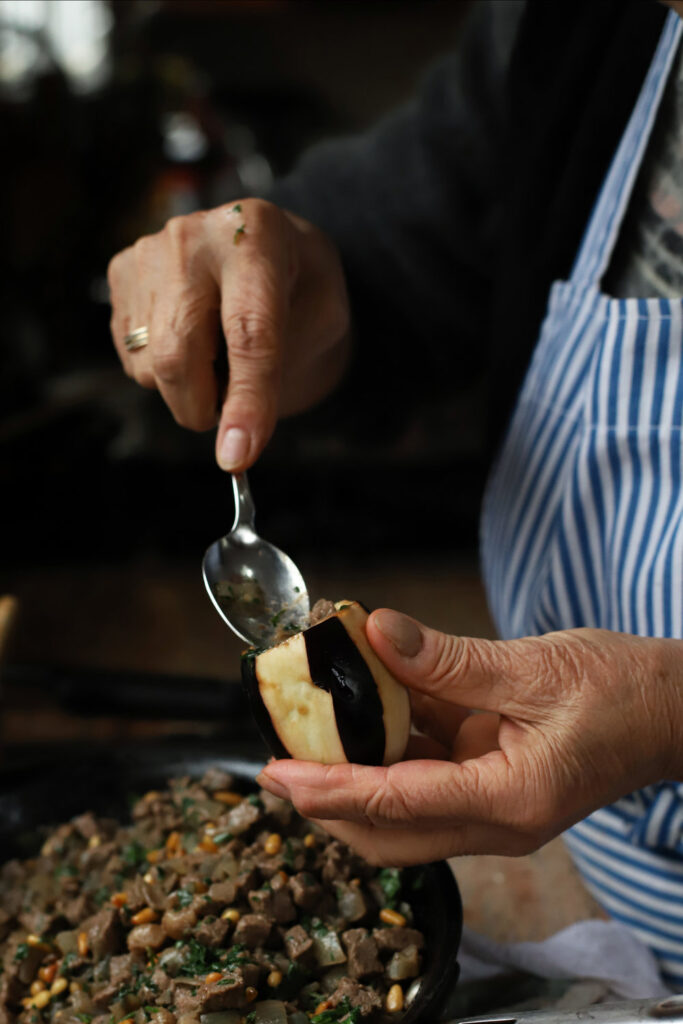
  7. Stuff the eggplants with as much of the meat mixture as will fit. Take the reserved caps and squeeze them into the tops so they stay in place. **
  8. Combine the leftover meat mixture with the can of diced tomatoes and return to the skillet. Simmer for about 2 minutes over medium heat, just to meld the flavors.
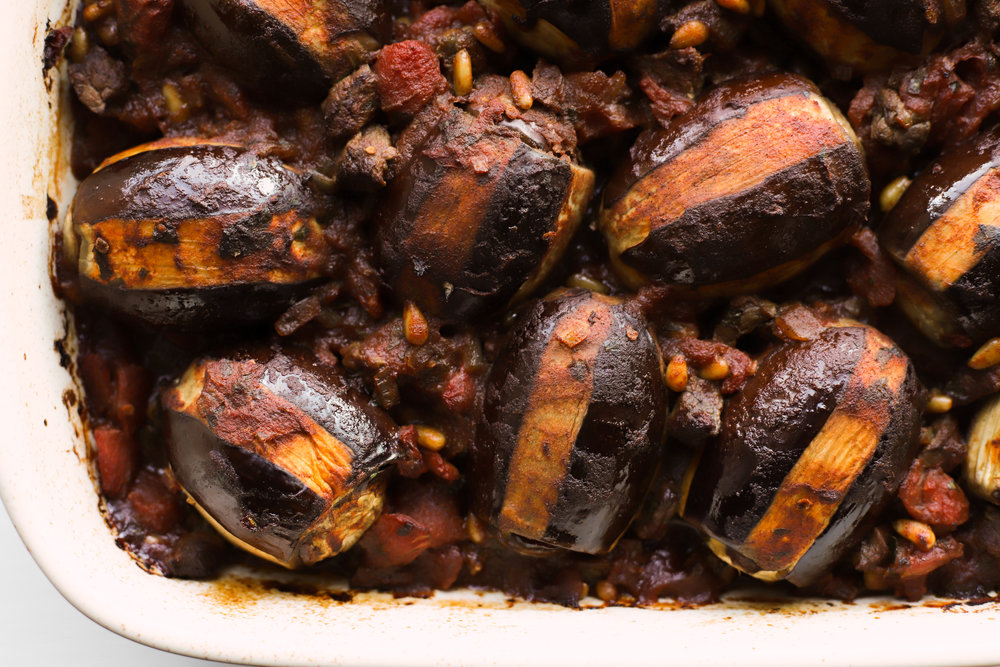
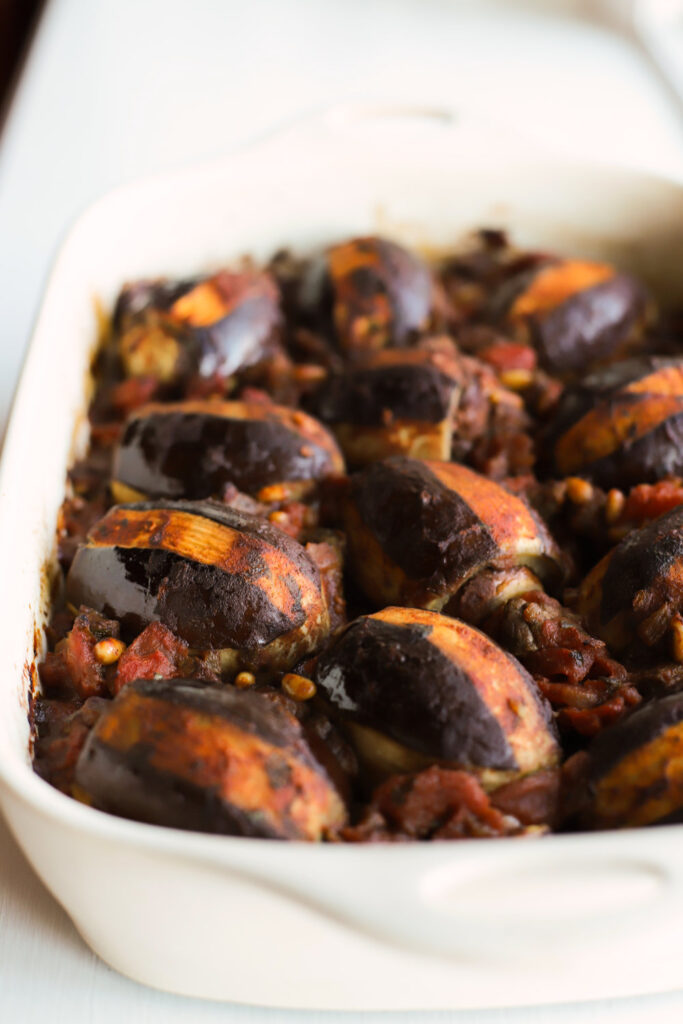
  9. Pour half of the tomato-meat sauce into the bottom of a casserole dish. Arrange the stuffed eggplants on theirs sides. Pour the other half of the tomato-meat sauce over the tops, pushing big chunks of meat and tomato off the tops, so they fall down the sides. Drizzle the top with 1 tablespoon of olive oil, or go over it with cooking spray. Cover everything with foil, and bake for 30 minutes. Uncover and cook for another 10 minutes, or a little longer until the top is nicely caramelized (see the photo). Sprinkle with parsley (optional) and serve.

Notes

* You can easily find zucchini corers online, and in some Middle Eastern grocery stores. In addition to making dolma, they can be used for lots more (see the note at the end of my dolma recipe).

** Compress the edges of the cap and then work it into the top of the eggplant. Take the top and hold it so that all 5 fingertips are touching its edges. Gently squeeze the top so its diameter decreases, and place it in the eggplant opening. When it is sitting in the eggplant, the cap will flatten and it will be hard to remove it because the edges will catch. It’s a little finicky, but fortunately it’s also ok to just skip this step if it gives you too much trouble. A tiny bit of the filling might fall out during baking, but it’ll be totally fine.

find us on instagram and let us know what you made!

Filed Under: dairy free, dinner, dolma and mahshi, every recipe, family recipes, gluten free, main courses, side dishes Tagged With: beef, eggplant, fall, herbs, parsley, pine nuts, summer, tomato

  • « Go to Previous Page
  • Page 1
  • Interim pages omitted …
  • Page 135
  • Page 136
  • Page 137
  • Page 138
  • Page 139
  • Interim pages omitted …
  • Page 183
  • Go to Next Page »

Primary Sidebar

Kathryn Pauline smiling

Welcome! I’m Kathryn Pauline, cookbook author, recipe developer, and photographer.

Footer

read our privacy policy

© 2017 - 2026 Kathryn Pauline