• Skip to primary navigation
  • Skip to main content
  • Skip to primary sidebar
  • Skip to footer
Cardamom and Tea
  • Blog
  • Recipes
  • About
  • Cookbooks
    • Piecemeal
    • A Dish for All Seasons (my first cookbook)

Roasted Squash Steaks

July 26, 2025 by Kathryn Pauline Leave a Comment

roasted squash steaks

After trying these roasted squash steaks, there was no going back to treating squash as a mere background vegetable. That butternut squash sitting on your counter? Suddenly it’s not just a future soup or a boring side. When roasted just right and paired with a few simple ingredients like feta, dates, and rosemary, squash becomes a centerpiece.

roasted squash steaks

Tips for success with you roasted squash steaks

1. Use any firm-fleshed winter squash.

One medium butternut squash is ideal for the quantities below, but kabocha or acorn also work beautifully. If your squash is larger or smaller, simply scale up or down the toppings. Be sure to add enough feta, rosemary, dates, and vinaigrette.

2. Use that vinaigrette (before and after).

Coating the squash steaks and onions in vinaigrette instead of plain olive oil adds a punch of flavor right from the start. And don’t forget to drizzle on a little more after roasting for a bit more brightness. Same goes for the rosemary—I like to chop some to roast and then sprinkle on some tiny sprigs after roasting.

3. Don’t crowd the pan.

Crowded squash = steamed squash rather than roasted squash. Use two sheet pans if needed and make sure each piece has space around it.

4. Add the dates toward the end.

Sprinkle the dates on after about 15 minutes of roasting so they soften and slightly caramelize without burning.

5. Cut evenly.

Try to keep the squash steaks around ¾ inch thick. Thinner pieces will overcook before the feta chars; thicker ones may stay too firm. Same goes for the feta, which should be around ¼ in.

roasted squash steaks
Print

Roasted Squash Steaks

roasted squash steaks
Print Recipe

5 Stars 4 Stars 3 Stars 2 Stars 1 Star

No reviews

  • Prep Time: 5 minutes
  • Cook Time: 20 minutes
  • Total Time: 25 minutes
  • Yield: 8 servings

Ingredients

  • 1 butternut squash*
  • ½ red onion, thinly sliced
  • 3 Tbsp vinaigrette,** plus more for serving
  • ¾ tsp salt
  • 6 oz [170 g] ¼ in [6 mm] sliced feta
  • 1 Tbsp chopped fresh rosemary needles, plus more for serving
  • 8 pitted, halved Medjool dates (125 g)

Instructions

  1. Preheat the oven to 500°F [260°C].
  2. Peel the butternut squash, slice off the stem, slice in half, and discard the seeds and pulp. Slice into about eight ¾ in [19 mm] thick wedges.
  3. Line a rimmed sheet pan with parchment paper and place the squash and onion slices on it. Drizzle on the vinaigrette and use your hands to coat evenly. Arrange the squash in a single layer with space around each piece (use 2 sheet pans if necessary, and don’t crowd the pan) and sprinkle with the salt. Layer the feta on and around the squash, and sprinkle with the rosemary.
  4. Roast for about 20 minutes, until the feta is charred in spots and the squash has cooked through (stop before it gets mushy). Sprinkle on the dates after 15 minutes of roasting.
  5. Serve with a small sprinkling of rosemary needles (do not sprinkle whole sprigs), and drizzle with a little more vinaigrette, to taste.

Notes

* One medium butternut squash is ideal for the quantities in this recipe, but any firm-fleshed winter squash will work. If your squash is larger or smaller, simply scale up or down the toppings.

** I linked here to my favorite recipe, which you’re welcome to make (without water). Or feel free to use your favorite vinaigrette.
find us on instagram and let us know what you made!

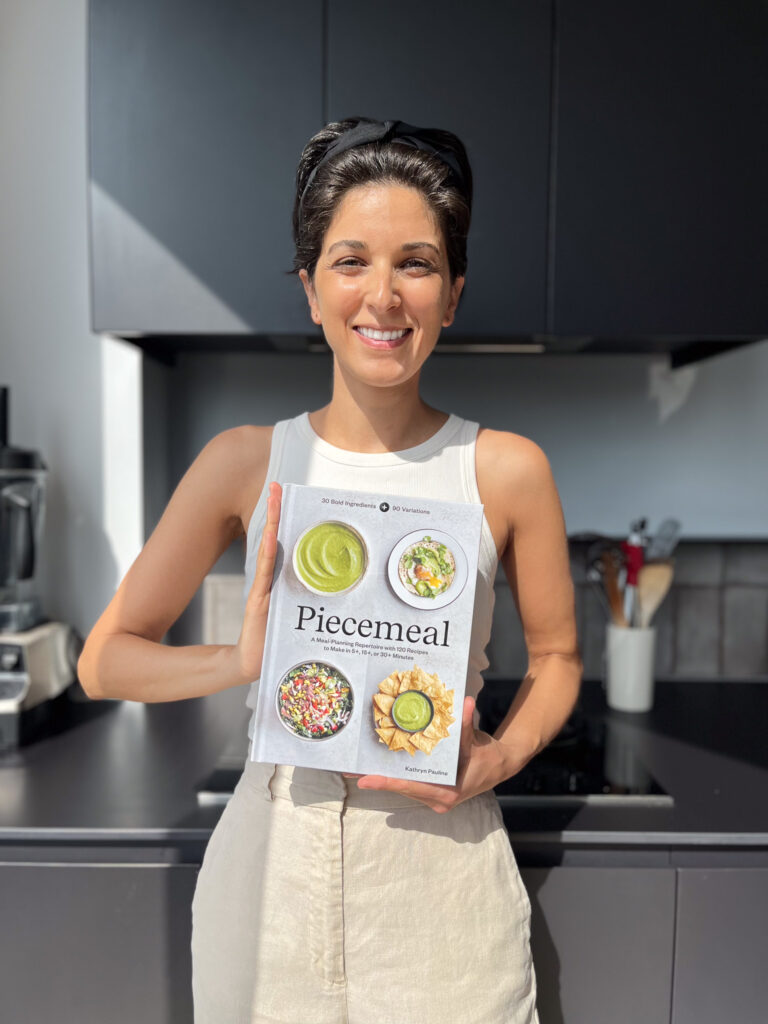
Psst… by the way, I love this recipe so much, I ended up including it in my cookbook, Piecemeal.

If you like this recipe as much as I do, you might like my book! It’s full of mix-and-match recipes and inspiration for fun and easy meals.
Filed Under: dinner, every recipe, gluten free, side dishes, vegetarian, weeknight Tagged With: dates, fall, feta, herbs, onion, winter

Ful Medames

July 26, 2025 by Kathryn Pauline 2 Comments

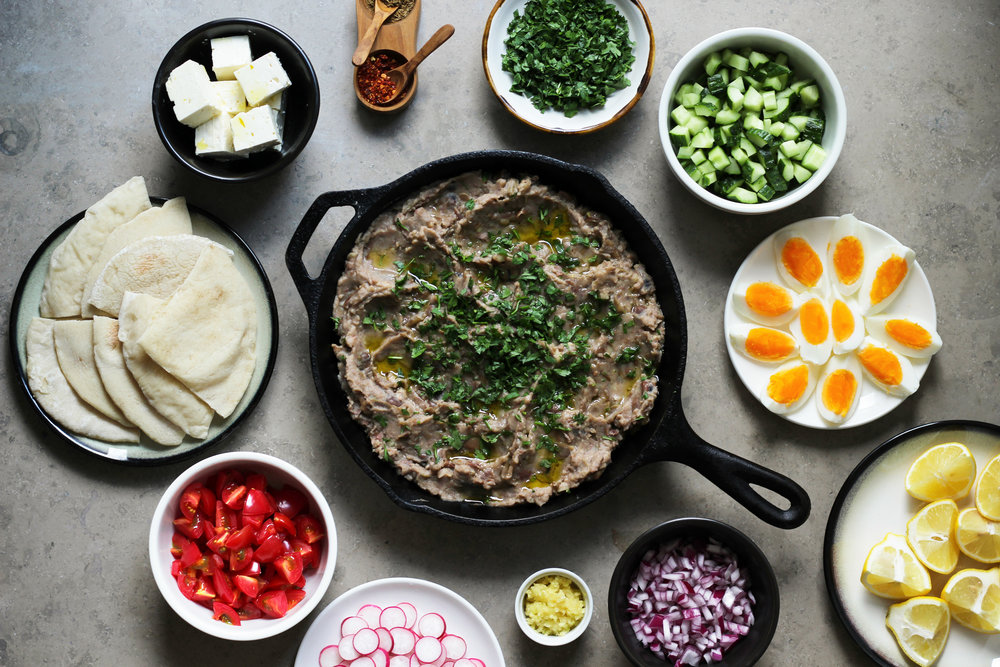
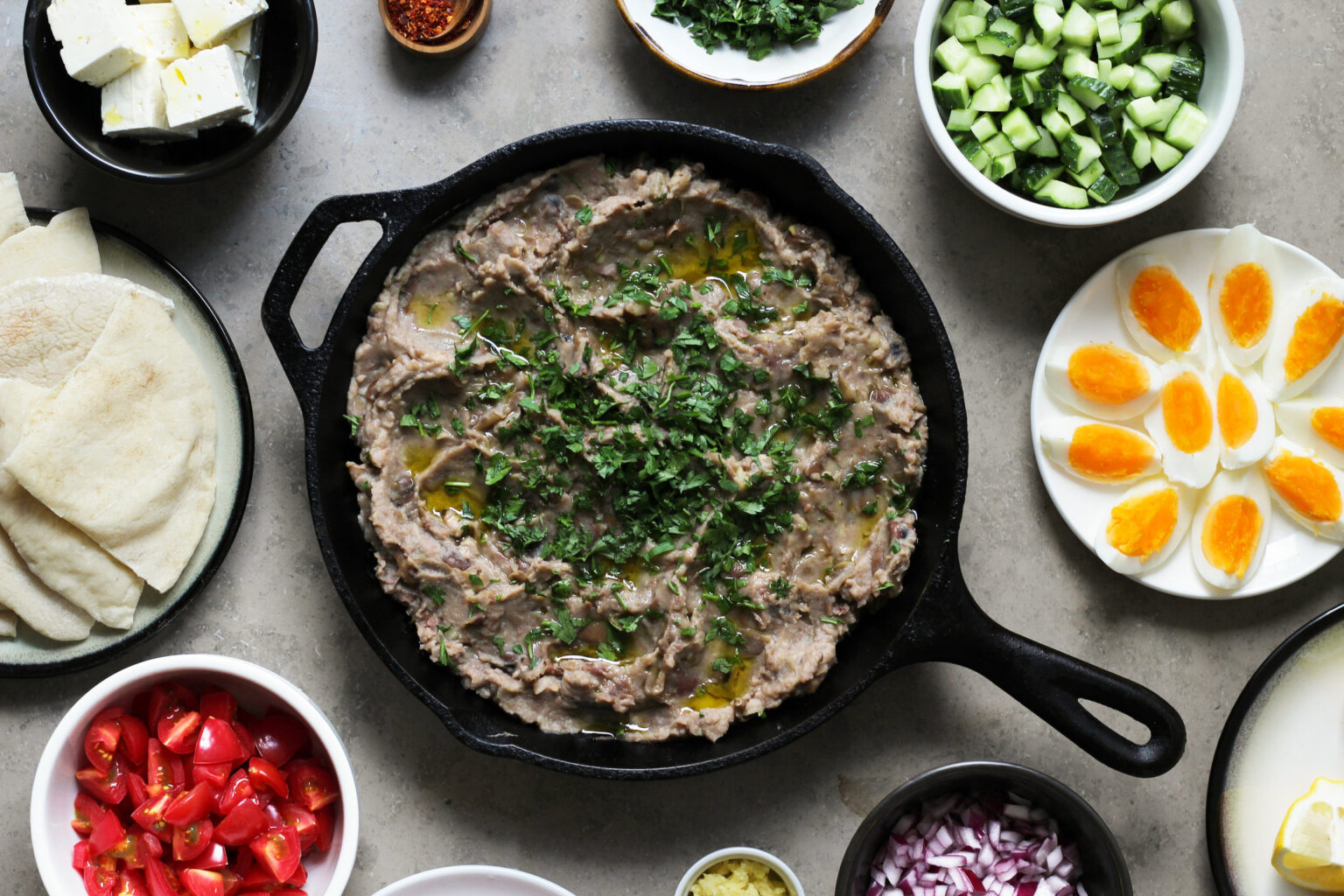
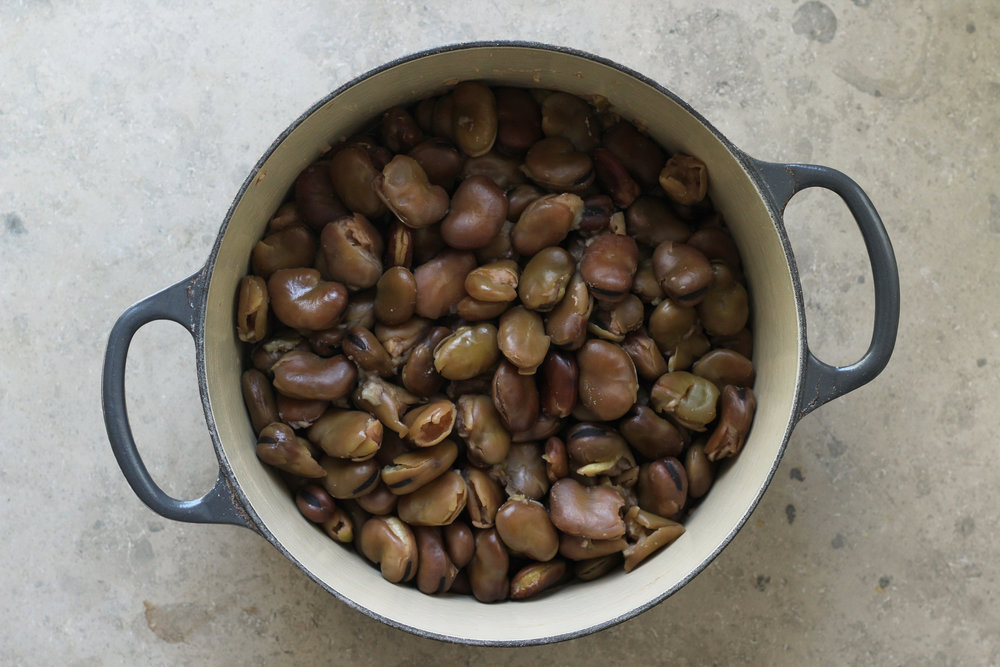
At the end of the day, it’s just stewed dried fava beans. It’s a pretty humble dish. But ful medames comes together into a total showstopper when you spoon some mashed fava beans a bowl and add some lemon juice, olive oil, chopped herbs, chili, eggs, or whatever else you love. After all, ful is all about the toppings.

I started making ful medames for weekend brunches as a way to feed a crowd without overcommitting myself to the kitchen. And it worked great, because as it turns out, everyone loves a meal they can customize. And I get to hang out instead of frying eggs to order.

Jump to the recipe to hit the ground running, or read on for a list of some tips for success and a note on fava allergy.

Tips for ful medames success

1. Use baking soda for quick-cooking, fluffy beans.

Soaking dried fava beans with baking soda not only helps them cook faster, but also helps them cook up fluffier and softer. Just make sure to rinse them well after soaking so they don’t taste weirdly soapy.

2. Watch the pot carefully.

When you use this baking soda trick, fava beans can go from tender to mushy very quickly. Don’t overcook them or they will get a bit soggy instead of fluffy. But with ful medames, soggy actually isn’t the end of the world, so don’t stress if you take them a little too far. Overdone is better than unpleasantly mealy.

3. Don’t skip the garlic, oil, and herbs.

These are the only toppings that are pretty much mandatory (well, that and pita bread, if that counts as a topping). Garlic and parsley or cilantro brings freshness and oil brings richness, two qualities that cooked fava beans are lacking.

4. Have fun with the toppings!

You can use whatever you’d like for your ful medames. The list in the following recipe is not mandatory—pick a few things that sound good to you. It’s generally nice to pick one or two fresh-tasting things (e.g., tomatoes, cucumbers, red onions, lemons), one or two creamy things (e.g. feta, eggs), and one or two bold things (e.g. spices, garlic, etc.). And don’t just stick to this list—feel free to get creative and use what you have.

allergy warning

Fava beans are a beloved ingredient in many parts of the world, but they’re not safe for everyone. There’s a genetic condition called G6PD deficiency (also sometimes referred to as favism) that can make it unsafe to eat certain foods, including fava beans. I’m not a medical professional, so if you’re unsure whether they’re safe for you or your guests, it’s worth doing a bit of research or checking with a healthcare provider.

And if you’d rather play it safe, you can absolutely make ful medames with something like black beans or chickpeas instead. It won’t be traditional, but it’ll still be hearty, comforting, and very good.

Print

Ful Medames (with topping ideas)

Print Recipe

5 Stars 4 Stars 3 Stars 2 Stars 1 Star

5 from 1 review

  • Yield: 4 to 6 servings

Ingredients

For the beans:

  • 2 quarts water
  • 2 tsp baking soda
  • 2 1/2 cup dried fava beans
  • Extra virgin olive oil
  • 2 cloves garlic, crushed through a press or finely minced
  • 3/4 tsp salt, or to taste
  • 1/2 cup chopped parsley or cilantro

Optional toppings (choose 2 to 3… or all 12!)

  • Serve with pita Bread, warmed in the oven for a couple minutes (semi-mandatory, unless you hate bread)
  • More garlic, crushed through a press or finely minced
  • 1/2 of 1 red onion, thinly sliced or minced
  • 2 lemons, sliced into wedges
  • 3 soft or hard boiled eggs, cut into wedges or halves
  • 3 medium tomatoes, diced
  • 1/2 of 1 English cucumber or 3 Persian cucumbers, diced
  • 8 to 10 radishes, thinly sliced
  • 1 1/2 tablespoons lightly toasted cumin
  • 1 tablespoon crushed red pepper
  • 8 ounces feta (can also use 1 cup labneh or yogurt)
  • More parsley or cilantro

Instructions

  1. Pour the water and baking soda over the dried fava beans and stir until the baking soda dissolves. Let them soak overnight.*
  2. The next morning, drain away the soaking water and cover the fava beans by a few inches of water in a medium stock pot or skillet. Bring the water to a boil, and then lower the heat and simmer the fava beans for about 35 minutes, until they’re very soft (keep an eye on them to make sure they don’t disintegrate completely). If you don’t use baking soda or if your beans are old, they’ll take longer to cook.
  3. While the beans are cooking, prep the toppings.
  4. Once the beans are very soft, strain them in a colander.
  5. Place the now empty pot back over medium heat and let it heat for a couple minutes. Add 1 tablespoon of oil and add the garlic. Cook and stir over medium heat for 30 seconds, and then return the beans to the pot with the garlic and mash them up with the salt. Add one or two tablespoons of water if the beans are too thick (they will thicken a little more as they cool).
  6. Drizzle the beans with more extra virgin olive oil, and top with parsley or cilantro.
  7. Have guests build their own bowls, starting with the beans, then piling on their favorite toppings.

Notes

* If you don’t have time to let them soak overnight, you can cook them right from dry. It will just take a lot longer on the stove.

find us on instagram and let us know what you made!

2025 update: This recipe was originally published on 10 January 2018, but I recently made a few changes and updated it. The recipe is now much more streamlined and easier to follow (this was my 100th recipe at the time 🥳 but I still had a lot to learn!). The actual recipe itself is still pretty much the same, so if you’ve been making it for years, don’t worry. It’s just a lot easier to follow now.

Filed Under: appetizers, breakfast, dairy free, dinner, every recipe, gluten free, lunch, main courses, meze, side dishes, vegan, vegetarian Tagged With: beans, cilantro, cucumber, eggs, fava beans, feta, herbs, parsley, radish, tomato

  • « Go to Previous Page
  • Page 1
  • Interim pages omitted …
  • Page 27
  • Page 28
  • Page 29
  • Page 30
  • Page 31
  • Interim pages omitted …
  • Page 183
  • Go to Next Page »

Primary Sidebar

Kathryn Pauline smiling

Welcome! I’m Kathryn Pauline, cookbook author, recipe developer, and photographer.

Footer

read our privacy policy

© 2017 - 2026 Kathryn Pauline