• Skip to primary navigation
  • Skip to main content
  • Skip to primary sidebar
  • Skip to footer
Cardamom and Tea
  • Blog
  • Recipes
  • About
  • Cookbooks
    • Piecemeal
    • A Dish for All Seasons (my first cookbook)

Greek Dolmades

August 5, 2025 by Kathryn Pauline Leave a Comment

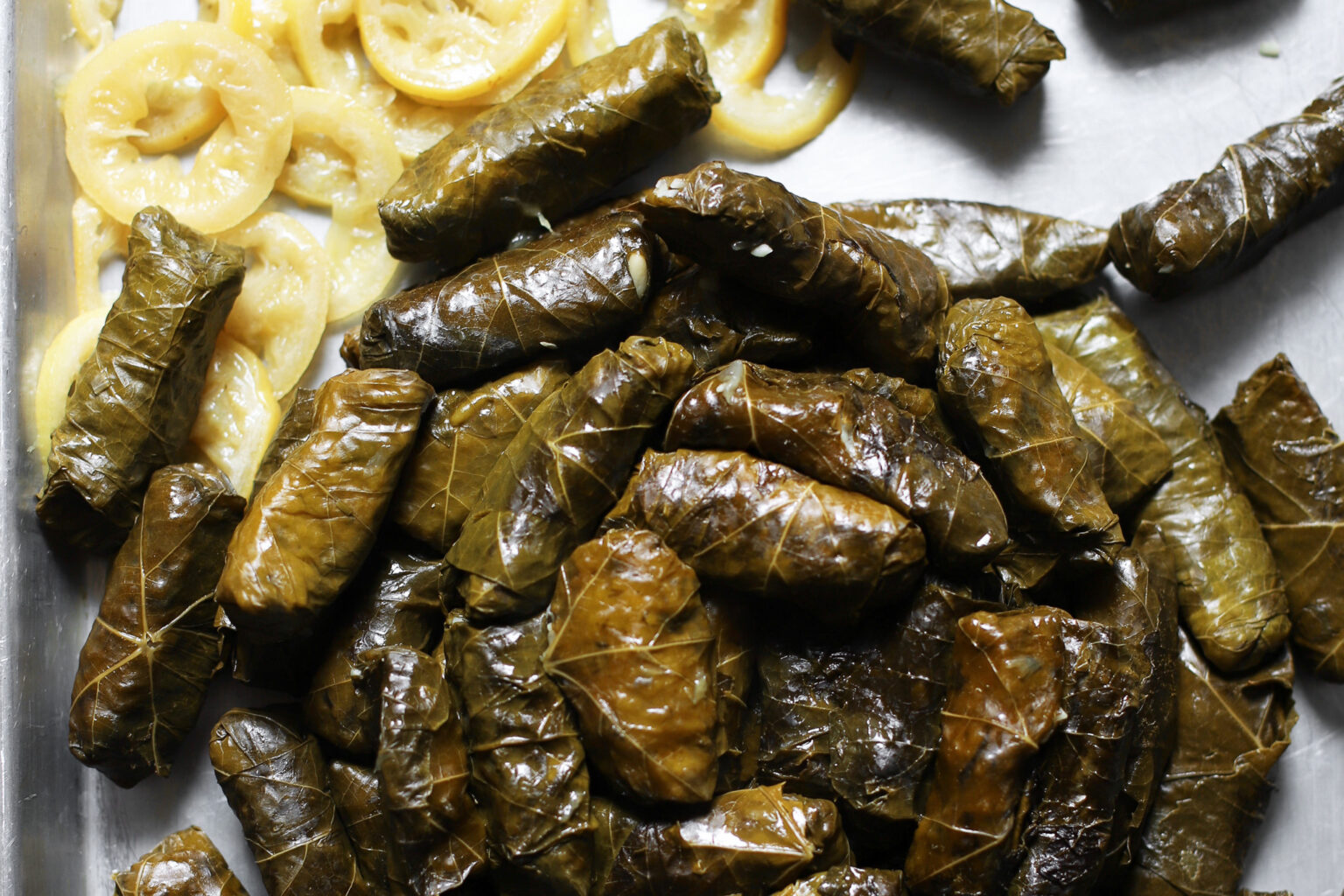
Greek dolmades

You’ll find stuffed grape leaves in just about every country across the Mediterranean and the Middle East. I grew up with the Assyrian version. But growing up in the Chicago suburbs also meant a steady rotation of Greek restaurants, so Greek-stye dolmades hold a special spot in my heart as well.

If grape leaves intimidate you a little, read on for reasons why this (naturally vegan!) dolmades recipe is my fave + a few tips. Dolmades may seem fussy, but once you get to know them, you’ll realize that they’re friendlier than they look.

Otherwise, jump to the recipe if you’re ready to hit the ground running.

Greek dolmades
Greek dolmades

Why I love this dolmades recipe

My recipe yields a traditional version of Greek dolmades, with a few subtle shifts to highlight all of the things I love about the classic.

  • For one, I don’t hold back on the lemon. We’re talking lemon slices layered across the bottom of the pot and a generous pour of lemon juice in the simmering broth. If you really want to take the lemonyness to the next level, serve it with avgolemono sauce. It makes everything taste like someone’s beloved yiayia made it.
  • I’ve also amped up the herbs. Parsley, dill, and mint take center stage. They are far from bland.
  • These dolmades are vegan (by nature!).
  • Besides the fact that this recipe tastes great, it’s also perfect for first-timers. I walk you through every step of the process.
Greek dolmades
Greek dolmades

Tips for making dolmades (and stuffed grape leaves in general)

I’ve been making all kinds of stuffed grape leaves for years, and these are my top tips. Following these practices separates an okay batch from an exceptional one:

1) If you start with jarred grape leaves, blanch them.

This is perhaps the most important thing to know for making truly good grape leaves. It’s the step that separates mediocre, mass-produced stuff from the kind made at home (i.e., the best kind!).

A quick 3-minute simmer softens the leaves and rinses the brine and oil off of them. Just rinsing under the tap won’t cut it. If you skip this step, the leaves will give the entire pot a harsh, acrid edge.

2) Turn it into a make-ahead situation.

If the whole process of stuffing grape leaves intimidates you, break it up into a couple days. You can prep the grape leaves and make the vegan filling the day before (just keep them in the refrigerator, stored separately). The day of, all that’s left is rolling, stacking, and simmering your way to a pot of dolmades.

3) Use the correct side of the leaf (the filling goes on the dull, veiny side).

Place the filling on the dull, veiny side of the leaf so that the smooth side faces out. This gives you that glossy, classic dolmades look once you roll them up.

4) Don’t over- or under-stuff.

Yes, over-stuffing can cause your rolls to burst. But under-stuffing leaves you with deflated little sacks of grape leaf. Aim for a small log of filling that you can wrap a big snugly (not tightly). As with so many things in life, balance is the way to go.

5) Pack the pot snugly.

It’s time to play dolmades tetris! And that’s because if you leave big gaps around the individual dolmades, they will bob around as they simmer and will come unraveled. You want a snug fit to prevent this. Don’t press them together to make them fit tightly, but also don’t leave big gaps between them. Topping the whole thing with an upside-down heatproof plate also helps ensure that they don’t come unwrapped while cooking.

6) Salt carefully

If your grape leaves are particularly salty, you might need to cut back a bit on the salt in the filling and simmering liquid. And if yours are under-salted (perhaps you’re using fresh grape leaves), you might want to add a bit more salt. It all depends!

Greek dolmades
Greek dolmades with avgolemono sauce

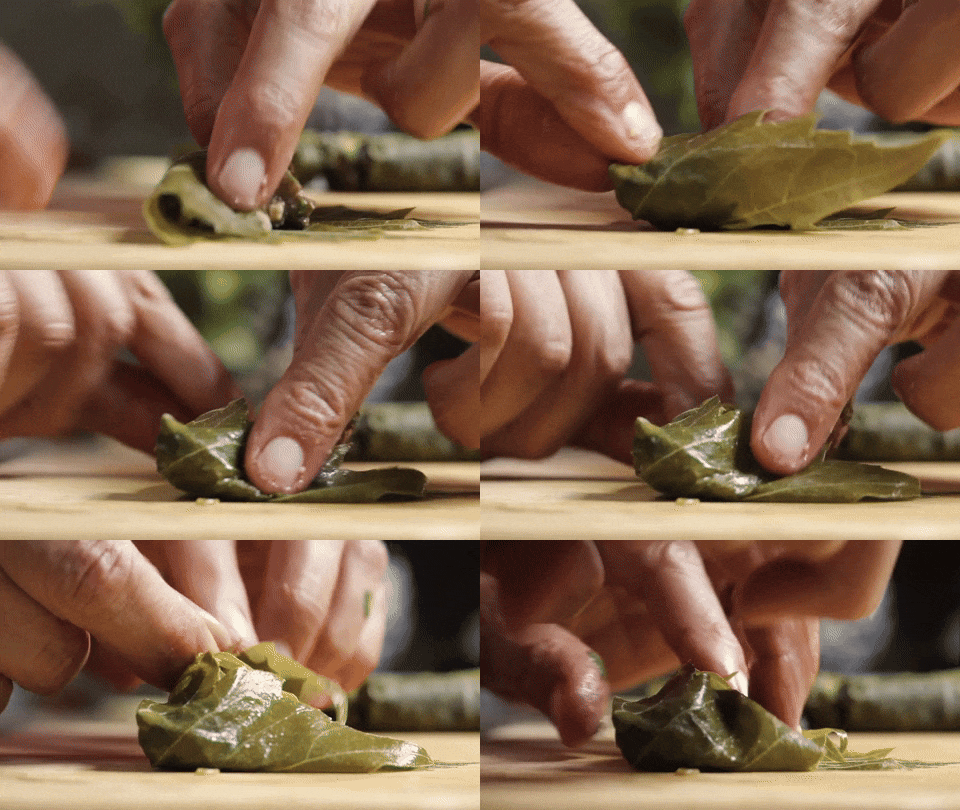
How to roll up grape leaves

rolling grape leaves

1. Place the filling in the center of the leaf.
2. Fold up the bottom.
3. Fold in the sides.

rolling grape leaves

4. Tuck in the jagged edges on the loose part of the leaf.
5. Roll away from yourself.

If you prefer, here it is in GIF form (thanks mom for modeling!). And the recipe card has a video of this too.
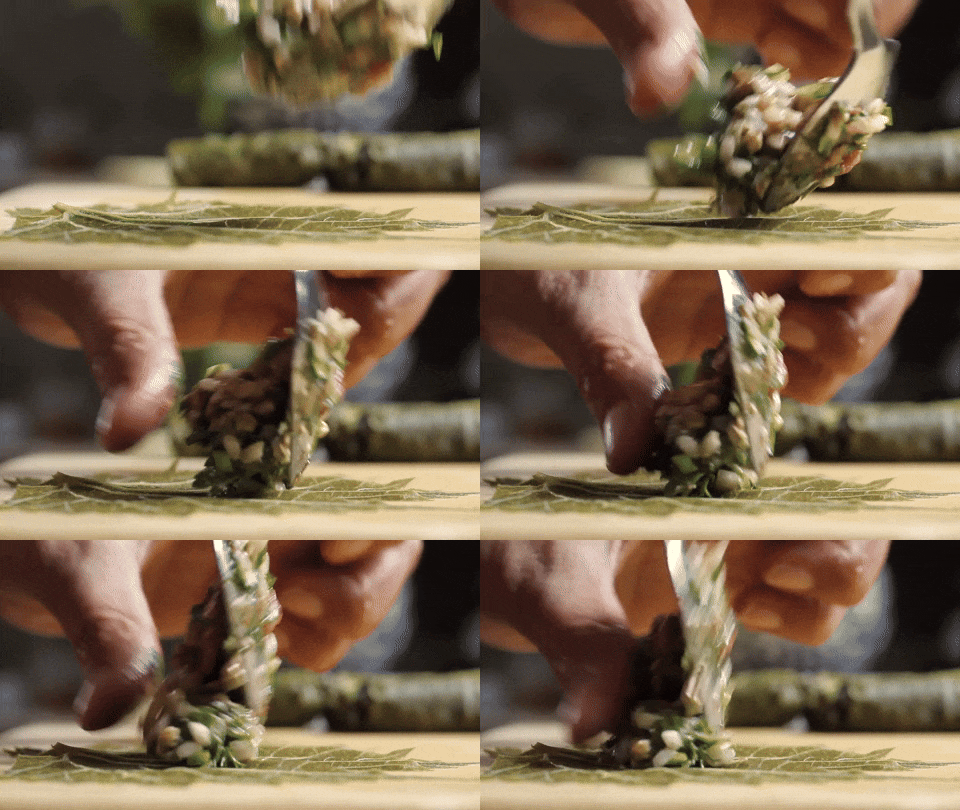
rolling grape leaves: adding the filling

1. Place the filling in the center of the leaf.
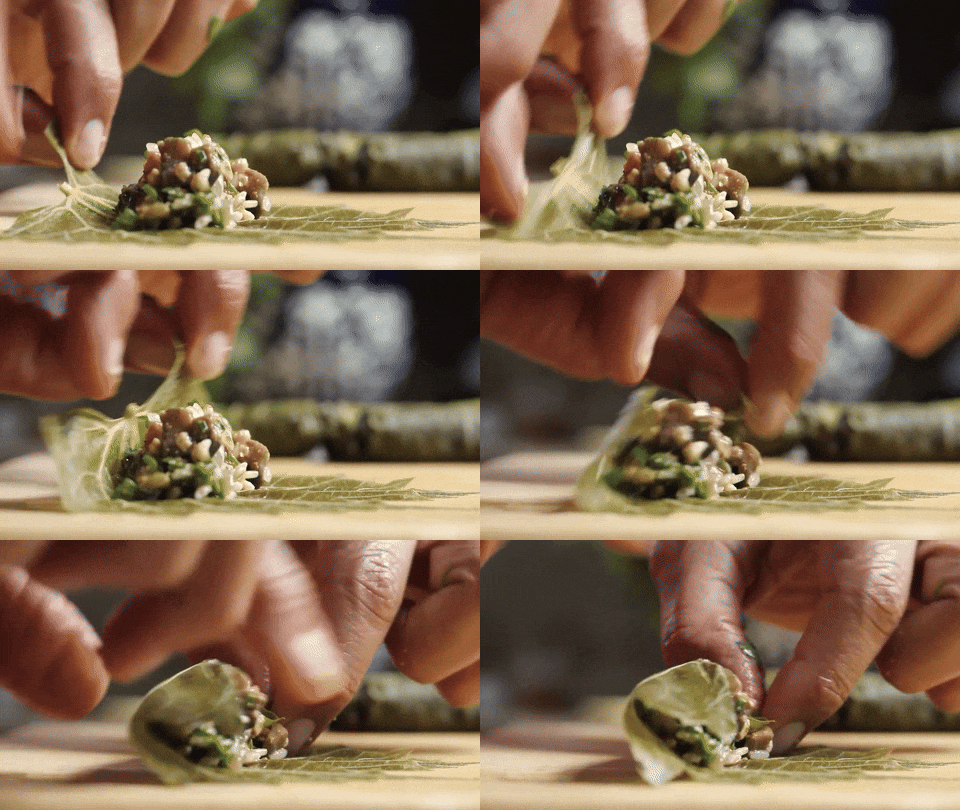
rolling grape leaves: folding up the bottom

2. Fold up the bottom.

rolling grape leaves: folding up the sides

3. Fold in the sides.
4. Tuck in the jagged edges on the loose part of the leaf.
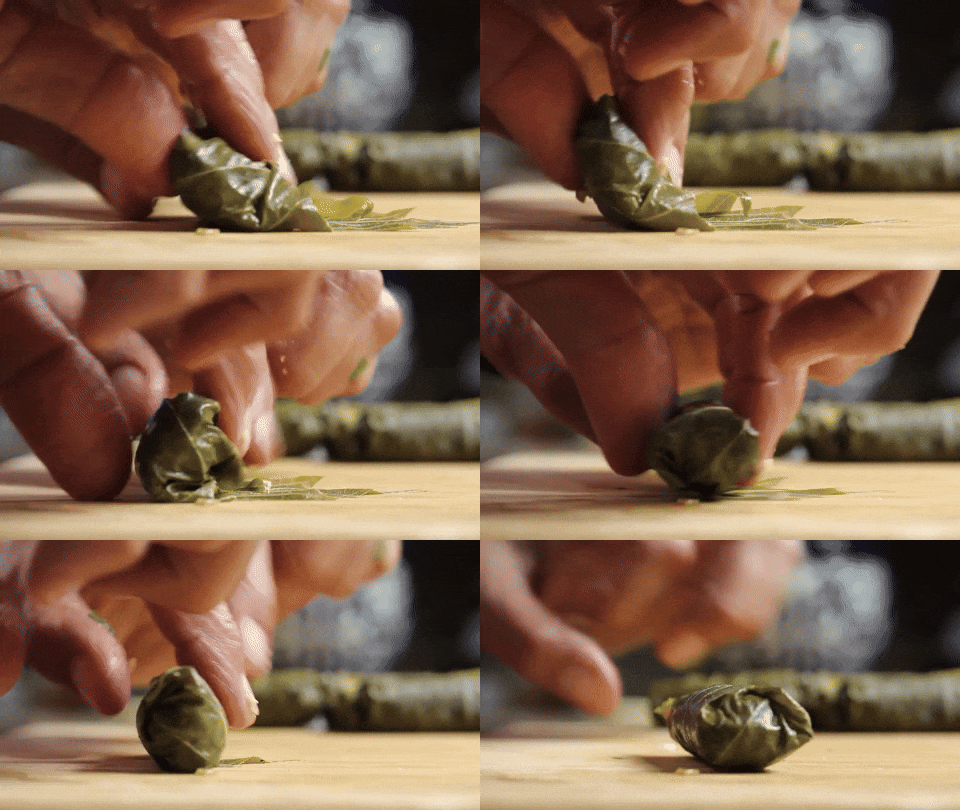
rolling grape leaves: rolling it up

5. Roll away from yourself.

Print

Greek Dolmades

Greek dolmades
Print Recipe

5 Stars 4 Stars 3 Stars 2 Stars 1 Star

No reviews

Ingredients

  • ¼ cup extra virgin olive oil, divided in half
  • 1 medium onion, chopped
  • salt, to taste
  • ⅔ cup [85 g] pine nuts
  • ½ cup [20 g] chopped parsley leaves
  • ¾ cup [20 g] chopped fresh mint leaves
  • ½ cup [20 g] chopped dill fronds
  • 2 Tbsp crumbled dried mint*
  • 1½ tsp black pepper
  • 2 cups [400 g] uncooked medium grain rice, soaked for 30 minutes and rinsed
  • 1 large clove garlic, crushed through a press
  • 2½ cups [590 g] vegetable stock or water
  • ½ cup [120 g] lemon juice
  • 1 lemon, sliced thinly into about 10 rounds
  • 70–90 grape leaves [350 g], prepped for rolling**

Instructions

  1. Heat a skillet over medium heat for a couple minutes, then add 2 tablespoons olive oil, followed by the onion and salt to taste (about ¼ teaspoon). Cook for 7-8 minutes, stirring occasionally, until they’ve softened and become translucent. Add the pine nuts, and continue to cook for 5 more minutes, stirring frequently. Remove the onions and pine nuts to a large mixing bowl.
  2. To the large mixing bowl, add the parsley, fresh mint, dill, dried mint, black pepper, strained medium grain rice, garlic, salt to taste (about 1 teaspoon), and the other 2 tablespoons olive oil. Mix together until it’s very evenly distributed.
  3. Combine the stock and lemon juice, and season to taste (this will depend on how salty your stock is. Also taste the grape leaves to see how salty they are—you may not need any salt, and should use water instead of stock if the leaves are very salty).
  4. Line the bottom of a 3 1/2 to 4 quart dutch oven with the lemon slices.
  5. Roll*** the grape leaves snugly, but careful not to wrap them too tightly. Build the pot into even layers, and make sure the whole thing is snug.
  6. Microwave the liquid until it’s hot (or heat it on the stove, but in either case, do not let it boil), then pour it over the grape leaves. It should come just up to the tops. Set over medium-high heat, cover with an upside-down heat-proof plate, and allow it about 5 to 10 minutes to come to a full simmer. Once it’s simmering, reduce the heat to medium, cover with a lid, and continue to cook over medium heat for 5 minutes. After those 5 minutes, the whole thing will be heated through, and you should gradually reduce heat to low while you cook covered for another 30 minutes (35 minutes total). As it cooks, bubbles should break the surface at a bare simmer.
  7. Once the dolmades are done cooking, remove from heat and let it sit covered for 30 minutes to coast and cool slightly. Once it’s rested, remove the lid, remove the plate with tongs, and enjoy.

Notes

* If you do not have dried mint, you can omit it and add more fresh mint and/or extra dill or parsley.

**To prep the leaves, start by blanching jarred grape leaves in simmering water for 3 minutes. Trim the stems and stack them with the dull, veiny side-up for easy rolling later on.

*** To roll: 1) Place the filling in the center of the leaf. 2) Fold up the bottom. 3) Fold in the sides. 4) Tuck in the jagged edges on the loose part of the leaf. 5) Roll away from yourself.

rolling grape leaves

find us on instagram and let us know what you made!

Filed Under: appetizers, dolma and mahshi, every recipe, gluten free, lunch, main courses, meze, side dishes, vegan, vegetarian Tagged With: dill, dried mint, garlic, grape leaves, herbs, lemon, mint, parsley, rice

Rhubarb Galette with Pistachio Frangipane

August 2, 2025 by Kathryn Pauline Leave a Comment

rhubarb galette

If you’re looking for a rhubarb galette that actually tastes like rhubarb, this one is for you. There are no strawberries here, no syrupy glaze to water down the rhubarbiness. It’s just bright, tangy rhubarb with a few simple ingredients, nestled over a layer of pistachio frangipane, all baked into a rustic crust.

Read on to learn more about why this is my favorite rhubarb galette recipe or jump to the recipe to hit the ground running.

rhubarb
rhubarb galette

Why I love this Rhubarb Galette

1. It actually tastes like rhubarb.

I love strawberry rhubarb, but sometimes it’s nice to let rhubarb shine on its own. Its flavor is sharp and a little bit earthy. It’s like spring, distilled. With just the right amount of sugar, it turns into something bright and clean that doesn’t need any help from berries.

2. The frangipane highlights and smooths out the rhubarb.

The frangipane softens the rhubarb’s tanginess just enough and adds a little bit of creaminess, but rhubarb still takes the lead. It’s sort of like how coffee’s flavor rounds out when you add a splash of milk, or how you can taste the spices in chai more distinctly after adding milk and sugar. It helps you taste more of what’s already there.

3. It’s forgiving.

You can line up the rhubarb in perfect rows or you can toss it together in a total jumble. You can roll the dough into a perfect circle or leave the edges lopsided. I guess you could even pipe on the frangipane, but my recipe just asks you to spread it in an even layer. A galette looks (and tastes) great whether you’re a perfectionist or a well-adjusted, chill person.

rhubarb galette
rhubarb galette

Tips for dough success

My recipe for rhubarb galette will walk you through everything, but here is a bit more context about the galette dough:

  • Cream cheese crust: You can use any crust you’d like for this, but my cream cheese crust is super forgiving. It doesn’t tend to crack or develop holes, so the filling stays put as it bakes. Rolling it out is as smooth as rolling out a new can of Play-Doh. And after it bakes up, it’s flaky and delicious.
  • Disk shaping: Don’t skip the step where I have you carefully shape your dough into a disk. Making sure the disk is smooth and does not have cracks on the sides will lead to a smoother roll-out process. I have a specific method of doing this, which I describe in the recipe.
  • Chill it: Make sure you chill your pie dough before rolling it out. If you accidentally let it chill for too long, leave it at room temperature for a little while, just until it’s pliable. This also leads to a smoother roll-out.
Print

Rhubarb Galette with Pistachio Frangipane

rhubarb galette
Print Recipe

5 Stars 4 Stars 3 Stars 2 Stars 1 Star

No reviews

Ingredients

For the pie dough:

  • 1⅓ cups [175 g] all-purpose flour, plus more for dusting
  • ½ cup [115 g] cold unsalted butter, cut into chunks
  • ¼ tsp salt
  • 4 oz [115 g] cold cream cheese, cut into chunks
  • 2 Tbsp very cold water

For the pistachio frangipane:

  • ½ cup [60 g] finely ground pistachios, plus extra for sprinkling
  • 1 large egg white
  • 2 Tbsp granulated sugar
  • 1 Tbsp unsalted butter, at room temperature
  • 1 heaping Tbsp all-purpose flour, plus more for dusting

For the filling:

  • 4 cups [400 g] ½ in [13 mm] sliced rhubarb
  • ⅓ cup [65 g] granulated sugar
  • 2 Tbsp cornstarch
  • 2 Tbsp water
  • ¼ tsp salt
  • Egg wash (1 egg yolk beaten with 1 tsp water)

Instructions

For the pie dough:

  1. Place the flour, butter, and salt in a food processor fitted with the blade attachment (see Note). Pulse about ten times and stop once the butter has blended into the flour with lots of pea-size lumps left. Add the cream cheese and pulse a few more times, just until the cream cheese has blended in but the mixture is still quite lumpy. Sprinkle the water over the surface and pulse a few more times, just until the mixture can be squeezed together into a ball.
  2. Shape the dough into a ball by squeezing it together, flatten the ball into a disk, and cover tightly with plastic wrap. Gently tap and roll the sides of the disk on the counter to help them become less jagged. Once they’re smooth and no longer have big cracks, place the disk flat on the counter and gently press and pat the top to make sure it’s nice and flat. As you gently press down on the top, the plastic wrap compresses the sides and ensures that any jagged edges are smoothed out. Refrigerate for 30 minutes. If you chill it completely, let it sit at room temperature for 30 to 50 minutes, just until it’s pliable but still chilled.

For the pistachio frangipane:

  1. Combine the pistachios, egg white, sugar, and butter in a stand mixer and beat at high speed with the paddle attachment until light and fluffy, about 2 minutes. Stir in the flour once it’s fluffy. Set aside at cool room temperature.
  2. Meanwhile, preheat the oven to 400°F [205°C] and line a rimmed baking sheet with parchment paper.

For the filling:

  1. In a medium mixing bowl, fold together the rhubarb, sugar, cornstarch, water, and salt.
  2. On a lightly floured surface, roll out the chilled dough to just under ¼ in [6 mm] thick and about 12 in [30.5 cm] across. Rotate occasionally as you work but try not to handle the dough too much and try to keep the edges from cracking too deeply.
  3. Once it’s rolled out, gently wrap the dough around your rolling pin to transfer it to the prepared baking sheet. Spread the frangipane in the center of the rolled-out dough, leaving a 2 in [5 cm] border around the edges.
  4. Place the rhubarb filling on the frangipane layer and be sure to scrape the bowl with a spatula so you don’t miss anything. Arrange in an even layer, leaving a 2 in [5 cm] border around the edges. Fold the edges over in a rustic overlapping pattern so that the middle stays open and brush the crust’s surface all over with the egg wash.
  5. Bake for about 50 minutes, until the whole thing is bubbly and the crust is golden brown.
  6. Let cool before slicing (at least 15 minutes, ideally 1 hour). Serve plain or with extra pistachios.

find us on instagram and let us know what you made!

Psst… by the way, I wrote a whole cookbook of adaptable recipes like this one. It’s called A Dish for All Seasons!

Check it out for adaptable base recipes + ideas for seasonal (and evergreen!) variations.

Filed Under: every recipe, sweets Tagged With: pies, pistachio, rhubarb, spring

  • « Go to Previous Page
  • Page 1
  • Interim pages omitted …
  • Page 24
  • Page 25
  • Page 26
  • Page 27
  • Page 28
  • Interim pages omitted …
  • Page 183
  • Go to Next Page »

Primary Sidebar

Kathryn Pauline smiling

Welcome! I’m Kathryn Pauline, cookbook author, recipe developer, and photographer.

Footer

read our privacy policy

© 2017 - 2026 Kathryn Pauline