• Skip to primary navigation
  • Skip to main content
  • Skip to primary sidebar
  • Skip to footer
Cardamom and Tea
  • Blog
  • Recipes
  • About
  • Cookbooks
    • Piecemeal
    • A Dish for All Seasons (my first cookbook)

foraging for wild grape leaves

June 11, 2017 by Kathryn Pauline 14 Comments

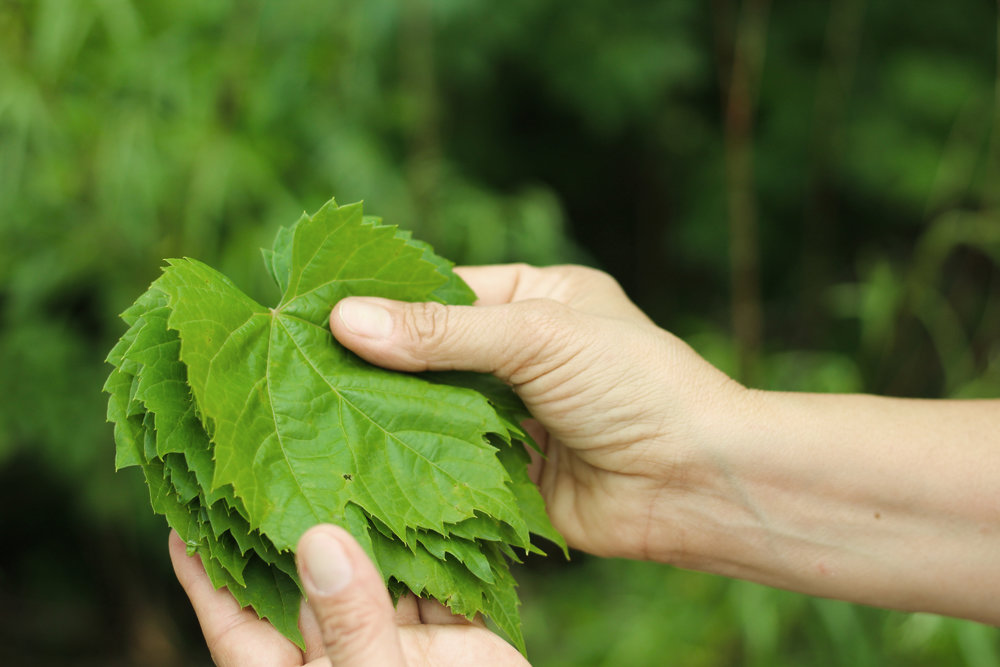
Wild grape leaves grow all over the city and suburbs in Chicago. You’ve probably seen them hundreds of times, but never realized what you were looking at. And once you learn how to identify grape leaves, you’ll start seeing them everywhere. Last weekend, I went foraging with my mom and learned a lot about identifying and preparing the leaves. But, as they say, safety first!
foraging safety

While grape leaves are one of the easiest things to identify and forage, all foraging should be done with caution and care. If you want to go foraging for grape leaves, I highly recommend going with an experienced forager. Identifying edible plants can be tricky, and you should find an expert who can teach you in person. This post only compiles my personal experiences and cannot be relied upon as a recommendation to harvest or consume any particular plant.

I hope that this post will give you a sense of what to expect if you decide to go (you’ll probably impress your guide with all your grape leaf knowledge!), but don’t just head into the woods with your phone and this blog post. If you do choose to go under the guidance of an expert, here are some things to keep in mind to make sure you have a safe and fun experience:

  • When you’re looking for grape leaves out in the world, you should find a place that’s not treated with pesticides and that isn’t growing on questionable land (e.g., don’t pick grape leaves that are growing right next to a gas station; don’t pick grape leaves right after your town has sprayed for mosquitoes; don’t trespass, don’t pick leaves in a place where it’s illegal to, etc.).
  • Also make sure there isn’t any poison ivy, poison oak, or other dangerous plants intertwining with the grape leaves.
  • Avoid dirty leaves or leaves with holes in them.
  • If you’re under 18, ask for a parent’s help.
  • The bottom line is that you should use common sense when choosing a safe and legal place to forage and you should avoid doing anything dangerous. When in doubt, just buy a jar of grape leaves from the market. And again, please do find an experienced forager to show you the ropes. This list of safety concerns might not be exhaustive, and a truly experienced forager can give you the safest possible experience.
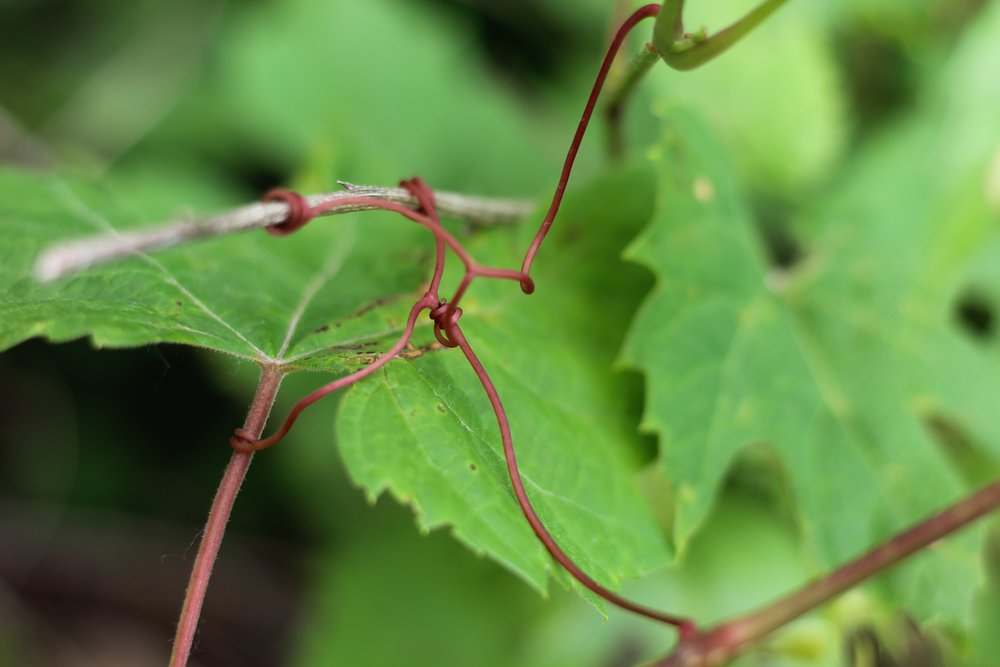
how to tell whether it’s a grape leaf

Now I’ll tell you a little bit about how to identify grape leaves in Chicago, so that you can keep an eye out for them while you’re out and about.

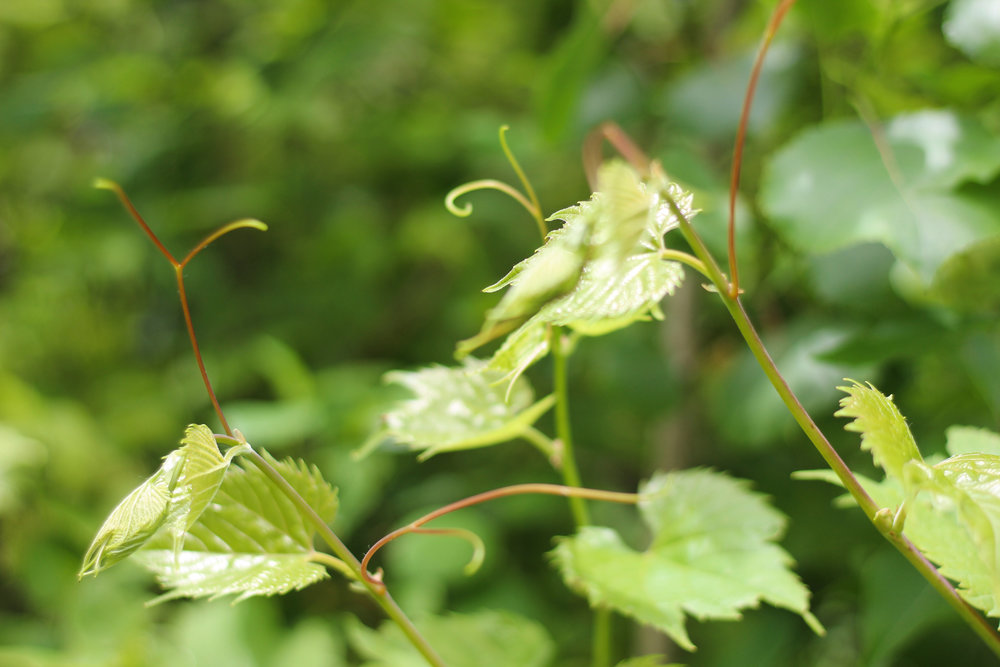
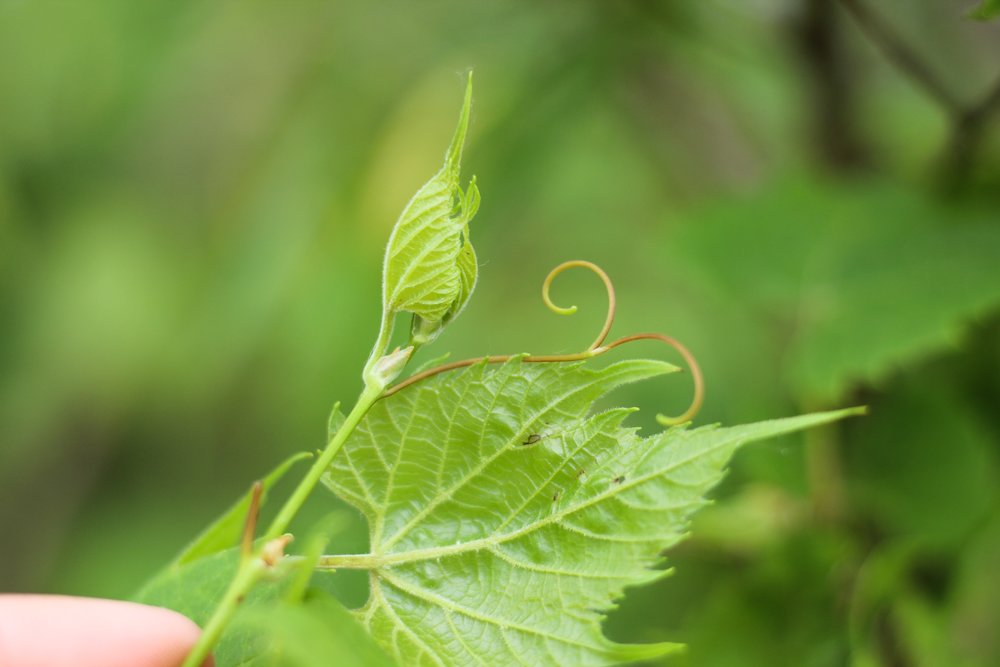
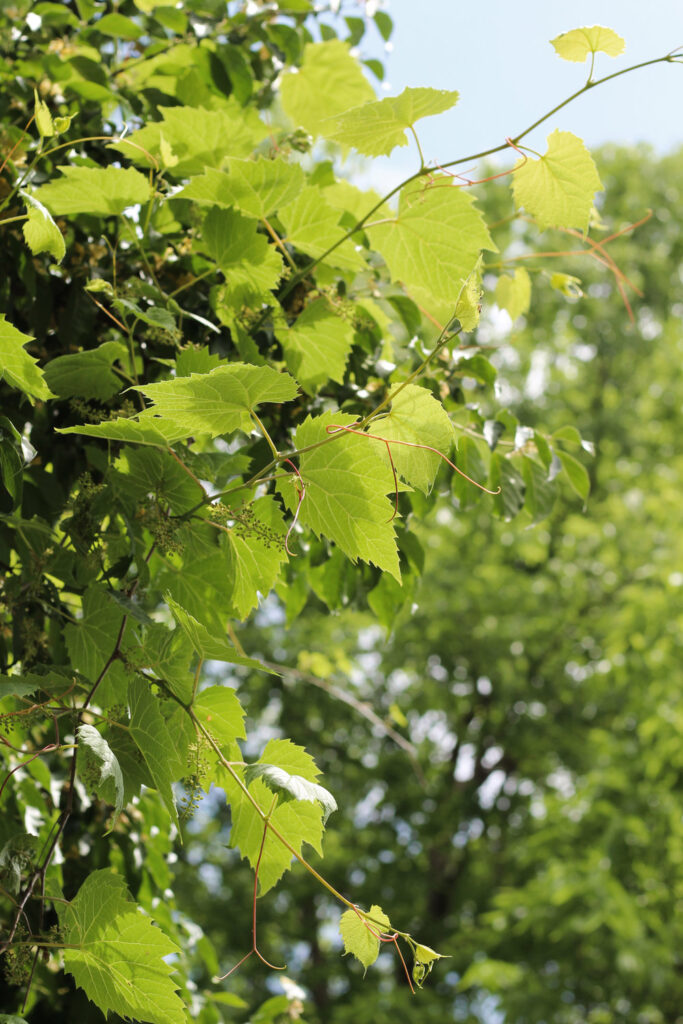
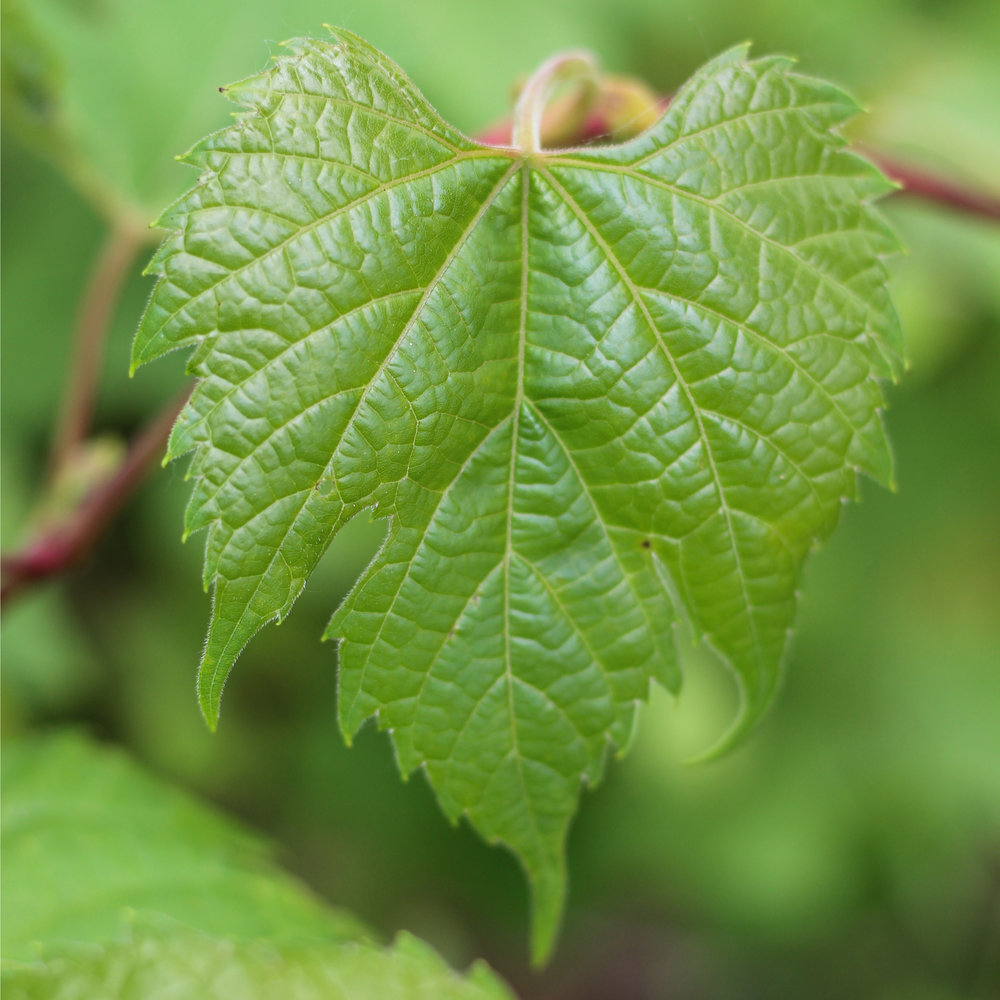
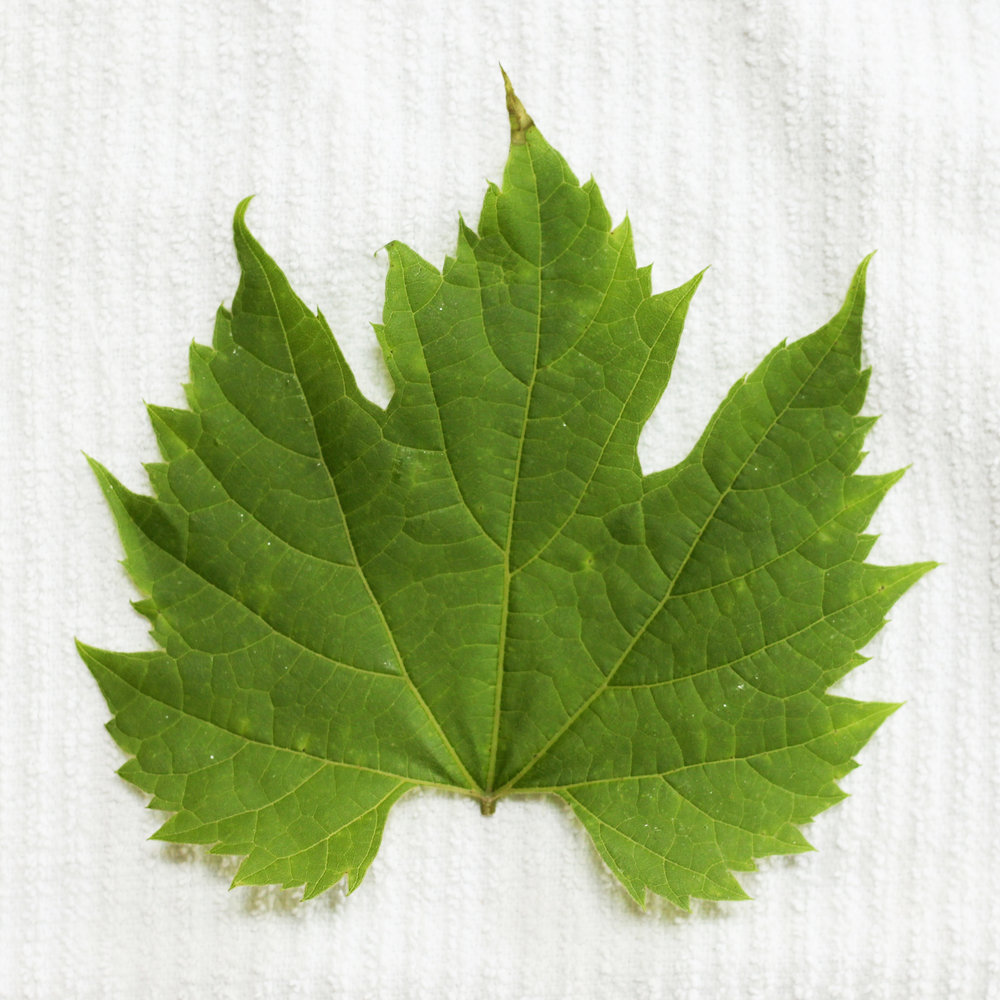
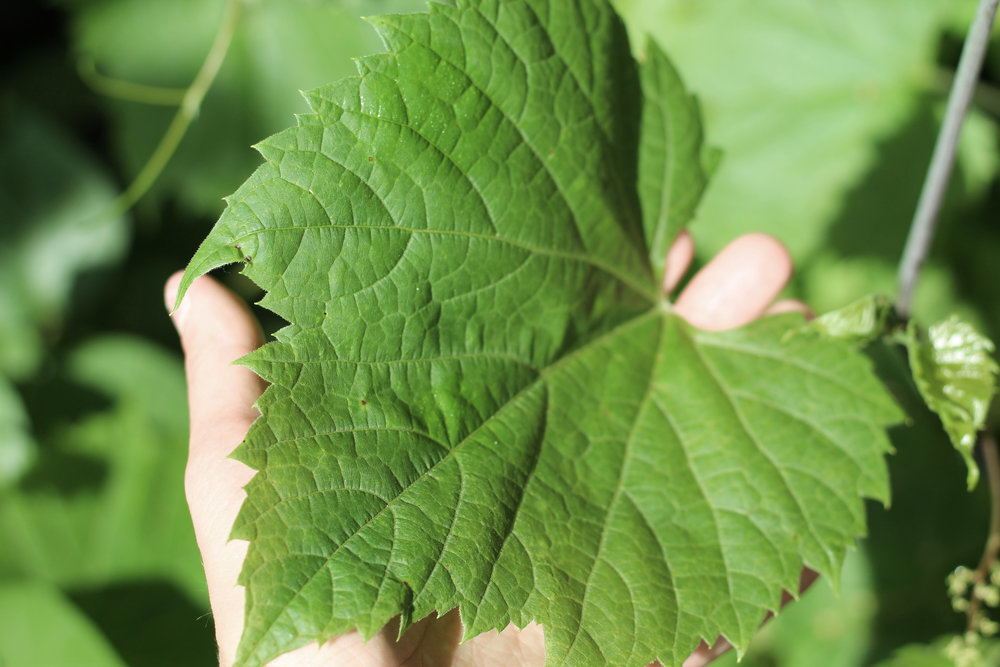
  • Grape leaves that grow around Chicago look a tiny bit like maple leaves, but they have a characteristic flat or round indentation around the stem, like in the photos above. If the stem comes to a sharp concave or convex point, you’re looking at a maple tree leaf or something else (or perhaps you are foraging for grape leaves in another region, in which case, this advice might not apply). The leaves should look like the photos above.
  • Grape leaves grow on vines, so look for red and green vines.
  • Grape leaves also have wavy or curly reddish tendrils that allow them to climb, although these tendrils can sometimes appear more green, depending on how old they are.
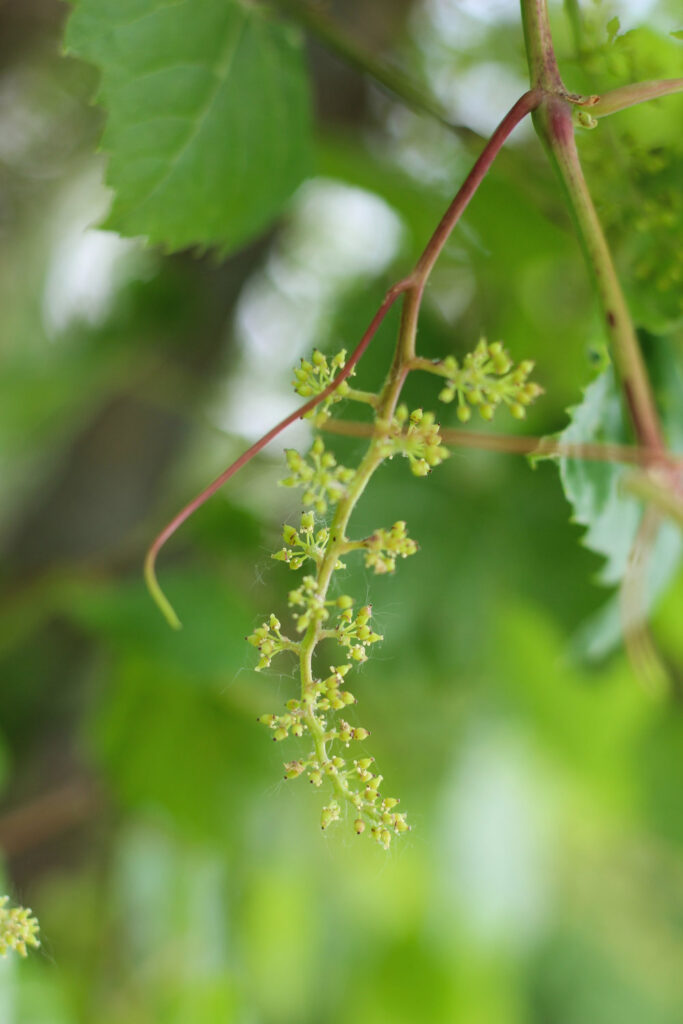
  • There are often teeny-tiny grape clusters. See the photos above to spot these.
  • Beyond appearance, you can also rely a little on smell. They should smell a little like sour grapes when you tear them.

when and where to find them

  • Make sure you don’t pick grape leaves from places where it’s illegal to do so, such as forest preserves.
  • To spot them, when you’re out walking, don’t just look straight ahead, but look up and down and side to side, since the vines can grow low on the ground or up the sides and branches of trees.
  • Most grape vines that are bred for producing sweet grapes are way too tough and fibrous, so stick to ones that grow wild, or ones that are grown specifically for their leaves.
  • If you want to harvest them, it’s best to search for them from late May to mid June. You can sometimes get away with finding the newer growth in early July, but by mid-July, they will be too tough. Find an expert to make sure they’re safe to eat, and only harvest leaves that are large enough to wrap (about 4 to 6 inches across), but not large, fuzzy, and veiny (the later in the season, the tougher and more fibrous they become).
preparing fresh grape leaves

This is the method I use to prepare fresh grape leaves:

  • Boil enough water to cover the grape leaves (usually about 1 to 2 quarts).
  • Wash the leaves with cold water to knock off any pollen or dirt.
  • Put the leaves in an even layer in a shallow dish and cover with boiling water by about 1/2 inch. Put a plate on top and use a wooden spoon to press the plate down, pushing the air out of it and completely submerging the leaves.
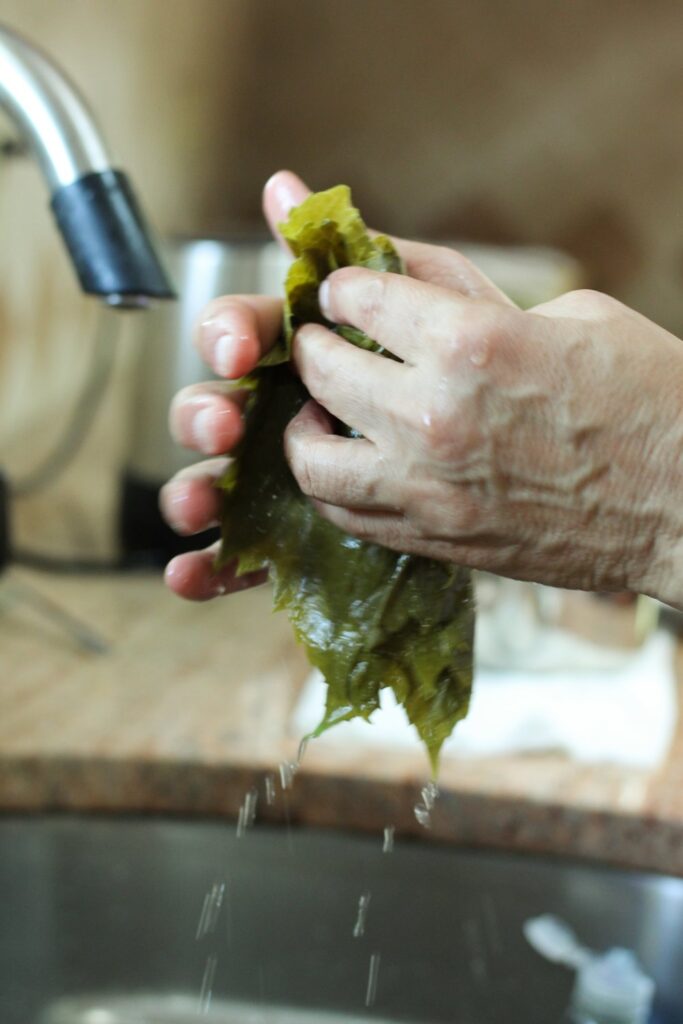
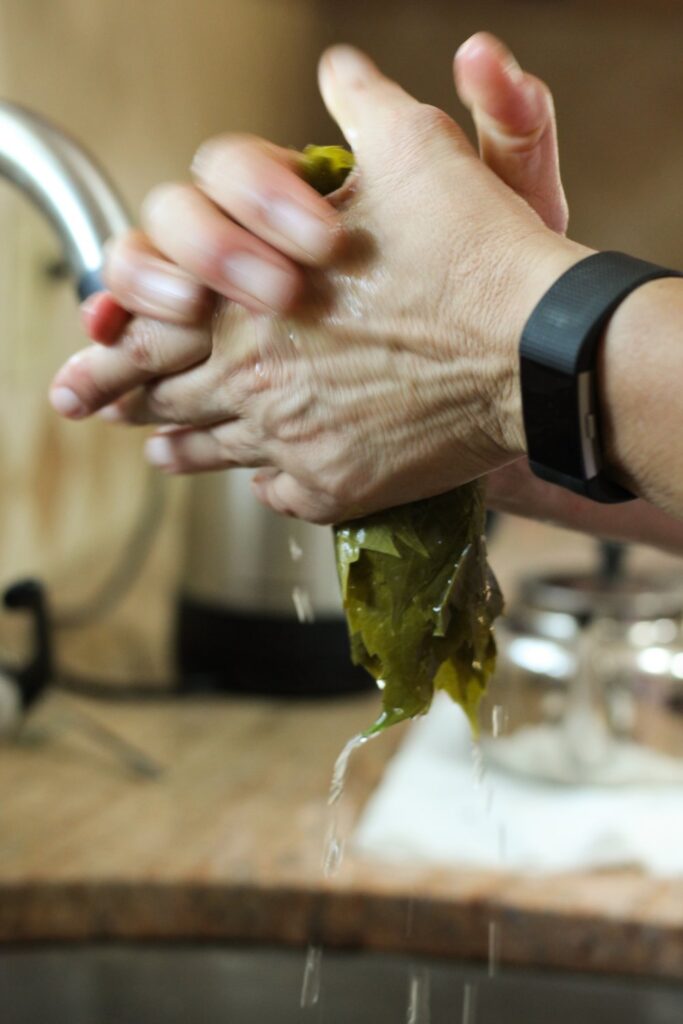
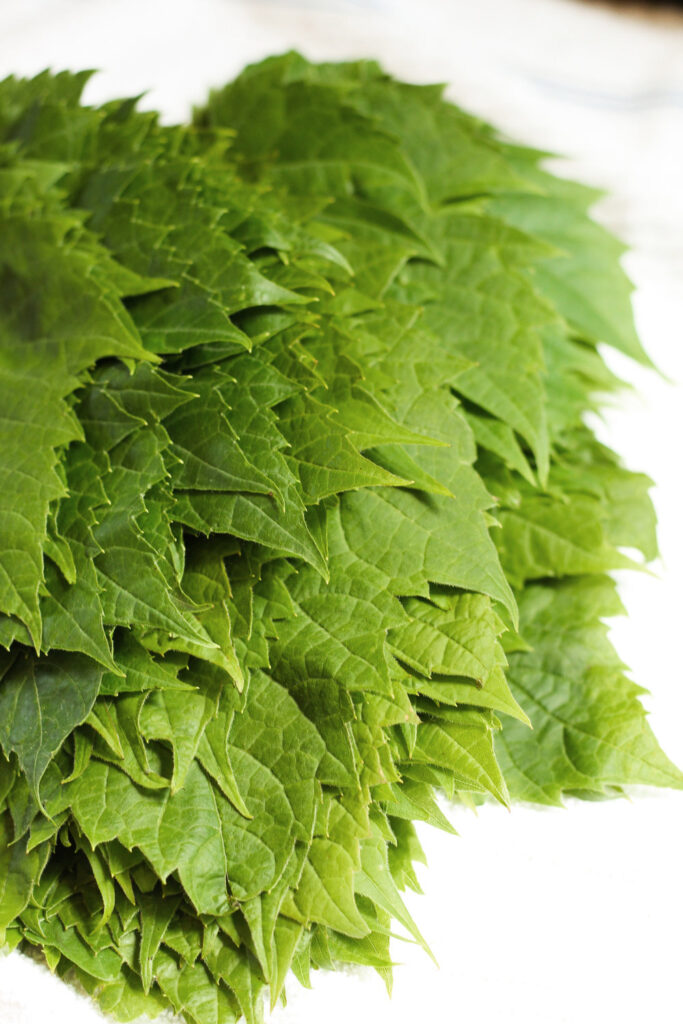
  • After 25 minutes, gently wring the leaves out and either use them immediately or freeze them. To freeze them, stack them together and place in a ziplock bag. Push as much air out of the bag as possible (without crushing the leaves) and freeze for 6 to 8 months.
Filed Under: dolma and mahshi, every recipe, family recipes, specialty ingredients Tagged With: grape leaves, middle eastern

ruby fennel tabbouleh

June 7, 2017 by Kathryn Pauline 4 Comments

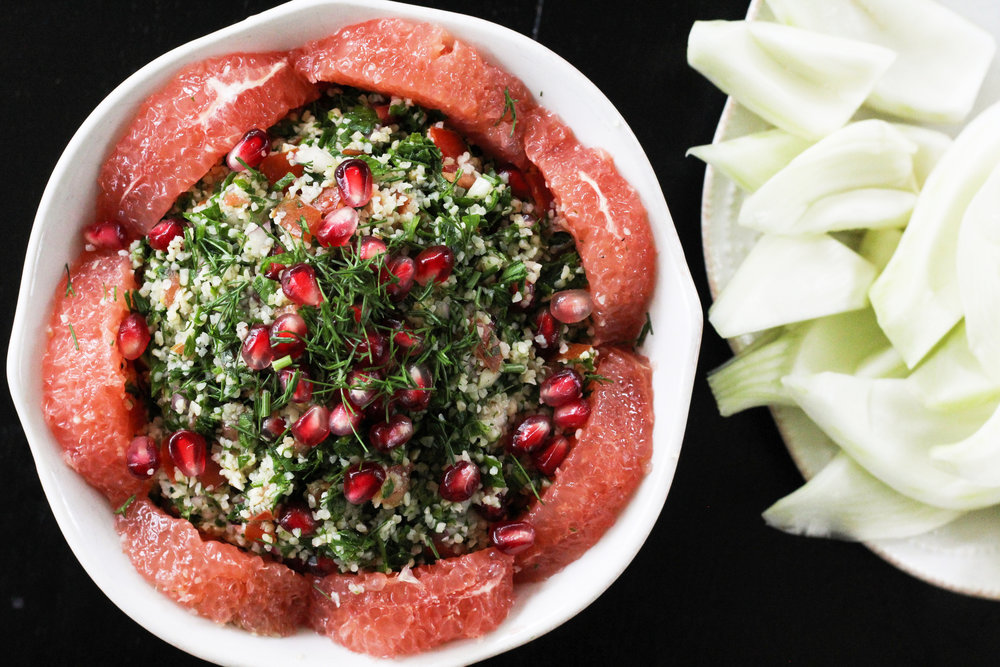
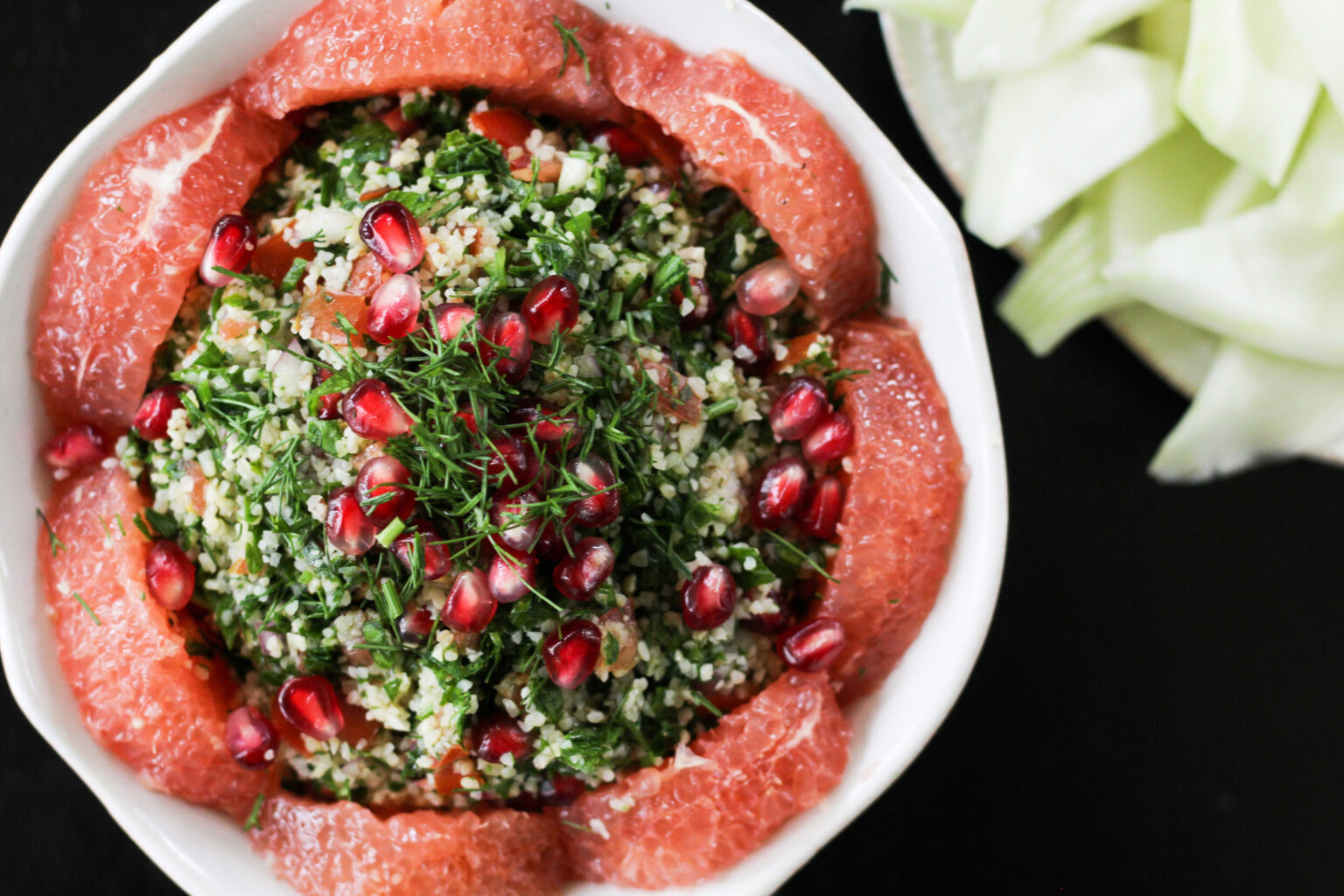
Tabbouleh (also spelled tabouli, tabbouli, or tabboule) is a traditional salad, made with bulgur, lemon, olive oil, parsley, mint, green onions, and (usually) tomatoes. While I love traditional tabbouleh, and eat it all the time, when I’m up for a change, I like to look at this list of ingredients as a formula for building a variety of different kinds of tabbouleh. I’m currently obsessed with a version that is minced up with fennel fronds, studded with grapefruit and pomegranate, and scooped up with fennel petals. I call it ruby fennel tabbouleh.

So what is it that makes tabbouleh tabbouleh, and not just some other salad? First, tabbouleh has to have a grain, most traditionally bulgur. It should probably have tomatoes, or something tomato-ish (although this isn’t absolutely necessary, since some traditional tabboulehs don’t include tomato). It’s got to have parsley and one or two other complementary herbs. It should have some sort of minced onion and some sort of zesty dressing with olive oil. And finally, tabbouleh is always vegan and must be finely minced.

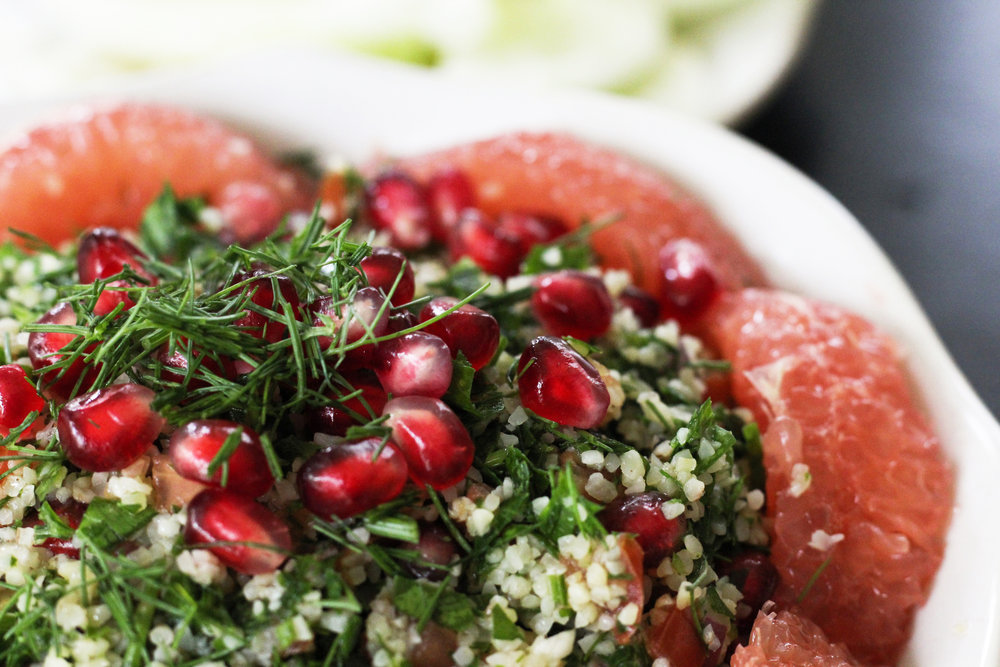
But of course, it’s always fun to break one or two rules, when it’s for a very good reason. The one place this recipe transgresses is the grapefruit supremes. When I first developed this recipe, I diced up the grapefruit and gently folded it in with the rest of the ingredients, but no matter how gently I folded, the grapefruit disintegrated entirely. But I’m glad I tasted it, even though it looked so sad, pale, and watery, because the flavor was outstanding; fennel and grapefruit are such a fantastic combination. So in order to fix the texture problem, the next time I tried to recreate it, I kept the grapefruit supremes whole and placed the slices along the bowl’s border. That way, everything made it to the plate in one piece, the dish looked beautiful, and the fennel-grapefruit-pomegranate combination was as strong as ever.

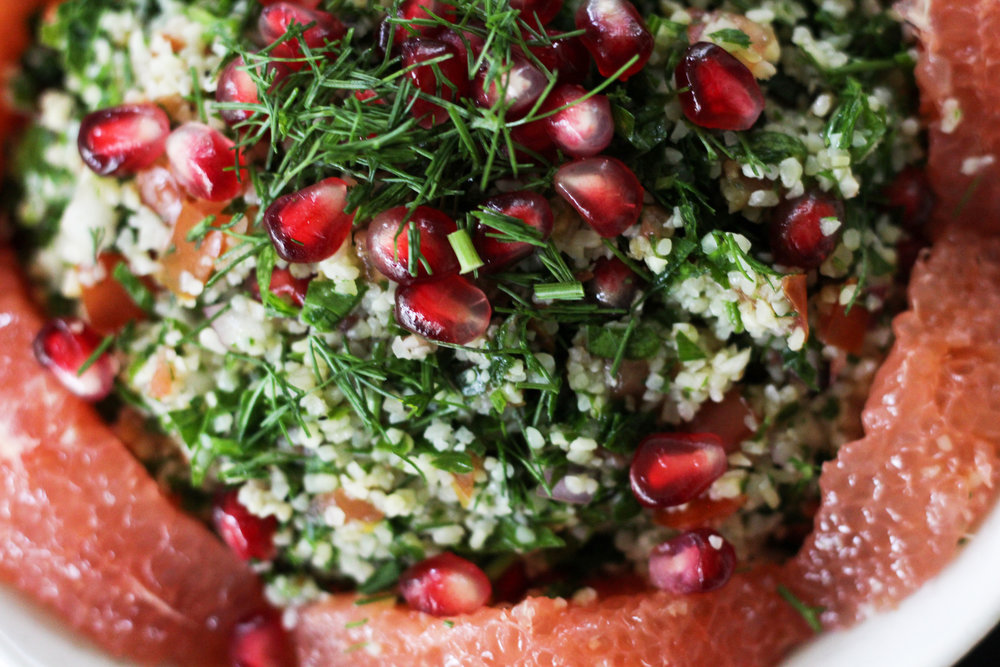
Other than the crazy-huge chunks of grapefruit (forgive me, tabbouleh purists!), I kept this recipe pretty traditional with the bulgur, lemon, tomato, and parsley. But instead of mint, I used fennel fronds to add even more fennel flavor. Pomegranate seeds make a great addition to the tomatoes, since they add a similar color, but with more zest and crunch.

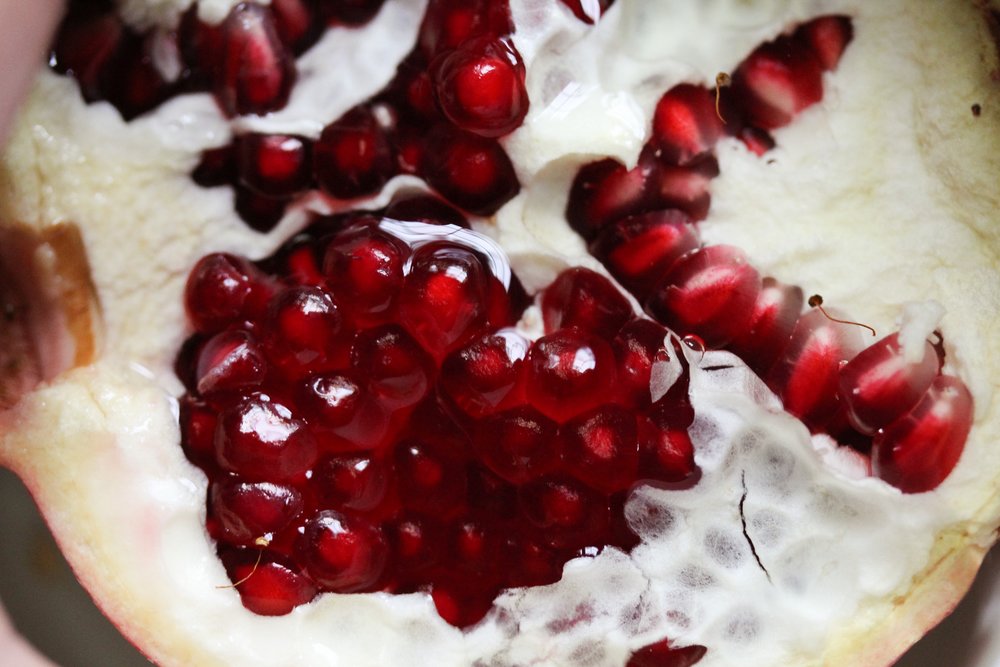
This is a wonderful summer salad, since we usually think of citrus as having a very summery mood, but it would also make a fantastic late fall salad, since many of its ingredients are in season later on in the year. If you’re really into local produce, you could even leave out the tomatoes altogether, adding extra pomegranate seeds and grapefruit supremes to compensate. And speaking of pomegranate seeds, if you’re looking for an easy way to remove them from the bulb, try doing it under water.

more tabbouleh

Build your own tabbouleh
Tomatillo tabbouleh verde
Tabbouleh margherita
Pomegranate Cilantro Tabbouleh

Print

ruby fennel tabbouleh

Print Recipe

5 Stars 4 Stars 3 Stars 2 Stars 1 Star

No reviews

Ingredients

  • 1/2 cup burghul #1 *
  • 1/3 cup lemon juice, plus more to taste
  • 1 cup minced red tomato, with juices saved
  • 1 small bulb of fennel **
  • 1/4 cup minced fennel fronds ***
  • 1 packed cup minced parsley
  • 1/4 cup minced red onion
  • 1/2 cup pomegranate seeds
  • 2 tablespoons extra virgin olive oil
  • Salt and pepper to taste
  • 1 small or 1/2 of 1 large grapefruit, supremed
  • Extra fennel fronds and pomegranate seeds for garnish

Instructions

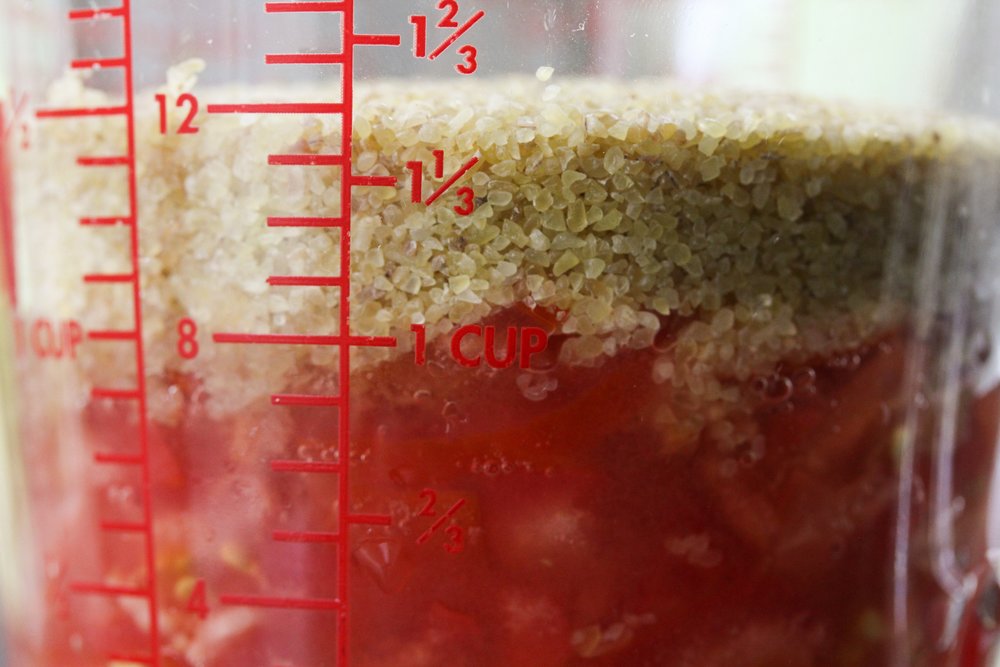
  1. Combine the burghul #1 with 1/3 cup lemon juice and diced minced tomatoes with their juices. Let this sit for 30 minutes while you prep the rest of the ingredients.
  2. Slice the fennel bulb into scoops by carefully severing each layer from the root and then cutting it into a few large triangular pieces from root to tip.
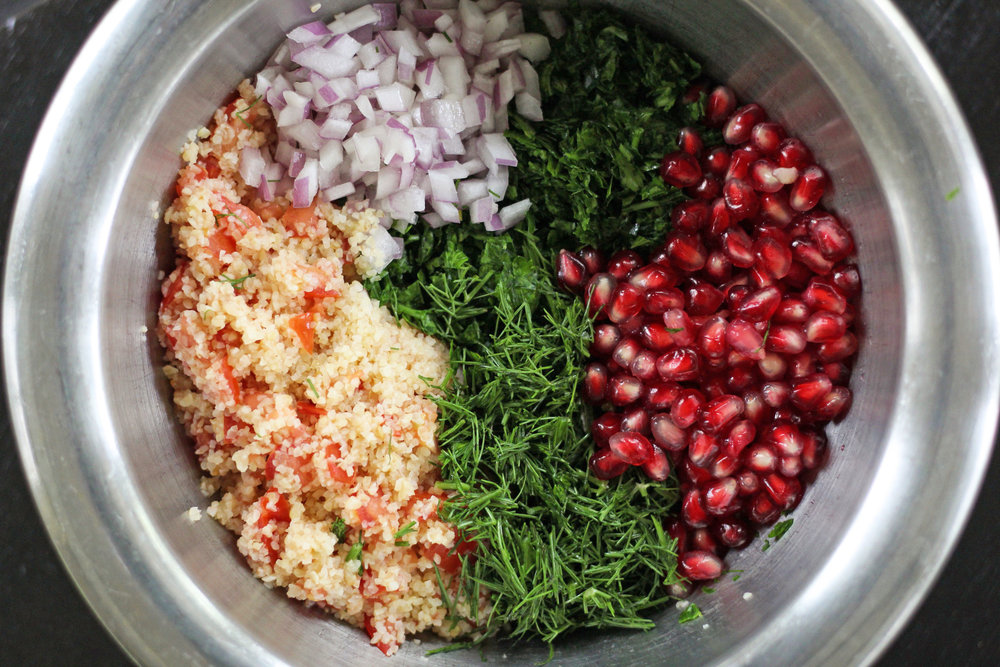
  3. Add the fennel fronds, parsley, red onion, pomegranate seeds, extra virgin olive oil, salt, and pepper to the soaking burghul.
  4. Combine, taste, and adjust the seasoning to taste (additional oil, lemon juice, salt, and/or pepper).
  5. Place the tabbouleh in a serving dish and place the grapefruit supremes all the way around the border.
  6. Garnish with more fennel fronds and pomegranate seeds, and serve the tabbouleh bowl alongside a plate of fennel scoops, or set the bowl on a plate and arrange the fennel petals around the bowl (see photos).

Notes

* Burghul #1 is pre-cooked and very fine, so it doesn’t need the extra step of being cooked in boiling water. You can find burghul #1/fine bulgur at most Middle Eastern grocers. If you can’t find a source near you, you can substitute couscous, cracked wheat, or coarse bulgur. However, these will need to be cooked in boiling water, according to the package instructions (or until al dente), rinsed, and then soaked with the tomatoes and lemon juice for about ten minutes.

** The fennel scoops can be used to serve the tabbouleh as an hors d’oeuvre at a party (like chips and dip). If your’e serving it as an hors d’oeuvre, instead of as part of dinner, you should buy a large fennel bulb (people tend to use more scoops for hors d’oeuvres than they do for dinner).

*** To buy fennel fronds, simply find a fennel bulb with some fronds attached to the top. If you can’t find one with fronds, just buy a larger bulb and mix in 1/4 cup of finely minced fennel bulb, and garnish with a little reserved parsley.

find us on instagram and let us know what you made!

Filed Under: appetizers, dairy free, dinner, every recipe, lunch, meze, salads, vegan, vegetarian Tagged With: fall, fennel, grapefruit, middle eastern, pomegranate, winter

  • « Go to Previous Page
  • Page 1
  • Interim pages omitted …
  • Page 167
  • Page 168
  • Page 169
  • Page 170
  • Page 171
  • Interim pages omitted …
  • Page 183
  • Go to Next Page »

Primary Sidebar

Kathryn Pauline smiling

Welcome! I’m Kathryn Pauline, cookbook author, recipe developer, and photographer.

What’s new? 🥕

cauliflower frying

Fried Cauliflower

edible cookie dough

A Better Way to Make Edible Cookie Dough

steamed kale

Steamed Kale (without a steamer)

steamed cauliflower

Steamed Cauliflower

strawberry rhubarb jam in a jar with a spoon photographed from overhead

Strawberry Rhubarb Jam

rhubarb cookies

Rhubarb Cookies

Footer

read our privacy policy

© 2017 - 2026 Kathryn Pauline