• Skip to primary navigation
  • Skip to main content
  • Skip to primary sidebar
  • Skip to footer
Cardamom and Tea
  • Blog
  • Recipes
  • About
  • Cookbooks
    • Piecemeal
    • A Dish for All Seasons (my first cookbook)

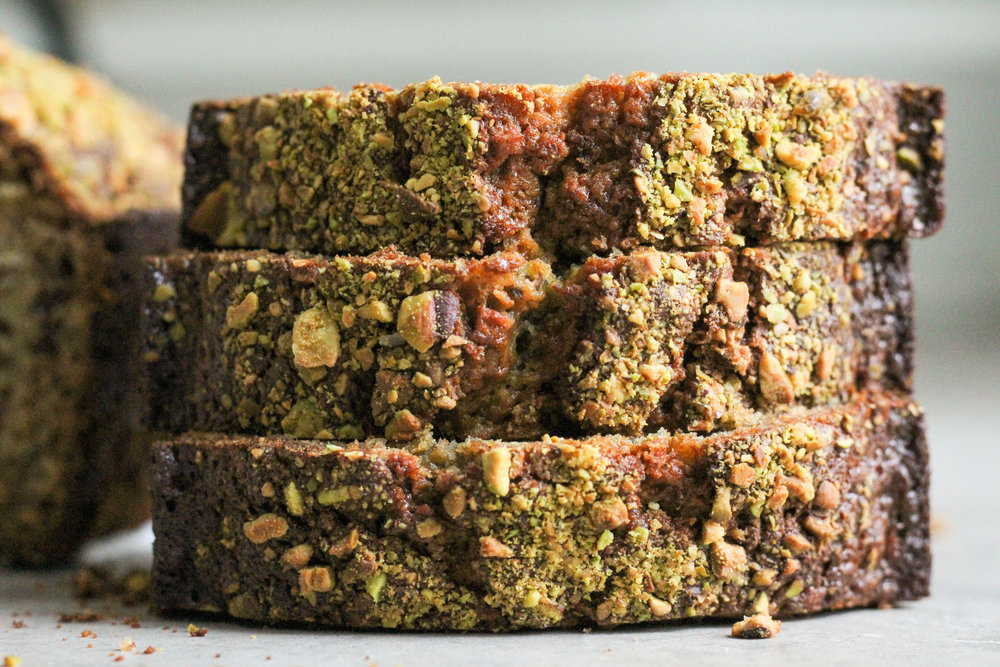
Pistachio Banana Bread

October 8, 2017 by Kathryn Pauline 22 Comments

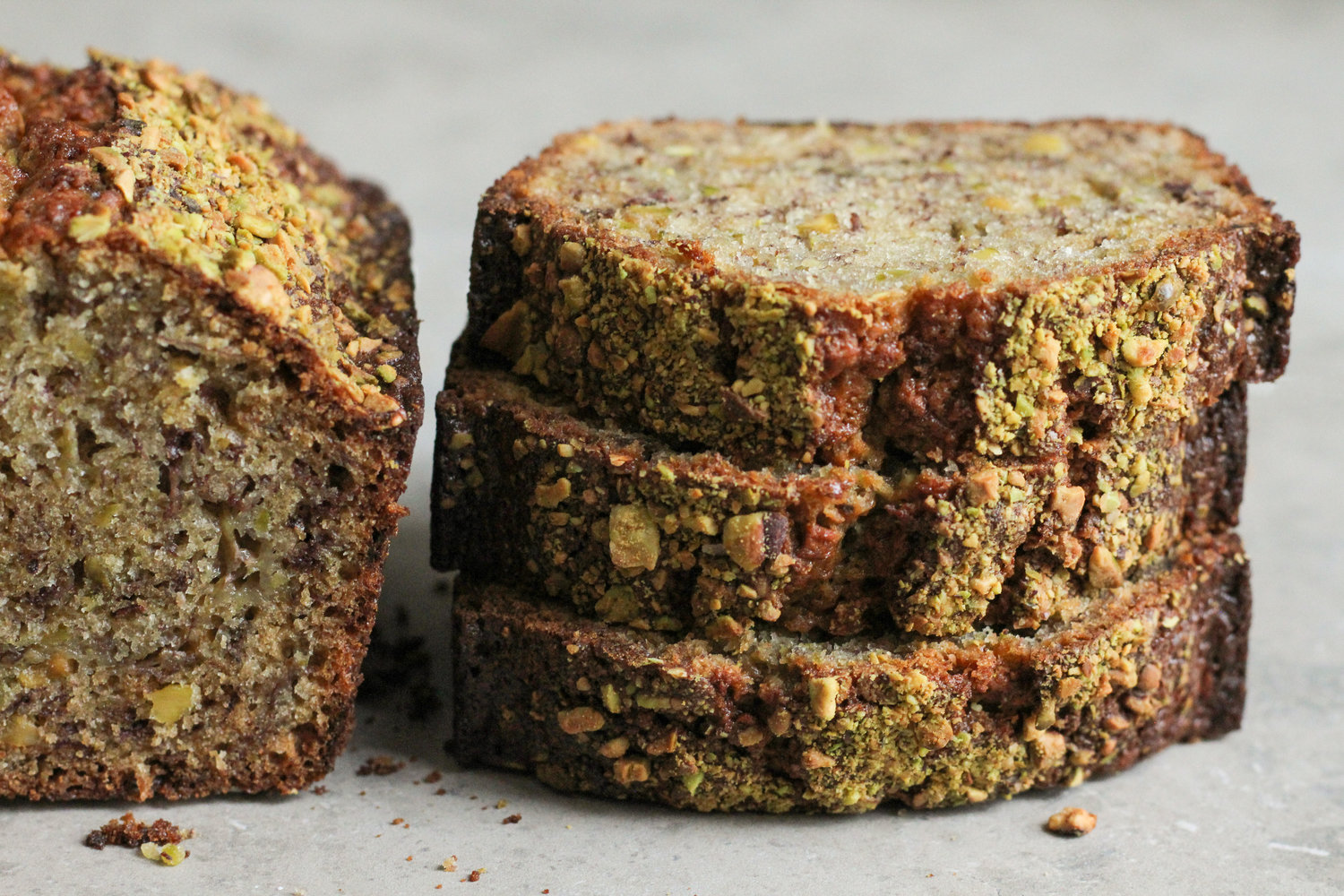
Lately, I’ve been obsessively trying to perfect my recipe for lokma (AKA Turkish delights). I might post it someday soon, but that’s all beside the point, because this post is not about the high-maintenance, fast-paced, high-stress world of candy making. This is a post about the lowest maintenance sweet of all time: banana bread! Or more specifically, pistachio banana bread.

Jump to the recipe if you’re ready to bake, or read on to learn about the secret ingredient I love to add to banana bread. And don’t miss my recipe for olive oil banana bread if you’re looking for a dairy-free alternative.

My secret ingredient for the best banana bread

It’s a bit of an obscure ingredient if you don’t do a lot of Middle Eastern baking, but my secret to the best banana bread is a little splash of orange blossom water.

Don’t worry though—you don’t have to use orange blossom water if you don’t have it on hand.

If you don’t use orange blossom water, this recipe makes an excellent loaf of pistachio banana bread. But if you do include a bit of orange blossom water, you’re in for an absolute treat. Here’s why:
What is orange blossom water?

If you haven’t tried orange blossom water, it tastes just like it sounds: it’s reminiscent of oranges, but with a definitively floral bouquet. It’s like if some really fancy cosmetic line made a subtly orange-scented perfume (rather than one that screams “generic orange-scented dishwasher detergent!!”).

In other words, orange blossom water makes plain old orange juice, orange slices, and orange peel extract seem astringent, bland, and brassy.

And why is it so good in banana bread?

There is something kind of ripe-banana-adjacent about the scent of orange blossom water. I’m not sure exactly what that’s all about, but it works incredibly well in banana desserts. It heightens the flavor of bananas by marrying them with a floral citrus-scented infusion.

I don’t stop at banana bread—I add orange blossom water to banana cream pie, banana pudding, and banoffee everything.
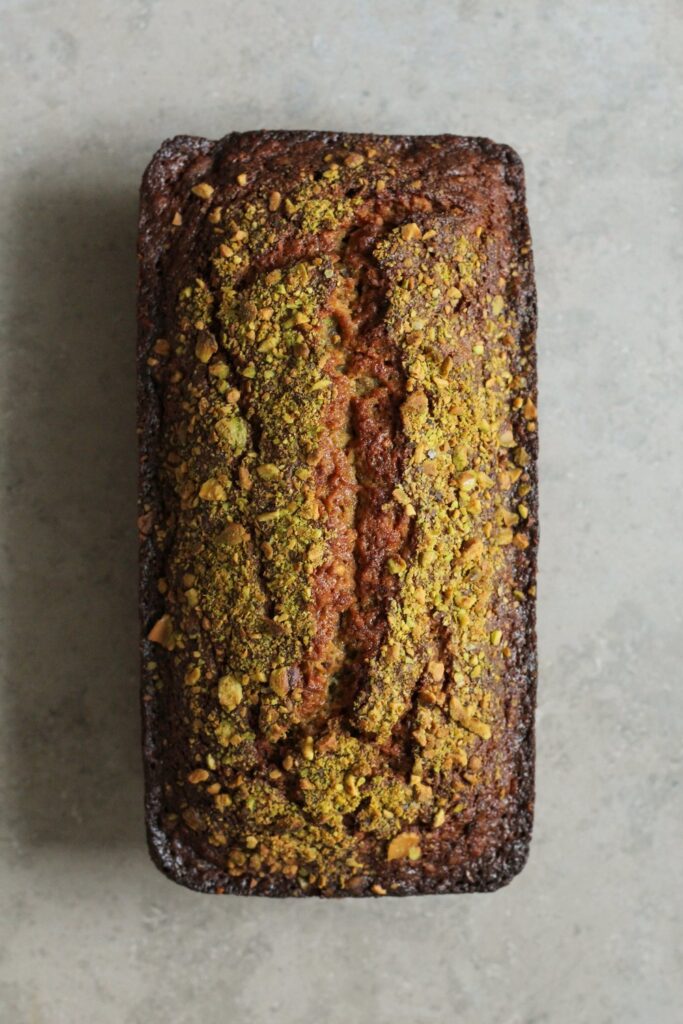
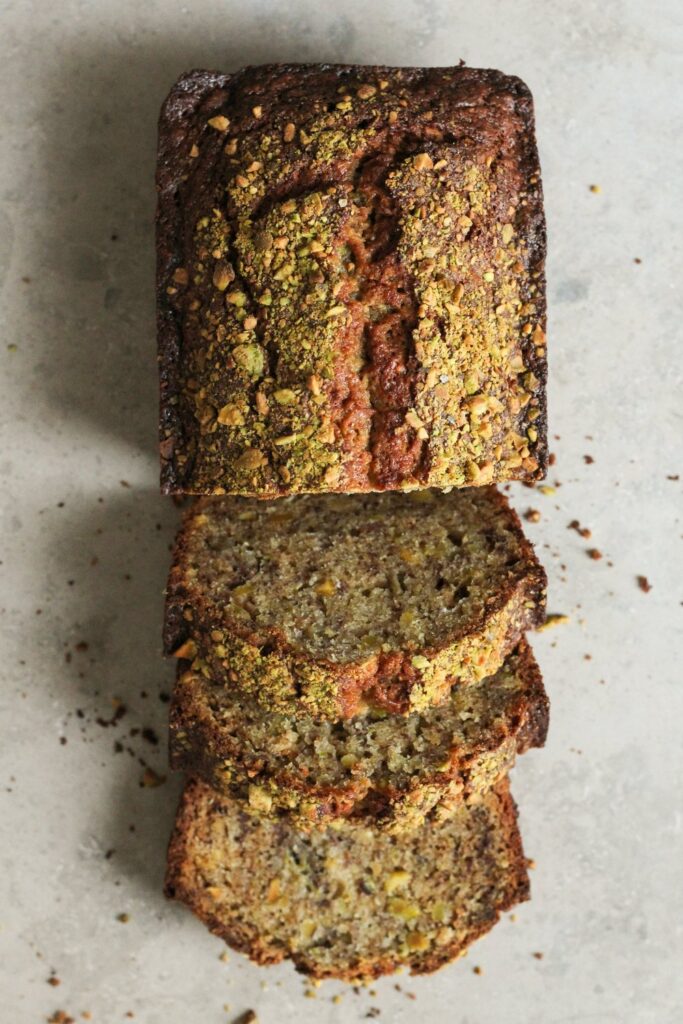
By the way, don’t miss my other banana bread recipes if you’re looking for something a little different:

  • Olive oil banana bread
  • Double chocolate banana bread
  • All my favorite loaf cakes! (including banana bread)
Print

Pistachio Banana Bread

Print Recipe

5 Stars 4 Stars 3 Stars 2 Stars 1 Star

5 from 2 reviews

  • Prep Time: 15 minutes
  • Total Time: 1 hour and 15 minutes
  • Yield: 1 medium loaf

Ingredients

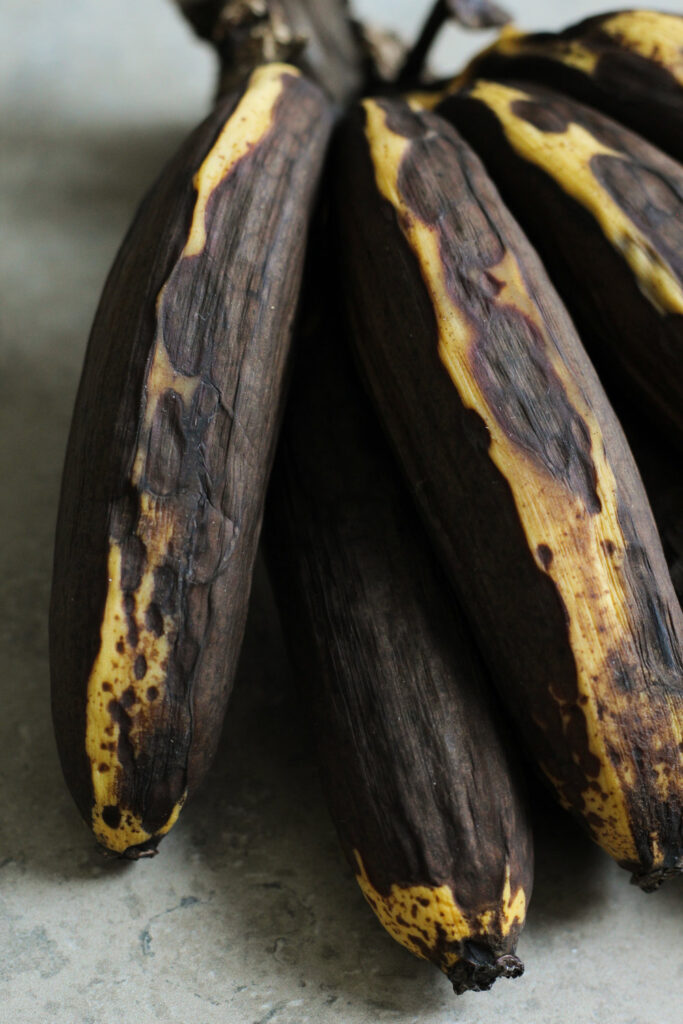
  • 1 cup [240 g] mashed banana from 3 very overripe bananas *
  • 3 Tbsp [45 g] melted unsalted butter**
  • 1/4 cup [55 g] olive oil**
  • 2 room temperature eggs
  • Flavorings (optional) ***
  • 1 cup [200 g] sugar
  • 1/2 teaspoon fine sea salt
  • 2 cups [230 g] sifted flour (about 1 3/4 cups unsifted)
  • 1/2 tsp baking soda
  • 1/2 tsp baking powder
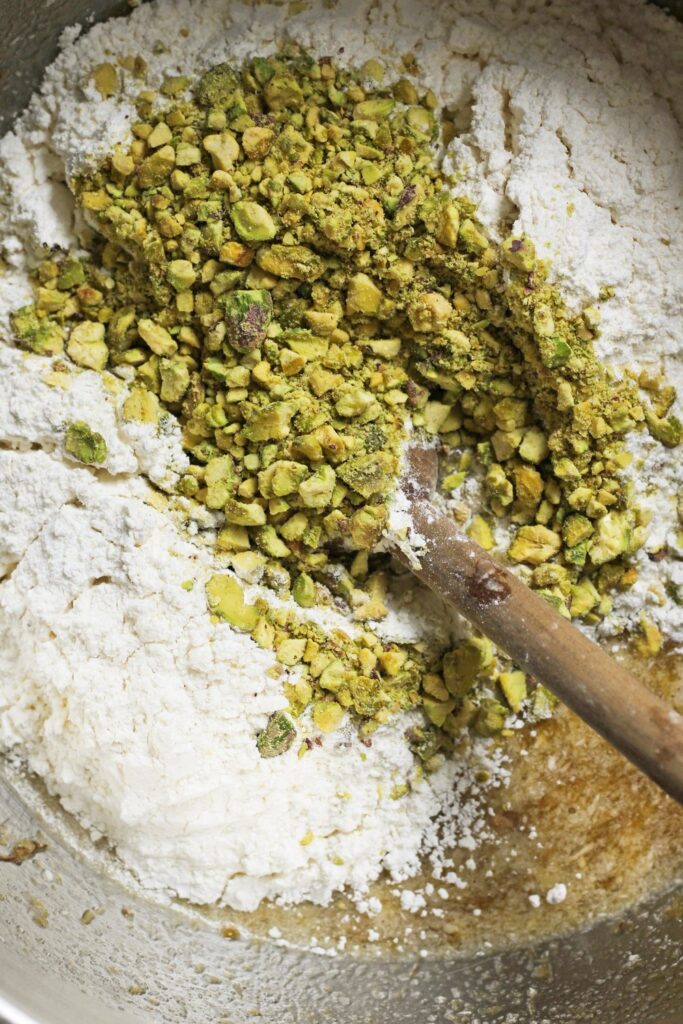
  • 1/2 cup [60 g] chopped raw pistachios
  • 1 1/2 Tbsp [15g] coarsely ground pistachios (for the top) ****

Instructions

  1. Preheat the oven to 350° F [177° C].
  2. Butter a 8 x 4 inch [20 x 10 cm] loaf pan. *****
  3. In a medium mixing bowl, whisk the mashed bananas together with the melted butter and olive oil until very well combined. Add the eggs, orange blossom water (if using), sugar, and salt, and whisk together until the whole thing is completely incorporated.
  4. In a large mixing bowl, combine the flour, baking soda, and baking powder, and then pour in the chopped pistachios.
  5. Add the wet mixture to the flour mixture and stir to combine. Do not over-mix (stop mixing as soon as there are no large lumps).
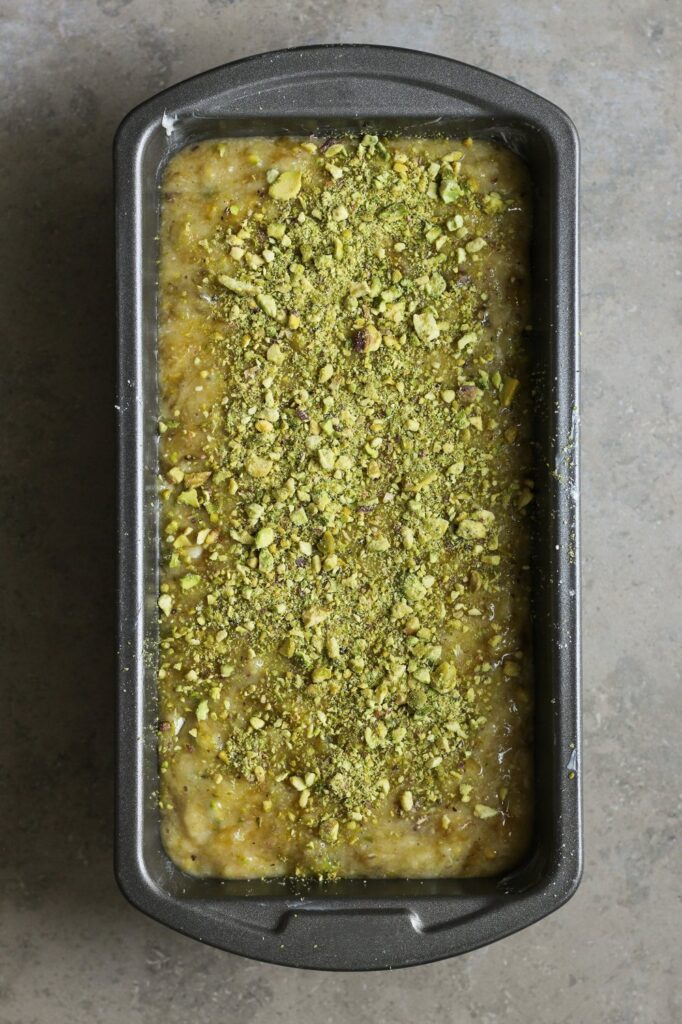
  6. Spoon the mixture into the loaf pan.
  7. Sprinkle the top with the ground pistachios.
  8. Bake for about 1 hour. Start checking for doneness after about 50 minutes, by inserting a toothpick or wooden skewer into the center of the loaf. If it comes out with batter, it needs more time, but if it comes out with just some crumbs, it’s ready to take out.
  9. Remove from the pan and cool on a rack for at least 30 minutes before cutting and serving.

Notes

* I used to suggest optionally using up to 1 1/4 cup [300 g] banana, but the recipe works much better with just 1 cup. I’m just including this note for anyone who used to make it with the larger amount when it was an option. (Note from 26 August 2025)

** Feel free to use a total of 1 cup [105 g] olive oil in place of the butter + oil.

*** For example, 2 teaspoons orange blossom water. Feel free to add more orange blossom water, if you’d like. 1 tablespoon will be a bit more heightened, and if you like when things to taste like perfume, you can even add 2 tablespoons. But that is the absolute maximum.

**** The pistachios that are mixed into the loaf should simply be chopped, but the ones sprinkled on top should be ground (in other words, very finely chopped). I like to simply use the crumbs left behind from chopping the pistachios for this. But the only reason is because it looks prettier this way, so don’t sweat it.

***** Feel free to instead use a 9×5″ loaf pan if you’re very worried about spillage. But if you follow the recipe carefully, the batter should be viscous enough that it won’t overflow, but will instead puff up into a beautiful, tall loaf as it bakes. If you use a 9×5 loaf, check it for doneness about 5 to 10 minutes earlier. If your pan isn’t nonstick (or is very scratched-up nonstick), make a parchment sling for easy removal (butter the pan, place the sling, and add more butter to the parchment). Simply trace a butter knife around the bare sides and lift it out with the parchment flaps.

Video note: If you don’t see the video for this post after scrolling up, please disable ad block and try reloading the page.
find us on instagram and let us know what you made!

Filed Under: bread, breakfast, every recipe, sweets Tagged With: banana, banana bread, loafcake, orange blossom water, pistachio

gurdthu | yogurt rice porridge

October 4, 2017 by Kathryn Pauline 12 Comments

I just got back from the Saveur Blog Awards in Charleston, South Carolina. I know it’s cheesy, but I’ve never been out in the world and felt so at home and in such good company. It was such an honor to be nominated, and I’m still totally stunned that I won Editors’ Choice for Best New Voice. I was up against some steep competition who deserved to win just as much as I did (including Esteban at Chicano Eats, who indeed won Readers’ Choice for his beautiful work).

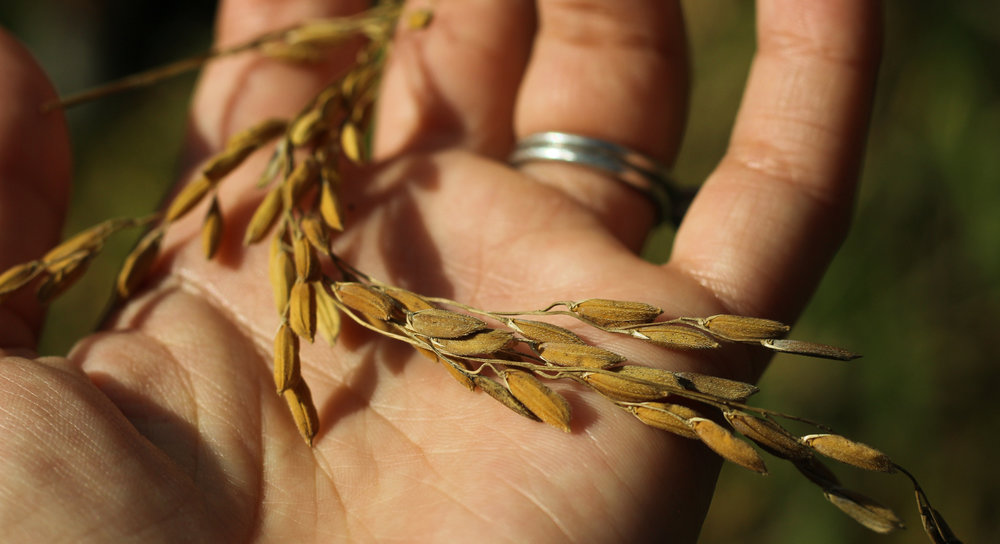
One of my favorite Saveur excursions was yesterday’s rice harvest. We visited a beautiful local farm in the heart of the Ace Basin, where I got to see a rice field for the first time ever, and we all got to harvest rice with scythes and all. We are food bloggers, after all, so this mostly turned into spending twenty minutes photographing rice (many hilarious #caughtgramming photos resulted).

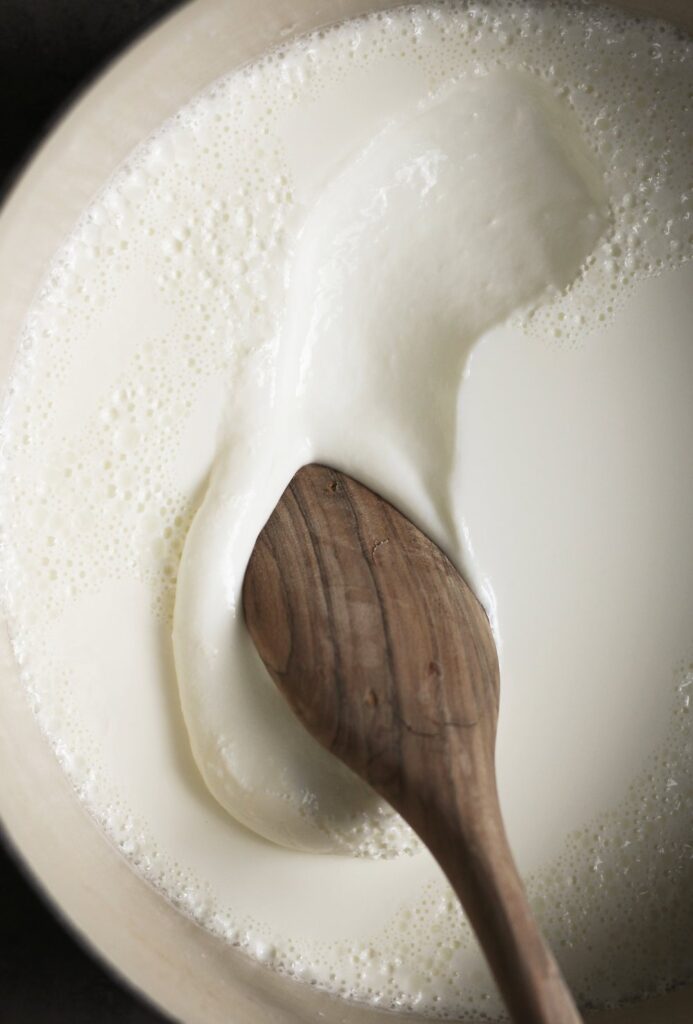
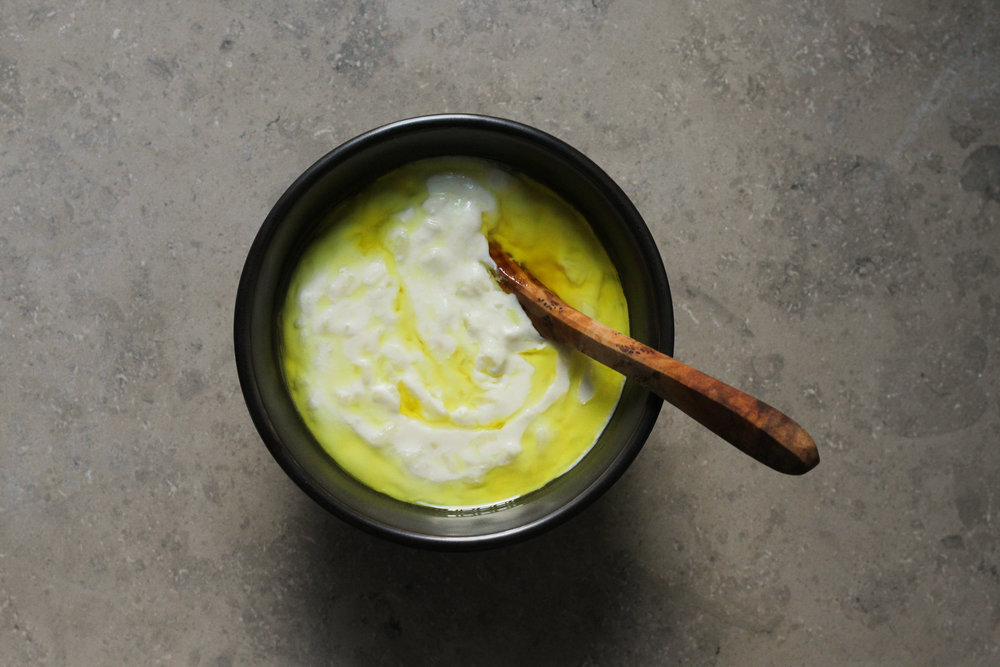
Rice is a staple of Assyrian cuisine, and it is often found alongside our other key staple, yogurt. We (along with many Middle Eastern cultures) enjoy yogurt on top of stuffed grape leaves, and we often eat it with savory toppings like za’atar and olive oil. There’s also the distinctively Assyrian booshala, or yogurt and swiss chard soup, as well as gurdthu, or yogurt rice porridge.

My main concern when writing about gurdthu (and booshala for that matter) is that most people find it a hard food to wrap their heads around. With booshala, the idea of hot, savory yogurt sounds totally unfamiliar (although there are so many dishes in western cuisines which feature savory sour cream, crème fraîche, and cream cheese).

But I think gurdthu is even more of a stretch because it’s neither sweet nor savory. It’s simply the essence of rice and yogurt.

A couple months ago, I put the cart before the horse and posted a recipe for vanilla, bay, and cardamom spiced gurdthu with fresh figs and honey before ever addressing classic, traditional gurdthu in a post of its own. My sweetened version is delicious, but it takes a lot of liberties, and there’s a beautiful subtlety in traditionally-prepared gurdthu.

In order to cook really good Middle Eastern food, it’s important to master balancing sweet with savory, since this combination is key to many of our dishes. There’s the pomegranate molasses you drizzle into red pepper muhammara, as well as the fenugreek seeds steeped in pickled mango brine, just to name a couple. These dishes balance the bright, sweet, and tangy with deep, savory, umami flavors. And what could be more sweet and savory than that?

And while I think that the concept of sweet and savory is important to our cuisine, I also think it’s a concept that is way over-attributed in general. Amba is definitely sweet and savory—mangoes (even unripe ones) are on the sweet side, while fenugreek seeds have a distinctively savory flavor—but some ingredients are not inherently sweet or savory.

Take rice, for instance. Add sugar and milk, and you’ve got a dessert like rice pudding. Add garlic, shallots, stock, and parmesan, and you’ve got risotto. But add yogurt, butter, and an egg (three neutrals that work in everything from scrambles to pastries) and you’ve got something that doesn’t just collapse this dichotomy into sweet-and-savory, but totally and completely defies it.

Print

gurdthu | yogurt rice porridge

Print Recipe

5 Stars 4 Stars 3 Stars 2 Stars 1 Star

4.5 from 2 reviews

  • Prep Time: 40 minutes
  • Total Time: 20 minutes
  • Yield: 8 servings

Ingredients

4 cups plain whole milk yogurt (1 quart container of non-Greek yogurt or 1/4 of a homemade batch)
1 1/2 cups water
1/2 teaspoon salt
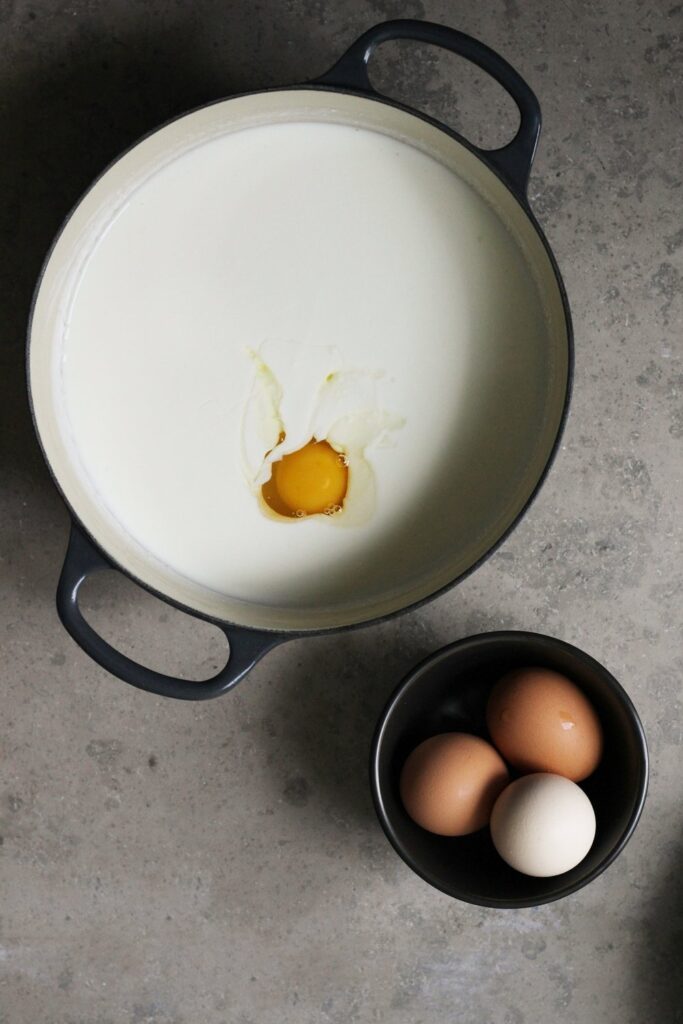
1 egg
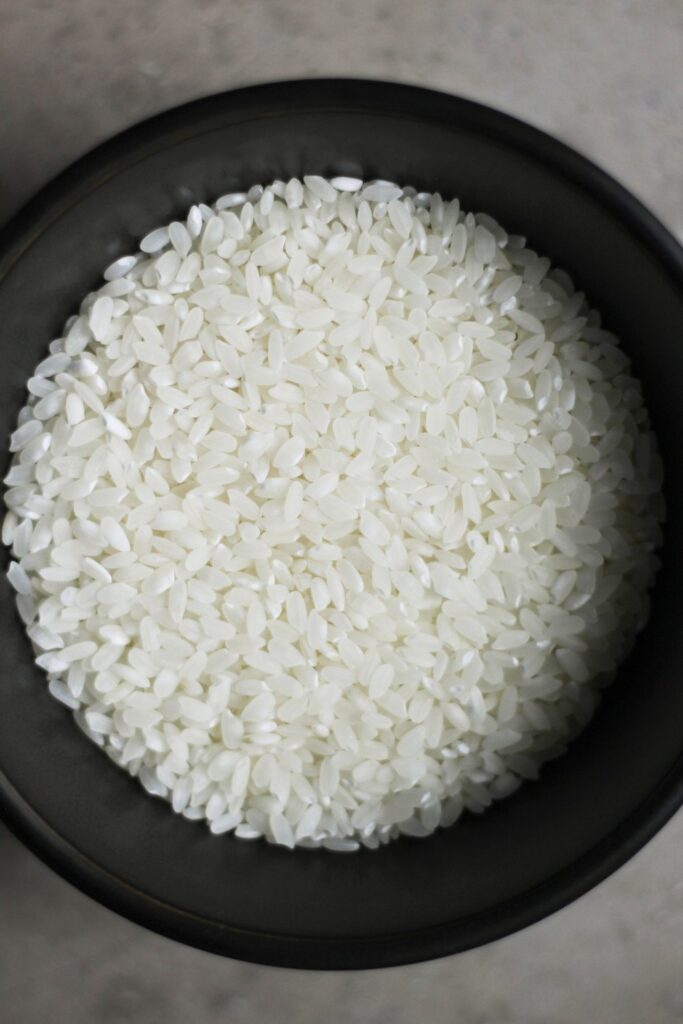
2/3 cup medium grain rice, rinsed (e.g., Calrose)
1 stick melted butter (or to taste)

Instructions

  1. In a stock pot, whisk together the yogurt, water, and salt.
  2. Whisk the egg into the yogurt mixture.
  3. Stir in the rice, and place the stockpot over medium heat. Stir constantly while you bring it to a simmer, about 10 to 15 minutes. Once it comes to a simmer, lower the heat until it is maintaining a bare simmer (low or medium-low heat).
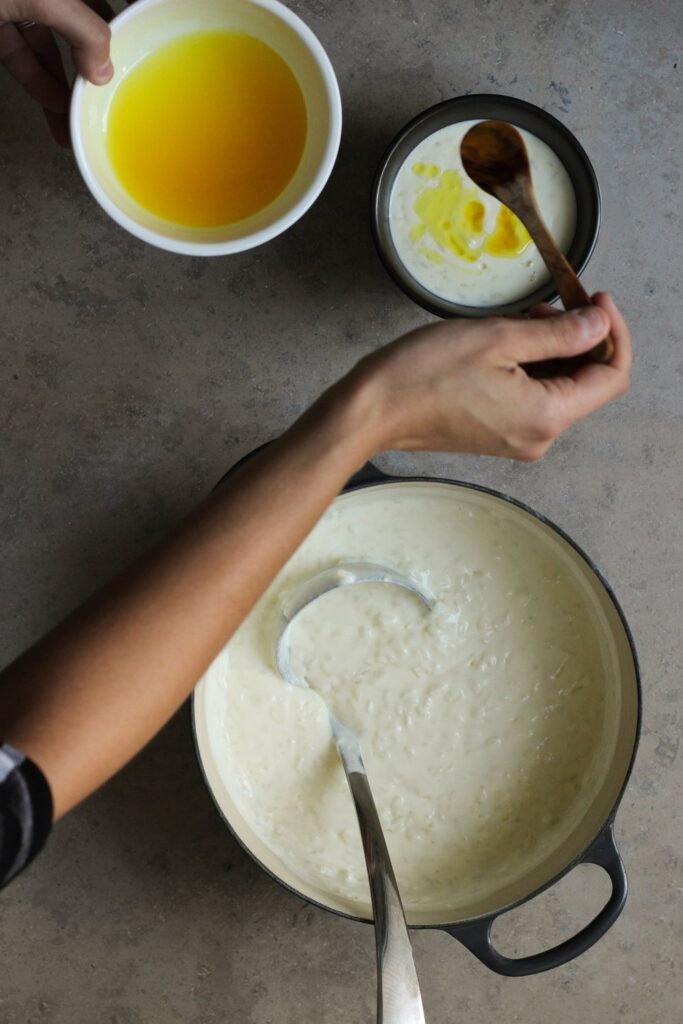
  4. Continue to stir occasionally for 20 minutes, until the rice is cooked through and the yogurt has thickened. It will thicken more as it cools.
  5. Serve it hot or let it cool to room temperature, and drizzle with melted butter (about 1 tablespoon per serving, but you should do this to your own taste).

find us on instagram and let us know what you made!

Filed Under: breakfast, every recipe, gluten free, vegetarian Tagged With: middle eastern, porridge, rice, yogurt

  • « Go to Previous Page
  • Page 1
  • Interim pages omitted …
  • Page 149
  • Page 150
  • Page 151
  • Page 152
  • Page 153
  • Interim pages omitted …
  • Page 183
  • Go to Next Page »

Primary Sidebar

Kathryn Pauline smiling

Welcome! I’m Kathryn Pauline, cookbook author, recipe developer, and photographer.

Footer

read our privacy policy

© 2017 - 2026 Kathryn Pauline