• Skip to primary navigation
  • Skip to main content
  • Skip to primary sidebar
  • Skip to footer
Cardamom and Tea
  • Blog
  • Recipes
  • About
  • Cookbooks
    • Piecemeal
    • A Dish for All Seasons (my first cookbook)

green and herby masgouf

May 21, 2017 by Kathryn Pauline 2 Comments

Masgouf (also known as masguf or masgoof) is always a hit. After you marinade the fish in lemon and spices, top it with a heap of tomatoes and onions, grill it to perfection, and serve it al fresco, absolutely no one can resist (except, of course, strict vegetarians, who should check back next week for two scrumptious vegan posts). But while just about everyone loves masgouf, we all have different palates and preferences. So I thought it would be fun to come up with a series of masgouf recipes, with something for every fancy.

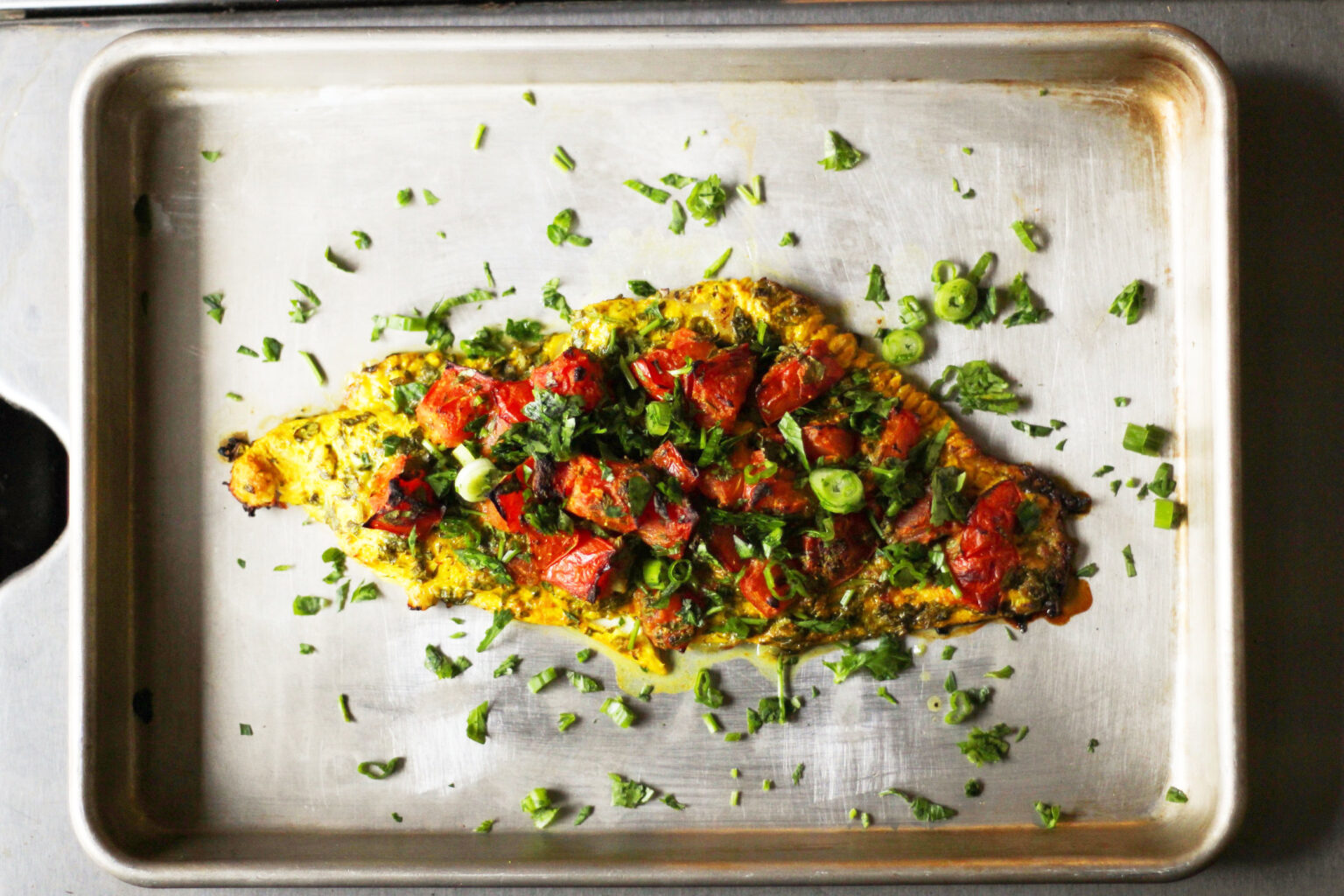
But for now, to kick things off, I’m starting with my recipe for green and herby masgouf. So if you like smoothie bowls, lemony kale salads, and agua fresca, this is definitely the masgouf for you. The fish gets marinaded in parsley, cilantro, green onion, lemon, and curry powder. The green onions, instead of bulb onions, add extra brightness. And after it comes off the grill, you douse the masgouf with a confetti of herbs. In Baghdad, my grandparents’ masgouf was made with catfish freshly caught from the Tigris River. This particular recipe really calls to mind that freshness, and it’s perfect for a spring dinner with friends.

Print

green and herby masgouf

Print Recipe

5 Stars 4 Stars 3 Stars 2 Stars 1 Star

No reviews

  • Prep Time: 30 minutes
  • Total Time: 1 hour
  • Yield: 2 to 3 servings (can easily be multiplied)

Ingredients

marinating the fish:

  • 2 tablespoons lemon juice
  • 1 1/2 teaspoons curry powder
  • 1/2 teaspoon olive oil
  • 1/4 cup + 2 tablespoons of the herb mix (see note)
  • 1/8 teaspoon salt (or to taste)
  • 10 to 12 ounces of white, lean fish fillets (about 1 big or 2 small fillets) *

topping and grilling the fish:

  • 1/2 cup large-diced tomatoes
  • 1 tablespoon lemon juice
  • 1 teaspoon curry powder
  • 3 tablespoons of the herb mix (to combine with the tomatoes) (see note)
  • 1/2 teaspoon olive oil
  • 1/8 teaspoon salt
  • to garnish: 3 tablespoons of the herb mix (see note)

Instructions

  1. Marinate the fish: Add the lemon juice, curry powder, olive oil, herb mix, and salt to a large ziplock bag, seal the bag and mix everything around by squeezing the bag a few times.
  2. Pat the fish dry with paper towels, and place it in the bag with the marinade. Squeeze the bag to evenly coat the fish in the marinade. Refrigerate for at least 30 minutes (or up to 4 hours ahead if you want to make it ahead).
  3. When you’re ready to cook the fish, preheat the grill. If you’re broiling, set the oven to broil 5 minutes before you’re ready to cook (all broilers work a little differently, so pre-heating times will vary).
  4. Take the fish from the marinade, do not pat it dry, and place it on a grill-safe tray (with a rim if you’re using the broiler).
  5. Grill the fish: Combine the diced tomatoes, lemon juice, curry powder, 3 tablespoons herb mix, olive oil, and salt.
  6. Top the fish with the tomato mixture, and grill (with the lid down) or broil until the fish is flaky. Cooking times vary, depending on how big your fish is and how hot your grill is, but you can count on at least 6 minutes.
  7. Garnish with more fresh herbs.

Notes

Herb mixture:
1/4 cup minced parsley
1/4 cup cilantro
1/4 cup green onion

* catfish is pictured, but you could use tilapia, cod, carp, branzino, or any other similar fish.
find us on instagram and let us know what you made!

Filed Under: dairy free, dinner, every recipe, gluten free, main courses Tagged With: fish

manakeesh za’atar | za’atar flatbread

May 17, 2017 by Kathryn Pauline 2 Comments

(jump to the manakeesh za’atar recipe)

If you know me through my blog, you might not know that I’m also a full-time PhD student and teacher. Though I teach and write about fourteenth century English poetry, I don’t like to get too academic when I write about food on my blog. But this week, I had a few quick thoughts on language that I wanted to share.

When you’re running an English language Middle Eastern food blog, transliterating words (or translating them from one alphabet into another) into English is a challenge. There’s technically no single right way to transliterate words from Arabic or Assyrian, which is frustrating since one of my goals is to make my website searchable and standardized.

So when I was working on the post on lahm bi ajeen (Middle Eastern meat flatbread), I was trying to figure out how to spell the name, so I asked my mom. She immigrated to the United States when she was a kid, so while she used to speak Arabic when she was little, she mostly grew up speaking English and Assyrian, a vernacular Aramaic language, and no longer speaks Arabic.

She suggested spelling it “lakhma bi ajeen,” because we assumed that the word lakhma must mean bread in Arabic, as it does in Assyrian. But when I did a quick search, I learned that, while lakhma means bread in Assyrian, lahm actually means meat in Arabic. So lakhma bi ajeen is like one of those funny portmanteaus that doesn’t translate well from one language to another; in Assyrian, it essentially means “bread of the dough” instead of “meat of the dough.”

But it turns out we weren’t so far off base after all, since the two words are etymologically related. According to Stephan Guth, the word was originally used to generally refer to whatever food was the main substance of the meal, but the meaning of the word changed over time through semantic narrowing.

Narrowing is a linguistic phenomenon where words take on more specific meanings as time goes on. So in this case, the original word came to refer to two totally different foods in each language (meat in Arabic and bread in Assyrian). And so now whenever we Assyrians eat meat pies, we call them bread of the dough. Language is such a funny thing.

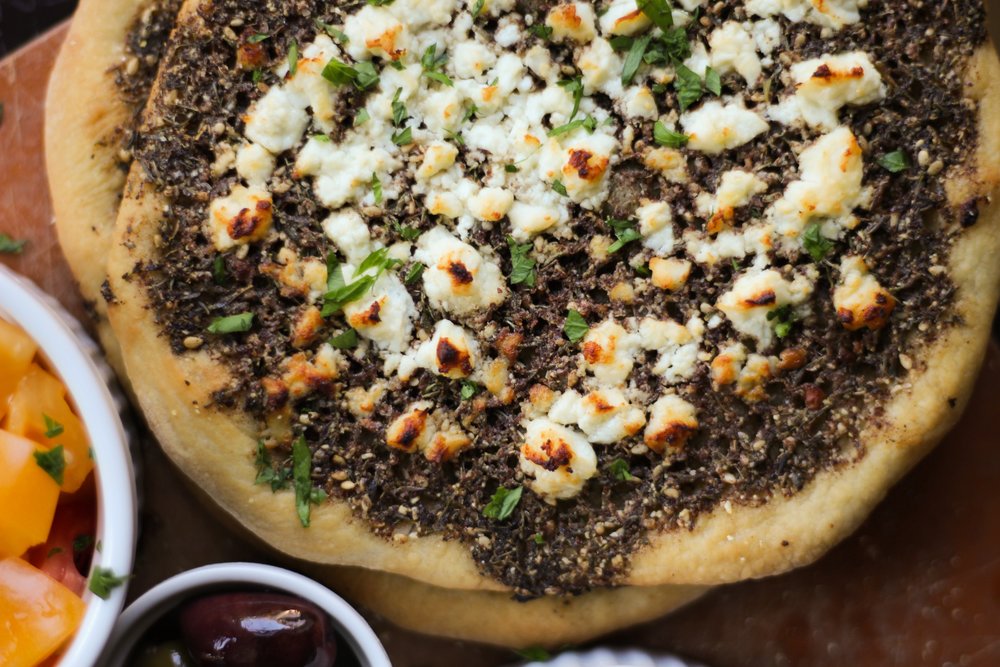
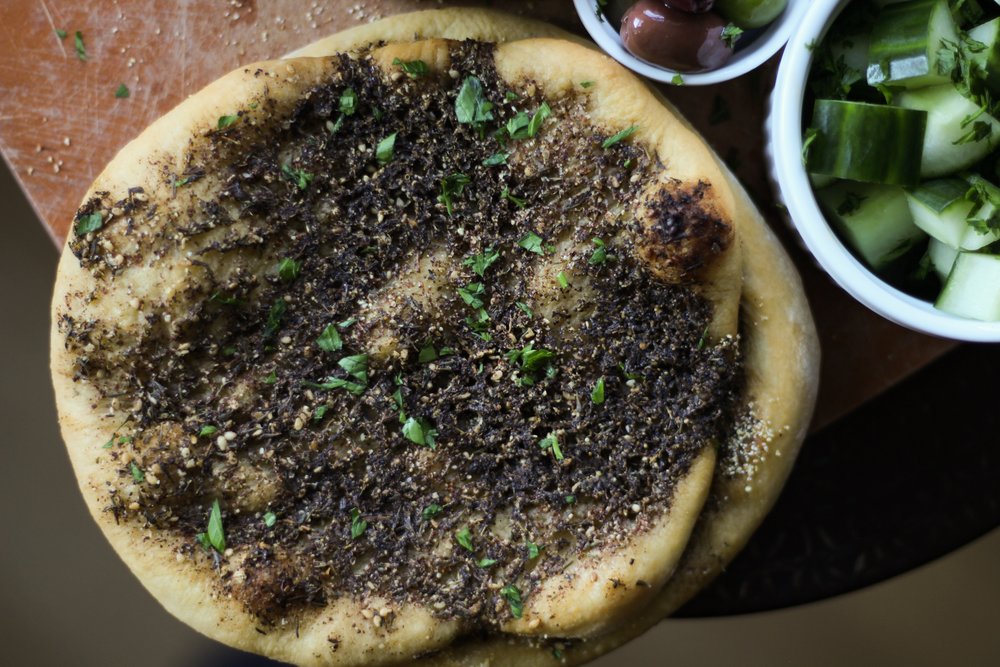
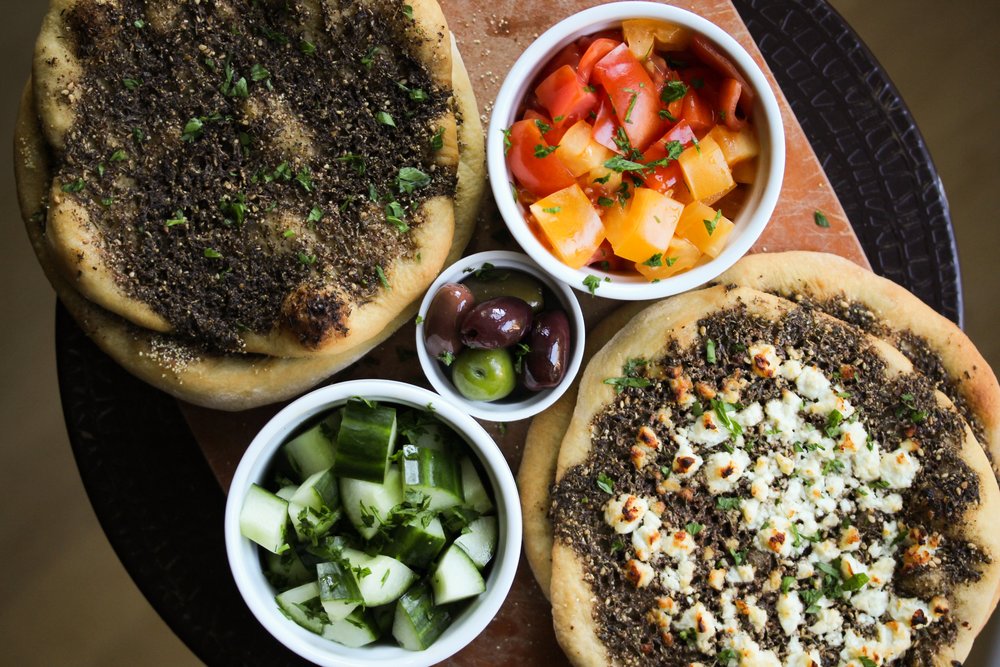
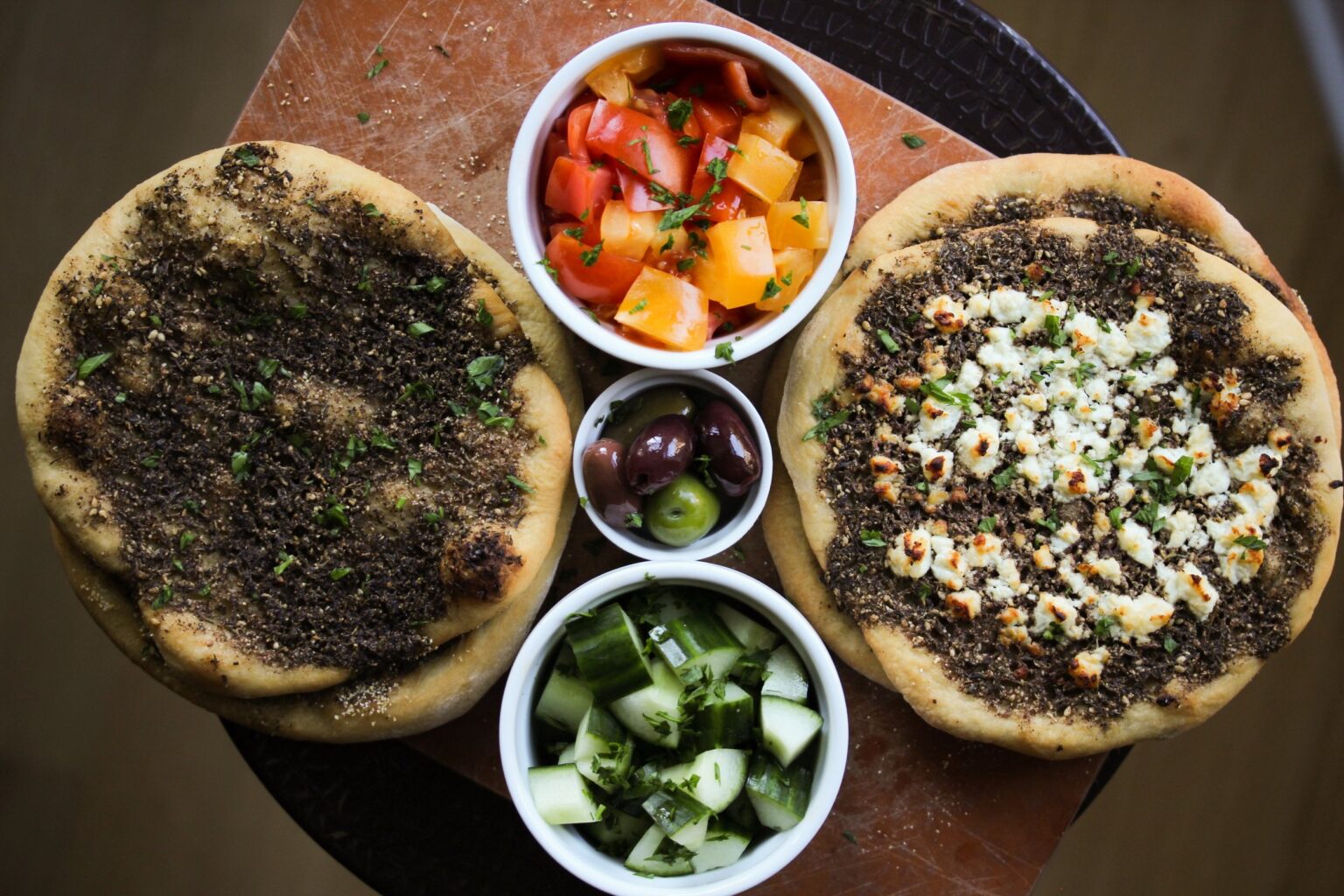
But since it’s lahm-less flatbread, lakhm’it za’atar in Assyrian, or manakish za’atar in Arabic (also known as manaeesh), doesn’t get into quite as much linguistic trouble as lahm bi ajeen. This flatbread is a really lovely meatless alternative, and it’s especially good if you make your own za’atar, which is a lot easier than it sounds. Adding cheese is totally optional, but it makes this more of a main-course, instead of a mezze or a snack. There are a lot of wonderful variations—my cousin, Sourma, recently posted some beautiful photos of a trip she took to Furn Saj Bakery in LA. Feel free to check out their menu for some man’oushpiration. If you’re looking for a menu featuring this recipe, check out my Cook for Syria supper club menu.

Print

za’atar flatbread | manakeesh za’atar

Print Recipe

5 Stars 4 Stars 3 Stars 2 Stars 1 Star

No reviews

  • Yield: 4 small flatbreads

Ingredients

  • 1/4 cup extra virgin olive oil
  • 1/4 cup + 2 tablespoons sumac-heavy za’atar
  • Salt, to taste (about 1/4 teaspoon)
  • 1 pound pizza dough *
  • Semolina or cornmeal, for sprinkling
  • optional: 1 cup loosely packed crumbled feta (for all 4 pizzas)
  • optional, for serving: 1 1/2 cup combination of olives, diced tomatoes, and diced cucumbers, plus minced mint or parsley

Instructions

  1. Place a pizza stone (or sheet pan) on the oven floor, move the oven racks up and out of the way, so you can easily access the pizza stone, and pre-heat the oven to 500° F.
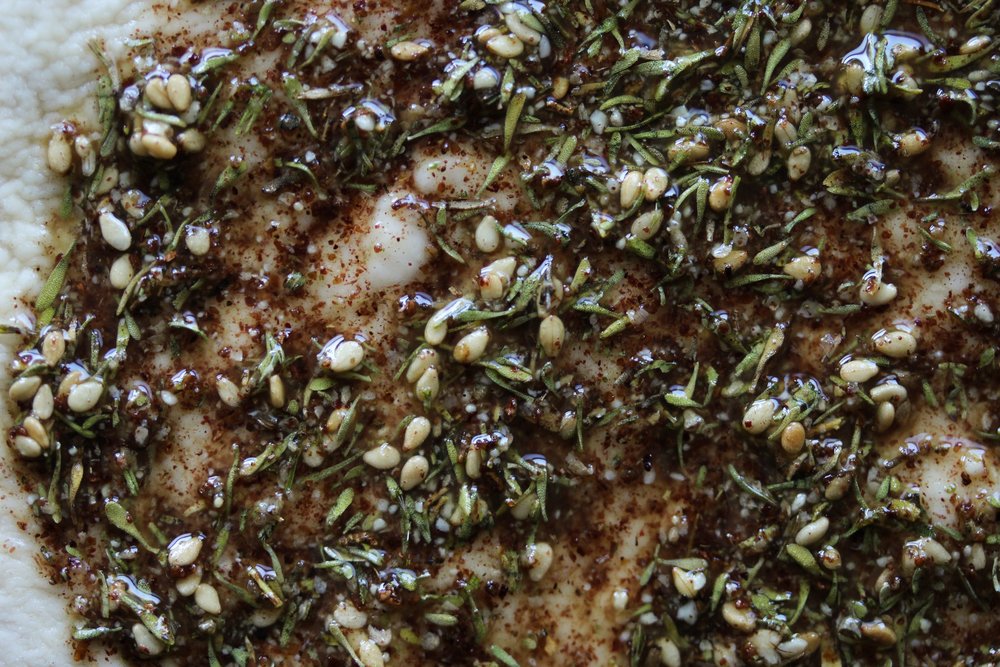
  2. Combine the olive oil and za’atar. Salt it to taste if you’re using unseasoned za’atar.
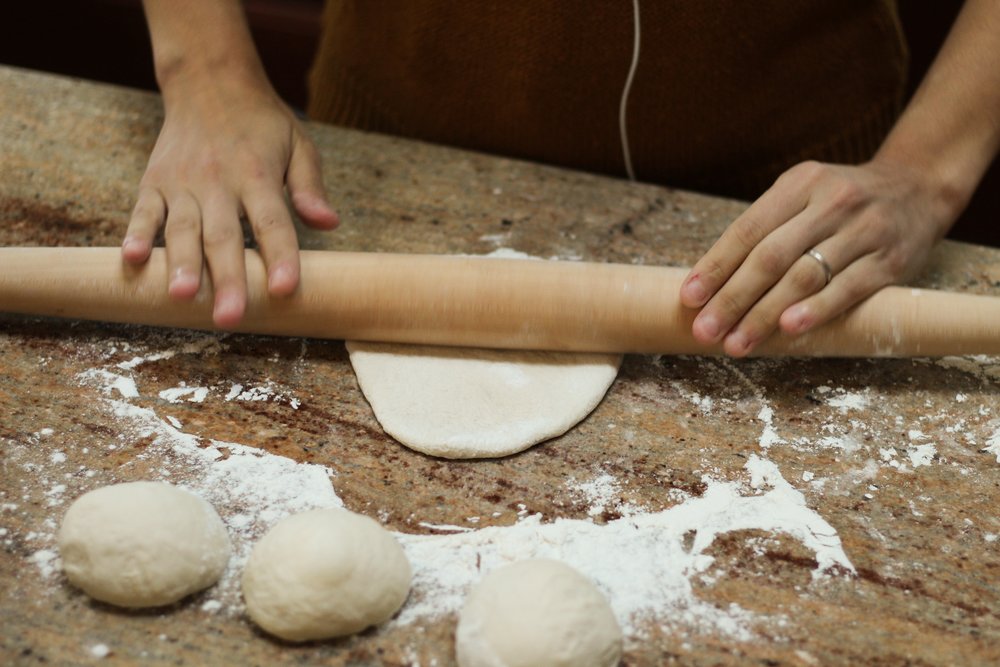
  3. Lightly flour a clean, food-safe work surface, use a knife or bench scraper to divide the dough into 4 equal pieces, and shape each chunk into a round ball.
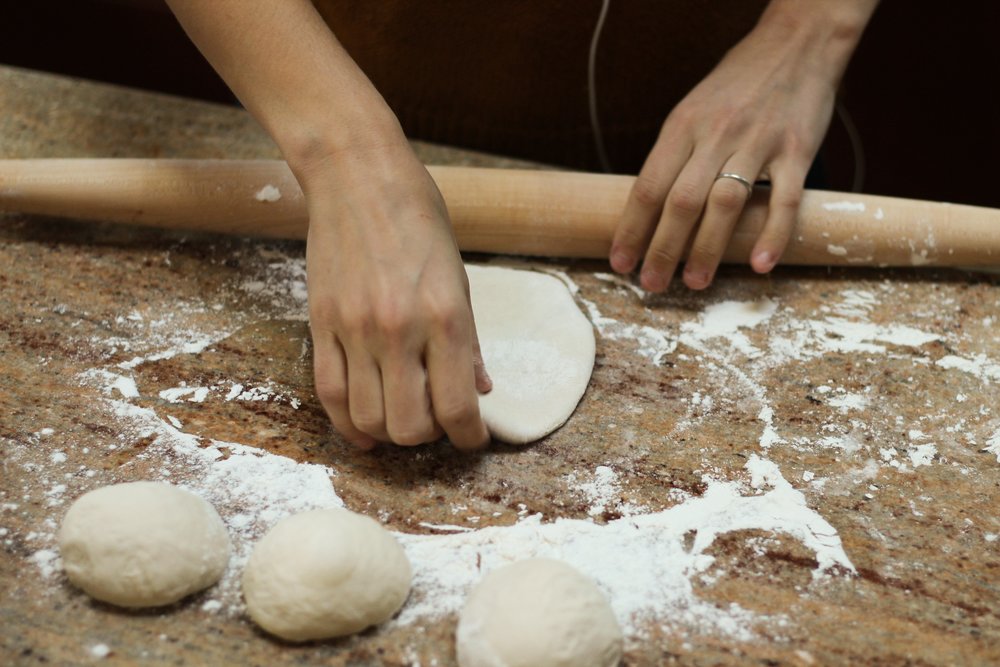
  4. Roll each dough ball into a circle, about 1/8 inch thick. To keep the round shape, rotate the disc about 90 degrees after each time you roll it out, and be sure to re-flour the surface every so often.
  5. Sprinkle semolina or cornmeal on a pizza peel or thin cutting board. Place one dough disc on the cutting board. Top with about 1/4 of the za’atar mixture (about a heaping tablespoon) and spread it out using your fingers or the back of a spoon. Top with 1/4 cup of feta cheese, if using. Let it rest for about 5 to 10 minutes before it goes in the oven.
  6. Once the oven has preheated, use a quick motion to move the pie from the pizza peel onto the pizza stone. Cook for about 5-8 minutes, until the edges start to brown and the bread is cooked through. The dough should be crispy and chewy, like really good brick oven pizza.
  7. Repeat with the remaining 3 pies.

Notes

* If you’re making your own dough, simply make this recipe for pizza dough. Divide it into 6 pieces, and you’ll have 2 left over after using 4 for this recipe. Feel free to turn them into pita bread, or freeze them to make pizza another time.

find us on instagram and let us know what you made!

Filed Under: bread, dairy free, dinner, every recipe, family recipes, main courses, meze, vegan, vegetarian Tagged With: cucumber, feta, middle eastern, sumac, za'atar

  • « Go to Previous Page
  • Page 1
  • Interim pages omitted …
  • Page 170
  • Page 171
  • Page 172
  • Page 173
  • Page 174
  • Interim pages omitted …
  • Page 183
  • Go to Next Page »

Primary Sidebar

Kathryn Pauline smiling

Welcome! I’m Kathryn Pauline, cookbook author, recipe developer, and photographer.

What’s new? 🥕

cauliflower frying

Fried Cauliflower

edible cookie dough

A Better Way to Make Edible Cookie Dough

steamed kale

Steamed Kale (without a steamer)

steamed cauliflower

Steamed Cauliflower

strawberry rhubarb jam in a jar with a spoon photographed from overhead

Strawberry Rhubarb Jam

rhubarb cookies

Rhubarb Cookies

Footer

read our privacy policy

© 2017 - 2026 Kathryn Pauline