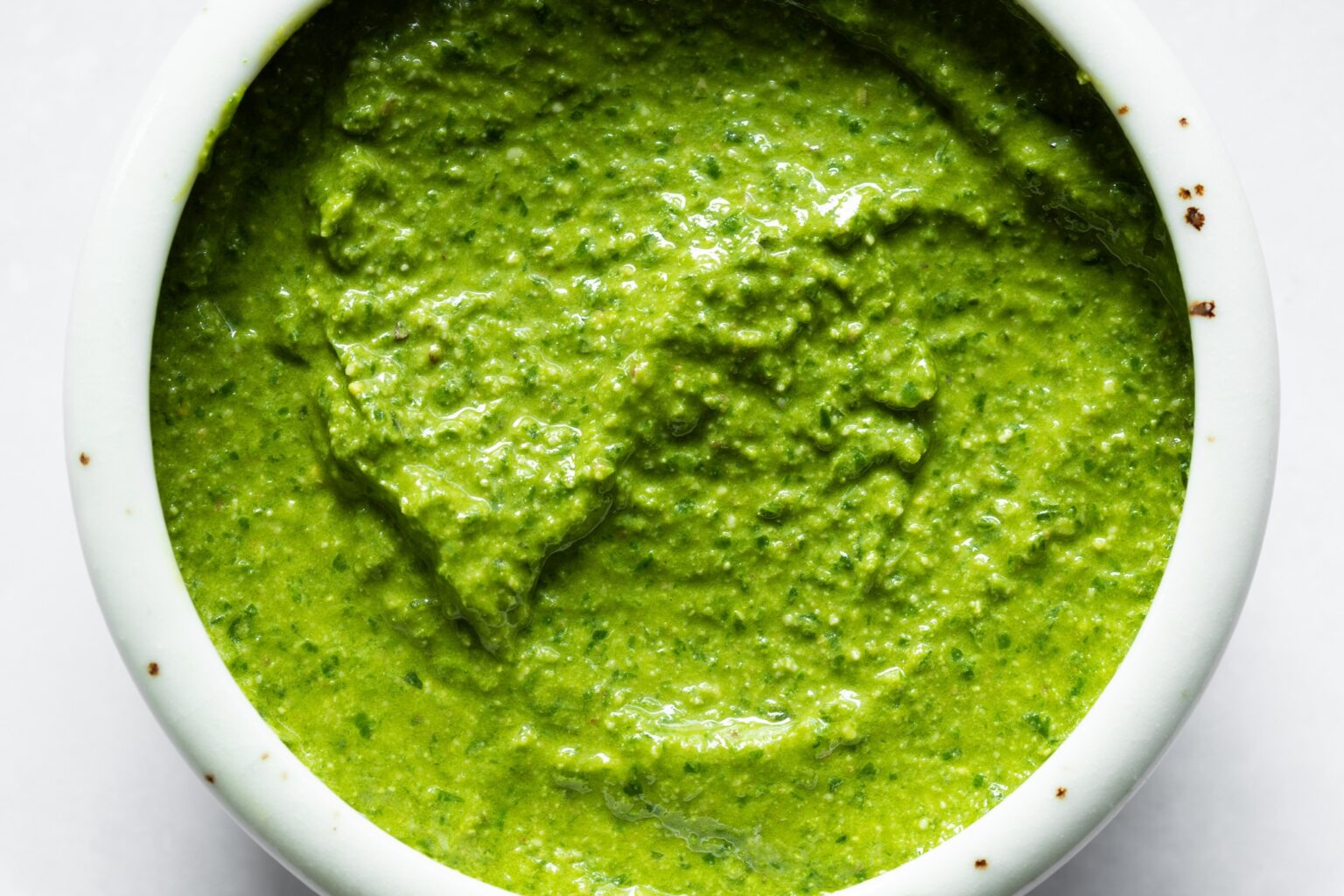
Basil pesto is the best—no notes. But what if your supermarket basil plant bit the dust last week? What if you want to make pesto without pine nuts? What if you need to make it vegan pesto? Don’t panic! This recipe works with whatever you’ve got.
Whether you’re working with a bare-bones pantry or just craving a creative twist, you’re in the right place. The recipe at the end includes simple, flexible swaps for every traditional pesto ingredient (and a note on making it vegan). But you can also use it to make my go-to classic basil pesto. Choose your own adventure!
But first, let’s talk about the 3 building-blocks of pesto and how you can play around with each one.


Pesto ingredients (and substitutions)
The one and only rule of substituting ingredients: Choose ones that go together and which you love.
The recipe at the end of this post includes some basics, which you probably have and which don’t impact the flavor a ton (e.g., olive oil, black pepper, garlic, and salt). But let’s talk about what to do with the greens, nuts, and cheese:
Greens
Basil is most traditional, but you can use any of the following in the recipe at the end of this post. If you’re weighing your ingredients, this is 80g of leaves, but here’s what that looks like in eye-balled amounts:

basil leaves from 2 medium bunches
parsley leaves from 2 small bunches
mint leaves from 2 medium bunches
chives: 1 large or 2 medium bunches
kale leaves from 1 very small bunch
arugula: 2 big handfuls
watercress: 2 big handfuls
ramps: 4 medium ones
cilantro leaves and small stems from 1 large bunch
(or a similar amount of any leafy greens or herbs you love the flavor of)
Nuts
Pine nuts are very traditional, but you can absolutely make pesto without pine nuts. If you’re changing up the greens, you may as well get creative with the nuts too. Just consider what would pair well with the greens you’ve chosen. E.g., Cilantro goes great with cashews. Mint goes amazing with walnuts and lemon.

pine nuts
walnuts
cashews
pecans
peanuts
pistachios
Cheese
You can’t really go wring with pecorino romano or parmigiano reggiano (parmesan). But you can use another similar hard cheese if you don’t have any on hand, as long as it goes with your other ingredients. Just finely grate it with a micro-planer if you’re measuring 2/3 cup by volume [35 g].
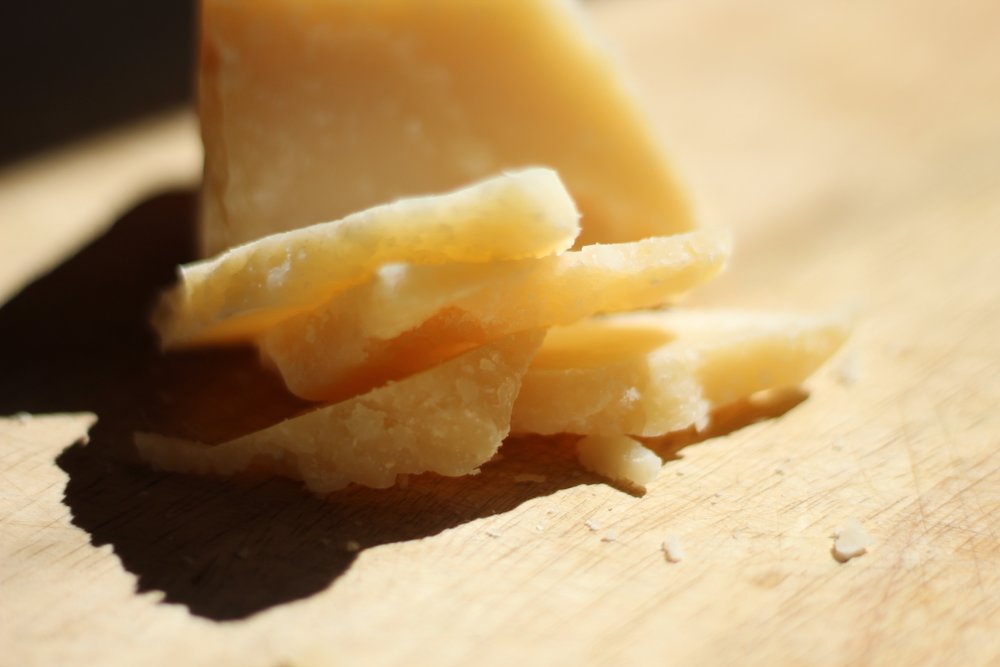
parmesan
pecorino romano
asiago
grana padano
vegan parmesan (for vegan pesto)
Ways to use pesto


Whether you make your pesto without pine nuts or make it vegan, all pesto has one thing in common: it’s got a lot of oil.
While it’s tempting to mix it into everything for a dose of savory herbiness, pesto works best in recipes where extra oil is welcome. A good rule of thumb is to use pesto when you might otherwise use mayo, aioli, or butter, but when you also want an herby kick.
- Coat veggies before (and after!) roasting
- Add to a quesadilla or burrito. I love to recreate the pestato burrito from Laughing Planet Cafe.
- Use in focaccia in place of some of the oil and herbs (my recipe has instructions)
- Pasta—obviously!
- Spread on a crostini
- In chicken salad in place of some or all of the mayo
- Topping corn on the cob instead of butter
- On a loaded baked potato
Pesto (with any ingredients)
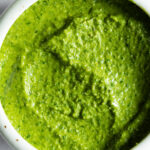
Use this recipe to create your own pesto, or use the examples (in parentheses) to make a traditional basil pesto.
Ingredients
- 1 to 3 garlic cloves
- ⅓ to ½ cup [45 g] nuts (e.g., ⅓ cup pine nuts)
- 3 oz [80 g] leaves from herbs/greens (e.g., basil leaves from 2 medium bunches)
- 1 Tbsp fresh lemon or lime juice (optional*)
- ⅔ cup [35 g] finely grated parmesan or other similar cheese
- ¼ tsp freshly ground black pepper
- ¼ tsp salt
- ¼ cup [50 g] extra-virgin olive oil
Instructions
- Place the garlic and nuts in the bowl of a food processor fitted with the blade attachment. Process until it turns into a thick, chunky paste. Scrape down the sides and add the herbs/greens, citrus juice (if using), pecorino, black pepper, and salt and pulse several times until it’s puréed. With the food processor running, very slowly drizzle the olive oil through the feed tube, allowing it to emulsify into a creamy, bright green pesto.
- Store in a jar in the refrigerator for up to 3 days or freeze. It will last in the freezer for 3 months in a regular sealed container or bag, and will last more like 1 year in the freezer in a vacuum-sealed bag.
Notes
* I add lime juice to cilantro pesto, and lemon juice to kale or mint pesto, but I prefer classic basil pesto without any extra acidity, so I don’t add it for that.
Note on storage and keeping it green: To keep your pesto from turning brown, use the freshest herbs possible, get rid of stems, and dry them very well before using them in this recipe. If you want to make absolutely sure your pesto won’t turn brown, blanch the herbs or greens in boiling water for exactly 5 seconds and then shock them immediately in an ice bath. You can also add the optional citrus juice for further insurance.
Note on veganizing: Use a vegan parmesan to make this recipe vegan. Vegan parmesans are pre-grated and sometimes a bit denser, so use a bit less if you’re measuring by volume (but it’s 35 g either way if you’re measuring by weight).

Psst… by the way, I wrote a whole cookbook of adaptable recipes like this one. It’s called A Dish for All Seasons!
Check it out for adaptable base recipes + ideas for seasonal (and evergreen!) variations.