• Skip to primary navigation
  • Skip to main content
  • Skip to primary sidebar
  • Skip to footer
Cardamom and Tea
  • Blog
  • Recipes
  • About
  • Cookbooks
    • Piecemeal
    • A Dish for All Seasons (my first cookbook)

Ravioli

July 10, 2025 by Kathryn Pauline Leave a Comment

ravioli in rows on a cutting board

I love a clean-out-the-fridge meal. And ravioli is secretly the absolute best for this. It’s a stealthy little envelope of resourcefulness—you’d never suspect that it’s filled with the last tablespoon of this and a half-a-handful of that.

Jump to the recipe for a very straightforward recipe for ravioli using lots of ingredients you probably have in your kitchen already. Or read on for more filling ideas, sauce ideas, and my tips for ravioli success. I even have a major time-saving dough shortcut in case anyone doesn’t feel like making theirs from scratch.

ravioli with tomato and basil
ravioli with fried sage
ravioli with tomato sauce
ravioli with peas and lemon

Mix-and-match ingredients for ravioli filling

The key to a good ravioli filling? Concentrated flavor. Since the filling is small, every bite has to count. That means no raw or soggy veggies, and definitely no watery spinach. You want richness and punch, not puddles.

The recipe at the end of this post has a ricotta base that works well with a number of veggies and other flavorful ingredients. Here are some ideas of other ingredients you can substitute:

Produce (in place of the spinach)

a paper bag opened to reveal tomatoes

corn kernels
coarsely chopped green beans
chopped figs
chopped bell peppers
chopped Swiss chard, spinach, or kale
thinly sliced sautéed fennel
large-diced sweet potatoes/squash/pumpkin, chopped
coarsely chopped asparagus
peas
thinly sliced mushrooms

For any of the above produce, sauté as follows:

  • Start with a total of up to 5 cups [450g] of raw produce in place of the spinach in the recipe in this post. You should end up with 1½ to 2½ cups [300 g] after sautéing.
  • Place a nonstick or cast-iron skillet over medium-high heat and let it preheat for a few minutes. Once hot, add some olive oil, followed by the produce.
  • Stir occasionally, and remove from the heat once they’re reduced in size and have caramelized in spots. If you’re using anything like squash or sweet potato, mash it after sautéing. If your produce gives off a lot of moisture, be sure to let it all cook off, and strain very wet things like spinach by wringing them out and discarding the liquid.

Fresh herbs (in place of the dried basil)

farm stand with giant bunches of basil and jars of pickle vegetables

Leafy herbs (use chopped ¼ cup or 10g):
basil
cilantro
dill
parsley
chives

Woody herbs (use chopped 1 to 2 Tbsp):
thyme
rosemary
sage
oregano

Sauces

tomato sauce being immsersion-blended

Pesto
Jarred or homemade tomato sauce
Garlic herb brown butter
Tomato sauce made with fresh diced tomatoes, barely cooked just until they’re falling apart (with some garlic and olive oil)

ravioli sheets
ravioli in rows on a cutting board

Tips for ravioli dough success

Now that we’ve addressed the filling, let’s talk dough! Here are a few simple tips to help your ravioli hold together and taste great.

1. Skip my dough recipe and use wontons to save time.

For a time-saver, skip the dough altogether and use small wonton wrappers. Just place the filling in the center, wet one side of the edges, and fold it into a triangle.

2. Don’t overfill them.

We’ve already covered the idea that the filling needs to be flavorful, and that’s because you’re not going to use very much of it. But here’s the thing: when you’re working with a super flavorful filling, 1 heaping teaspoon is all you need. And with a standard-sized ravioli press, that’s all it can hold. If you add any more, your ravioli will become leaky little blobs that fall apart as soon as they hit the water.

3. Press out the air.

Whether you’re using a mold or going free-hand, press out any air bubbles before sealing them. Air bubbles lead to a leaky ravioli.

4. Flour, flour, flour!

Dust your surface, your tools, your everything! This will keep the ravioli from sticking and becoming a nightmare to work with.

5. Freeze whatever you don’t plan to eat right away.

Raw ravioli freeze incredibly well, but they don’t keep as well in the refrigerator. I highly recommend freezing whatever you don’t plan to eat soon after making them. Your future self will thank you!

To freeze, simply place filled ravioli in a single layer on a parchment-lined baking sheet, freeze solid, and transfer them to a freezer bag to store for several months. Boil them right from frozen, and add an extra minute to their cook time.

Print

Ravioli (with any vegetable)

ravioli in rows on a cutting board
Print Recipe

5 Stars 4 Stars 3 Stars 2 Stars 1 Star

No reviews

To save time, skip the dough altogether and use small wonton wrappers. Just place the filling in the center, wet one side of the edges, and fold it into a triangle.

If you want to use a different sauce, different herbs, or something besides spinach, check out the lists above the recipe for mix-and-match ideas.

  • Yield: 60 ravioli

Ingredients

For the pasta dough:

  • 3 cups [390 g] all-purpose flour
  • 4 large eggs
  • 1 large egg yolk
  • 1 Tbsp extra-virgin olive oil
  • ½ tsp salt

For the filling and sauce:

  • Special equipment: pasta roller (see note on using wontons if you do not have one)
  • Extra-virgin olive oil
  • 1lb [455 g] chopped spinach (or see list of produce substitutes)
  • Salt
  • One 8 oz [225 g] container ricotta
  • ½ cup [25 g] finely grated parmesan or pecorino romano
  • 1 large egg yolk
  • 3 garlic cloves, crushed through a press
  • 1 Tbsp dried basil (or see list of herb substitutes)
  • 2 tsp lemon zest (optional)
  • ¼ cup [35 g] toasted pine nuts (optional)
  • ¼ tsp freshly ground black pepper
  • Your favorite tomato sauce, warmed (or see list of sauce substitutes)

Instructions

Make the dough:

  1. To make the pasta dough: Reserve ¼ cup [30 g] of the flour and set aside. Combine the majority of the flour along with the eggs, yolk, olive oil, and salt in the bowl of a stand mixer (or knead by hand). Bring it all together at medium speed with the dough hook. Once it comes together into a firm dough, continue kneading while you slowly sprinkle in some of the remaining flour, until it becomes very firm yet still pliable (about 3 minutes total). You will likely only need half of the remaining flour. You may need to pause to scrape the dough down or to knead by hand for a minute if your mixer has trouble bringing it together.
  2. Once you’ve kneaded it, smooth the dough into a ball, wrap tightly in plastic wrap, and let rest for about 30 minutes to 1 hour. Make the filling while you wait.

Make the filling:

  1. Place a large stockpot or Dutch oven over medium-high heat and let it preheat for a few minutes. Once hot, add about 1 tsp of olive oil, followed by about half of the spinach and a pinch of salt. Let the spinach cook for about 4 minutes, tossing it constantly. It’s done once it’s wilted down completely and any excess moisture has cooked off. Transfer to a medium mixing bowl, and repeat with the remaining spinach and another 1 tsp of olive oil. Wring it out by pressing it against the side of the bowl and letting any excess juices run into the sink. You should end up with about 1 cup [250 g] of wilted spinach.
  2. Add the ricotta, Parmesan, egg yolk, garlic, dried basil, lemon zest (optional), pine nuts (optional), pepper, and about ¼ tsp salt to the mixing bowl with the spinach. Mix well.
  3. Bring a large stockpot of water to a boil.

Shape and cook the ravioli:

  1. To assemble: Lightly flour a clean countertop and set up a pasta roller. Divide the dough into eight pieces and pat each piece into a flat oval.
  2. Roll two of them out to about number 3, into 13 by 5 in [33 by 12 cm] rectangles. Start with the widest setting and then gradually scale it down. Flour them well once they’re rolled out.
  3. Fill the ravioli by using a mold or doing it freehand on the counter. If using a mold, create indentations. Evenly distribute 12 heaping tsp [10 g each] of filling (do not overstuff).
  4. Dab lightly around the filling with water, and place the other rectangle on top. Lift one half up and slowly lower it back down, patting as you go to make sure all the air bubbles are out. Repeat with the other side. Trim them into separate pieces using your mold or a knife.
  5. Repeat with the remaining dough and filling. Collect the scraps as you go, form into a ball, divide in half, and let rest for at least 10 minutes so you can roll out one last batch.
  6. Simmer the ravioli about 12 at a time for about 3 minutes. Transfer to a serving bowl as they finish cooking, and toss with the tomato sauce.

find us on instagram and let us know what you made!

Psst… by the way, I wrote a whole cookbook of adaptable recipes like this one. It’s called A Dish for All Seasons!

Check it out for adaptable base recipes + ideas for seasonal (and evergreen!) variations

Filed Under: dinner, every recipe, lunch, main courses, side dishes, vegetarian Tagged With: basil, pasta, ricotta, tomato

Savory French Toast

July 10, 2025 by Kathryn Pauline 2 Comments

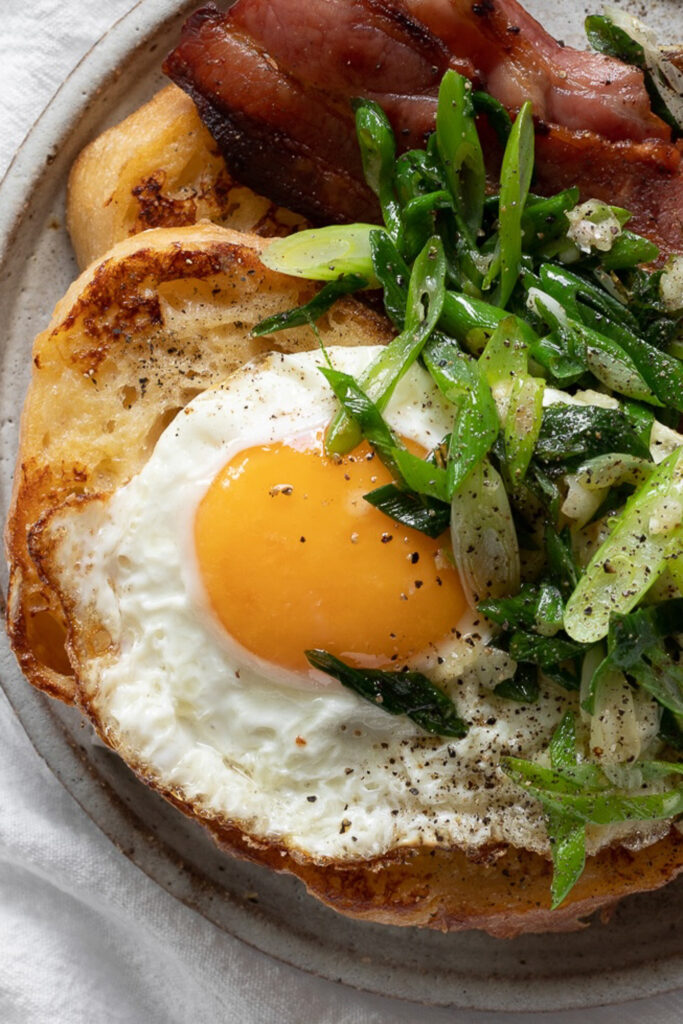
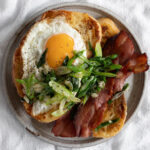
savory French toast with a sunny side up egg

If you’ve only ever had sweet French toast with syrup and powdered sugar, this savory French toast recipe might just change your breakfast game for good.

It’s made with ingredients you probably already have on hand: eggs, bacon, green onions, and garlic. And I’ve even got ideas for veganizing it!

It’ll make you wonder if you should throw that bottle of maple syrup out the window. Or you could always pour a little on for some sweet-and-savory fun.

Jump to the recipe if you’re ready to dig in, or read on for more ideas of toppings and ways to make this recipe even easier.

savory French toast with a sunny-side-up egg and green onions
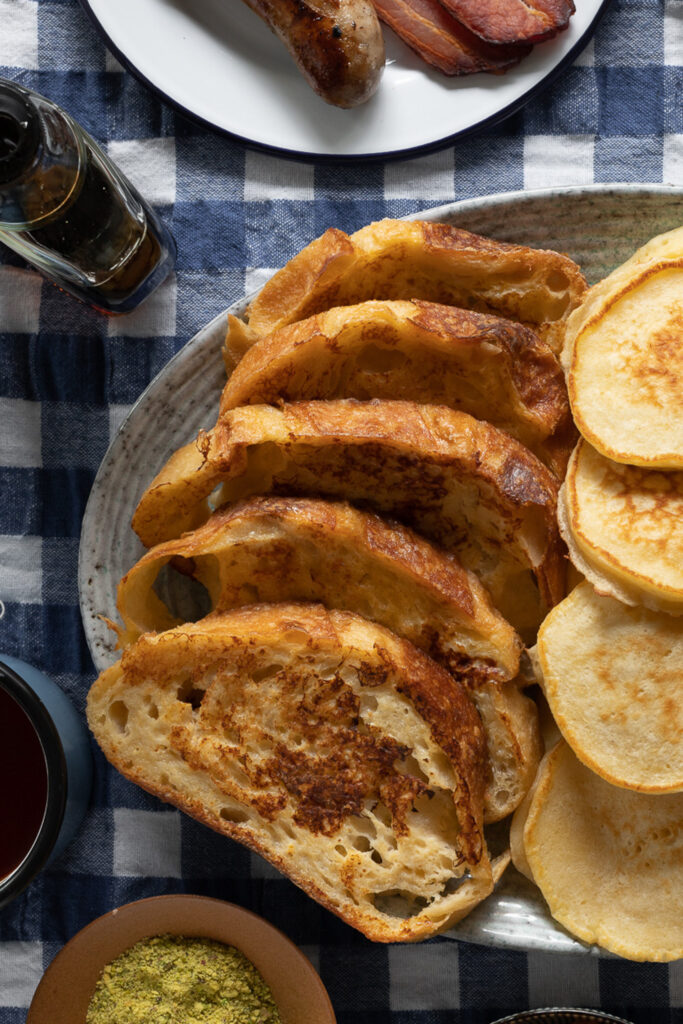
savory French toast with no toppings on a blue gingham tablecloth

Savory French toast: Easy and Flexible!

This recipe is incredibly low-stress and flexible. Whether you’re cooking for one or feeding a crowd, whether you’re vegan or an omnivore, this dish adapts beautifully to whatever you need.

1. It uses familiar ingredients

No obscure items, no specialty shopping, and very few perishables. This recipe leans on staples you probably have on hand. Even the bread can be whatever crusty loaf you have on hand.

2. You can easily change up the toppings

This savory French toast is a perfect canvas. Add a handful of fresh herbs if you have them (chives, parsley, or dill all work great). Add some hot sauce for a little heat. Roasted cherry tomatoes or even leftover roasted vegetables are particularly at home here.

It all comes down to the garlic and green onion topping—it goes with almost anything, adding a ton of flavor and a little pop of green without a lot of effort.

Not a fan of eggs and bacon? Let’s get into veganizing it!

3. You can easily veganize it

First, for the French toast itself, swap the eggs and milk with your favorite vegan egg replacement (a pourable one designed for scrambling—avoid hommade flax eggs here, which doesn’t add the right flavor) and vegan milk alternative.

For the toppings, skip the bacon and eggs and go for savory tofu crumbles, pan-fried mushrooms, or even avocado with a sprinkle of nutritional yeast. The garlicky green onion topping is already plant-based, and that’s the key to adding lots of flavor.

4. It’s great for a crowd (or for just one!)

This recipe makes 8 small servings or 4 hearty ones.

For a group, you can bake the bacon on a sheet pan as the recipe specifies. This savory French toast can be cooked ahead of time and quickly reheated in the oven (just pop it on another rack for a few minutes while the bacon roasts). The garicky green onion topping keeps well in the fridge, and all that’s left to do at the last minute is to fry a ew eggs (or scramble them to simplify things further).

If you’re cooking just for yourself or one other person, you can easily scale it down. Cook the bacon in a skillet if you prefer, and make the French toast in the same pan. Everything comes together quickly, and you’ll have a savory, cozy meal.

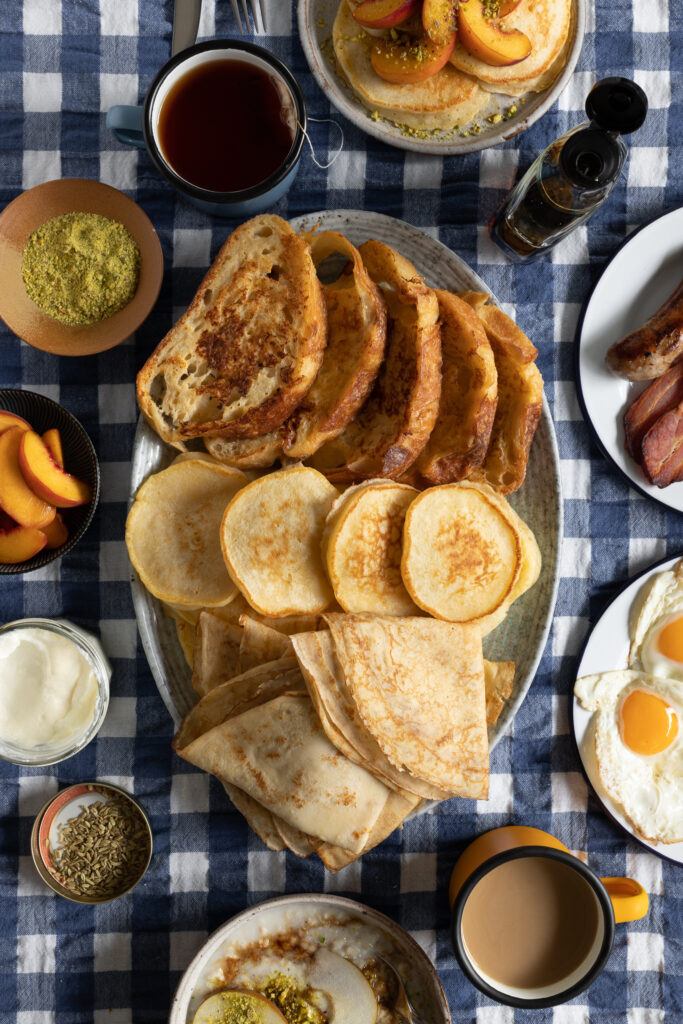
array of breakfast carbs on a blue gingham tablecloth with lots of toppings
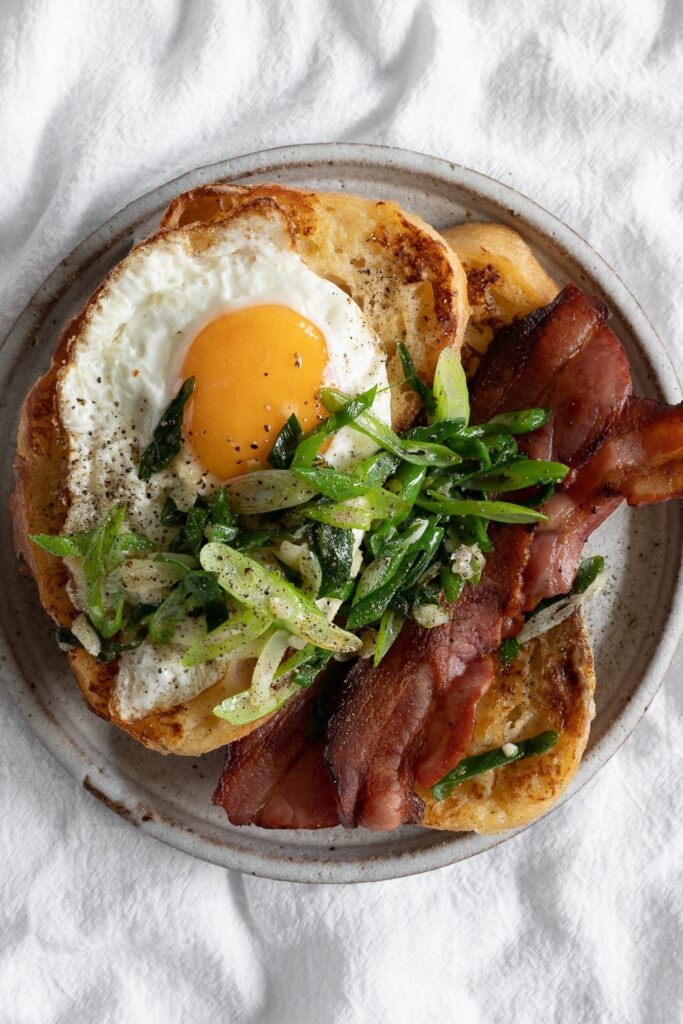
savory French toast

Before I get to the recipe, a couple quick links for more French toast content!

  • If you’ve got a loaf of delicate sliced bread (rather than something crusty and hearty) this Tiktok hack is life-changing.
  • For sweet French toast, don’t miss Abeer Najjar’s cancelled flight French toast
  • You can also try this sweet French toast casserole for a sweet alternative for a crowd.
Print

Savory French Toast (with variations)

savory French toast
Print Recipe

5 Stars 4 Stars 3 Stars 2 Stars 1 Star

5 from 1 review

To veganize this recipe and for variations, see notes above the recipe.

  • Yield: 4 large or 8 small servings

Ingredients

For the French toast:

  • ¾ cup [180 g] whole milk
  • 2 large eggs
  • 1 Tbsp granulated sugar
  • ½ tsp salt
  • Eight ½ in [13 mm] slices stale* sourdough bread
  • Cold butter, for greasing the pan

For the toppings:

  • 8 to 12 pieces regular-cut bacon (200 to 300 g)
  • Neutral oil (such as canola)
  • 4 large eggs
  • Salt
  • 3 green onions, or 2 small spring onions, thinly sliced
  • 3 garlic cloves, crushed through a press
  • Freshly ground black pepper

Instructions

For the French toast:

  1. Combine the milk, eggs, sugar, and salt in a medium mixing bowl. Beat together until smooth.
  2. Set a large plate or two next to the milk mixture. Place a couple of bread slices in the liquid and let them float for about 30 seconds on one side, then flip and let them soak for another 30 seconds on the other. Remove once they are soft, letting some of the excess drip away for about 5 seconds—don’t let them soak in the liquid any longer, or they will get soggy. Transfer the soaked pieces to the plates and let them rest in a single layer for 2 to 20 minutes.
  3. Once your bread pieces are soaked and resting, preheat a nonstick or cast-iron sauté pan or skil- let over medium heat. Once hot, swipe a stick of butter across the surface. The butter should sizzle and then go quiet, but it should not smoke (adjust the heat as necessary). Place two or three slices of bread on the buttered pan. Let cook for about 3 minutes per side, just until they are cooked all the way through and golden brown on the outside. Repeat with the remaining bread slices.

For the toppings:

  1. Preheat your oven to 400°F [205°C].**
  2. Place the bacon on a rimmed baking sheet in a single layer. Bake for about 17 minutes, just until it’s crisp-chewy and browned (thick-cut will take a couple of minutes longer; thin bacon will take a bit less time).
  3. Using a neutral oil, fry your eggs in a non-stick sauté pan or skillet following your favorite technique.
  4. Remove the fried eggs from the pan and set aside. Remove all but 1 Tbsp of oil from the pan. Add the green onions and garlic to the still-hot pan and stir over medium heat for about 2 minutes. Season with salt and pepper.
  5. Serve the French toast topped with the bacon, fried eggs, onion, and garlic.

Notes

* If the bread slices are rock-hard, they will need to soak for much longer. “Stale” does not mean completely dehydrated—it means that the bread tastes unpleasantly mealy because it is no longer fresh.

** You don’t have to cook your bacon in the oven, especially if you’re making a single serving of this. But in my experience, it’s much easier than pan-frying, especially if you carefully line the pan with foil first for easy clean-up.

find us on instagram and let us know what you made!

Psst… by the way, I wrote a whole cookbook of adaptable recipes like this one. It’s called A Dish for All Seasons!

Check it out for adaptable base recipes + ideas for seasonal (and evergreen!) variations. This recipe comes from the section with 4 breakfast carbs (waffles, crêpes, french toast, and pancakes) + so many ideas for mix-and-match toppings.

Filed Under: breakfast, dairy free, every recipe, vegan, vegetarian, weeknight Tagged With: eggs, garlic, onion

  • « Go to Previous Page
  • Page 1
  • Interim pages omitted …
  • Page 38
  • Page 39
  • Page 40
  • Page 41
  • Page 42
  • Interim pages omitted …
  • Page 183
  • Go to Next Page »

Primary Sidebar

Kathryn Pauline smiling

Welcome! I’m Kathryn Pauline, cookbook author, recipe developer, and photographer.

Footer

read our privacy policy

© 2017 - 2026 Kathryn Pauline