• Skip to primary navigation
  • Skip to main content
  • Skip to primary sidebar
  • Skip to footer
Cardamom and Tea
  • Blog
  • Recipes
  • About
  • Cookbooks
    • Piecemeal
    • A Dish for All Seasons (my first cookbook)

za’atar manakish + variations

January 14, 2019 by Kathryn Pauline 4 Comments

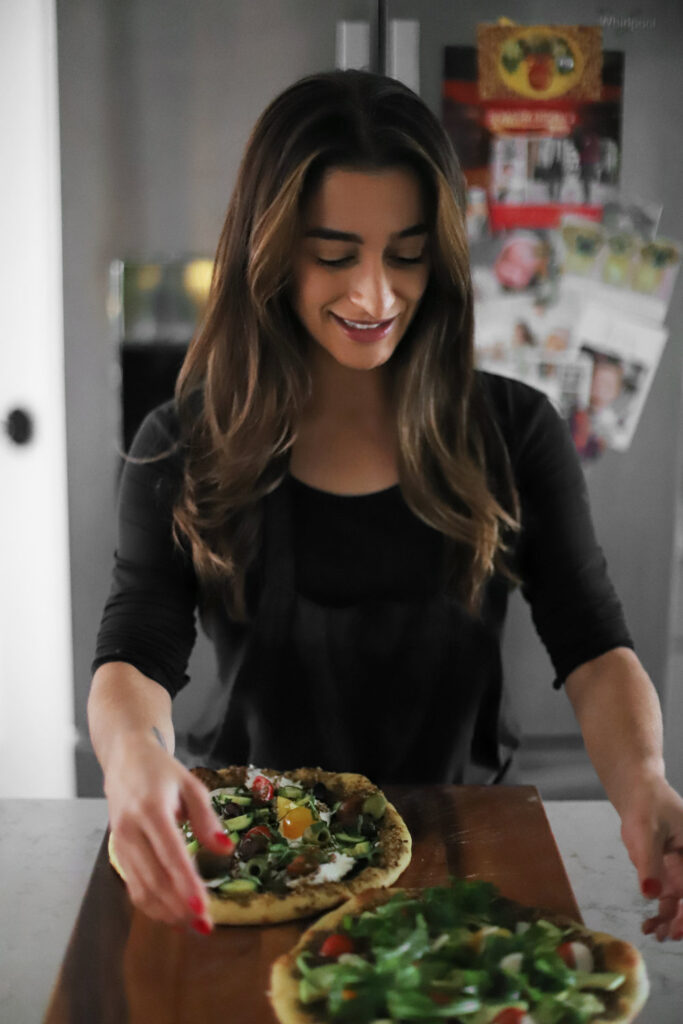
A few weeks ago, I flew to Phoenix to celebrate Christmas with my whole big family. We had so much fun playing giant Jenga, hiking, and eating a million delicious tacos. While I was in town, I also got to cook with one of my favorite Assyrian food bloggers, Lisa from Seven Spice Life. We spent the morning at her house making an epic manakish feast, with lahm bi ajeen, and a couple of delicious variations on manakish za’atar (AKA manousheh).

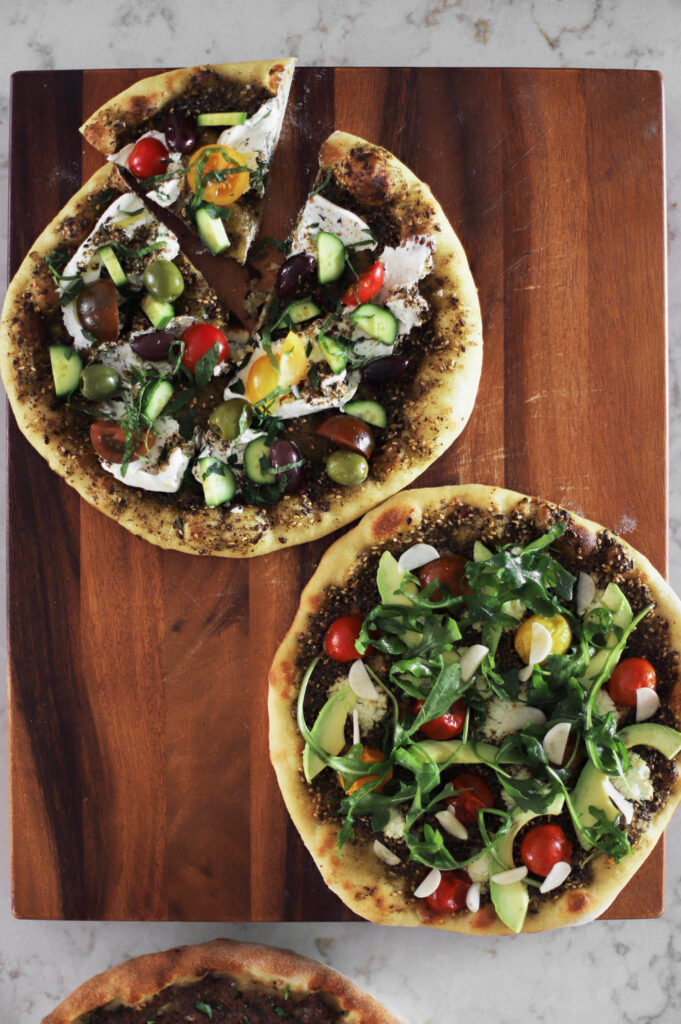
The classic manakish with olives, tomato, labneh, cucumber, and mint was inspired by a trip Lisa took to Jordan, and the California-style one was inspired by all our favorite ingredients (goat cheese, blistered tomatoes, arugula, avocado, and garlicky pickled radishes). We used some incredible za’atar from Lisa’s brother-in-law’s family in Lebanon, and everything was just so perfect.
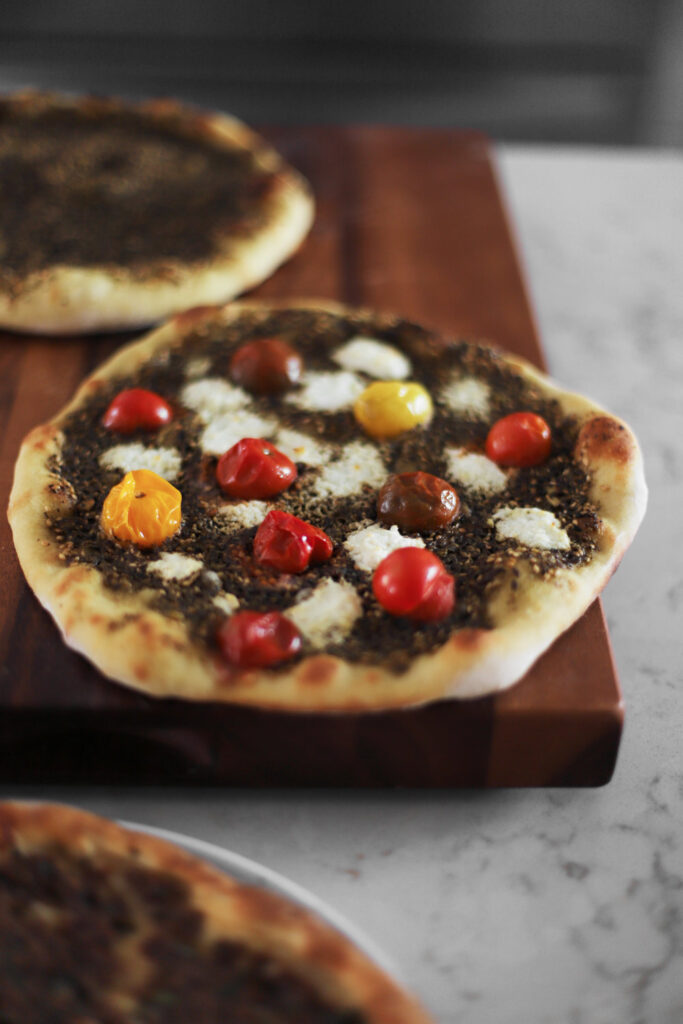
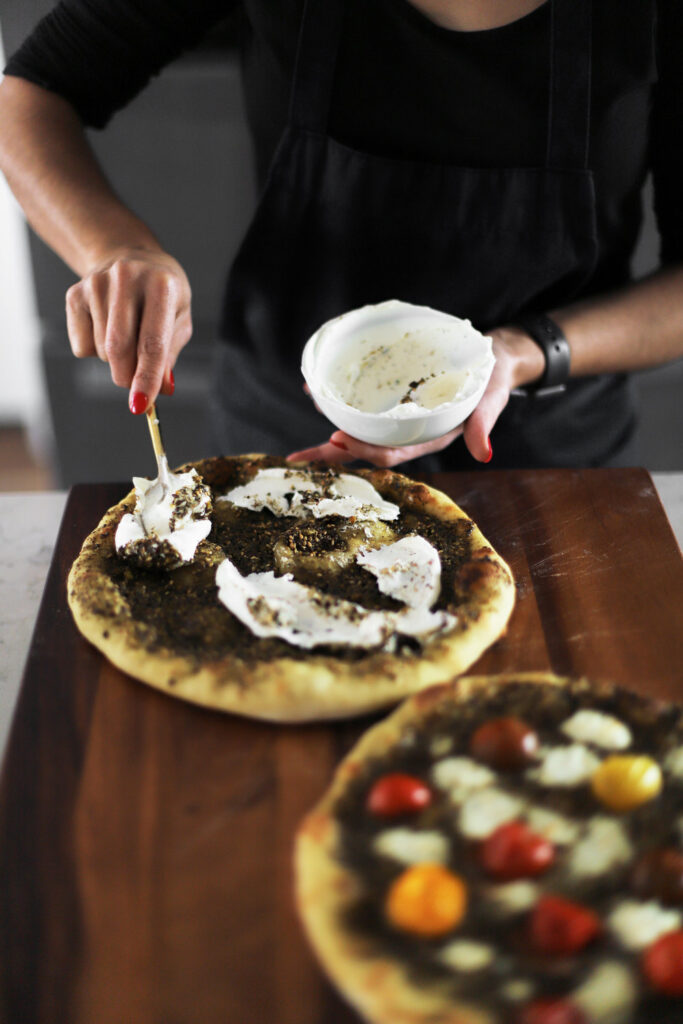
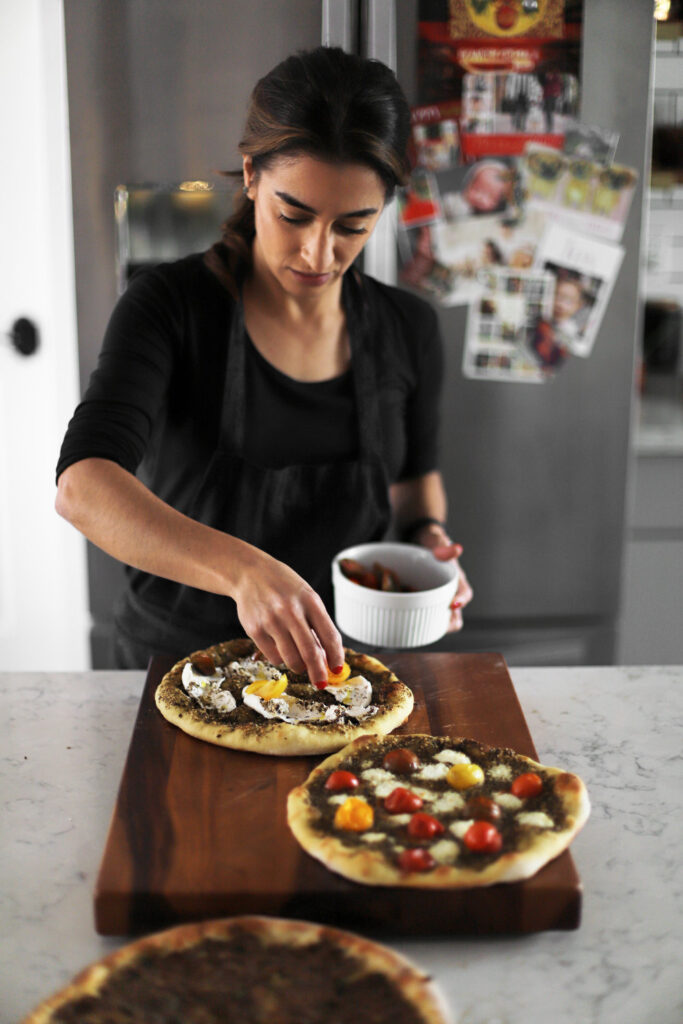
Here’s the base of the California-style one—Lisa had the idea to add the tomatoes and goat cheese to the pizza before baking, which was a stroke of brilliance!
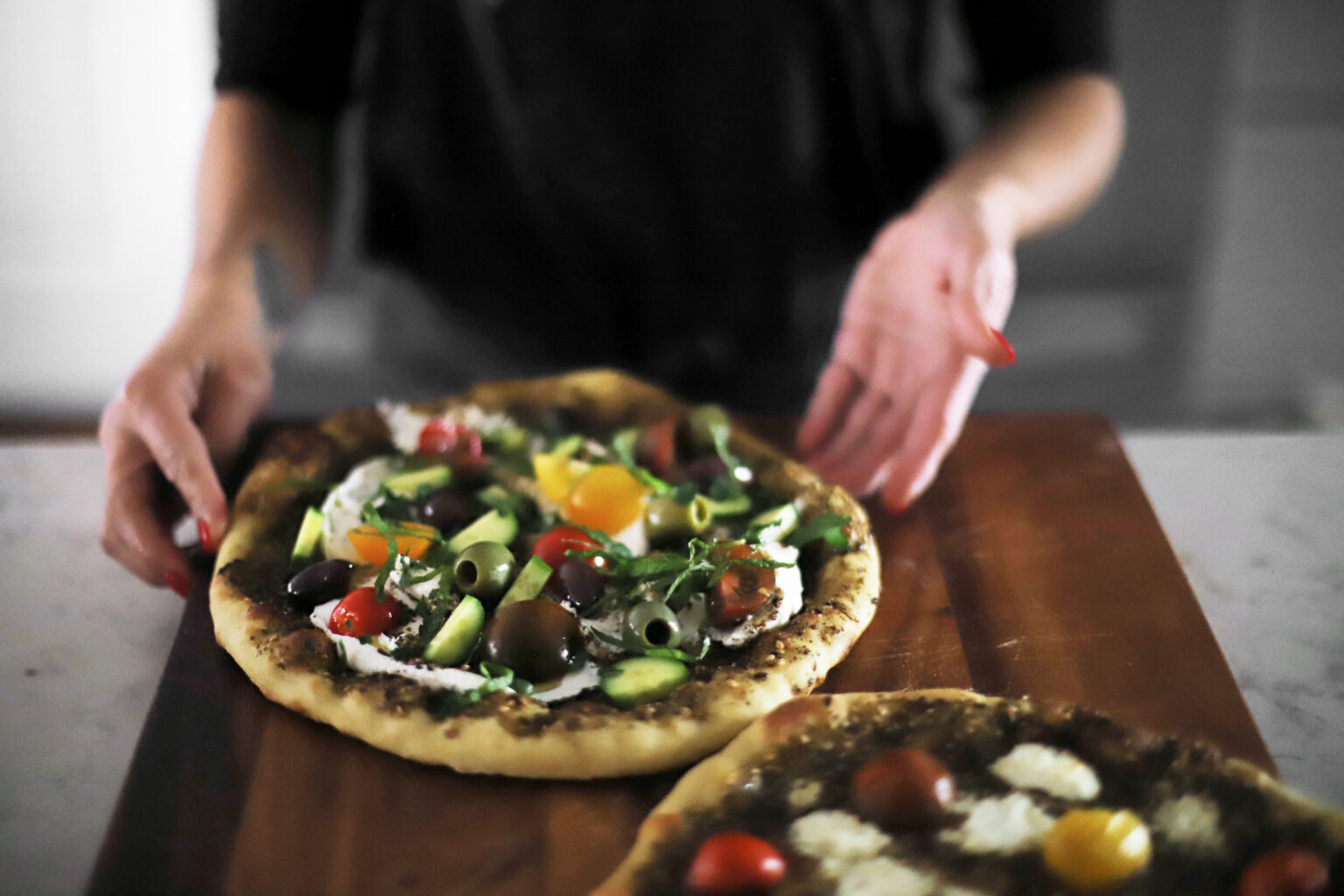
Here’s the labneh going onto the classic tomato, cucumber, and olive manakish za’atar. I love the way the za’atar swirls with the labneh a little, and all the flavors meld together.
And now for the toppings!
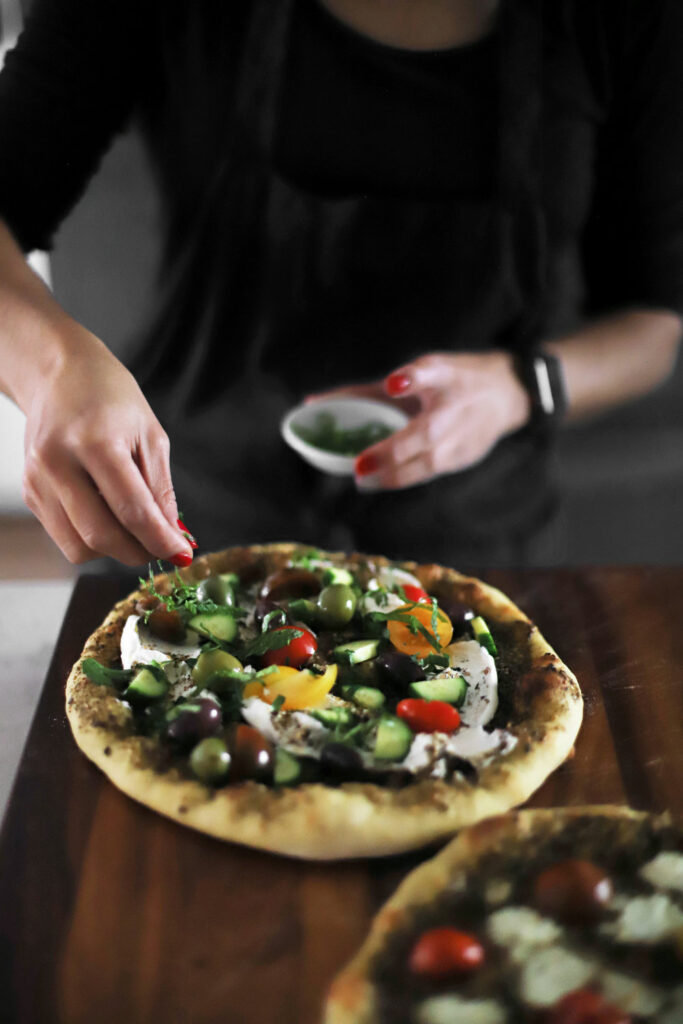
After the labneh and veggies, on goes the mint chiffonade.
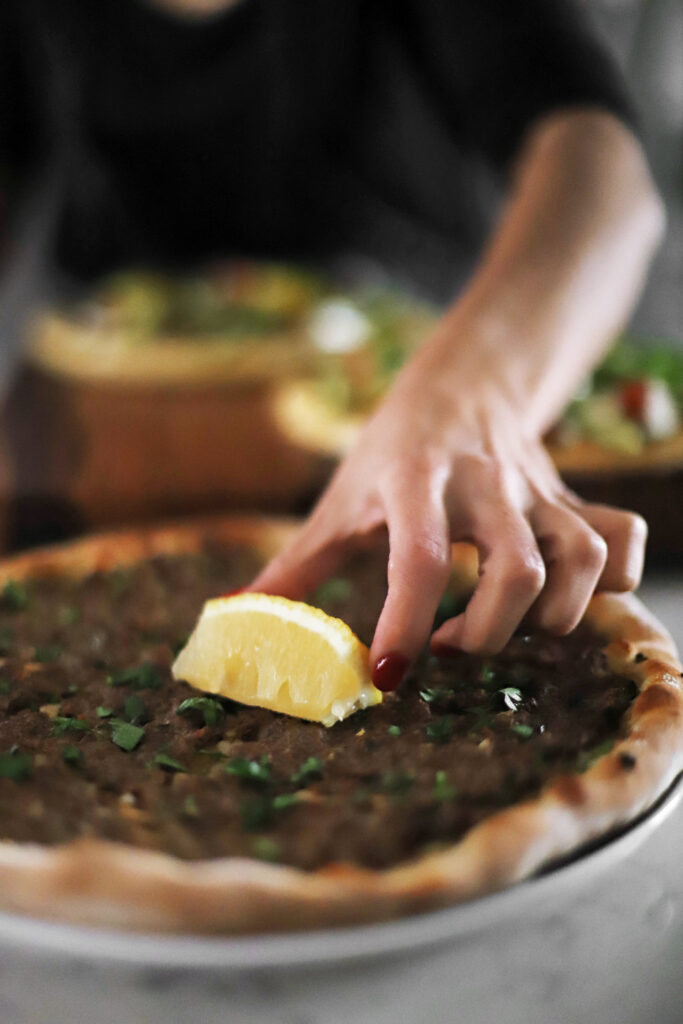
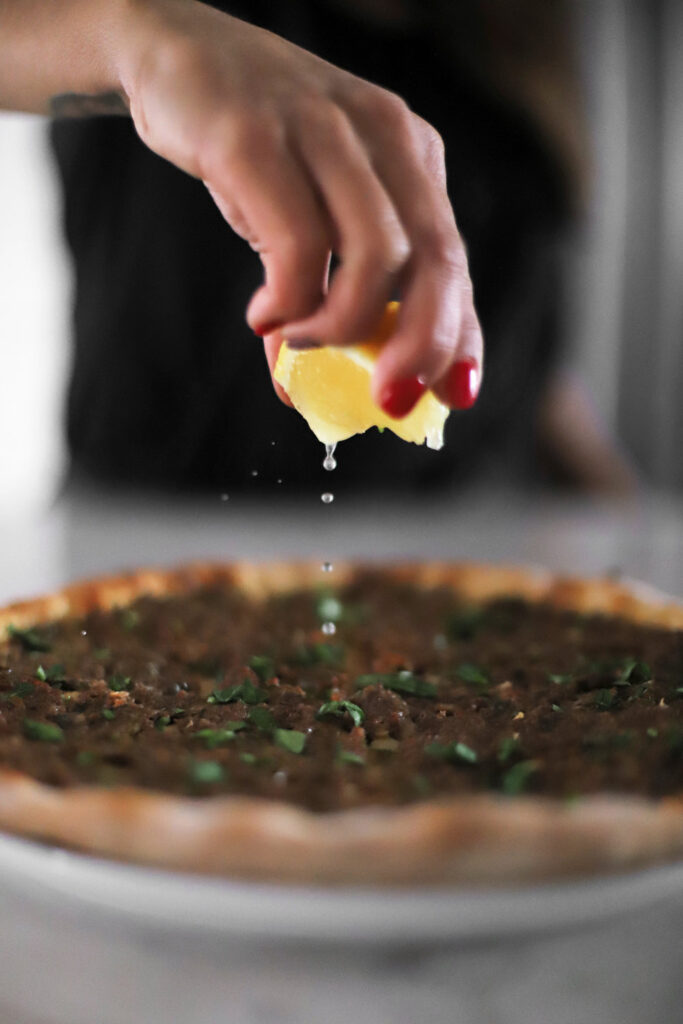
How have I never had lahm bi ajeen with lemon before?
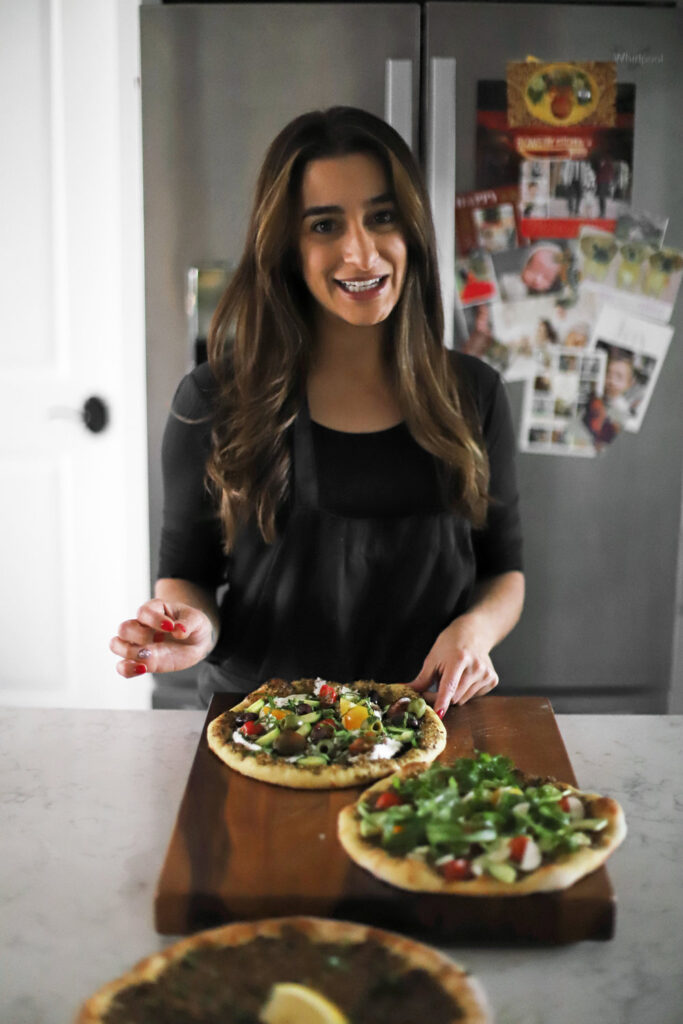
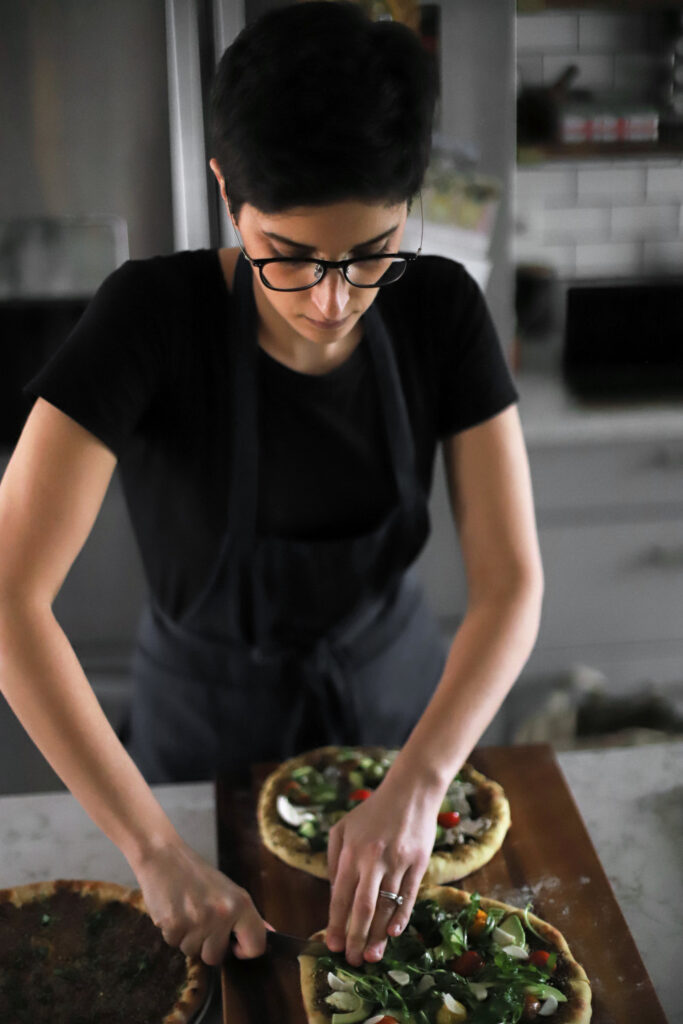
Here’s Lisa! We had so much fun talking for hours about family, food, travel, and our mutual love of castelvetrano olives.
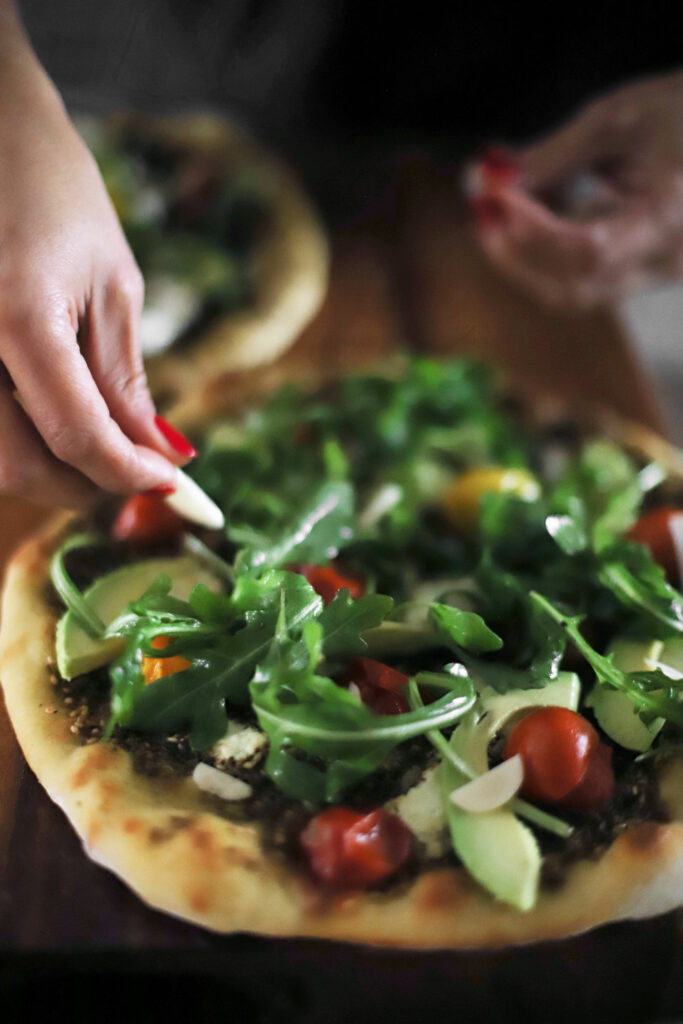
Lisa made these wonderful pickled radishes, with lots of garlic and zesty flavors. Any kind of pickled veggie would work wonderfully here, but the radishes were just the thing.
above: classic manakish with olives, tomatoes, cucumbers, labneh, and mint chiffonade
below: california-style manakish with goat cheese, blistered tomato, arugula, avocado, pickled radishes or onions, and a little more extra virgin olive oil.
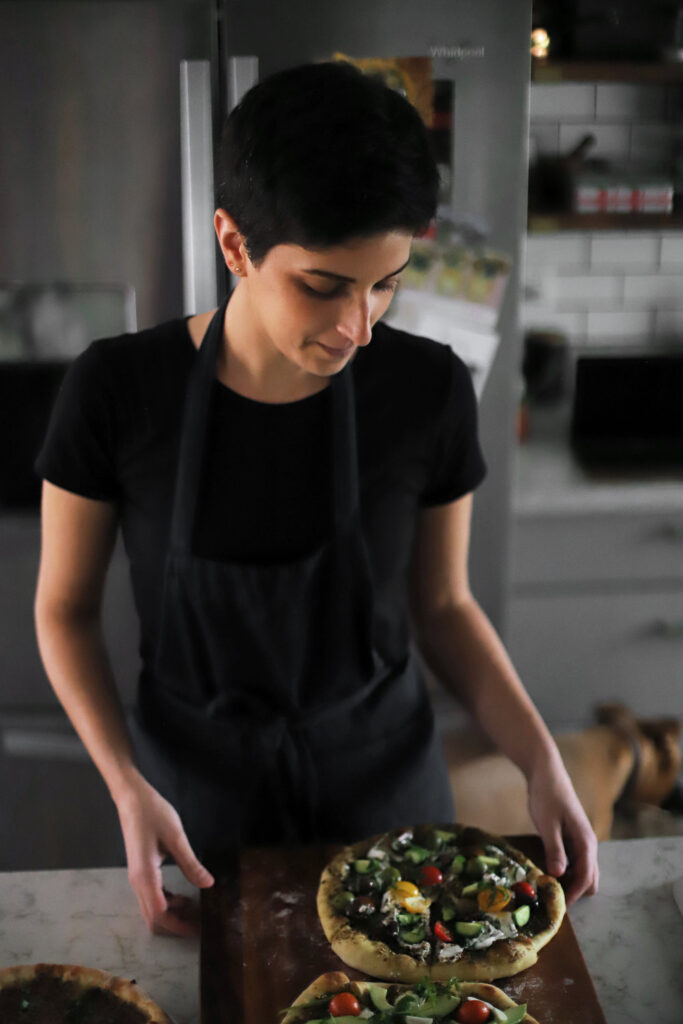
You can see one of Lisa’s pups running by in the background <3

I’ve got some photos and the recipe for the two manakish za’atar variations, and Lisa was generous enough to direct and edit a video with all three manakish, including the lahm bi ajeen.

Print

za’atar manakish + variations

Print Recipe

5 Stars 4 Stars 3 Stars 2 Stars 1 Star

5 from 1 review

  • Yield: 4 small manakish

Ingredients

  • 1/4 cup extra virgin olive oil
  • 1/4 cup + 2 tablespoons za’atar
  • Salt, to taste (about 1/4 teaspoon)
  • 1 pound pizza dough
  • Semolina or cornmeal, for sprinkling
  • Toppings (See notes below)

Instructions

  1. Place a pizza stone (or sheet pan) on the oven floor, move the oven racks up and out of the way, so you can easily access the pizza stone, and pre-heat the oven to 500° F (260°C).
  2. Combine the olive oil and za’atar. Salt it to taste if you’re using unseasoned za’atar.
  3. Lightly flour a clean, food-safe work surface, use a knife or bench scraper to divide the dough into 4 equal pieces, and shape each chunk into a round ball.
  4. Roll each dough ball into a circle, about 1/8 inch thick. To keep the round shape, rotate the disc about 90 degrees after each time you roll it out, and be sure to re-flour the surface every so often.
  5. Sprinkle semolina or cornmeal on a pizza peel or thin cutting board. Place one dough disc on the cutting board. Top with about 1/4 of the za’atar mixture (about a heaping tablespoon) and spread it out using your fingers or the back of a spoon. Top with 1/4 cup of feta cheese, if using. Let it rest for about 5 to 10 minutes before it goes in the oven.
  6. Once the oven has preheated, use a quick motion to move the pie from the pizza peel onto the pizza stone. Cook for about 5-8 minutes, until the edges start to brown and the bread is cooked through. The dough should be crispy and chewy, like really good brick oven pizza.
  7. Repeat with the remaining 3 pies.

Notes

Toppings:

california-style manakish za’atar
cherry tomatoes + goat cheese + lightly dressed arugula + avocado + pickled radishes/onions + olive oil

Add a few halved cherry tomatoes and a handful of goat cheese crumbles to the manakish za’atar base after the za’atar oil goes on. Bake as usual, until the pizza is cooked through, the goat cheese is melted, and the tomatoes are slightly charred or blistered. Once it comes out of the oven, top with arugula (dressed lightly with oil and vinegar), avocado, pickled radishes or onions, and a little more extra virgin olive oil.

classic manakish za’atar
labneh + olives + cherry tomatoes + Persian cucumbers + mint + olive oil

Bake the manakish za’atar base as the original recipe suggests. Top with labneh, halved olives, quartered cherry tomatoes, large-diced Persian cucumbers, a few sprigs of mint chiffonade, and some more extra virgin olive oil
find us on instagram and let us know what you made!

Filed Under: appetizers, bread, breakfast, dinner, every recipe, lunch, main courses, meze, vegetarian Tagged With: cucumber, greens, middle eastern, pizza dough, tomato, za'atar

dikhwa

January 10, 2019 by Kathryn Pauline 4 Comments

When you have an ethnically-focused food blog, you’re always thinking about who you’re writing for. Am I writing for other people who share my heritage, or am I writing for everyone? Am I reminding someone of what they already love, or introducing someone to something they want to know more about? Am I connecting or explaining? Remembering or creating?

Of course the answer is usually both. But sometimes, I write a post with just my Assyrian friends, family, and readers in mind. This is one of those. If you’re not Assyrian, you should (as always!) feel welcome to read along and even try this recipe. And if you’re also Middle Eastern or North/East African, this might remind you of some of your favorites (like shish barak, mullah robe, or shakriyeh). But truth be told, dikhwa is one of those things that I think people only love if they grew up with it. It’s lamb and barley stewed in yogurt, done simply and perfectly, and served with love and community.

In my grandmother’s little Syrian village as well in the bustling Baghdad of my grandfather’s childhood, families would make dikhwa at home for dinner and holidays. But during my grandmother’s brief time in Beirut, dikhwa was a community event. At Christmas and Easter, the church served it to the entire congregation. The men set up three or four giant cast iron cauldrons outside and maintained the open fires, and the women prepared the dikhwa. The stew requires careful timing and frequent stirring, and it’s no wonder it was reserved for only the most special holidays.

Everyone makes dikhwa a little differently, but I’ve only been able to find one other recipe online from Julian of Assyrian Dishes, which is a wonderful variation if you prefer a more porridge-like dikhwa. My grandmother makes one that’s a bit more stew/soup-like. She makes a very sour homemade yogurt as the base of the stew, and combines it with par-cooked barley and lamb, which all simmer together for about an hour. The lamb falls off the bone and becomes incredibly tender, and the barley and yogurt carry its flavor. Some dikhwas are flavored with thyme or oregano, but my family keeps it simple with just the key ingredients. Make a big pot for your dottu today, and get ready for some tears, light criticism, and unforgettable stories.

Print

dikhwa

Print Recipe

5 Stars 4 Stars 3 Stars 2 Stars 1 Star

No reviews

  • Prep Time: 30 minutes
  • Total Time: 24 hours (if using store-bought yogurt, 3 hours)

  • Yield: 8 to 10 servings

Ingredients

  • 900g (about 2lbs) lamb shoulder and/or stew meat, trimmed of fat, bones left in, cut into small pieces
  • water
  • salt
  • 385g (2 cups) pearled barley
  • 1 egg, beaten
  • 3 to 4 quarts unstrained homemade yogurt, made with whole milk *

Instructions

  1. Place the lamb in a large stockpot or dutch oven. Cover with about 1 quart (900g) water and add about 1/2 teaspoon salt (or more to taste).
  2. Bring to a boil, and then reduce heat to low and simmer covered for about 1 hour and 15 minutes, just until the lamb is cooked through and somewhat tender (not yet falling apart).
  3. While the lamb is cooking, boil the barley. Place the pearled barley in a large saucepan with about 1.5 quarts (1350g) water and about 1/2 teaspoon salt. Bring to a boil, and then reduce heat to low and simmer covered for about 40 minutes, until it’s tender but al dente.
  4. Once the lamb is done, rinse and strain it, and rinse out the pot. Rinse the barley once it’s done too.
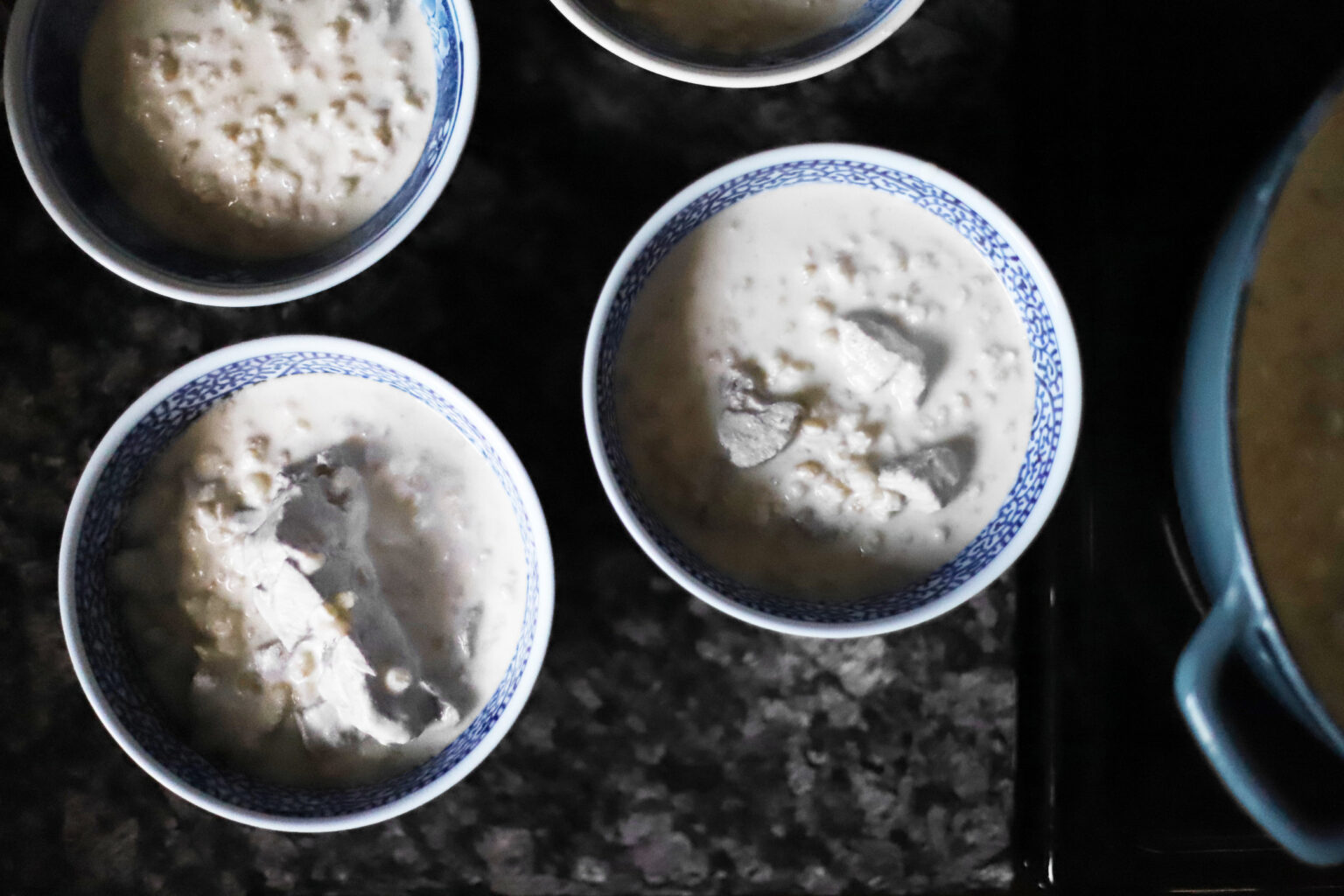
  5. If your yogurt is on the thick side, you will only need to use 3 quarts, and will need to water it down with about 4 cups of water. * The yogurt, or yogurt/water mixture, should have quite a bit of body, but it absolutely must be liquid (see photos). Place the yogurt (and water, if using) in the pot, add the egg, and mix until completely combined. Add the cooked and strained lamb and barley, and season with a little more salt (about 2 teaspoons, or more to taste). Stir together, and bring to a boil over medium heat. Stir constantly while you bring it to a boil, and then reduce the heat to low. Keep the pot uncovered, and cook stirring occasionally for about 1 hour and 15 minutes. The stew is done once the flavors have melded and the lamb is falling off the bones.

Notes

* If you want to make this with store-bought yogurt, make sure you don’t use strained/Greek yogurt. Look for a plain whole milk yogurt with as few additives and stabilizers as possible. Most Indian and Arabic brands work well, but read the label carefully to make sure it’s plain, unstrained. Yogurt consistency varies from brand to brand (and homemade batch to batch), which is why the amount you use will vary. If you use thick yogurt, you should water it down, and if it’s a thin homemade yogurt, you can get away with using the full amount and no water. Read the recipe for details.

find us on instagram and let us know what you made!

Filed Under: dinner, every recipe, family recipes, main courses, soups and stews Tagged With: lamb, middle eastern, yogurt

  • « Go to Previous Page
  • Page 1
  • Interim pages omitted …
  • Page 101
  • Page 102
  • Page 103
  • Page 104
  • Page 105
  • Interim pages omitted …
  • Page 183
  • Go to Next Page »

Primary Sidebar

Kathryn Pauline smiling

Welcome! I’m Kathryn Pauline, cookbook author, recipe developer, and photographer.

Footer

read our privacy policy

© 2017 - 2026 Kathryn Pauline