

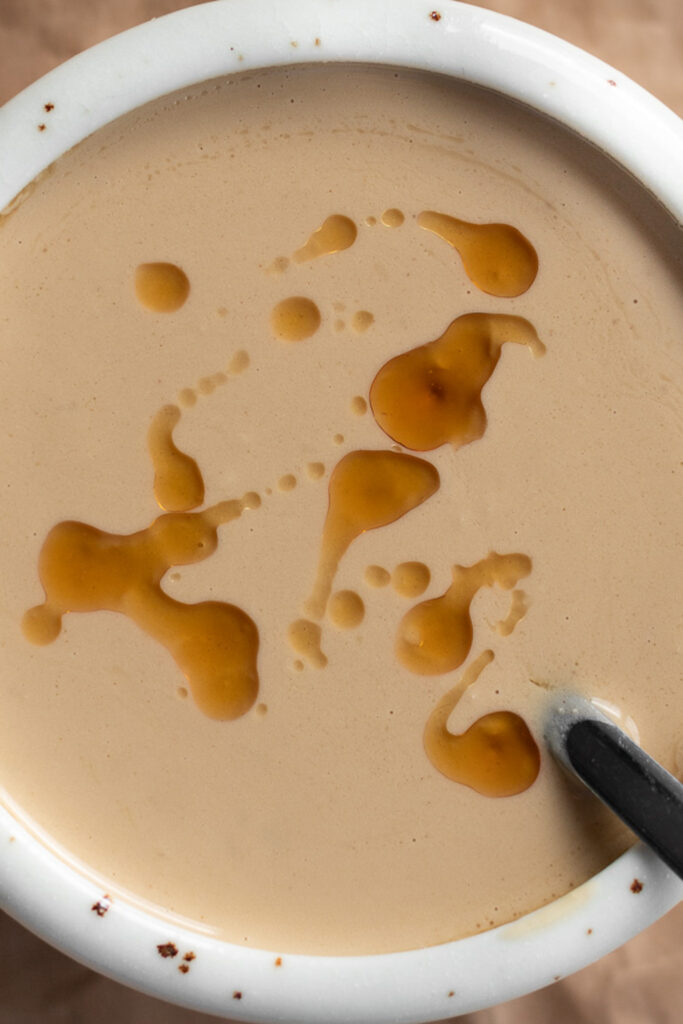
Sesame ginger dressing just makes everything taste better. Salads, sandwiches, grain bowls—it’s always a hit. This version uses tahini as the base, which gives it a creamy texture and a rich, nutty flavor (and bonus, it’s vegan!). It’s great on crisp vegetables, perfect over soba noodles, and great with herbs like cilantro and basil.
Read on for my best tips for sesame ginger success + ways to use it, or jump to the recipe.

Sesame ginger dressing tips for success
1. Use frozen minced ginger and garlic as a shortcut.
Short of buying a bottle of (likely far inferior) store-bought dressing, frozen garlic and ginger are the fastest route to getting this one on the table. Powdered versions just don’t work the same. Grab a couple frozen blister packs of ginger and garlic and you’re halfway there! I’ll even allow bottled lime juice, since it’s such a small amount. The rest of the ingredients are just poured straight from their bottles—easy peasy.
2. Know your tahini.
Tahini is a little quirky—when you start to add water to it, it actually thickens up before it thins out as you add more water. Then as it sits, it thickens up a tad more. So if you’re eyeballing quantities, just know the texture goes from thin (plain tahini) → thick (tahini with a little water) → thin (tahini with a lot of water) → thicker again (tahini with a lot of water that’s rested). If you add too much water, it may truly thin out too much, but it takes a surprising amount.
Also, give your tahini a really good stir before measuring. If you don’t mix it, you’ll end up with either too much oil or too much sludge, and neither will work.
3. The water seems like a lot, but it’s essential.
You can experiment with adding a little bit less if you want a punchier sauce, but 3/4 cup of water is not a mistake. The rest of the flavors are extremely powerful, and they need that water to balance everything out.
4. Scaling up and down
This recipe is easy to scale up! But some of the quantities make it a little tricky to scale down (if you’re measuring with cups and tablespoons). It can be done though! I have quantities for a half-recipe in the notes at the bottom of my cold soba noodles post, which uses this sesame ginger dressing. The half recipe has a tad more vinegar and tad less lime juice to normalize some of those odd volumetric measurements.
But I highly recommend making a full batch of sesame ginger dressing, because you’ll never run out of ways to use it…


Ways to use it
- On a baked sweet potato with sliced green onions and hot peppers
- As a dipping sauce for spring rolls
- Over silken tofu with green onions and cilantro (or even better, tofu with perilla!)
- With cold soba noodles
- Drizzled over a sweet potato broccoli grain bowl
- Massaged into a kale salad with roasted sweet potatoes and sesame seeds
- Drizzled over sautéed broccoli and sprinkled with sesame seeds
Sesame Ginger Dressing


- Yield: 2¾ cups [660 g]
Ingredients
- 1 cup [250 g] tahini
- ¾ cup [175 g] water
- ⅓ cup [80 g] rice vinegar
- 3 Tbsp soy sauce
- 2 Tbsp honey
- 2 Tbsp sesame oil
- 1 Tbsp lime juice
- 3 Tbsp minced fresh ginger
- 3 garlic cloves, crushed through a press
Instructions
- In a medium mixing bowl, whisk together the tahini, water, vinegar, soy sauce, honey, sesame oil, lime juice, ginger, and garlic. It will start out watery, but will thicken as you continue to whisk, and will thicken further in the refrigerator.
- This sauce will keep for 3 to 4 days in the fridge, or at least 3 months in the freezer in a tightly sealed container.

Psst… by the way, I love this recipe so much, I ended up including it in my cookbook, Piecemeal.
If you like this recipe as much as I do, you might like my book! It’s full of mix-and-match recipes and inspiration for fun and easy meals. There are recipes in it for spring rolls, baked sweet potato, and cold soba noodles, which all use this sesame ginger dressing as their base.
Leave a Reply