
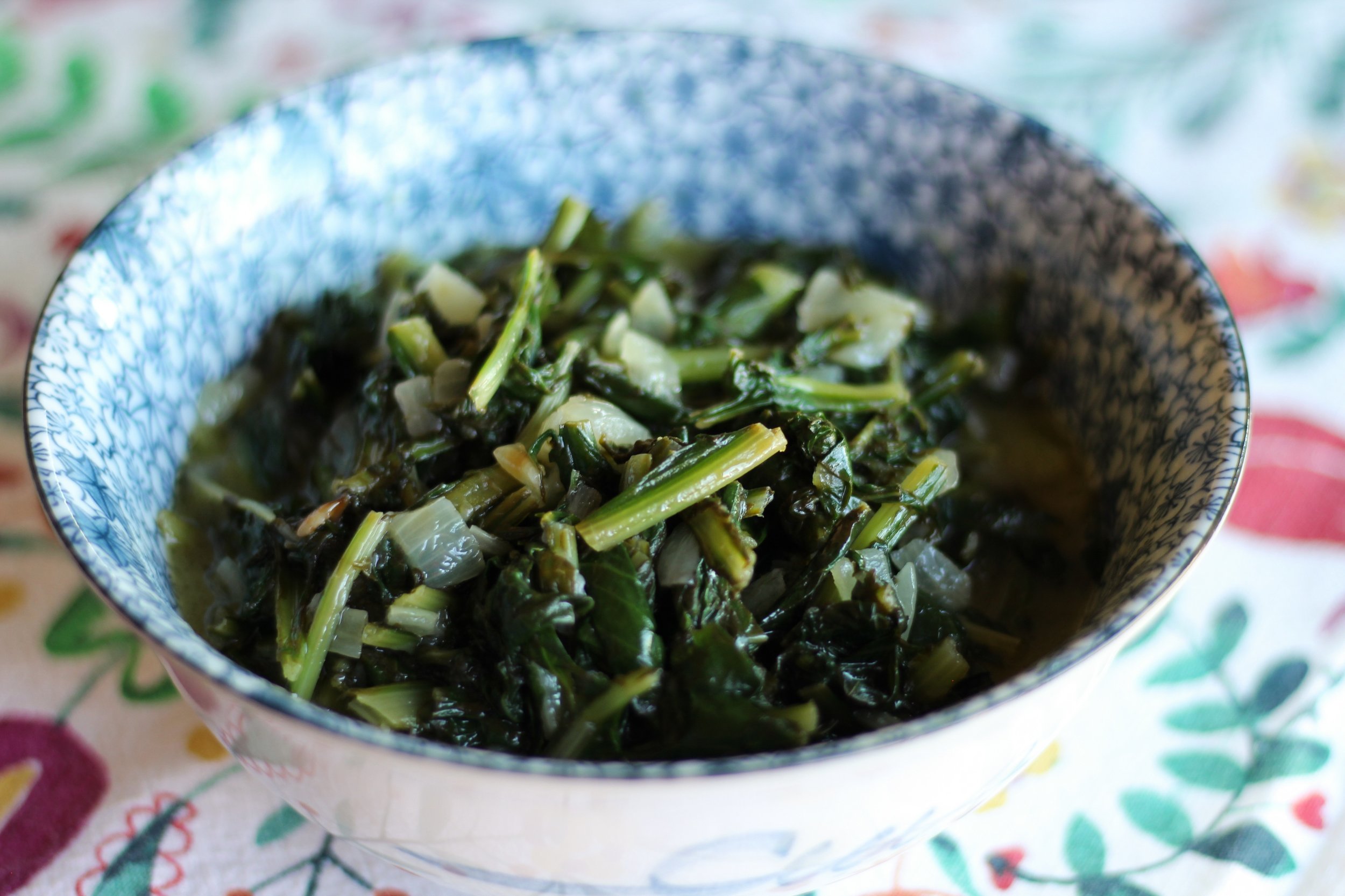
If you’ve ever picked up a bunch of dandelion greens and then wondered what on earth to do with them, you are not alone! These slightly wild-tasting greens can be delicious, but only if you know how to deal with their natural bitterness. This recipe has you covered.
Skip to the recipe if you want to hit the ground running, or read on for a bit more about dandelion greens: What are they? Why are they bitter? And how can you make them less bitter?
What are dandelion greens?
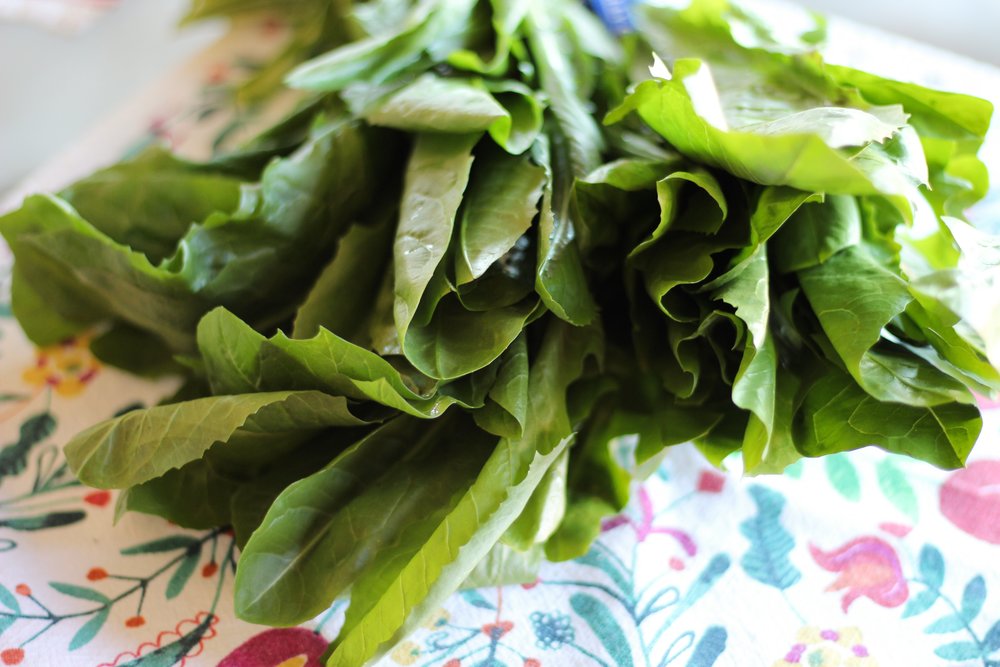
Dandelion greens are the leafy tops of the dandelion plant. You can find them at farmers markets, natural grocery stores, or even foraged (if you’re 100% confident they’re pesticide free and if you know how to safely identify them). They’re long, slender, and deeply green, with a flavor that’s earthy, peppery, and quite bitter.
But cooked the right way? They mellow into something bold and vibrant without being too harsh.

Why dandelion greens are naturally bitter (and how to fix it)
Dandelion greens have a bunch of bitter compounds. No matter what you do, they will always be a little bitter, so if you’re a super-taster, they might always taste a little bitter to you. But in this recipe, we’re aiming for semi-sweet-chocolate-levels of bitterness, not baking-chocolate-bitter. Here’s what we can to do cut the bitterness down as much as possible:
1. Start with young, tender greens
Larger, more mature greens tend to be more bitter than smaller, less mature ones. So the first step in getting less bitter greens is to search out smaller, younger, more tender greens in the first place. With more delicate greens, you’re already off to a great start.
2. Blanch them
Always, always, always blanch them first. A quick boil softens the greens and washes away some of those bitter compounds we talked about earlier. That’s because many of them are water-soluble. After blanching, the greens will be less bitter, but now a bit on the bland side. That’s okay though, because we’re going to take it one step further…
3. Add flavor back in after blanching
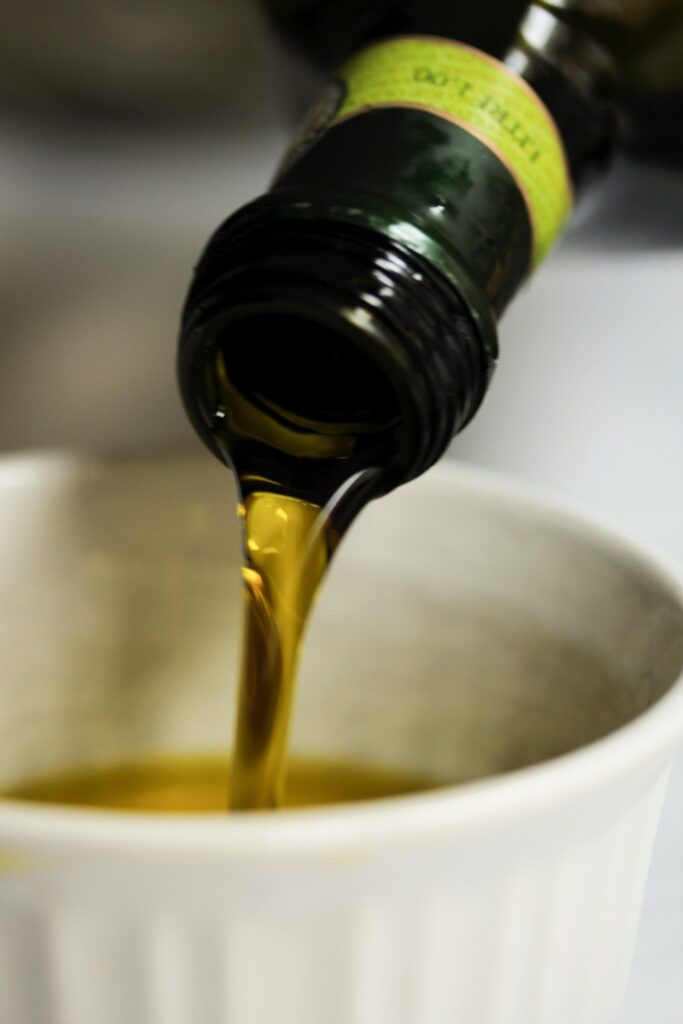
After blanching, we’re going to combine them with onions that have been sautéed in a generous amount of olive oil. These flavors will balance out what was lost in blanching and give them some fat and flavor to balance out that bitterness.
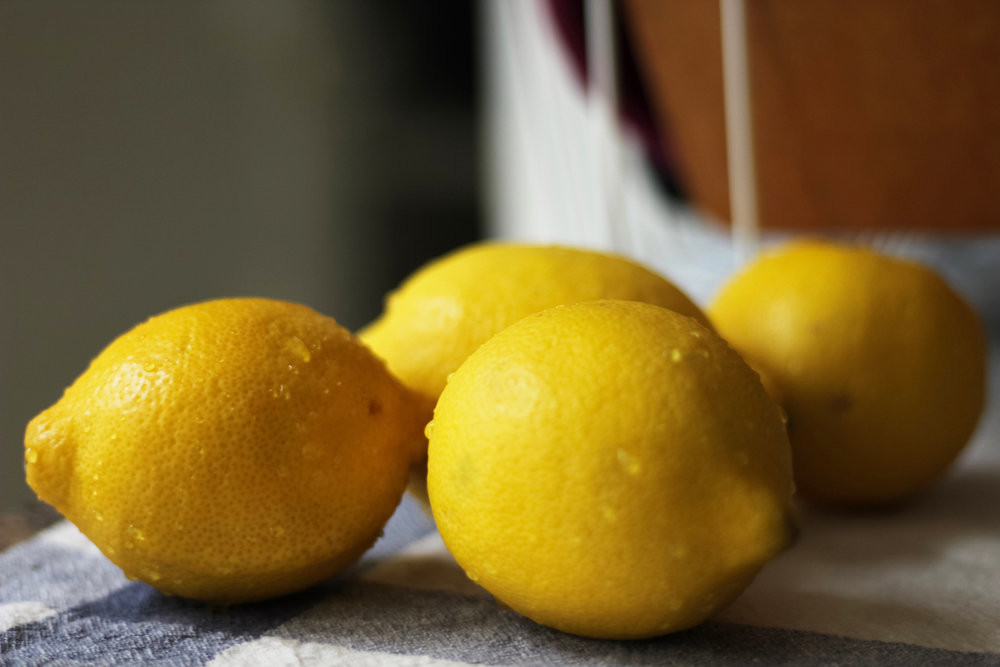
4. Lemon juice, for the win!
While acidity does not strictly “cancel out” bitterness, it does go a long way in balancing it. It’s the reason even if you don’t love ultra-dark chocolate, you might still love it when it’s paired with raspberry or passion fruit. So we’re gonna add a generous amount of lemon juice to this recipe.
How to prep dandelion greens
- Wash them thoroughly. They can be gritty, so soak and rinse a few times, sort of like you’re prepping parsley.
- The tender parts of the stems cook down nicely, so there’s no need to remove them. But do remove any especially thick or tough stems.
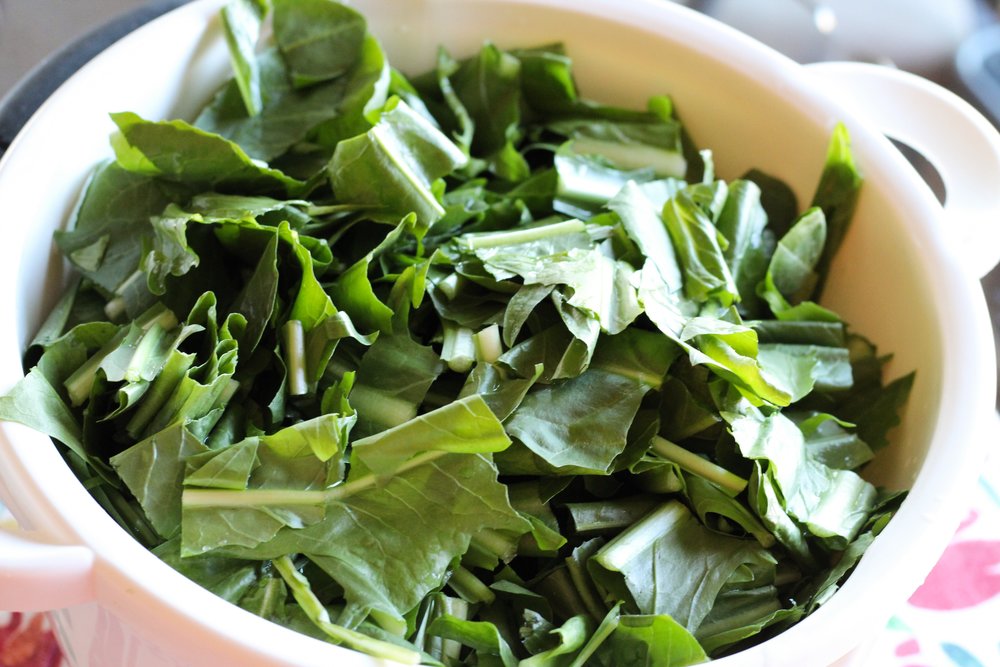
- Chop them roughly into 2-3 inch lengths so they cook evenly.
A little family history
A few years after my mom and her family immigrated to Chicago from Baghdad, they moved to a bigger apartment in Andersonville on Balmoral Avenue. She was still a little kid at the time, and even though the new place had more space, there were still twelve people packed into their two-flat.
Every week, my grandfather would take her down to the produce market on Randolph, where he’d pass as a restaurant owner to score good deals on produce. They’d come home with giant grates of lettuce, tomatoes, and greens, and the whole family would divvy everything up.
There was often too much to go around. One week, after coming home with more tomatoes than they could possibly eat, my mom and uncle Al packed them into paper bags and went door-to-door selling them to the neighbors. And on weeks when they ended up with extra dandelion greens, they’d make a huge batch of yarcah, which just means “greens” in Assyrian.
I hope you enjoy this yarcah recipe as much as my family has over the years. It comes from my grandmother, Romy, and I took most of these photos in her kitchen and yard.
PrintDandelion Greens (less bitter)

- Yield: 4 servings
Ingredients
- 1/4 cup extra virgin olive oil
- 1 cup medium diced onion (from about half a medium onion)
- Between 1/3 to 1/2 cup lemon juice (from about 2 lemons), to taste *
- Salt to taste
- 1 pound roughly chopped dandelion greens, with the tough ends of the stems trimmed (from about 2 bunches)
Instructions
- Bring 3 quarts of salted water to a boil in a large stockpot.
- While you’re waiting for the water to boil, heat the olive oil over medium-low heat in a frying pan and add the onion.
- Cook the diced onion until it softens, turns translucent, and turns very slightly golden around the edges, about 8 to 10 minutes. Once it’s done, and add the lemon juice, heat until it starts to simmer, and immediately remove from heat.
- Boil the chopped dandelion greens for 5 to 8 minutes, depending on your preference for doneness. **
- Drain the greens over a sink, and wring them out by pressing them against the colander with a wooden spoon.
- Combine the cooked greens with the lemon juice and onion mixture.
- Season with salt, to taste.
Notes
* I use the full 1/2 cup of lemon juice because I like more acidic greens, but if you want a mellower flavor, you can add closer to 1/3 cup. You can always add a little more later, but it’s hard to take lemon juice away.
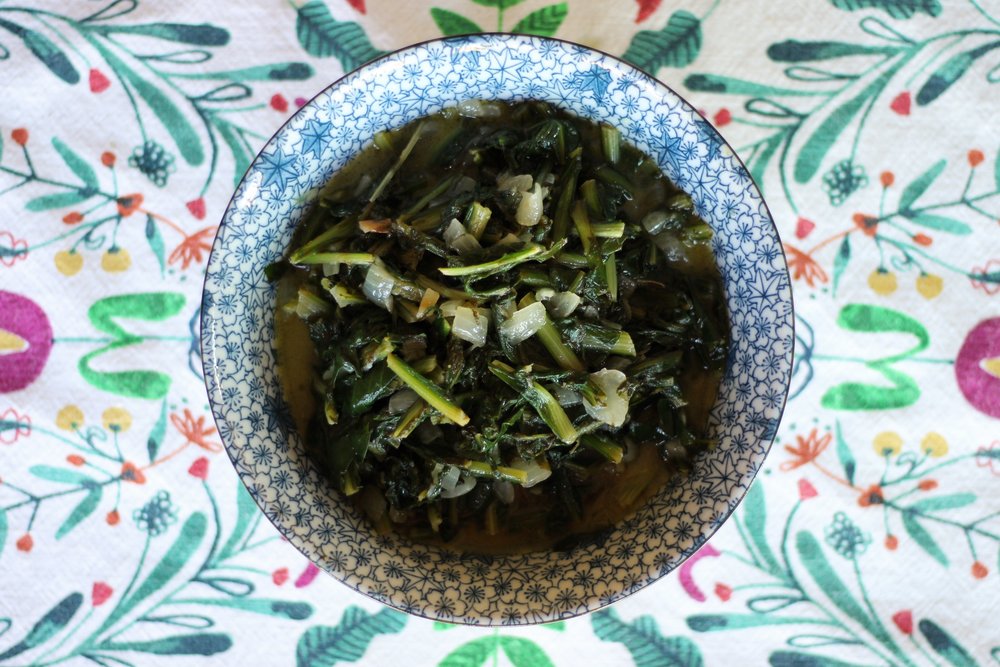
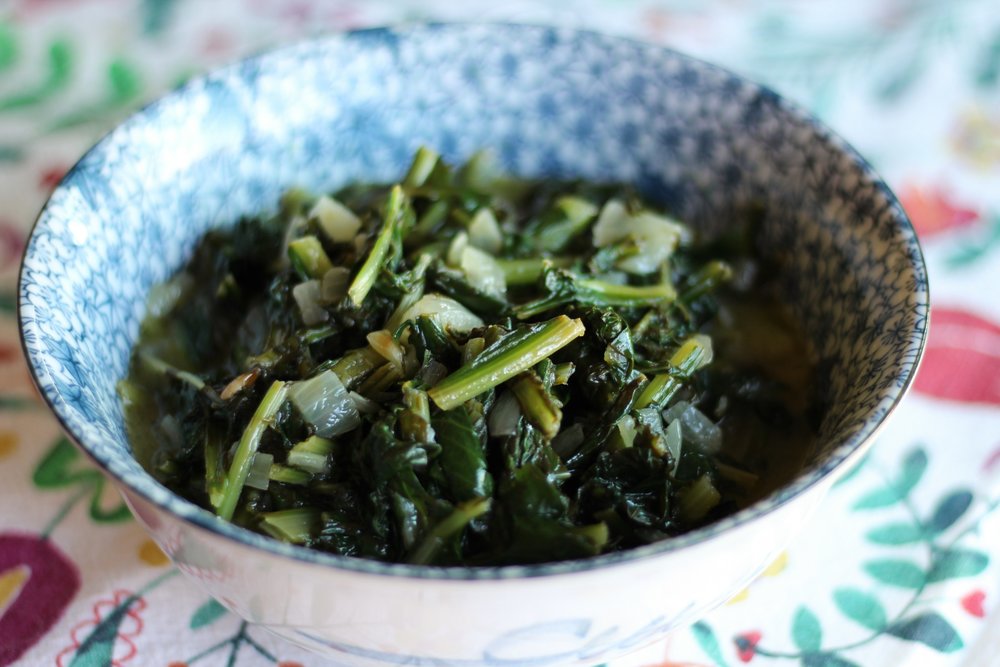
** The dandelion greens pictured here were cooked for 8 minutes, which yields a deeply green, slightly toothsome finished product. If you like brighter, even more al dente greens and don’t mind a little more bitterness, cook them closer to 5 minutes (or even less). If you have very tender, small dandelion greens, you may need to cook them even less.
This recipe was originally posted on 26 March 2017. I updated the recipe very slightly to streamline it and reposted it in 2025, but it is largely the same. I also added more useful information about dandelion greens, why this recipe works, and how to make them less bitter.
Leave a Reply